15 Under-the-Sink Bathroom Organization Ideas

15 under-the-sink bathroom ideas that work around the plumbing: sliding drawers, clear category bins, a shelf that wraps the P-trap, a separate cleaning caddy and a mat that catches drips first.
Table of Contents (15 Ideas)
- 1.Add a Two-Tier Sliding Organizer That Fits Around the Pipes
- 2.Stack Clear Bins for Backup Toiletries
- 3.Use a Small Lazy Susan for Everyday Bottles
- 4.Wrap the P-Trap With a U-Shaped Raised Shelf
- 5.Hang an Inside-Door Caddy for Hair Tools
- 6.Sort Into Labeled Clear Bins by Category
- 7.Put a Pull-Out Drawer Unit on One Side of a Double Vanity
- 8.Keep a Separate Cleaning-Supplies Caddy
- 9.Lay a Waterproof Liner Mat to Catch Drips
- 10.Try the Tension Rod Trick for Spray Bottles
- 11.Add Slim Stackable Drawers for Skincare and Makeup Backups
- 12.Combine an Over-the-Door Towel Bar With a Hanging Bin
- 13.Use L-Shaped Bins to Reach the Deep Back Corners
- 14.Store First Aid and Medicine in a High, Lidded Bin
- 15.Finish With a Rolling Under-Sink Cart for Cleaning Day
Open the cabinet under your bathroom sink and be honest: is it neat rows, or is it bottles tipped over behind the pipes, a hair dryer cord wrapped around the cleaning spray, and one mystery bag you have not opened since you moved in? Most vanities look like the second one. The space is awkward, the plumbing cuts right through the middle, and everything tall has to dodge the drain.
That is exactly why bathroom organization drawers under sink setups work so well. A drawer or pull-out tier slides past the pipes instead of asking you to reach blindly into the back. Pair them with clear bins and one or two bathroom organization cabinets tricks for the sides, and a cabinet that felt useless turns into the hardest-working storage in the room.
These 15 ideas are bathroom-specific: double vanities, P-traps, toiletries, hair tools, first aid and the cleaning caddy that should never share a bin with your toothpaste. They are different from our kitchen under-sink ideas, where the pipes share space with dish soap and trash bags. Measure your cabinet width, depth and the space either side of the P-trap before you buy anything, and if the counter above is also crowded, start with our bathroom countertop organization ideas so only daily things earn a spot up top.
Measure before you buy anything
Three numbers decide almost every idea on this list: cabinet width, depth from door to back wall, and the clear space on each side of the P-trap. Write them on your phone, along with the height from cabinet floor to the underside of the sink bowl. Most returns happen because a lovely organizer met a pipe nobody measured. Allow a half-inch of wiggle room on every side.
Add a Two-Tier Sliding Organizer That Fits Around the Pipes

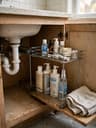
This is the fix I recommend first, because it solves the reach problem in one go. A two-tier sliding organizer has a narrow top basket that sits beside the drain pipe and a wider bottom basket that pulls out like a drawer. Measure the clear width on one side of your P-trap — most vanities give you about 10 to 13 inches — and pick a unit a half-inch narrower. Put daily bottles on the top tier and taller backups below. Stainless or coated metal versions, usually $22 to $35, handle damp cabinets better than cheap chrome. Once it slides, you stop kneeling with your phone flashlight on.
Stack Clear Bins for Backup Toiletries

Backups are where under-sink cabinets go messy: extra shampoo, spare toothpaste, a four-pack of soap balanced on top of cotton balls. Sort them into stackable clear bins with lids, one bin per type, and stack two high on the side away from the water shut-off valves. Clear sides matter here. You can see at a glance that you already own three conditioners before you buy a fourth. Leave a finger of space at the top of each bin so lids actually go back on. This is also the easiest system to keep up, because putting something away is just lifting one lid, not rebuilding a pile.
Use a Small Lazy Susan for Everyday Bottles

If you keep five or six bottles you reach for every morning — contact solution, moisturizer, toner, your partner's aftershave — a small lazy susan stops the daily shuffle. Pick a 10-inch turntable with a low lip and non-slip base, and set it on the flattest spot in front of the pipes. Spin, grab, done. It works best for round bottles of similar height; tall or wobbly things belong in a bin instead. Wipe it once a month, because drips collect under it quietly. In a wide vanity, two small turntables, one per person, end the whose-side-is-this argument without saying a word.
Wrap the P-Trap With a U-Shaped Raised Shelf

That dead space hugging the drain pipe can hold more than dust. A U-shaped raised shelf is cut out in the middle so it wraps around the P-trap, giving you a flat top level with storage underneath for flat things like washcloths, a scale battery pack or spare razor heads. Look for adjustable legs, because vanity floors are rarely level and trap heights vary — most shelves adjust between about 6 and 9 inches. Put lightweight, rarely used items on top so you can lift the whole shelf out when a plumber needs access. It is a simple shape, but it claims the one spot most organizers waste.
Hang an Inside-Door Caddy for Hair Tools

Hair dryers and straighteners are the worst shape to store: bulky, hot and trailing a cord that tangles around everything. An inside-door caddy with heat-safe metal cups fixes that. It hooks over the cabinet door or mounts with screws, keeps the dryer and brush upright, and gives the cord a place to loop instead of a nest on the cabinet floor. Check door clearance first — close the door slowly with the caddy loaded to be sure tools do not hit the sink bowl. Let tools cool for a few minutes before they go back. Your morning routine gets faster, and the cord finally behaves.
Three products that earn their space
If you buy nothing else, these three cover most vanities: a two-tier sliding organizer for the daily side of the cabinet, a ribbed silicone liner mat to protect the cabinet floor from drips, and a lidded cleaning caddy so sprays stay separate from toiletries. Together they usually come in under $60 and handle the messiest cabinet shape there is.
Sort Into Labeled Clear Bins by Category

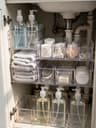
One big bin for everything is just a junk drawer lying down. Split toiletries into labeled clear bins by category — dental, hair, first aid, nails, shaving — and give each category its own small bin or caddy with a handle. Labels sound fussy until someone else puts things away; then they are the reason the system survives. A basic label maker or even masking tape and a marker works fine. Keep the two bins you use daily at the front and the rest behind them. If a category outgrows its bin, that is your sign to use things up, not to buy a bigger bin. Small bathrooms benefit most — see our small bathroom organization ideas for the rest of the room.
Put a Pull-Out Drawer Unit on One Side of a Double Vanity

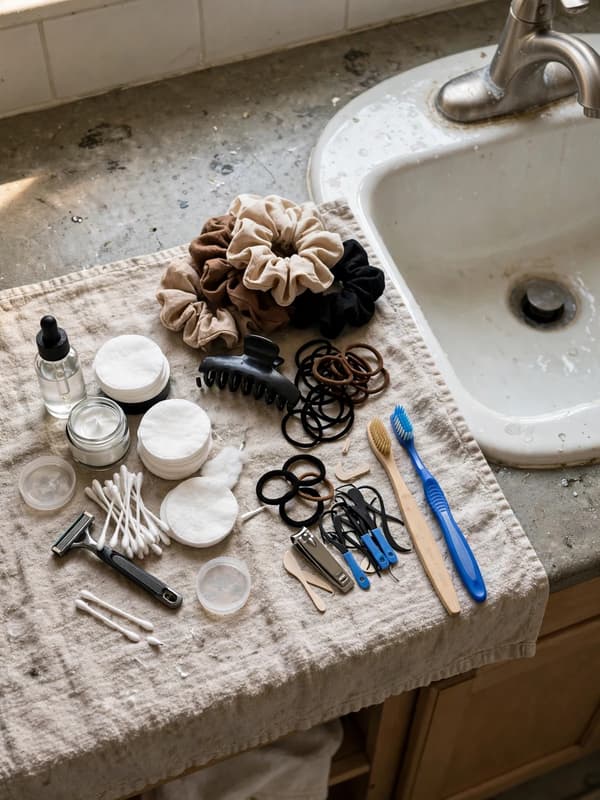
A double vanity has twice the plumbing and, somehow, twice the clutter. Give one side a job: fit a pull-out drawer unit, two or three drawers deep, in the wider bay and leave the other side for tall bottles and the cleaning caddy. Drawers suit small things that get lost in a cabinet — makeup, hair ties, nail tools, spare contacts. Most freestanding units are about 11 inches wide and need no fitting, just slide them in. This is where bathroom organization drawers under sink planning really pays off, because you measure both bays and assign each one a role instead of letting both become a mix of everything.
Keep a Separate Cleaning-Supplies Caddy

Bathroom cleaner, toilet gel and a bleach spray should never lean against your moisturizer. Keep them in their own cleaning-supplies caddy with a sturdy handle, stored on the opposite side of the cabinet from toiletries, or at the very back if space is tight. A caddy also makes cleaning day quicker: lift it out, carry it to the tub and toilet, put it back. Add a pair of gloves and a microfiber cloth so everything is together. If you rent, this setup is gold — nothing is fixed, and the whole caddy moves house with you. More renter-friendly ideas are in our bathroom organization for apartments guide.
Lay a Waterproof Liner Mat to Catch Drips

Before any organizer goes in, put protection down. A waterproof liner mat, cut to fit your cabinet floor, catches the slow drips every P-trap eventually makes and stops a small leak from swelling and ruining the cabinet base. The ribbed silicone kind, about $12 to $18, also stops bottles sliding and can be wiped or rinsed in the tub. Trim it with scissors around pipes and valves, and check it every few months — a mat that is often wet is telling you a fitting needs tightening. It is the least exciting idea on this list and the one that saves you the most money.
Try the Tension Rod Trick for Spray Bottles

Here is the old trick that still earns its place: fit a short tension rod across the top front of the cabinet, just under the sink bowl, and hang spray bottles by their trigger handles. They float above the cabinet floor, so the space below stays free for bins, and you can read every label at a glance. A 12- to 18-inch rod costs a few dollars and needs no screws — twist it tight between the cabinet sides. It holds standard bathroom cleaners well, but skip very heavy bottles. Renters love this one, and it pairs nicely with the budget finds in our dollar tree bathroom organization ideas.
Double sinks, double plumbing
A double vanity is not one big cabinet — it is two small ones sharing a wall. Treat each bay separately: drawers and daily bins under the sink you use most, tall bottles, backups and the cleaning caddy under the other. Fighting both P-traps with one wide organizer almost never fits, and two smaller systems will always close their doors properly.
Add Slim Stackable Drawers for Skincare and Makeup Backups

Skincare and makeup backups are small, numerous and easy to lose behind a pipe. Slim stackable drawers, about 6 inches tall per tier, turn them into neat rows: serums and creams in one drawer, cotton pads and cotton buds in another, unopened makeup in a third. Clear fronts mean no opening three drawers to find one lip balm. Stack no more than three high or the bottom drawer gets awkward. Check expiry dates as you load them — skincare does go off, and under-sink warmth does it no favours. Keep only unopened or weekly-use items here; the daily routine belongs on the counter or in a front bin.
Combine an Over-the-Door Towel Bar With a Hanging Bin

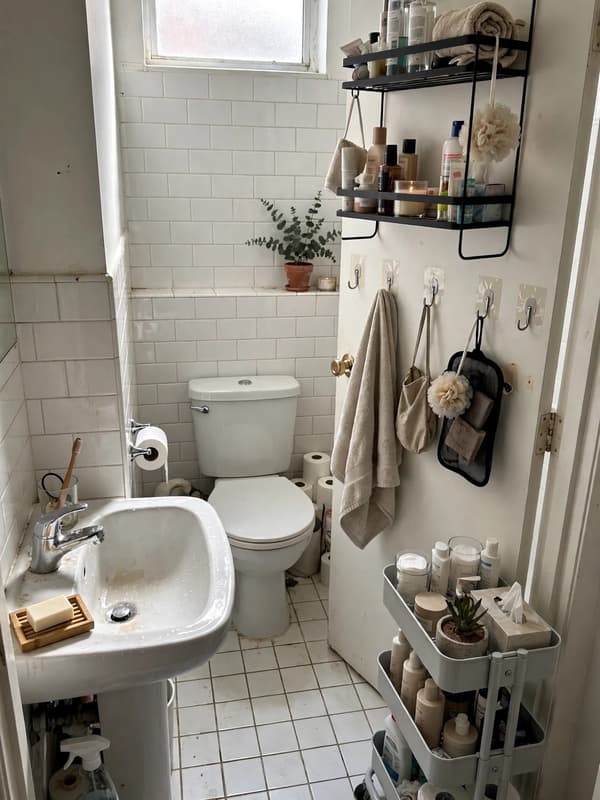
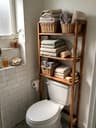
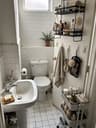
If your vanity doors are solid, the outside face can work too. An over-the-door towel bar on one door holds the hand towel that otherwise lives on the counter edge, and a matching hanging bin on the inside of the same door catches the small daily things — hair ties, tweezers, the nail file that wanders. Choose bars with padded hooks so they do not scratch, and measure the gap above the door so it still closes cleanly. This combo is especially handy in a guest bathroom, where counter space is tiny and visitors need an obvious place for a towel. Pair it with the vertical ideas in our above-the-toilet storage ideas and a small room starts to feel planned.
Use L-Shaped Bins to Reach the Deep Back Corners

Deep vanity cabinets swallow things at the back. You know they are in there; you just cannot reach them without emptying the front first. L-shaped bins are made for this: the tall back section holds upright bottles in that wasted rear corner, while the low front section slides under the pipes. This is the heart of bathroom organization deep cabinet storage — using the full depth instead of the front half. Put slow-moving stock at the back of the L, like refill pouches and spare razors, and weekly items at the front. If your cabinet is extra deep, add a small battery light with a motion sensor, about $8, so the back is actually visible.
Store First Aid and Medicine in a High, Lidded Bin

First aid and medicine need the opposite treatment from everyday toiletries: out of daily traffic, sealed and up high. Use a lidded bin with a latch, keep it on top of a stack or on a raised shelf, and treat that height as your child-safety line if little ones visit or live with you. Inside, group plasters, antiseptic, pain relief and any prescriptions in small zip bags with dates facing forward, and toss anything expired twice a year. Under-sink humidity is not ideal for medicine long-term, so if your bathroom steams up heavily, move prescriptions to a hall cupboard and keep only first-aid basics here. Safe beats convenient for this one category.
Finish With a Rolling Under-Sink Cart for Cleaning Day

Last, give yourself an exit strategy. A slim rolling under-sink cart, about 9 inches wide with small casters, holds the things you need in two rooms — wipes, a spare roll, all-purpose spray, a scrub brush — and pulls straight out when it is time to clean or when a plumber needs the space clear in a hurry. Measure your cabinet height carefully; the cart plus its top row of bottles must clear the sink bowl. On cleaning day you roll it to the tub, work around the room, and roll it back. No armfuls, no bottles left behind the toilet. It is a small luxury that makes a weekly clean feel oddly easy.
You do not need all 15 ideas. Most real vanities calm down with four or five: something that slides, bins you can see through, a separate home for cleaning sprays, and a mat underneath in case the plumbing ever weeps. Start there, live with it for two weeks, and only add more if a specific pile is still bothering you.
The real test is a normal Tuesday morning. If you can find the plasters, grab your moisturizer and put the hair dryer away without moving three bottles first, the cabinet is doing its job. Under-sink storage will never be the prettiest part of a bathroom, but it can stop being the part you apologize for when a guest goes looking for a spare roll.
Under-Sink Bathroom Organization FAQs
Expert answers & styling advice
How do you organize a deep cabinet under a bathroom sink? ▼
Use the depth in layers instead of fighting it. Put L-shaped bins or a sliding organizer at the back for slow-moving stock, keep daily items in a front bin or on a small turntable, and add a cheap motion-sensor light so the back is visible. The bathroom organization deep cabinet trick is simple: nothing goes in loose, everything rides in a container you can pull toward you. If you still cannot reach, the cabinet is holding too much — move backups to a hall cupboard.
What should you not store under a bathroom sink? ▼
Skip anything humidity ruins or heat harms: important papers, electronics you care about, and most prescription medicine if your bathroom steams up a lot. Perfume and opened skincare also last longer in a cooler drawer. Cleaning chemicals are fine under the sink, but keep them in a separate lidded caddy, away from toiletries, and out of reach if children are in the house. And never store anything directly against a leaking pipe — fix the drip first, then organize.
How do bathroom organization cabinets differ under a kitchen sink? ▼
The plumbing is similar, but the contents and the risks are not. Bathroom organization cabinets hold personal items — toiletries, hair tools, first aid — in a smaller, damper space, often with two sink bowls in one vanity. Kitchen cabinets deal with bigger bottles, trash pull-outs and food-adjacent cleaners. That is why bathroom setups lean on small drawers, door caddies and category bins, while kitchen setups lean on wide pull-outs. Measure for your vanity, not for a kitchen cabinet that happens to look alike.
What size organizer fits a standard bathroom vanity? ▼
For a standard 30- to 36-inch vanity, the clear space beside the P-trap is usually 10 to 14 inches wide and about 18 to 20 inches deep. A two-tier organizer or drawer unit in that range fits most homes. Pedestal sinks have no cabinet at all, so door and wall storage have to do the work instead. Whatever the size, leave room for the shut-off valves — you need to reach them fast, not after unloading a cabinet.
How do you keep an under-sink cabinet dry? ▼
Start with a waterproof liner mat so small drips land on silicone, not wood. Keep bottles with their caps closed, wipe the mat dry when you clean, and check the trap and supply lines with a dry hand every few months — dampness you can feel means a fitting needs attention. If the cabinet smells musty, leave the doors open overnight after showers for a week and cut back on storing fabric items like spare towels in there.