17 Small Laundry Room Organization Ideas

A tiny laundry room, 17 smart fixes: slim carts for the gap, shelves and rods above the machines, door racks and stackable storage.
Table of Contents (17 Ideas)
- 1.Hang an Over-the-Door Rack for Supplies
- 2.Slide a Slim Rolling Cart Into the Gap
- 3.Put One Long Shelf Above the Machines
- 4.Stack Corner Shelves for Vertical Storage
- 5.Decant Detergent Into Jars on a Tray
- 6.Turn a Blank Wall Into a Pegboard
- 7.Mount a Fold-Down Folding Table
- 8.Add a Hanging Rod Under a Shelf
- 9.Stick Magnetic Tins on the Machine Side
- 10.Use Low Baskets on Top of the Machines
- 11.Sort Laundry in a Hanging Door Sorter
- 12.Add a Tension Rod Inside a Cabinet
- 13.Claim the High Wall With a Closed Cabinet
- 14.Pull Down a Wall-Mounted Drying Rack
- 15.Build a Clear Bins System for Supplies
- 16.Make a Lost-Sock and Lint Station
- 17.Hang the Iron and Board Behind the Door
A tiny laundry room asks a lot of a very small footprint. The washer and dryer take up most of the floor, and then detergent, towels, the ironing board and a week of clothes all want in as well. It is no wonder the door barely closes in half the homes I see. The good news is that laundry room organization small space style is mostly about using the spots you are not looking at: the back of the door, the six-inch gap beside the machine, the blank wall above it, even the side of the dryer itself.
None of the 17 ideas in this list needs a renovation, and most cost less than a large bottle of detergent. Work through them in order if you like — biggest wins first — or just pick the two or three that match the corner that annoys you most. Measure before you buy anything, keep supplies where you stand to use them, and a laundry room the size of a closet can start feeling surprisingly calm. If the door is your only free surface, start there — our over-the-door storage ideas go deeper on racks and hooks for every room in the house.
Measure first, buy second
In a tiny laundry room, an inch is a lot. Before ordering anything here, jot down four numbers: the gap beside the machines, the height from machine top to ceiling, the door clearance, and the inside width of any cabinet. A tape measure and two minutes save every return parcel.
Hang an Over-the-Door Rack for Supplies

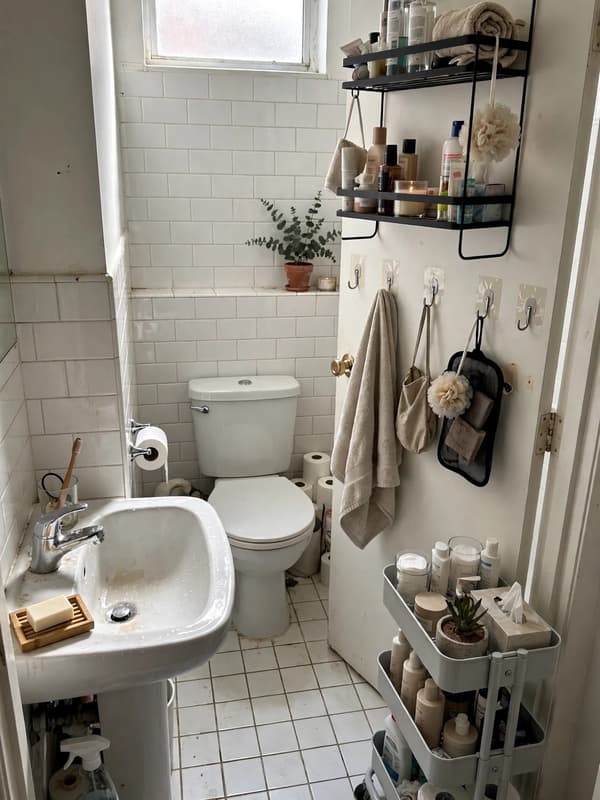
The back of the laundry door is a full wall of storage most people never use. A simple over-the-door wire rack with three or four baskets holds spray bottles up top, folded cleaning cloths in the middle, and the dustpan or spare trash bags down low. Look for padded hooks so it does not rattle, and check the gap above your door first — most racks need half an inch of clearance. Keep heavier bottles in the lowest basket so the door does not swing with the weight. Ten minutes to hang, no screws, and a whole shelf's worth of clutter clears off your machines.
Slide a Slim Rolling Cart Into the Gap

Measure the gap between your washer and dryer, or between a machine and the wall — in most small rooms it is 5 to 8 inches of completely wasted space. A slim rolling cart made for that gap, usually 5 to 6 inches wide with three tiers, slides in and turns the slot into a proper cupboard. Detergent and stain remover live on top where you grab them mid-load, dryer sheets and pegs in the middle, spare cloths at the bottom. Because it rolls, nothing gets lost at the back. Measure at floor level too — baseboards steal more room than you expect.
Put One Long Shelf Above the Machines

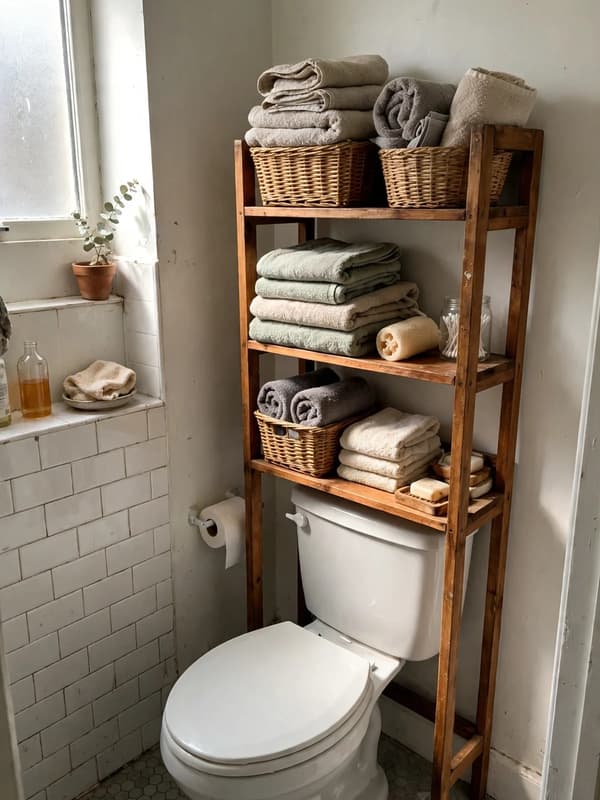
If you do one thing on this list, make it this one. A single wooden shelf on sturdy brackets above the washer and dryer gives a home to everything that currently migrates around the room. Mount it high enough to open a top-loader lid fully — about 18 to 20 inches above the machines — and around 10 to 12 inches deep. Jars of pegs, folded towels, a small basket: all in one calm row where you can see it. Brackets into studs, please — a loaded shelf is heavier than it looks.
Stack Corner Shelves for Vertical Storage

Corners are the other dead zone in a tiny laundry room. A set of stackable corner shelves — or a simple tall cubby unit like this one — builds straight up instead of out, exactly the direction a small space can afford. Lower cubes take heavy things like spare detergent, the middle holds folded linens and baskets, and the top takes the lightweight stuff you rarely reach for. Open cubes beat doors here — you can see what is running low. If it wobbles, fix it to the wall with a furniture strap; loaded shelves and spin cycles are not friends.
Decant Detergent Into Jars on a Tray

Bulky detergent boxes make a small shelf look messy and waste space. Decant powder, pods and scent boosters into plain glass jars with lids and group them on a wooden tray on top of the machine or the shelf. The tray is the real trick: it corrals drips and powder dust, and lifts the whole station out of the way in one move. Add a small metal scoop and everything for a load is in one grab. Keep the original packaging until you are sure of dosing, and with small children, pods belong up high or latched away — safety first.
Turn a Blank Wall Into a Pegboard

A small pegboard costs very little and gives every awkward laundry tool a visible home: brushes, the lint roller, scissors, cloths on hooks. Hang it beside or between the machines, at the height your hand naturally reaches. The point is that nothing lives in a mystery drawer anymore. Start with fewer hooks than you think and add as habits form. It is also one of the most renter-friendly laundry room organization hacks here if you use strong adhesive hooks instead of screws — see our renter-friendly storage ideas for more no-drill options.




Think in zones, not piles
A small laundry room works when each job has a zone, however small: a wash zone (detergent and stain kit where you load), a dry zone (pegs, dryer balls, the drying rack), a fold zone (one clear flat surface), and an away zone (baskets and sorters). You do not need more space — you need everything in the zone where it is used. Most systems fail because supplies live one zone away from their job.
Mount a Fold-Down Folding Table

Folding clothes on top of a vibrating dryer is how socks end up behind the machine. A wall-mounted fold-down table gives you a proper flat surface that disappears flat against the wall when you are done. A top around 24 by 16 inches is enough for a basket's worth of folding, and most brackets lock with a simple click. Mount it at about waist height, above a front-loader or facing the machines. Fold straight from the dryer, stack by person, carry the piles out in one trip. It folds away and the room looks twice the size.
Add a Hanging Rod Under a Shelf

Shirts that go straight from dryer to hanger barely need ironing — if there is somewhere to hang them. A simple metal rod mounted under your shelf above the machines creates that spot for about the price of a coffee. Keep five or six empty hangers living on it permanently so there is no excuse mid-unload. A 24 to 30 inch rod is plenty for a load of shirts, and it doubles as air-drying space for delicates on a rainy day. Leave a few inches between rod and wall so hangers swing freely.
Stick Magnetic Tins on the Machine Side

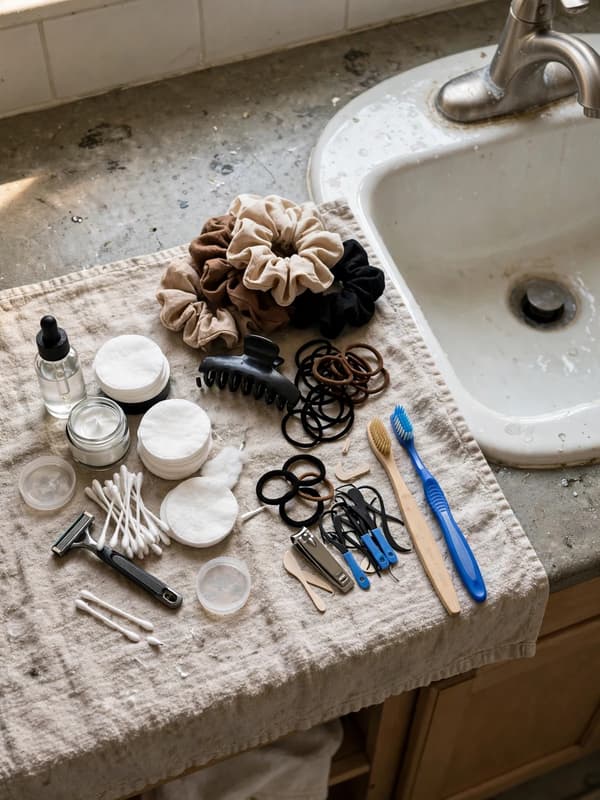
The side of your washer or dryer is a steel wall waiting for a job. Small magnetic tins stick straight onto it and catch the little things that otherwise vanish: safety pins, loose buttons, hair clips, coins. Three tins in a row — pins, buttons, pocket finds — takes seconds to check before a load, saving your clothes and the machine's filter. Test the magnet with the tin full before trusting it, and use the side panel rather than the front, where doors and knees knock them off. A tiny change that ends the pocket-treasure pile on top of the machine.
Use Low Baskets on Top of the Machines

If your machines are front-loaders, their tops are a countertop — but a bare one collects chaos. Two low woven baskets turn it into zones instead: one basket for clean folded towels waiting to go upstairs, one for supplies like stain spray and a cloth. Low sides, around 4 to 6 inches, matter — tall baskets tip and block the view of the controls. Felt pads or a washable mat underneath stop the baskets wandering across the top during a fast spin cycle. And keep one basket's job sacred: clean things only, never a dumping ground, or the system collapses within a week.
Sort Laundry in a Hanging Door Sorter

Three baskets on the floor of a tiny room is a trip hazard, not a system. A hanging laundry sorter with two or three canvas bags on the back of the door sorts lights, darks and delicates as clothes come off, using zero floor space. When a bag fills, that is your signal to run that load — the sorting is already done. Choose bags that lift off individually, so you are not dragging the whole sorter to the machine. Between this and the rack in idea 1, a door can quietly do the work of a whole storage unit — the same thinking behind our small apartment storage ideas.
Add a Tension Rod Inside a Cabinet

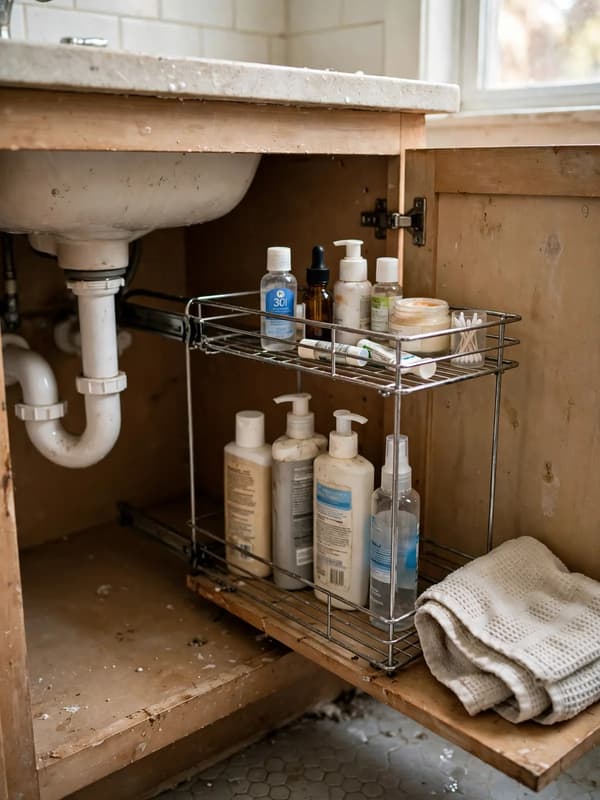
Inside a laundry cabinet, the top half usually sits empty while bottles crowd the shelf below. A small tension rod fitted across the cabinet — or across an open closet section, as here — gives you a hanging rail for shirts to dry or wait for ironing, with folded towels still stacked above. Tension rods need no tools and adjust from about 18 to 30 inches, so measure the inside width before ordering. The same hidden-space trick works under sinks — our hidden storage ideas has more. Position the rod towards the front so hangers clear the stacks.
The five-minute rule that keeps it working
Organization in a tiny space is maintenance, not a one-time project. The rule that keeps these 17 ideas working: nothing leaves the laundry room in empty hands, and nothing enters without a home. Folded towels go up when you go up; an empty bottle goes straight on the shopping list. Five minutes a week — wiping machine tops, pairing the sock basket, checking the bins — beats a full reorganization every spring.
Claim the High Wall With a Closed Cabinet

The wall space near the ceiling, above the shelf line, is free real estate in a small laundry room. A closed wall cabinet mounted up high is the right home for the things you want out of daily sight and out of children's reach: bulk refills, bleach, the good stain treatments, spare light bulbs for the room. Closed doors matter here because open shelves up high just collect dust you cannot reach. Keep a step stool hooked nearby — if reaching it is a performance, you will stop using it and clutter creeps back down.
Pull Down a Wall-Mounted Drying Rack

A freestanding airer eats the whole floor of a tiny laundry room. A wall-mounted folding drying rack pulls down when you need it — over the machines, where warm air rises anyway — and folds flat to about 4 inches deep when you do not. Most hold a full load across their rails, roughly 15 to 20 pounds, and shoulder height keeps drips off the machine tops. Fix it into studs or solid brick; plasterboard alone will not forgive a wet load of towels. Delicates dry faster, the room stays walkable, and no airer lives in the bathtub.
Build a Clear Bins System for Supplies

Back-stock is where small rooms go to die — three half-used bottles of everything, bought twice. Give supplies one system: matching clear bins with lids, one for wash products, one for dryer balls and pegs, one for cleaning cloths, one for refills, stacked on the shelf or in the tall unit. Clear sides mean you see what you own before you shop; lids mean you can stack two high safely. A simple label on each bin keeps everyone putting things back in the right place. Review monthly, oldest stock first.
Make a Lost-Sock and Lint Station

Every laundry room produces two things endlessly: single socks and lint. Give both a tiny station on the dryer and they stop spreading. A small basket is the lost-sock basket — every odd sock goes in, and once a month you play matchmaker and retire the true loners to the rag bag. Beside it, a mini lint bin, just a small lidded pot, catches lint from the filter every single load instead of leaving grey fluff sculptures on the machine. It takes less room than a paperback, and the dryer top stays clear enough to fold on. Silly idea, genuinely life-improving.
Hang the Iron and Board Behind the Door

An ironing board leaning in a corner is 4 feet of tripping waiting to happen. An over-door iron and ironing board holder — or a simple pair of wall hooks if your door is already full — parks the board flat against the door or wall and cradles the iron safely above it, cord wrapped. Check the holder is rated for your board's weight, and let the iron cool fully before it goes away. It is the finishing touch: everything on this list now has a place, including the bulkiest item of all.
A small laundry room will never give you more floor — but it does not need to. A rack on the door, a cart in the gap, a shelf and a rod above the machines, and a system for the little things, and a room that felt impossible starts quietly working for you. That is the heart of good laundry room organization ideas: fewer wasted inches, not more furniture.
Start with the three changes that match your biggest annoyance, live with them for a fortnight, then add the next. The first morning you walk in, load the machine, and put everything back with one hand, you will feel the difference. Tiny room, calm laundry — that is the goal.
Small Laundry Room FAQs
Expert answers & styling advice
How do I organize a laundry room with no shelves? ▼
Start with non-shelf surfaces: an over-the-door rack or hanging sorter on the door, a slim rolling cart in the gap beside the machines, magnetic tins on the side of the dryer, and low baskets on top of front-loaders. Together they replace a shelving unit without a single screw. One shelf above the machines is the best first install when you are ready.
What fits in the gap between the washer and dryer? ▼
Most gaps are 5 to 8 inches wide. A slim rolling cart around 5 to 6 inches wide is made for it and holds detergent, dryer sheets and cloths across three tiers. Measure at floor level too — baseboards and hoses often narrow the gap. Under 4 inches, store a step stool or the ironing board upright in it instead.
How high should a shelf be above the washer and dryer? ▼
Leave about 18 to 20 inches between the machine tops and the underside of the shelf — enough to open a top-loader lid fully, lift a basket in and out, and reach jars comfortably. Front-loaders can go a little lower, around 15 inches. Always fix brackets into studs or solid wall.
Are these ideas renter-friendly? ▼
Most of them, yes. Over-the-door racks and sorters, slim carts, magnetic tins, tension rods, baskets and clear bins need no drilling at all. A pegboard can hang from strong adhesive hooks, and a fold-down table is usually fine if you fill two small holes when you leave — check your lease first. Nothing here needs plumbing or electrical work.
How do I keep a small laundry room organized once it is done? ▼
Keep the systems smaller than your habits: a full sorter bag triggers a wash, the lost-sock basket gets paired monthly, and clear bins get a two-minute check before you shop. A five-minute weekly reset — tops wiped, lint bin emptied, one basket carried up — beats a big annual sort-out.