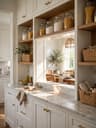
15 Butlers Pantry Ideas That Make a Pass-Through Kitchen Work Twice as Hard

15 practical ideas — layout, coffee stations, pull-out drawers, wine zones and hidden appliance storage — that turn a butler's pantry into the hardest-working room in the house.
Table of Contents (15 Ideas)
- 1.Start With the Walk Path, Not the Shelves
- 2.Draw the Layout on Paper Before You Buy Anything
- 3.Build a Coffee and Breakfast Station on One Counter
- 4.Give Plates and Bowls Deep Pull-Out Drawers
- 5.Put Spices in a Slim Pull-Out by the Counter
- 6.Make It a True Walk-Through, Not a Dead End
- 7.Add a Wine and Glass Zone With Its Own Counter
- 8.Decant the Daily Staples Into Matching Jars
- 9.Put a Small Sink In If the Plumbing Allows
- 10.Keep Linens in Their Own Baskets, Folded and Ready
- 11.Hide the Appliances Behind a Lift-Up Door
- 12.Use Clear Bins for Backstock You Can See
- 13.File Trays, Boards and Platters Upright Like Books
- 14.Add a Menu and Shopping-List Spot on the Wall
- 15.Style the Counter for Serving Night, Then Leave It That Way
A butler's pantry is the room between the kitchen and the dining room where the real work happens — plating, pouring, stashing the stand mixer, hiding the mess while guests are at the table. Mine started as a bare pass-through with two shelves, and every dinner party ended with me ferrying plates down a hallway in the dark. These 15 butlers pantry ideas are the fixes I actually made, one weekend at a time: a coffee station that keeps the morning rush out of the main kitchen, deep drawers that hold a full set of plates without stacking, and a layout that lets two people pass each other without a collision. Nothing here needs a remodel budget. Most of it is shelving, bins, and deciding what each stretch of counter is for before you fill it. If your pantry is the small reach-in kind rather than a walk-through room, start with our small pantry organization ideas — the zoning rules are the same, just on a smaller footprint.
What you'll need for most of these ideas
Most of this list runs on six things: airtight glass canisters, deep pull-out drawers or drawer dividers, clear stackable bins, a few woven storage baskets, a slim pull-out spice rack, and chalk labels with a chalk pen. Buy them in that order if you're spreading out the cost — the canisters and the drawer dividers change the most, the fastest. Everything else is just rearranging what you already own.
Start With the Walk Path, Not the Shelves

Before you buy a single bin, stand in the middle of your butler's pantry and walk the route you actually take: kitchen door to dining room door, hands full, turning with a tray. That path is sacred. Nothing — no stool, no basket, no open drawer — gets to block it. The best pantry plans all start here, because a pantry you have to sidestep through will never stay organized. Leave at least 36 inches of clear floor between facing counters so two people can pass with plates. Once the path is marked, everything else gets planned around it, and the room starts working with you instead of against you.
Draw the Layout on Paper Before You Buy Anything

A butler's pantry fails quietly when every wall gets treated the same. Sketch the room — even a rough rectangle on the back of an envelope works — and mark the doors, the window, and the counter runs. Then assign each wall a job: one wall serves drinks, one wall stores dishes, one wall holds dry goods. That sketch is the whole secret of a good butlers pantry ideas layout: zones decided on paper, not discovered by accident after the shelves are full. Measure the depth of each counter run too. A 24-inch-deep counter holds a coffee maker and a stack of plates; a 16-inch one holds jars and nothing else, and knowing that before you order shelving saves a return trip.
Build a Coffee and Breakfast Station on One Counter

Mornings are when a butler's pantry earns its keep. Give one stretch of counter to coffee and breakfast and keep it there permanently: the coffee maker or kettle, mugs on hooks underneath the shelf above, sugar and coffee beans in matching jars, and a small tray for spoons and filters. Everything for the first cup lives within arm's reach, so nobody opens the main kitchen cabinets before they've woken up properly. Put the mugs on hooks, not stacked in a cabinet — hung mugs dry faster and never chip against each other. Add a power strip behind the station so the kettle and the machine aren't fighting over one outlet.
Give Plates and Bowls Deep Pull-Out Drawers

Stacking twelve dinner plates on a high shelf is how plates get chipped and how the bottom one never gets used. Deep pull-out drawers change the whole thing: plates stand in a wooden plate divider or lie in a single low stack you can lift from the top, and the drawer slides out so you're never reaching over your head with a heavy pile. Bowls nest in the drawer next to them, and serving platters get their own wide, shallow drawer so they stop leaning against the wall. Measure your largest platter first — the drawer needs to be two inches wider than it. No drawers yet? A retrofit kit fits most standard base cabinets in an afternoon.
Put Spices in a Slim Pull-Out by the Counter

Spices are small, numerous, and the first thing to vanish into a dark corner. A slim pull-out rack — the kind that's only 6 inches wide and slides out from beside the counter — holds thirty jars in a single visible row, and nothing hides behind anything else. Decant into matching small glass jars if your collection is a jumble of brands; uniform jars line up tighter and you can read every label without moving a bottle. Keep the everyday five — salt, pepper, cumin, paprika, cinnamon — at the front of the rack, and the once-a-month spices at the back. Our spice organization ideas cover the full system if your collection has outgrown one rack.
Make It a True Walk-Through, Not a Dead End

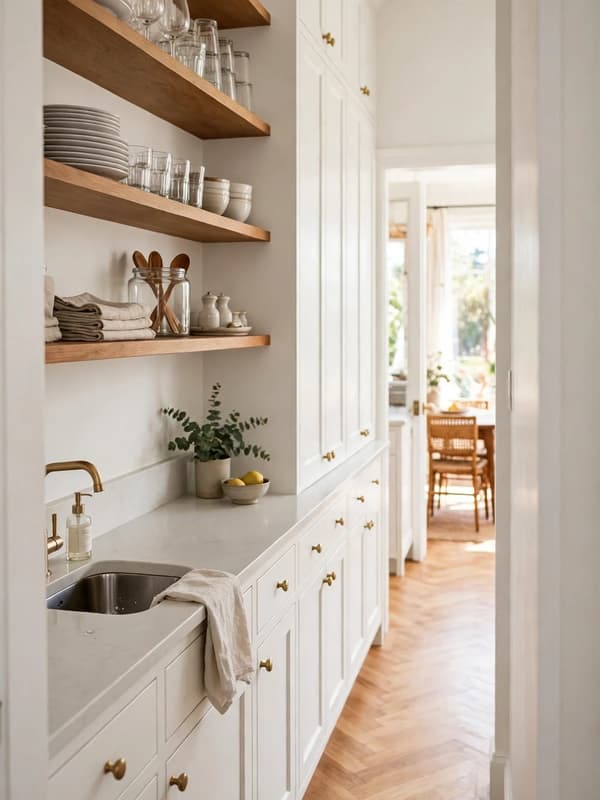
A butler's pantry with a door at each end is a hallway that happens to hold dishes — and that's a gift, not a problem. Keep both doors clear and put the busiest storage on the long walls, not across the ends. Glasses hang from a rack on one side, closed cabinets hold the serving pieces on the other, and the middle stays open so a tray passes through without a shuffle. These walk through butlers pantry ideas work because the room never becomes a cupboard you have to back out of. If one end has no door, leave that wall for the coffee station or the sink — the jobs that make you stop — and keep the through-route for the jobs that make you move.
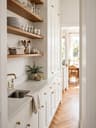
13 Butlers Pantry Ideas Layout Plans That Make a Pass-Through Work Harder
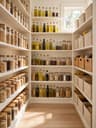
17 Walk In Pantry Ideas That Make Every Inch Work
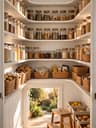
15 Corner Pantry Ideas That Put Every Awkward Corner to Work
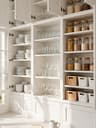
15 Kitchen Cupboard Organization Ideas That Make Mornings Easier

15 Kitchen Pantry Ideas That Make Cooking Easier Every Day
Add a Wine and Glass Zone With Its Own Counter

Wine glasses are the most breakable thing in the house, and they deserve a home that isn't the top shelf of a busy cabinet. Give them a dedicated zone: a hanging rack under a shelf for stemware, a small wine fridge or a cool lower shelf for bottles, and a stretch of counter where you can actually pour. Bottles lie on their sides in a wooden wine rack, labels facing out so you're not pulling four bottles to find the one you want. Keep the corkscrew, a small towel, and a couple of stoppers in a drawer right below the pouring spot. The whole zone takes about three feet of wall.
The walk-through test
Carry a tray of four full glasses from the kitchen door to the dining room door. If you have to turn sideways, move something, or set the tray down halfway, the layout needs adjusting — no matter how good it looks. The best pass-through pantry plans pass this test with a tray in each hand, and the room should still feel calm when someone else is working at the coffee station at the same time.
Decant the Daily Staples Into Matching Jars

Flour, rice, pasta, oats, sugar, coffee — the bags and boxes they arrive in are all different heights, they slump, and they never stack. Pour them into airtight glass canisters in one or two matching sizes and two things happen: the shelves instantly look calmer, and you can see at a glance when you're running low. In a butler's pantry, decanting does a second job too — the jars look good enough to sit on open shelving, so the pantry doubles as a display when the dining room door is open. Stick a small piece of tape with the cooking time and use-by date on the bottom of each jar.
Put a Small Sink In If the Plumbing Allows

A butler's pantry sink is a luxury that pays for itself at the first dinner party: rinse glasses, fill a vase, wash hands without walking back into the kitchen. A small bar sink — 15 inches wide is plenty — fits into a single cabinet run, and a tall faucet clears pitchers and vases. If plumbing is out of reach, fake the job instead: a deep tray with a water carafe, a stack of clean towels, and a small basin for rinsing glasses covers most of the same ground. Either way, keep a folded linen towel stack and a soap dispenser right there — anything that gets wet in this room gets handled in this room.
Keep Linens in Their Own Baskets, Folded and Ready

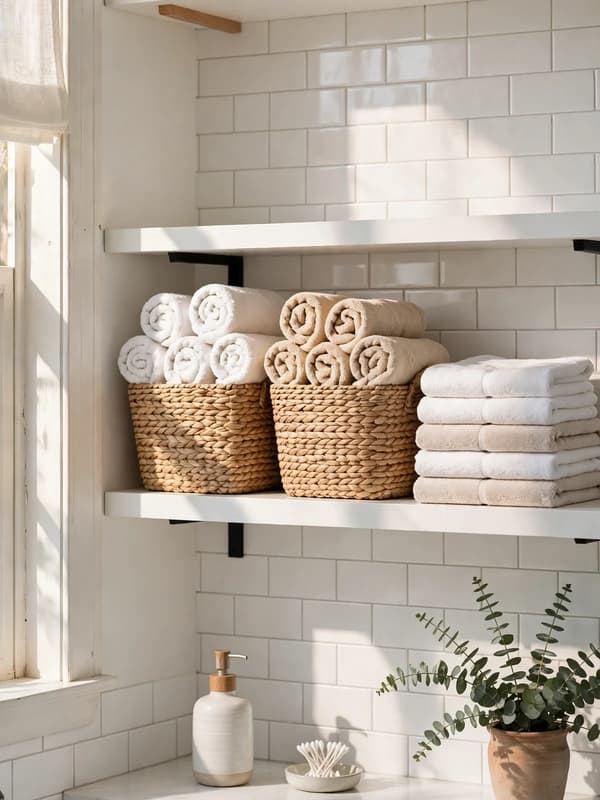
Tablecloths, cloth napkins, and placemats are the quiet clutter of every dining household — folded into a drawer they wrinkle, left on a shelf they slide. Give them woven storage baskets on one shelf, one basket per category: napkins in one, tablecloths in another, placemats in a third. Fold napkins the same way every time so the stack stays level, and keep one set of everyday napkins at the front where you can grab them for a weeknight dinner. A lavender sachet in the tablecloth basket keeps the linen smelling fresh between the big occasions.
Hide the Appliances Behind a Lift-Up Door

The stand mixer, the blender, the toaster — they earn their counter space three times a week and hog it the other four days. An appliance garage fixes that: a cabinet with a lift-up or tambour door, outlets wired inside, and enough depth for the mixer to live with its bowl on. Lift the door, use the mixer, drop the door, and the counter is clear again in ten seconds. Measure the mixer with the bowl attached before you order the cabinet — most standard garages are 18 inches deep, and a big mixer needs every bit of it. If a built-in garage is too much work, a tall cabinet with a pull-out shelf does the same job, and the mixer rolls out to the counter instead of being lifted.
Use Clear Bins for Backstock You Can See

The top shelves and the deep corners of a butler's pantry are where backstock goes to be forgotten — the second bag of rice, the spare jar of peanut butter, the extra box of tea. Good butler pantry storage ideas start with making that backstock visible: clear stackable bins, one per category, labeled on the front, so a quick glance tells you whether you need rice on the shopping list. Keep backstock on the highest shelf or the lowest one, never at eye level — daily items earn the easy reach, and the spares wait their turn. When you open a backup, write it on the shopping list the same day. For the rest of the kitchen, our kitchen cabinet organization ideas use the same clear-bin rule.
A quick word about lighting
A butler's pantry is a small room with tall shelves, and one ceiling light leaves the lower shelves in shadow. Stick-on LED strip lights under each shelf cost very little and change everything — you can read labels at the back of a shelf without a torch, and the room looks twice as finished. Warm white, not cool white, keeps the wood and the glass looking like a home instead of a shop.
File Trays, Boards and Platters Upright Like Books

Baking trays, cutting boards, and serving platters are flat, awkward, and always the thing at the bottom of the pile. Stand them upright in a deep drawer or a tall cabinet with vertical dividers, like books on a shelf, and suddenly you can pull out the one you want without moving five others. Dividers spaced 2 to 3 inches apart fit most trays and boards; leave one wider slot for the big roasting pan. If your drawer isn't deep enough for a full-size tray, a vertical rack inside a tall cabinet does the same job — the point is that flat things get stored flat-side-out, not stacked.
Add a Menu and Shopping-List Spot on the Wall

A butler's pantry is the last room you pass before the dining table, which makes it the perfect place for the week's plan. Put a small whiteboard or a chalkboard on the wall by the door: this week's menu on one side, the running shopping list on the other. When you notice you're out of cumin, you write it down right there — not on a scrap of paper that ends up in a coat pocket. Keep the marker or chalk in a little cup screwed to the wall beside it, because a list board without its pen is just decoration. Check the board every Sunday before the shop, and wipe the menu side clean each week.
Style the Counter for Serving Night, Then Leave It That Way

Here's the part most people skip: once the pantry works, let it look like it works. Keep the serving counter set the way you'd want it ten minutes before guests arrive — a stack of plates, folded napkins, glasses lined up, a small vase with greenery — and treat that as the pantry's resting state, not a special-occasion performance. When the counter is always ready, hosting stops feeling like a project and starts feeling like opening a door. It also keeps the counter honest: if the serving setup is the default, the random mail and the spare batteries have nowhere to land. A butler's pantry that looks ready is one you'll actually use, and that's the whole point of the room.
A butler's pantry doesn't need to be big, and it doesn't need to be expensive. It needs a clear walk path, a job for every wall, and a place for the things you reach for every single day. Start with the layout sketch and the coffee station — those two change how the room feels by the weekend — then add the drawers and the bins as you see what your household actually uses. These 15 ideas work as a set because they solve the real annoyances: the chipped plates, the lost spices, the tray that won't fit through the door. Pick the five that fix your biggest headache, live with them for a month, and let the rest follow. And if the pantry keeps growing on you, our walk in pantry ideas are the natural next step.
Butlers Pantry FAQs
Expert answers & styling advice
What is a butler's pantry, exactly? ▼
It's a small room or passage between the kitchen and the dining room, used for storing dishes, glassware, linens, and dry goods, and for plating and serving food. Older homes built them as a staging area for formal meals; modern ones use them as a coffee station, wine storage, and overflow pantry. The difference from a regular pantry is the serving job — a butler's pantry is where food gets finished and carried to the table, not just where it gets stored.
How much space do you need for a butler's pantry? ▼
A workable layout starts at about 5 feet by 7 feet for a single-sided run of counters, and 7 by 9 feet if you want counters on both sides with a walk path between them. The hard number is the clearance: 36 inches of clear floor between facing counters so two people can pass with plates, and at least 42 inches if one of them is carrying a tray. Anything smaller than that works better as a reach-in pantry with a single counter run and no through-traffic.
What should you store in a butler's pantry? ▼
The serving things first: everyday and formal dishes, glassware, flatware, table linens, serving platters, and trays. Then the daily staples that belong near the table — coffee, tea, sugar, breakfast items — and the backstock that doesn't fit in the main kitchen. Good butler pantry storage ideas keep heavy appliances and bulk food in the main kitchen and let the butler's pantry hold the lighter, prettier, serving-side things. If you have to lift it with two hands every day, it probably belongs in the kitchen, not the pantry.
Can you add a butler's pantry to a small kitchen? ▼
Yes, if you have a hallway, an unused nook, or a stretch of wall between the kitchen and the dining area. A single run of 24-inch-deep cabinets along one wall, with open shelving above and a coffee station at one end, gives you most of the benefit in about 6 feet of wall. You don't need two doors or a separate room — what matters is the dedicated serving counter and the dish storage, not the floor plan. Renters can get close with a tall freestanding cabinet and a rolling cart in the same spot.
Is a butler's pantry worth it? ▼
If you host even a few times a year, yes — it keeps the serving mess out of the kitchen, hides the dirty dishes during dinner, and gives the coffee maker and the mixer a home that isn't your main counter. It also adds real resale appeal, since buyers read it as extra kitchen storage with a purpose. The value drops if the room becomes a dumping ground, so it's worth it only if you give every shelf a job and keep the walk path clear. A small, well-run pantry beats a big, cluttered one every time.