21 Small Apartment Storage Ideas That Actually Work


Twenty-one storage ideas for small apartments and rentals — vertical shelving, hidden under-bed bins, rolling carts, door storage and more, most of it with zero drilling.
Table of Contents (21 Ideas)
- 1.Map Your Dead Zones First
- 2.Go Vertical With Tall, Narrow Shelving
- 3.Use Over-Door Organizers Everywhere
- 4.Roll a Cart Into the Gaps as a Movable Pantry
- 5.Claim the Space Above Your Cabinets
- 6.Choose a Storage Ottoman That Earns Its Place
- 7.Slide Low Bins Under the Bed
- 8.Hang a Pegboard in the Entryway
- 9.Turn the Closet Top Shelf Into Real Storage
- 10.Add Floating Shelves Above the Toilet
- 11.Use Tension Rods Inside Cabinets and Closets
- 12.Pick a Bed Frame With Built-In Drawers
- 13.Tuck a Slim Console Behind the Sofa
- 14.Divide One Shelf Into Two With Risers
- 15.Hang Pots and Tools on a Kitchen Wall Rail
- 16.Use the Inside of Every Door You Own
- 17.Add Hooks Under Shelves and Cabinets
- 18.Choose Foldable and Nesting Everything
- 19.Keep a Donation Bag by the Door
- 20.Label the Zones So Everyone Uses Them
- 21.Do a 15-Minute Reset Every Month
A small apartment does not have a stuff problem. It has a where does this go problem. In 400 to 700 square feet, every object needs a home you can reach without moving three other objects first — and most apartments simply were never given those homes.
So we stop buying random bins and start finding the space that is already there: the walls, the doors, the gaps beside appliances, the dead air under beds and above cabinets. These 21 small apartment storage ideas cover the whole home, entryway to bathroom, and almost all of them are renter-friendly — no drilling, no deposit drama, nothing you cannot take with you when you move. Start with the first idea. It costs nothing and it changes how you see every room.
 Save Pin
What you'll need
Most of these 21 ideas run on the same small kit: a tall narrow shelving unit, a few clear under-bed bins, a three-tier rolling cart, one storage ottoman and a handful of $6 tension rods and adhesive hooks. Measure first, buy once, and skip anything that needs a drill until you have tried the no-hole version.
Map Your Dead Zones First

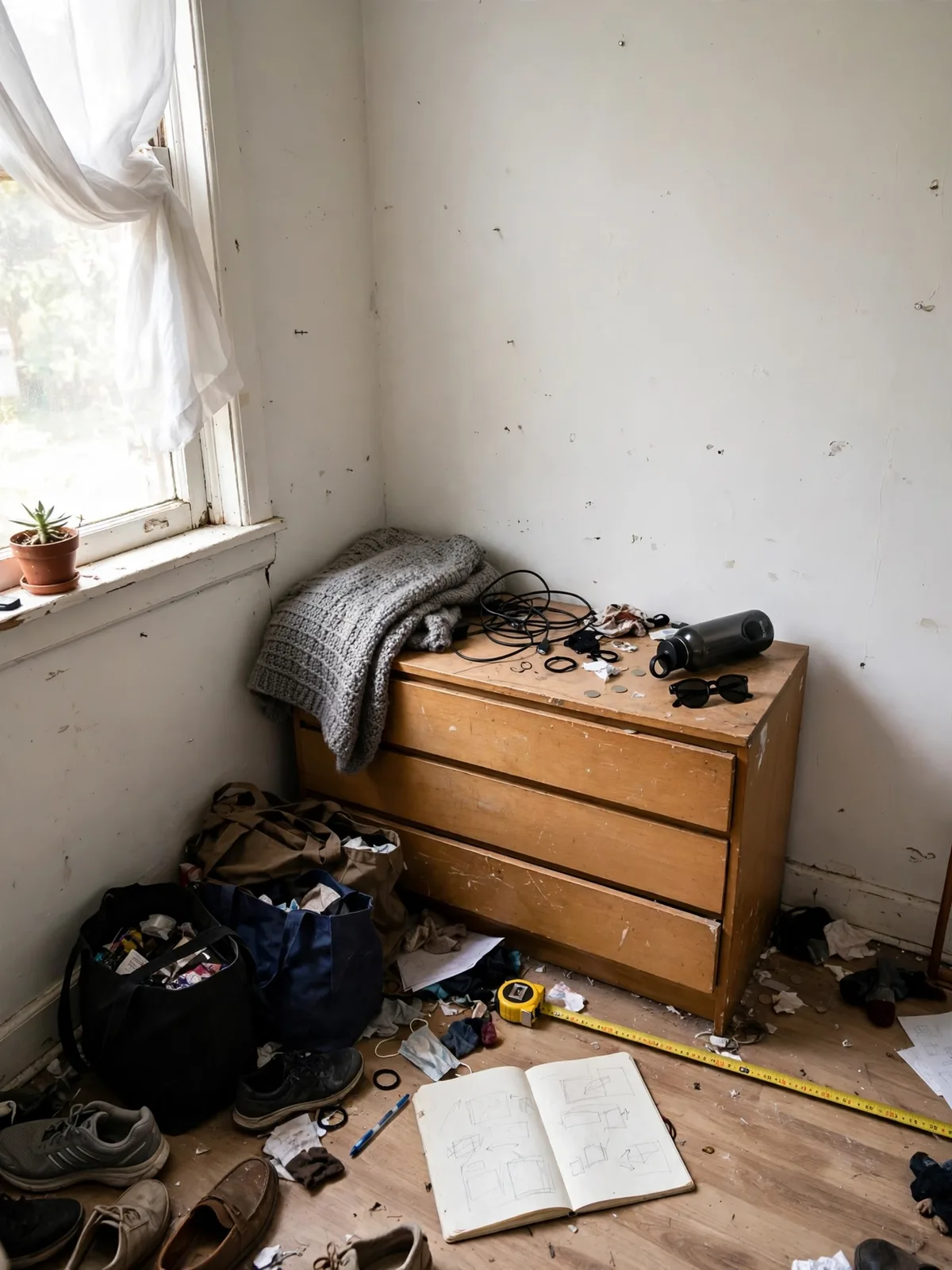
Start here, before you buy a single bin. Walk your apartment with a tape measure and your phone, and note every wasted spot: the 14 inches above the dresser, the gap beside the fridge, the wall over the toilet, the dead space under the bed. In a 450-square-foot rental, those forgotten pockets usually add up to 20 or 30 square feet of storage you already pay for. Snap a photo of each one. That list, not a pretty catalog photo, decides what you actually need to buy.
Go Vertical With Tall, Narrow Shelving

Floor space runs out fast. Wall height almost never does. A tall narrow shelving unit, around 12 to 14 inches deep and 70 inches high, holds roughly what a wide dresser holds while taking up half the footprint. Put daily stuff at eye level, light things up top, heavy things low so it never feels wobbly. In most rentals you can anchor it with a single anti-tip strap into a stud, and patch one tiny hole when you leave. One unit by the door can swallow a whole entryway's worth of clutter.
Use Over-Door Organizers Everywhere

Every door in your apartment is a storage wall you have been ignoring. A clear-pocket over-door organizer costs about $12 to $18 and holds shoes in the bedroom, cleaning bottles in the hall closet, snacks in the kitchen, toiletries in the bathroom. No screws, no holes, and it moves out with you in thirty seconds. Clear pockets beat fabric ones here because you can see what you own, which quietly stops you buying a third bottle of the same lotion. Just add felt pads where the hooks touch, so the door does not rattle at night.
Roll a Cart Into the Gaps as a Movable Pantry

That awkward 10-inch gap beside the fridge? It was made for a three-tier rolling cart. Slide one in and you have a pantry that pulls toward you: top tier for everyday snacks and produce, middle for jars and cans, bottom for the heavy stuff like potatoes and pet food. Wheels matter more than looks — a cart you can roll to the counter gets used, a fixed shelf in a dark gap does not. This is the same thinking behind kitchen organization without a pantry, just on wheels. Expect to pay $25 to $40 for a sturdy metal one.
Claim the Space Above Your Cabinets

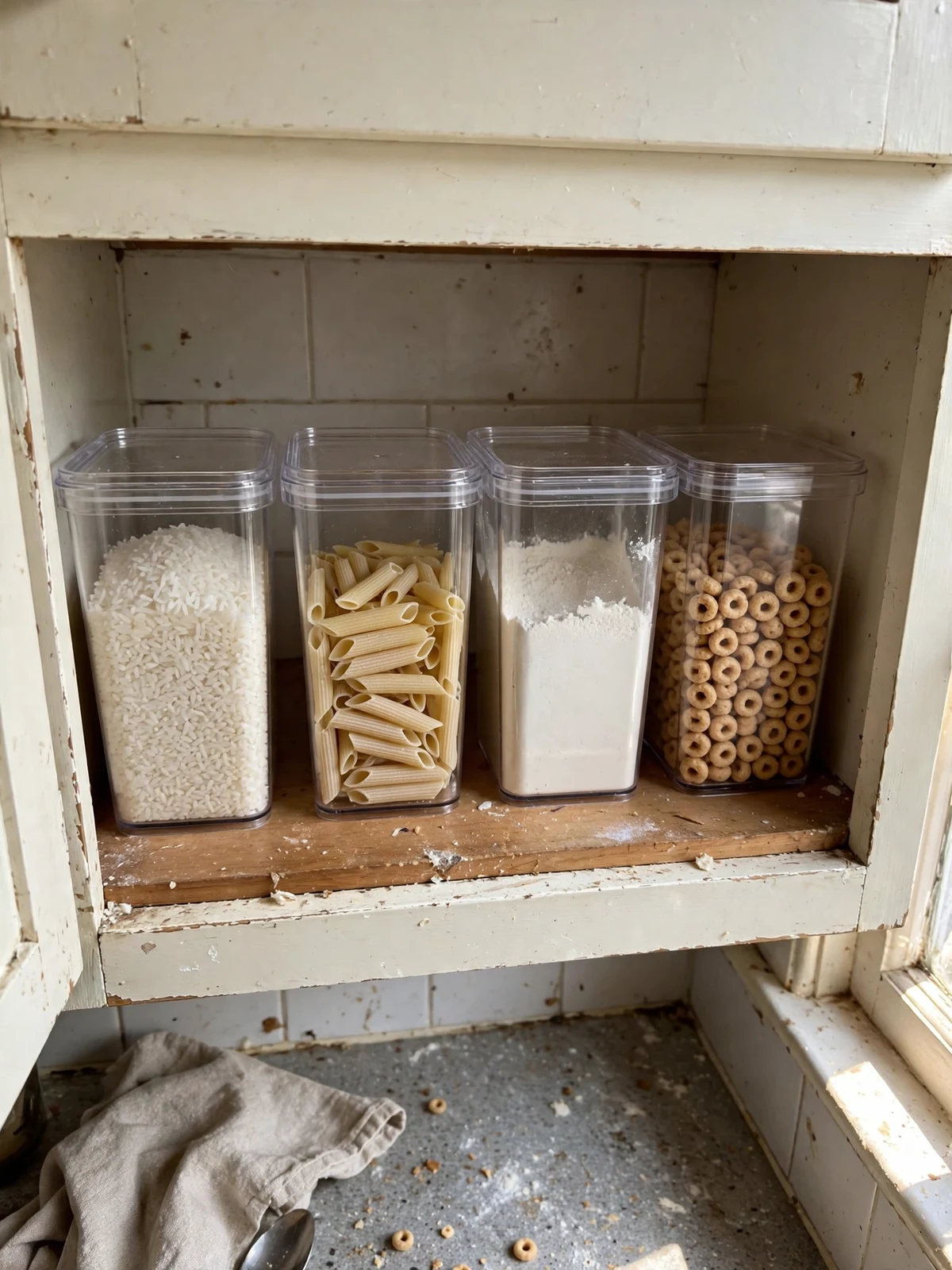
Look up. In most apartments there is a foot or more of empty air between the top of the kitchen cabinets and the ceiling, and it is perfect for the things you touch twice a year: the big roasting pan, holiday dishes, bulk paper towels. Use matching woven baskets or clear bins so it reads as one calm line instead of a junk shelf, and keep a small step stool nearby or you will never bother. Dust is the trade-off, so lidded bins win over open baskets for anything fabric. Renters, this one needs no permission at all.
Choose a Storage Ottoman That Earns Its Place

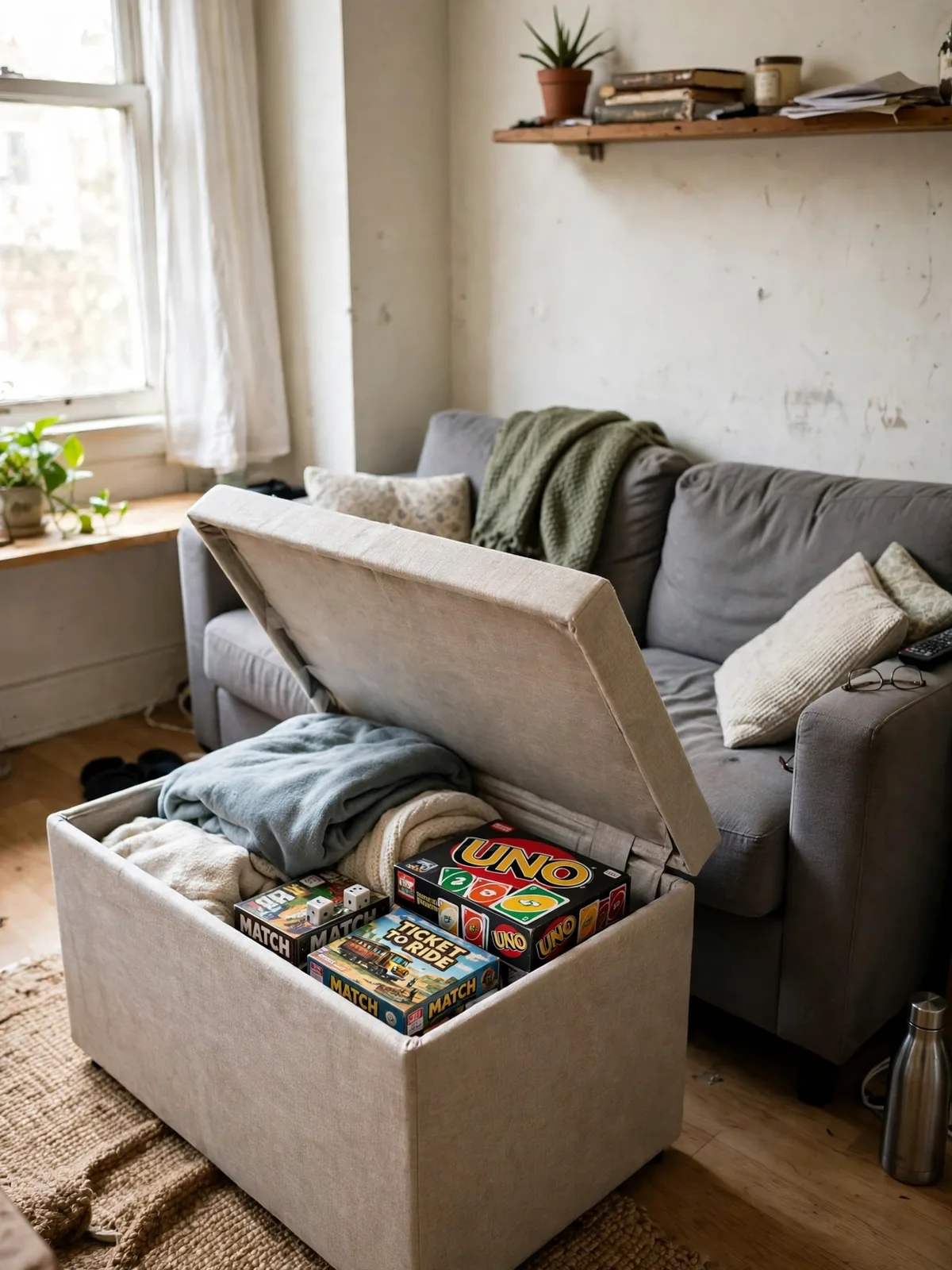
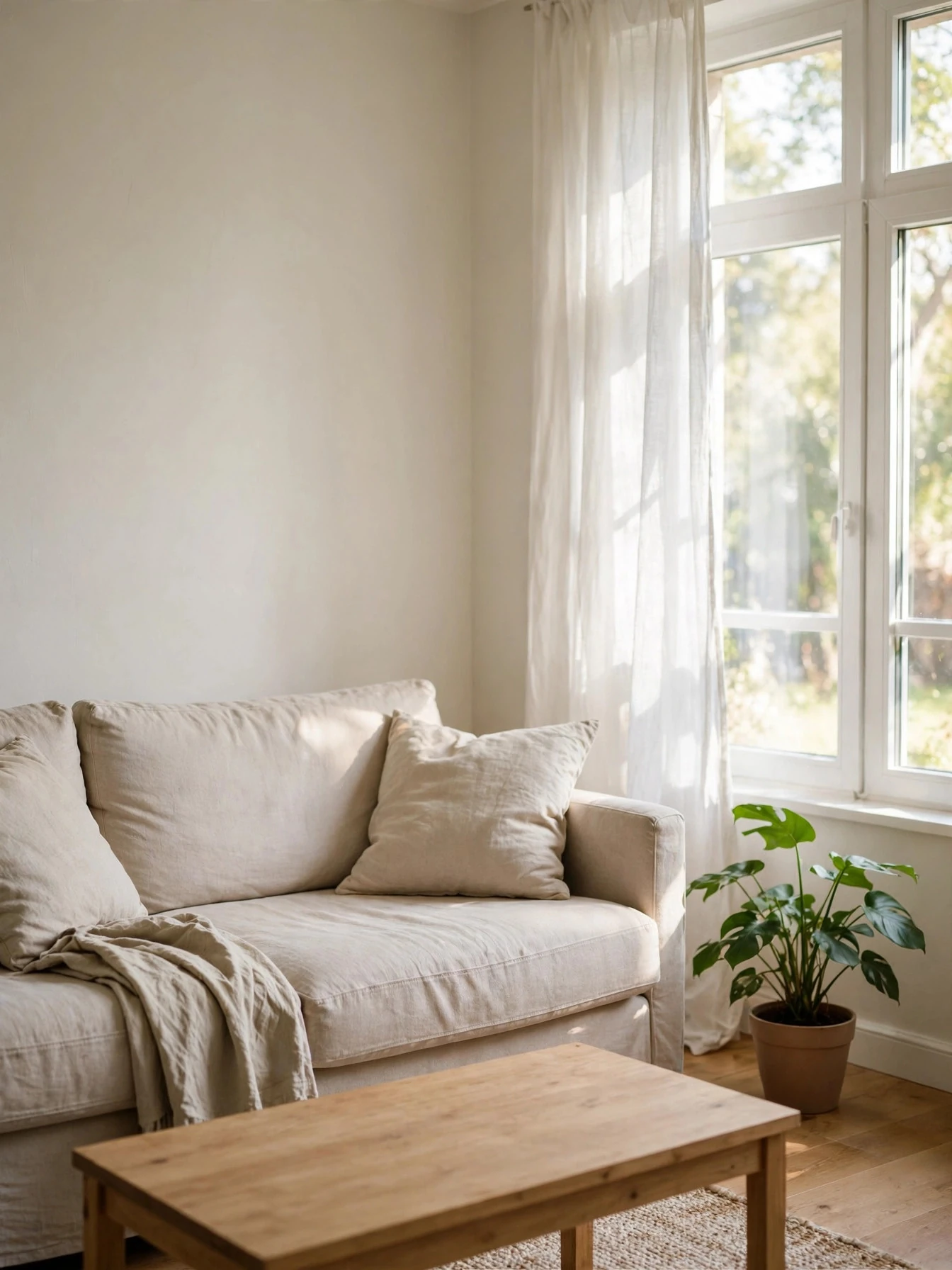
In a small living room, every piece of furniture should do two jobs. A storage ottoman is a footrest, extra seating when friends come over, a coffee table with a tray on top, and a hiding place for blankets, board games and the controller tangle. The decent ones run $45 to $90 and hold a surprising amount — mine swallows two throw blankets and a full game shelf. Pick a fabric that matches your sofa rather than fighting it, and measure the height against your seat cushions so your feet actually land comfortably.
Slide Low Bins Under the Bed

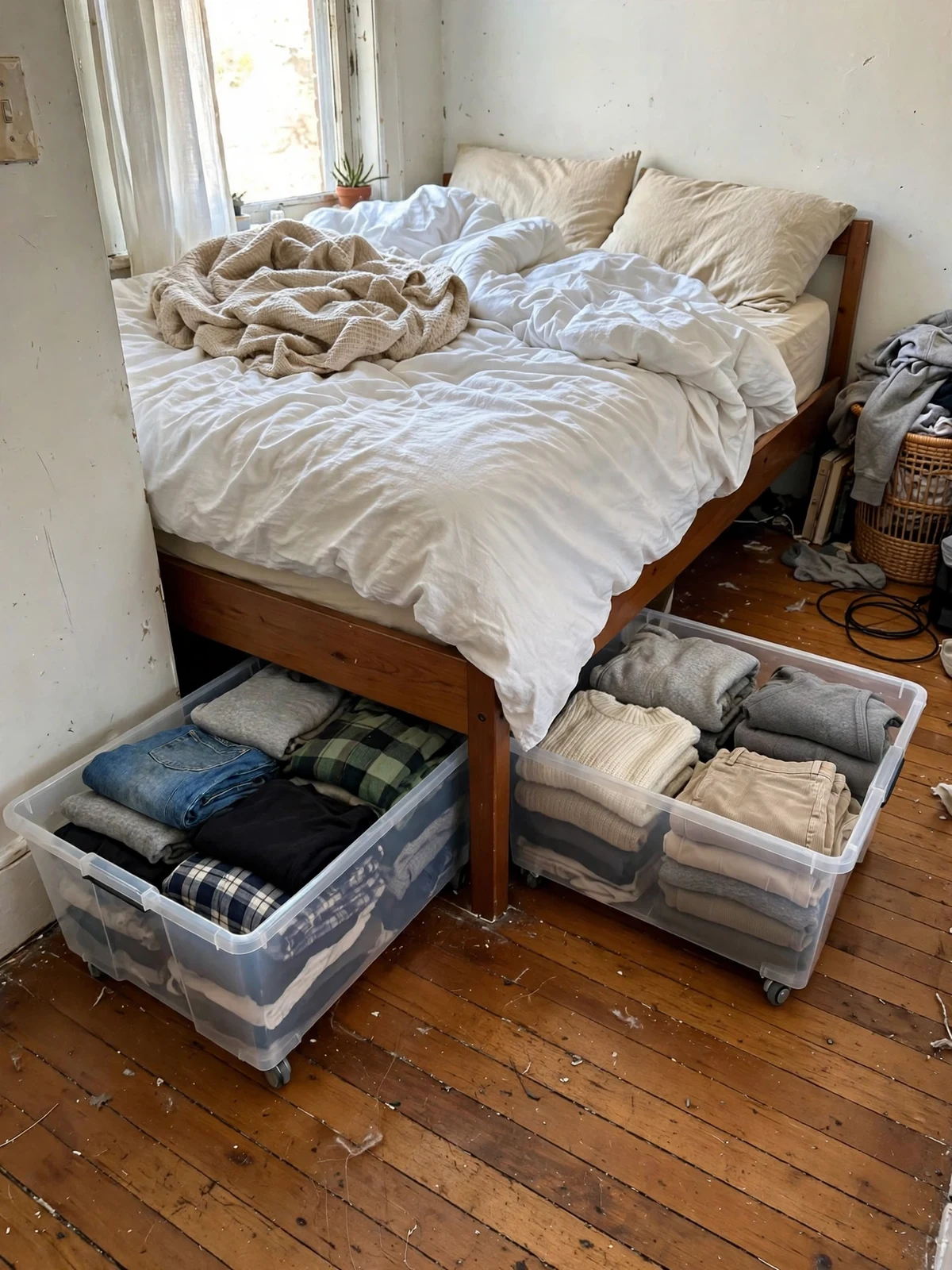
Under the bed is the biggest storage zone in most small bedrooms, and in too many apartments it is just dust and one lost sock. Low-profile under-bed bins, about 6 inches tall on wheels, turn it into a proper drawer for off-season clothes, spare bedding and shoes. Clear lids help, because out of sight should not mean out of mind. Measure the clearance under your frame before you buy — bed frames vary by inches. We go deeper on layouts in our under-bed storage ideas, but the short version is simple: bins with wheels, one category per bin.
Start here if you buy one thing
If the budget stretches to one purchase, make it the storage ottoman. It is the only item on this list that adds storage, seating and a table surface at the same time, and it works in the living room today and a bigger home later. The three-tier rolling cart is the runner-up for kitchen-short apartments.
Hang a Pegboard in the Entryway

Most small apartments have no entryway closet, just a door that opens into chaos. A pegboard panel, roughly 24 by 36 inches, gives that wall a job: hooks for keys and hats, a small shelf for mail, a basket for sunglasses and dog leashes. Everything you grab on the way out lives in one square meter, and nothing piles up on the kitchen counter anymore. Paint it the same color as the wall and it looks built-in. Hang it with French cleats or heavy-duty strips if your lease bans screws, and it still holds more than you'd expect.
Turn the Closet Top Shelf Into Real Storage

The top shelf of a closet is where good intentions go to be forgotten, mostly because everything lands there in a soft, sliding pile. Fix it with three or four uniform storage bins, one per category: spare linens, travel gear, keepsakes. Same size, same color, lids on. Suddenly the shelf reads as a system instead of a landslide, and you can pull one bin down without the rest following. Keep a folding step stool inside the closet door. If you need a stool from another room, be honest — that shelf will never get used properly.
Add Floating Shelves Above the Toilet

Bathroom wall space above the toilet is almost always blank, and bathroom counters are almost always crowded. Two floating shelves move the towels, spare toilet paper and cotton jars up and off the counter in one afternoon. Keep it to two shelves — three starts to feel like it is closing in on you in a tiny room. Rolled towels look better than folded stacks up there and they do not topple. If drilling is off-limits, an over-toilet standing rack gets you the same zones with feet on the floor instead of holes in the wall.
Use Tension Rods Inside Cabinets and Closets

A $6 tension rod might be the hardest-working thing on this list. Wedged across the top of a kitchen cabinet, it hangs spray bottles by their triggers and frees the whole floor for bins — the same trick we use in our under-sink organization ideas. In a closet, a second rod doubles hanging space for short items like shirts and kids' clothes. In a shallow cupboard, one stood vertically keeps baking trays and cutting boards filed upright instead of stacked in a clattering pile. No tools, no holes, and it all comes down in a minute on moving day.
Pick a Bed Frame With Built-In Drawers

If you are buying a bed frame anyway, make it storage. A platform bed with built-in drawers holds what a full dresser holds — four deep drawers swallow a whole wardrobe of folded clothes — while using zero extra floor space. That can mean skipping the dresser entirely in a 10-by-12 bedroom, which changes what the room can be. Solid wood costs more, around $400 and up, but flat-pack versions start near $200. Check the drawer glides in person if you can. Cheap glides are the one place this purchase can disappoint you daily.
Tuck a Slim Console Behind the Sofa

Pull your sofa six inches off the wall and slide a slim console table behind it. You gain a surface for drinks and lamps, a home for remotes and chargers, and room underneath for two baskets of books or blankets — all in space that was previously just a dust trap and a lost-TV-remote zone. Narrow consoles, 6 to 8 inches deep, are sold for exactly this. Run one power strip along the back and every charger in the room finally lives in one place. Guests will assume the room was always this put together.
Divide One Shelf Into Two With Risers

Most cabinet shelves are too tall for what sits on them, so half the height goes to waste while mugs crowd in front. A shelf riser — a small raised platform, $8 to $15 — splits one shelf into two honest levels. Mugs below, bowls above, nothing stacked in a wobbling tower. The same trick works in a closet for folded tees and in the bathroom for toiletries. Measure the shelf depth first; risers come in 8, 10 and 12-inch depths and the wrong one will annoy you every single day. Start with one cabinet and you will want them everywhere.
Renter-friendly, honestly
Renting? Every idea up to this point can be done with zero holes: tension rods, over-door hooks, adhesive strips and freestanding furniture. The few that usually involve screws — the pegboard and floating shelves — both have standing or adhesive versions mentioned in their entries. Your deposit stays safe.
Hang Pots and Tools on a Kitchen Wall Rail

Pots are bulky, awkward, and terrible at sharing cabinet space. Get them out. A wall-mounted rail with S-hooks, the classic is about $20 to $30, hangs your most-used pans, ladles and scissors on the wall where you can grab them mid-recipe. It frees an entire cabinet in most small kitchens, which is no small thing when you only have four. Renters can mount a rail on a strong adhesive strip system rated for the weight, or lean a pegboard panel against the backsplash instead. Either way, the daily tools stop living in a drawer avalanche.
Use the Inside of Every Door You Own

Open any cabinet and look at the door. That flat, empty panel is storage. Slim door-mounted racks hold spice jars in the kitchen, foil and wrap boxes by the sink, hair tools in the bathroom, cleaning gloves under the counter. The kits run $10 to $20, most hook over the top or stick on with strong adhesive, and they put daily items exactly where your hand already goes. Keep door loads light — heavy bottles strain hinges over time — and check the clearance once: the rack needs to swing shut without clipping the shelves behind it.
Add Hooks Under Shelves and Cabinets

The underside of a shelf is a ceiling for small things. A strip of under-cabinet hooks holds mugs in the kitchen, which can free a whole shelf, and under a closet shelf the same hooks take bags, belts and tomorrow's outfit. Adhesive versions hold a few pounds each and come off clean, which keeps landlords calm. Space the hooks a mug-width apart — crowding them makes the whole row useless. It is a $9 change that you will notice every morning when the coffee things are hanging in a row instead of buried behind the cereal boxes.
Choose Foldable and Nesting Everything

Storage that cannot shrink becomes clutter of its own. So buy the versions that fold, nest or collapse: foldable fabric boxes that go flat when empty, nesting baskets that stack inside each other, a collapsible laundry hamper, folding step stool. When a season changes and half your bins empty out, the empty storage itself takes up almost no room. This matters most in rentals with no garage and no attic to absorb the overflow. It costs the same as the rigid versions. There is genuinely no downside, which is rare enough to be worth saying out loud.
Keep a Donation Bag by the Door

Storage has a limit, and in a small apartment you hit it honestly. The system that saves you is not a bigger bin — it is an exit. Keep one donation bag hanging by the front door, always. The shirt that never fits right, the duplicate spatula, the book you will not reread: in the bag they go, the moment you notice. When it fills, it goes out on your next trip past a donation bin. No seasonal purge, no guilt pile in the corner. Just a steady, quiet outflow that matches the inflow, which is the only way 500 square feet stays livable.
The rule that makes it all work
One in, one out. In a small apartment, storage is a fixed pie — the donation bag by the door is what keeps new things from quietly re-filling every zone you just cleared. It is not the prettiest idea on this list. It is the one the other 20 depend on.
Label the Zones So Everyone Uses Them

A system only works if the other people in the home can read it. If you share your apartment, spend ten minutes with a label maker or a marker and some tape: cleaning, games, batteries, guest stuff. Labeled zones end the daily 'where does this go' that quietly undoes every organizing weekend. Keep labels big, plain and on the front of the bin where eyes actually land. It feels fussy for exactly one day. After that it just feels calm, and putting things away stops being a memory test that only one person can pass.
Do a 15-Minute Reset Every Month

Apartments do not get messy in a day. They drift — one bag by the door, one drawer that stops closing. A 15-minute monthly reset stops the drift: set a timer, walk the zones from this list, put strays back, empty the donation bag if it is full, and stop when the timer rings, even mid-shelf. Short and regular beats heroic and rare, every time. Tie it to something you already do monthly, like paying rent, so it never needs willpower. Fifteen minutes is the rent your storage system charges, and it is cheap at the price.
You do not need all 21 ideas, and you definitely do not need them this weekend. Pick the three zones that annoy you daily — for most people that is the entryway, under the bed and one kitchen gap — and fix those first. Small apartments reward systems, not shopping sprees: a home for everything, labels everyone can read, and a way for things to leave. Do that, and the square footage stops feeling like the problem. If the clutter itself is the bigger issue, pair this list with our 30-day declutter challenge and let the storage follow the letting go.
Small Apartment Storage FAQs
Expert answers & styling advice
How do I add storage to a small apartment without drilling holes? ▼
Use the no-drill kit: tension rods in cabinets and closets, over-door organizers and hooks, adhesive hook strips, and freestanding pieces like a tall narrow shelving unit and a three-tier rolling cart. Together they cover walls, doors and gaps — most of the storage in this list — and everything comes down clean on moving day.
What is the best first storage purchase for a small apartment? ▼
A storage ottoman for living-room-heavy homes, or a three-tier rolling cart if the kitchen is the pain point. Both add real capacity without taking new floor space, both cost under $90, and both move with you to your next place instead of being built for one room.
Where can I find hidden storage in a small rental? ▼
The reliable five: under the bed in low wheeled bins, above the kitchen cabinets in lidded baskets, behind the sofa with a slim console, inside cabinet doors with slim racks, and on the backs of doors with pocket organizers. Most renters are sitting on 20-plus square feet they have never used.
How do I keep a small apartment organized long term? ▼
Give everything a labeled zone, keep a donation bag by the door so outflow matches inflow, and do a 15-minute reset once a month. Storage fails when it depends on a big annual purge. Small, regular upkeep is what keeps a small space calm.