15 Renter-Friendly Storage Ideas (No Drilling)

Fifteen deposit-safe ways to add storage to a rental without drilling a single hole — tension rods, adhesive hooks, rolling carts, magnets and more clever tricks.
Table of Contents (15 Ideas)
- 1.Tension Rods Inside Cabinets and Closets
- 2.Adhesive Hooks That Actually Hold Weight
- 3.A Freestanding Shelf as a Room Divider
- 4.Rolling Carts That Move With You
- 5.Baskets and Racks That Hang Over Cabinet Doors
- 6.Stackable Crates and Cubes You Build Up, Not In
- 7.Under-Shelf Baskets That Clip On
- 8.Suction-Cup Organizers for Bathroom Tile
- 9.Magnetic Strips and Spice Tins on the Fridge Side
- 10.Bed Risers That Unlock Under-Bed Space
- 11.Hanging Closet Shelves on the Rod
- 12.A Tension-Pole Shower Caddy in the Corner
- 13.Dual-Purpose Furniture That Earns Its Footprint
- 14.S-Hooks on Rails and Rods You Already Have
- 15.Peel-and-Stick Ledges and Shelves (That Come Off Clean)
Renting teaches you a specific kind of frustration: you can see exactly where a shelf should go, and you cannot put a single screw in it. The deposit math always wins.
The good news is that almost nothing good storage does actually needs a hole. Tension presses outward. Adhesives release clean. Magnets, wheels, hooks that hang over doors and furniture that stores things inside itself — put together, they add the storage of a small built-in without touching a wall. These 15 renter-friendly storage ideas are all reversible in minutes, most for under $30 each. If your whole place is tight and not just your walls, our small apartment storage ideas covers the rest of the room-by-room picture.
 Save Pin
The no-damage ground rules
Three rules keep every idea on this list deposit-safe. One: read your lease — a few ban adhesives outright, and knowing beats guessing. Two: respect the weight rating on anything sticky, magnetic or suction-based; most failures are overloads, not bad products. Three: keep the packaging and removal tabs for removable adhesive strips and spring tension rods until move-out day. Everything here comes down in minutes with heat, dental floss or a slow pull — no filler, no repainting, no awkward final inspection.
Tension Rods Inside Cabinets and Closets

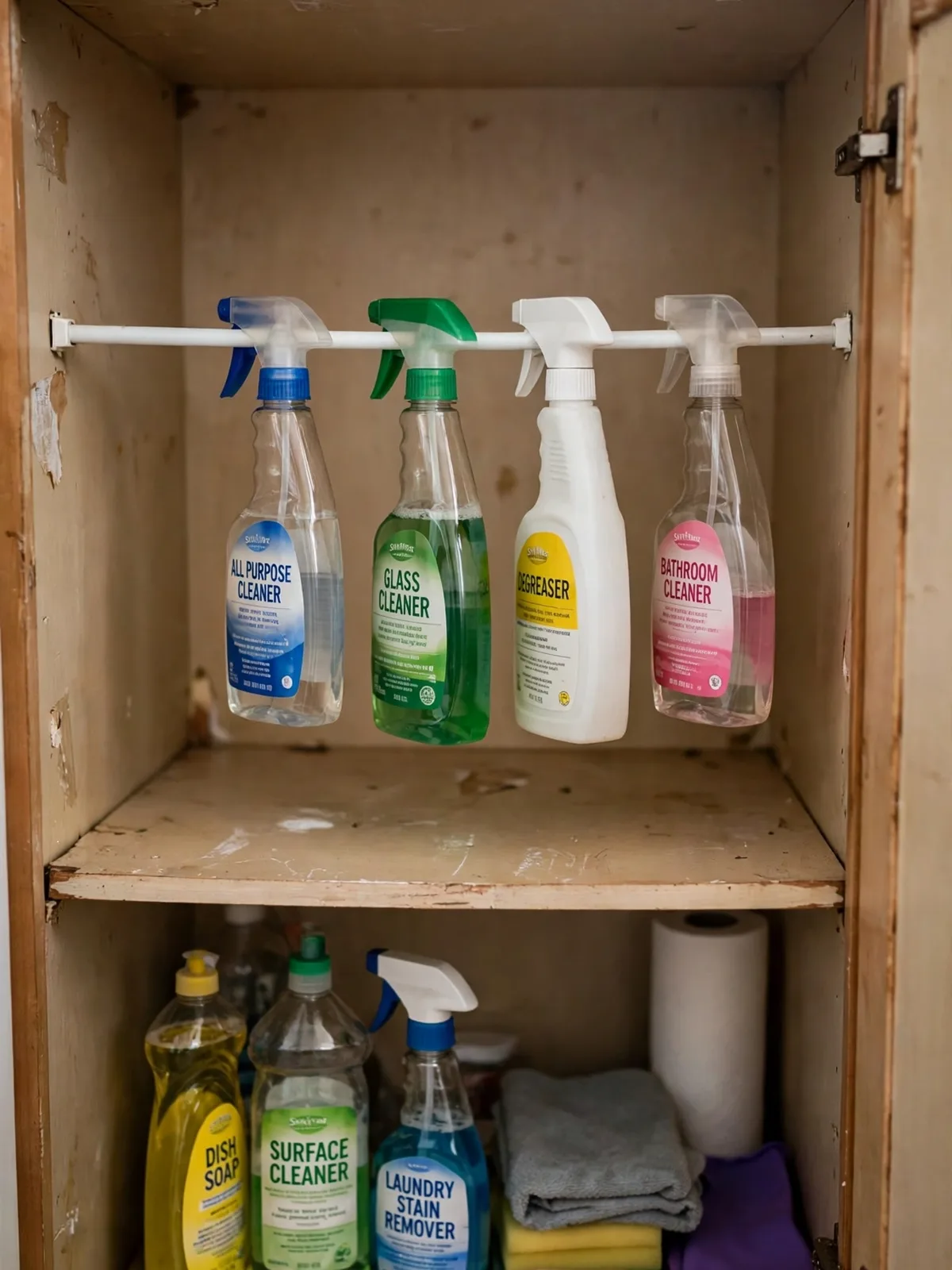
A spring tension rod costs about $8 to $12, installs in ten seconds, and leaves absolutely nothing behind. Under the kitchen sink, one rod stretched across the cabinet creates a second level — hang spray bottles by their triggers on the rod itself and the space underneath opens up for bins and refills. Inside a closet, a low rod holds heels by their heels, and a high one doubles hanging space for short clothes. Measure the inside width first and buy the range that fits, most rods adjust from 18 to 28 inches or 28 to 43. Twist until the rubber ends grip firmly. No screws, no marks, nothing for a landlord to find.
Adhesive Hooks That Actually Hold Weight

Most adhesive hooks fail because people hang things too heavy, too fast. Good heavy-duty adhesive hooks and large removable picture strips are honest about their limits — a single large hook holds around 7 pounds, a pair of large strips up to 16 — and they only reach that if you clean the spot with rubbing alcohol first and wait a full hour before loading them. Hang coats, towels, a broom, even a backpack by the door, but skip anything fragile or irreplaceable. Removal is the renter-friendly part: pull the tab slowly straight down and it releases clean. A stubborn strip gives up with gentle heat from a hairdryer and a slide of dental floss behind it.
A Freestanding Shelf as a Room Divider

In a studio, one room has to do the work of three. A low, wide freestanding cube shelf, laid horizontally, draws the line between bed and sofa without blocking light — and every cube is storage. Baskets hide the messy stuff, open cubes hold books and a plant or two. A horizontal shelf around 30 inches tall will not tip the way a tall narrow one can, which matters when you cannot anchor anything to the wall. Expect $70 to $150 for a sturdy one, less secondhand. It is also the easiest item on this list to rearrange: push it somewhere new on a Sunday and the whole studio feels different by lunch.
Rolling Carts That Move With You

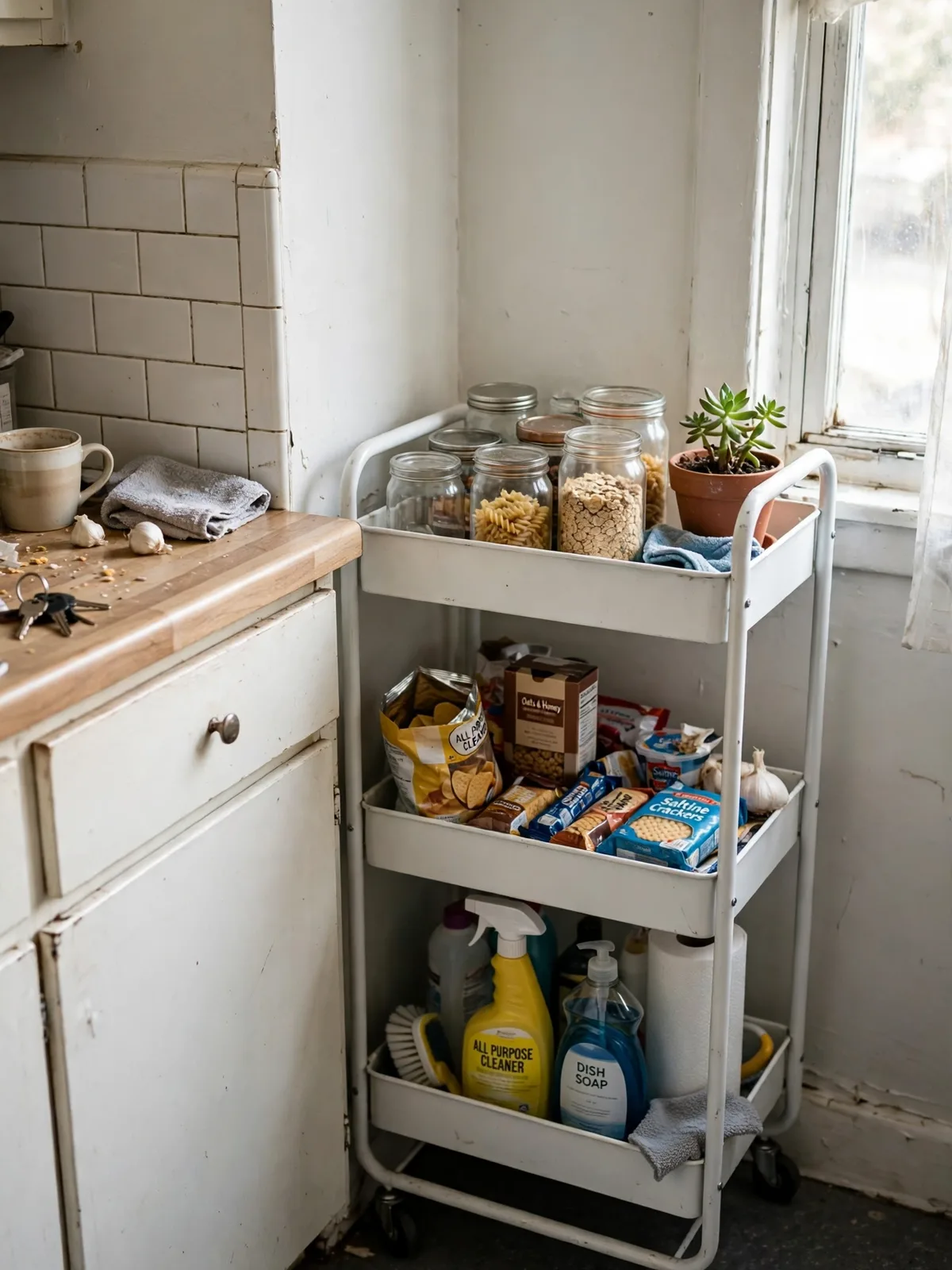
The three-tier metal rolling cart is the hardest-working $30 in rental storage. It is a pantry in a kitchen with two cupboards, a bathroom cabinet where there is none, a craft station, a coffee bar. The standard cart is about 16 inches long and 14 wide, and slimmer 5-to-6-inch versions slide into the gap beside the fridge that currently holds only dust and a lost bottle cap. Wheels matter more than looks: the cart rolls out when you clean, rolls to wherever you are working, and rolls straight onto the truck on moving day, still loaded. Locking casters keep it parked on sloped old floors.
Baskets and Racks That Hang Over Cabinet Doors

The inside of every cabinet door is a shelf you have not built yet. Over-the-door cabinet baskets hook over the top of the door and hold the tall, awkward things that waste shelf space — cling wrap and foil boxes, cutting boards, lids, cleaning cloths. Under the sink, one holds sprays and sponges at grab height. Look for hooks padded with foam or silicone so the metal does not scratch the door finish, and check your door thickness first, most racks fit doors up to about three-quarters of an inch. Close the door slowly the first time to make sure the basket clears the shelves inside. Nothing sticks, nothing screws, nothing shows from outside.
Stackable Crates and Cubes You Build Up, Not In

Renters cannot build storage in, so build it up instead. Stackable wooden crates and modular cube units use the one direction small rooms always have spare: vertical. A tower of four cubes in a dead corner holds shoes, folded sweaters or the board games currently living on the floor. Connect cubes with the clips or zip ties in the box so the stack acts like one piece, keep heavy things in the bottom cube, and stop at a height you can reach without a chair. Wooden crates run about $12 to $20 each and flat-pack or nest when you move. The whole structure takes apart in minutes, which is the point.
Start here if you buy three things
On a tight budget, spend in this order: a three-tier metal rolling cart for the room with the least storage, spring tension rods for the under-sink cabinet and closet, and a pack of heavy-duty adhesive hooks for the entryway wall. Together they run about $50, take an afternoon to set up, and cover the three spots every rental under-stores.
Under-Shelf Baskets That Clip On

Kitchen cabinets waste the top half of every shelf. A clip-on under-shelf basket — a white wire basket around $10 to $14 — slides onto the shelf above, usually any shelf up to an inch thick, and hangs underneath as a new half-shelf. Mugs, spice jars, tea towels and the lid collection all fit in that dead air. One per shelf is the sweet spot; two make the cabinet feel crowded. They work just as well on closet shelves for socks and scarves, and on a bookshelf for chargers and notebooks. Installation is genuinely just sliding it on, and removal is sliding it off. It might be the lowest-effort storage on this whole list.
Suction-Cup Organizers for Bathroom Tile

Rental bathrooms are famous for one tiny shelf and a landlord who counts holes. Locking suction-cup organizers grip smooth tile and glass properly — a good basket holds 3 to 5 pounds of shampoo and body wash — as long as the surface is genuinely smooth. Glossy ceramic tile, yes. Painted drywall, textured or matte stone, no, the cup cannot seal and it will slide down at 2 a.m. Clean the tile with rubbing alcohol, press the cup hard, then twist or flip the lock. Once a month, pop them off, rinse the cups and re-seat them. That small habit is the difference between suction storage that works and suction storage people complain about online.
Magnetic Strips and Spice Tins on the Fridge Side

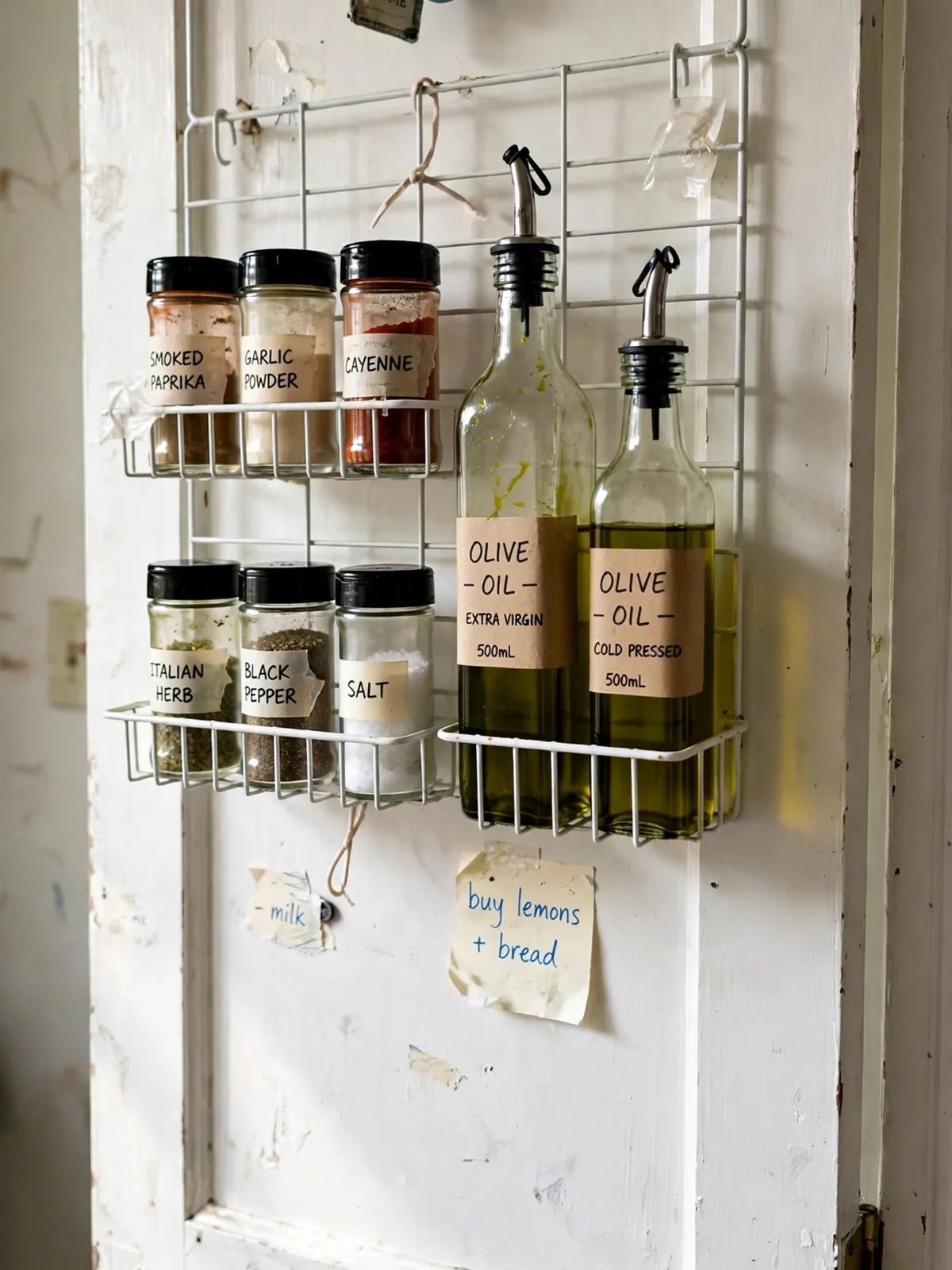
The side of your fridge is a big, flat, magnetic wall you are probably using for one takeaway menu. Magnetic spice tins — the 2-to-3-ounce size with clear lids — stick straight to it in a neat grid, labels facing out, and free up an entire kitchen drawer. A pack of twelve runs about $20 to $25. The same trick holds a magnetic notepad, bottle opener and measuring spoons on hooks. Honest limit: the tins hold best on flat steel, and a fridge side that gets hot from an oven next door can weaken the grip, so keep heavy jars in a cupboard. At move-out, you just pocket the tins. The fridge looks exactly as you found it.
Bed Risers That Unlock Under-Bed Space

If your bed sits 4 inches off the floor, the space under it stores dust and one sock. Bed risers lift the frame by 3, 5 or 8 inches for about $15 to $30 a set, and suddenly full-size bins fit. Choose sturdy risers rated well above your bed's weight — a shared bed with two sleepers wants a 1,000-pound-plus rating — and make sure each leg sits fully in its cup. Once lifted, slide in low rolling bins for off-season clothes, spare bedding and shoes. Risers change nothing about the room itself: no fixings, no marks, and at move-out they come with you in a shoebox. The extra height is not for everyone, so start with the 3-inch set.
Hanging Closet Shelves on the Rod

A closet rod with six inches of clothes on it is wasted air underneath. A hanging closet shelf organizer hooks or velcros over the rod and drops in five or six fabric shelves — folded sweaters, t-shirts, shoes and bags stack in the space that was doing nothing. Most cost $15 to $20 and hold about 5 pounds per shelf, so treat it as sweater storage, not a bookcase. If your rental barely has a closet at all, pair this with our bedroom ideas with no closet for the bigger fix. On moving day it folds flat into a suitcase. The rod, the walls and your deposit never knew it was there.
A Tension-Pole Shower Caddy in the Corner

The corner shower caddy that hangs from the shower head sags, swings and rusts. A tension-pole shower caddy stands floor-to-ceiling in the corner instead, held by the same spring pressure as a tension rod, with three or four baskets that adjust to your tallest bottles. Aluminum versions, roughly $40 to $70, resist rust far better than cheap chrome. Measure your floor-to-ceiling height first — most poles adjust between about 5 and 9 feet — and check the feet are rubber, so nothing marks the tub. It holds a household's worth of bottles off the tub edge, and when you move, it twists down and comes with you.
Moving out? The 10-minute undo
Everything on this list reverses fast: pull adhesive tabs down slowly, warm stubborn strips with a hairdryer and slide dental floss behind them, twist tension rods and poles down, and roll carts and crates straight out. Do a slow walk with your phone flashlight before the final inspection — the only trace of a good renter system should be how clean the walls look.
Dual-Purpose Furniture That Earns Its Footprint

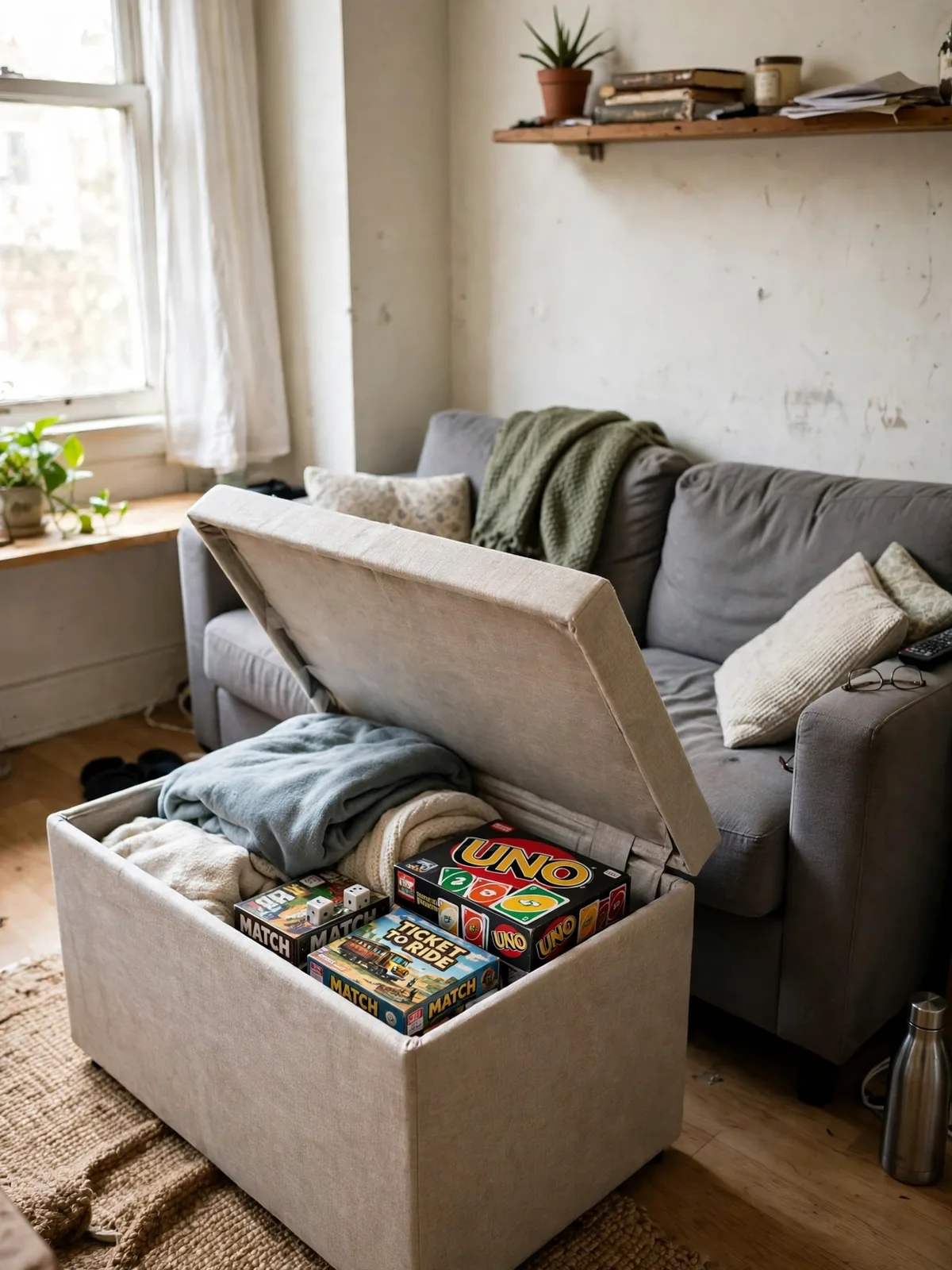
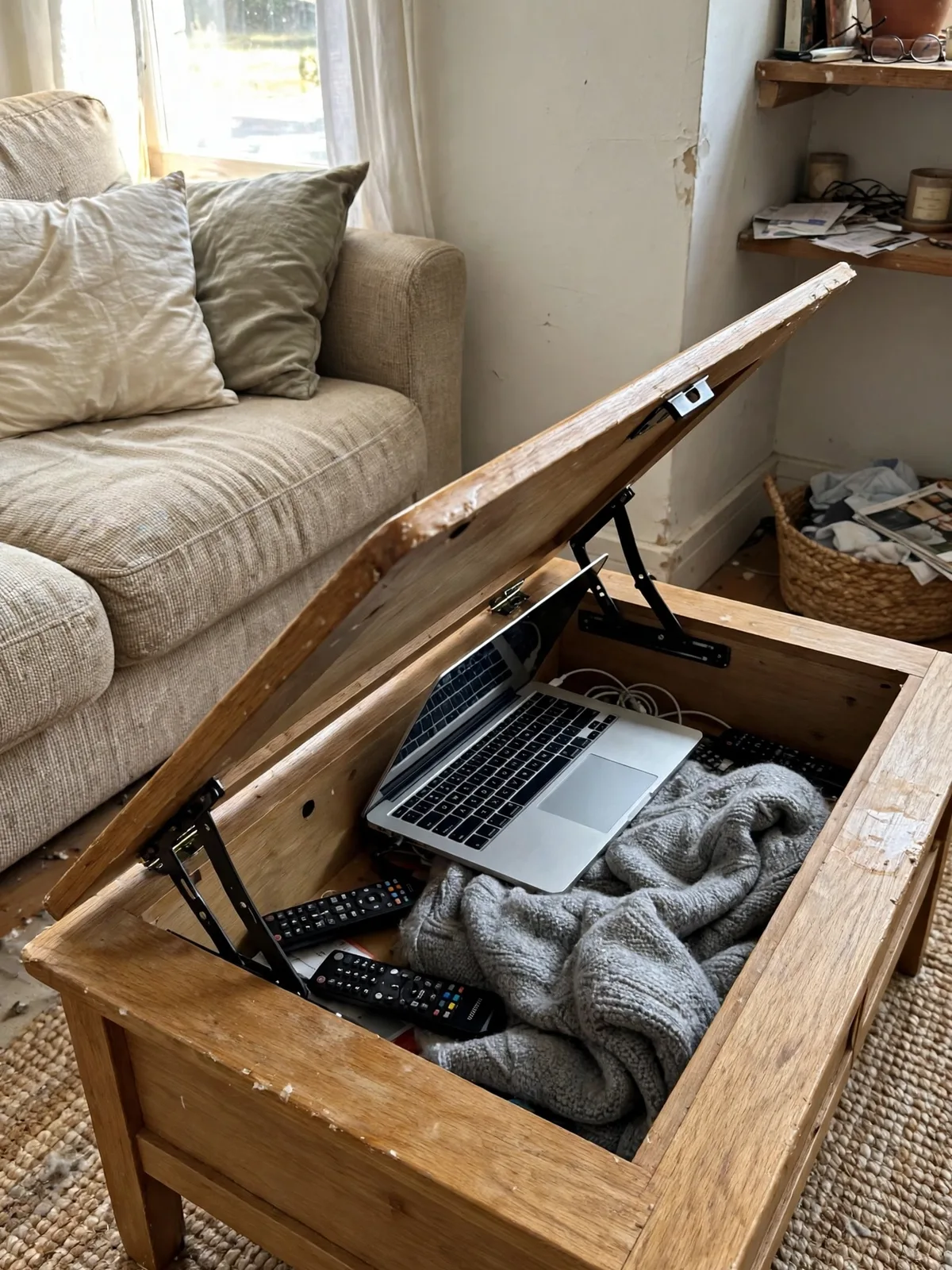
In a rental you cannot add a room, so every piece of furniture has to do two jobs. A storage ottoman is a footrest, an extra seat and a blanket box in one 18-inch cube. A storage bench by the door swallows shoes and gives you somewhere to sit while you tie them. Even a simple coffee table with a low shelf beats a solid one that stores nothing. The rule before buying anything new: if it takes up floor and stores nothing, it has to be beautiful enough to justify itself — most are not. Expect $50 to $90 for a sturdy ottoman, and it moves with you like every other piece you own.
S-Hooks on Rails and Rods You Already Have

The cheapest item on this list might be the most useful. A pack of stainless steel S-hooks costs about $8 for ten, and they turn every rod and rail you already have into storage. On a closet rod, S-hooks hold bags by their straps and jeans by a belt loop, packed tighter than hangers allow. On the shower rod, one hook holds a small hanging basket. In the kitchen, they hang utensils and mugs from a rail or the side of a wire shelf. Get hooks with rounded or ball tips so they glide without scratching the rod, and match the hook size to the rod's thickness. No rod, no problem lost — they also hook over cabinet handles and wire racks.
Peel-and-Stick Ledges and Shelves (That Come Off Clean)

Sometimes you just want one little shelf by the bed. Peel-and-stick ledge shelves give you that — a 4-inch picture ledge for your phone, glasses and a paperback, stuck on with removable strips instead of screws. Keep them honest: these hold light things, around 2 to 3 pounds, so photos, small plants and toiletries, never a row of hardcovers. Removal is slow and warm — heat the strip with a hairdryer for 30 seconds, work dental floss behind the ledge, and roll residue off with your thumb. One warning worth hearing: on old, bubbling or freshly painted walls, any adhesive can lift paint. Test in a hidden spot first, and if your paint is tired, skip this one and use a ledge on tile instead.
You do not need all 15. Most rentals transform with four or five: a rolling cart where storage is thinnest, tension rods in the cabinets, hooks by the door, and one piece of furniture that stores something inside itself. Add the rest room by room, as the annoyances show up.
The real goal is a home that works like you own it, with an exit as clean as the day you moved in. Every idea here leaves with you — to a bigger rental, or one day to walls you are allowed to drill. For the spaces that hide storage in plain sight, our hidden storage ideas is the natural next read.
Renter-Friendly Storage FAQs
Expert answers & styling advice
Will these storage ideas really protect my deposit? ▼
Yes, if you follow the ground rules. Spring tension rods, carts, crates and over-door racks touch nothing permanently. Removable adhesive strips release clean when you pull the tab slowly straight down — rushing and ripping is what takes paint off. Photograph your walls on move-in day so you can prove any mark was already there.
What if my lease bans adhesive products completely? ▼
Then skip the adhesive ideas and lean on the rest of the list: tension rods and poles, magnetic spice tins on the fridge, over-door baskets, suction cups on tile, rolling carts and dual-purpose furniture. That is still eleven of the fifteen ideas, and honestly the strongest ones. When in doubt, a short polite email to your landlord asking about removable strips often gets a yes.
How much weight can adhesive hooks and suction cups safely hold? ▼
Less than the box dreams of. A large adhesive hook holds about 7 pounds on smooth painted wall, and a good locking suction-cup organizer holds 3 to 5 pounds on glossy tile only. Halve those numbers for anything steamy like a bathroom, load hooks an hour after sticking them, and never hang anything fragile or irreplaceable on either.
Where should I start in a tiny studio on a small budget? ▼
Start with the three-tier metal rolling cart — about $30 and it serves kitchen, bathroom or bedside. Add spring tension rods under the sink and in the closet for about $10 each, then a freestanding cube shelf when budget allows. That order fixes the most daily friction first, and every piece moves out with you.