15 Decluttering Inspiration Ideas to Finally Start Letting Go

15 decluttering inspiration ideas that help you actually start — one drawer, one surface, one bag at a time — and keep going until the whole house feels lighter.
Table of Contents (15 Ideas)
- 1.Start With One Drawer — the Ten-Minute Win
- 2.Take a Before Photo — Then Chase the After
- 3.Clear One Surface Completely — Just One
- 4.Set a 15-Minute Timer and Race It
- 5.One Bag Out the Door Every Day
- 6.Ask One Question: Would I Buy This Again?
- 7.Declutter by Category, Not by Room
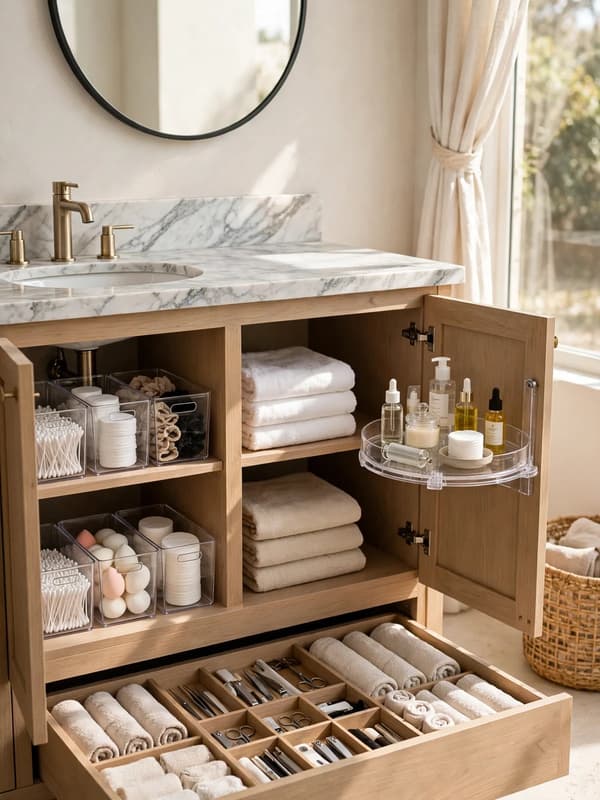
- 8.Leave One Shelf Empty on Purpose
- 9.Photograph the Same Corner Every Sunday
- 10.One In, One Out — the Rule That Protects the Win
- 11.Declutter With a Friend — or Just on the Phone
- 12.Park the Maybes in a Box for 30 Days
- 13.Make One Shelf Beautiful — Your Motivation Anchor
- 14.Count the Wins — Keep a Simple Tally
- 15.The Sunday Reset — 20 Minutes That Protect Everything
Most decluttering advice starts with the wrong thing: a whole-house plan, a weekend you don't have, and a motivational speech that fades by Saturday morning. Real decluttering inspiration doesn't come from a perfect plan. It comes from one small win — a drawer that finally closes, a counter you can actually see — and the feeling that follows it.
That's what this list is for. These 15 decluttering inspiration ideas are not about buying matching bins or making your home look like a magazine. They're about starting, and then keeping going: tiny tasks that take ten minutes, tricks that make progress visible, and small rules that stop the clutter creeping back.
Some of these ideas will give you inspiration to declutter your home today, in the next ten minutes, with whatever you already own. Others are the slow-burn kind — a weekly photo, a maybe box, a Sunday reset — that keep the momentum alive. Pick the one that feels easiest and do it now.
Before you start any item
Set up the same three stations every time and every idea on this page gets faster: a bag for donations, a bag for trash, and one box for things that belong in another room. When a donation bag fills up, it goes in the car the same day. And remember: start small — one drawer, one surface, one bag.
Start With One Drawer — the Ten-Minute Win

Forget the whole house. Open one drawer — the junk drawer, the one in the kitchen that sticks, the bedside drawer you never quite close — and empty it completely onto the counter. Ten minutes, start to finish, and nobody needs to know you did it.
Tip it all out: sorting in place never works. Seeing the whole mess at once makes decisions fast.
Three piles, no fourth: keep, bin, donate. The moment you invent a "maybe" pile inside a ten-minute job, the job doubles.
Put back only the keepers: dead pens, dried glue, mystery keys and chargers for phones you no longer own all leave today.
A drawer that opens smoothly is proof you can do this.
Take a Before Photo — Then Chase the After

Before you move a single thing, take a photo of the mess. Not a flattering angle — the honest, cluttered truth, exactly as it looks at 7pm on a normal Tuesday. Then declutter that one spot and take the same photo again from the same place.
Same spot, same angle: stand in the same doorway, same height. The comparison only works if the two photos match.
Keep both photos: the before photo is the only honest record of how far you've come.
Share it with one person: a friend, a sibling, a group chat. A little outside applause makes the next room much easier to start.
We can't see our own progress because we live inside it. The camera can.
Clear One Surface Completely — Just One

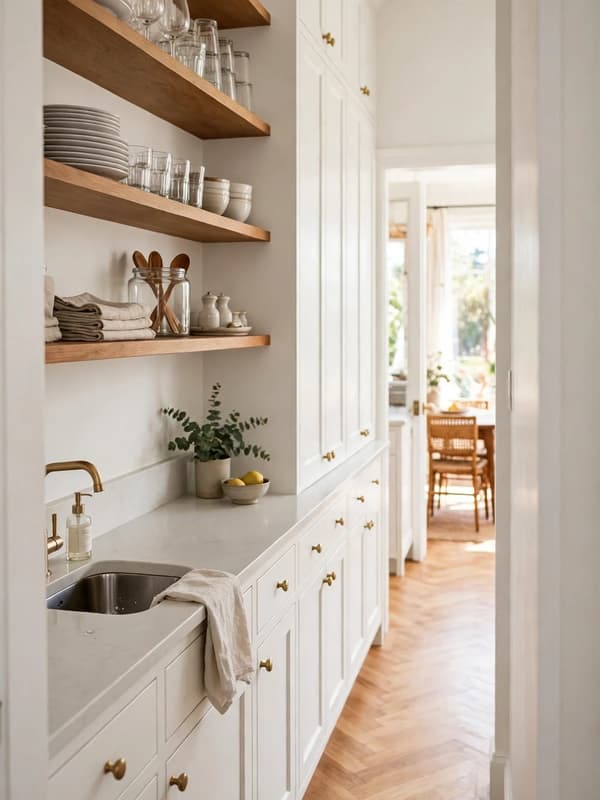
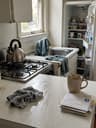
Pick the surface that greets you first: the kitchen counter, the dining table, the top of the dresser. Clear everything off it — every last thing — wipe it down, and then put back only what you genuinely use every single day.
Everything off, no exceptions: the mail pile, the vitamins, the three half-used candles, the charger nobody claims. Off.
The daily-use test: kettle, fruit bowl, one cutting board. If you haven't touched it this week, it doesn't live on the counter.
Give the rest a real home: a drawer, a shelf, a donation bag — not another pile.
A single clear surface changes how a whole room feels. Tomorrow morning you'll get it: visible space is visible progress.
Set a 15-Minute Timer and Race It

Decluttering feels endless because it has no finish line. So give it one: set a timer for fifteen minutes, pick one spot, and work until it rings. When it rings, you stop — even if the job isn't done. Especially if the job isn't done.
One spot, not one room: a shelf, a drawer, the top of the wardrobe. Small enough to finish, big enough to notice.
Move fast on purpose: the timer kills the dithering. Hold it, decide in five seconds, move on.
Stop when it rings: stopping on time is what makes you start again tomorrow.
Fifteen minutes a day is nearly two hours a week — and proof that decluttering is a short, finishable thing.
One Bag Out the Door Every Day

Keep a donation bag by the front door — a proper bag, open, waiting. Every day, put one thing in it. A shirt you skip over, a mug with a chip, a book you'll never reread. When the bag is full, it goes straight into the car, and the next bag takes its place.
One thing is enough: the rule is deliberately tiny. Tiny rules survive busy days; heroic rules die by Wednesday.
Make the bag visible: by the door, not in a closet. You pass it every time you leave, and every pass is a tiny nudge.
Full means gone: a bag that sits by the door for a month is clutter with better intentions. Car, same day.
This is the slowest idea on the list and the most reliable. One bag a day is 365 things a year — and you never once had to find a free weekend. If you want a bigger push, our 30-day declutter challenge turns the same daily habit into a month-long plan.
When the first burst fades
Week one is exciting. Week three is where most people stall — the novelty is gone and the house still isn't finished. That's when the slow ideas earn their keep: the weekly photo, the tally, the Sunday reset.
Ask One Question: Would I Buy This Again?

Pick up the thing you're dithering over and ask the only question that matters: if I saw this in a shop today, at full price, would I buy it again? Not "might I need it someday" — would I spend my own money on it, right now, today?
No means no: if you wouldn't buy it again, you're keeping it out of guilt, not usefulness. Guilt is not a storage category.
Yes means it earns its space: the things you'd rebuy are the things that make your home work.
Use it on clothes first: hold each piece, ask the question, and watch how fast a stuffed wardrobe turns into one you can actually choose from.
The question cuts through every excuse — the money spent, the gift-giver's feelings, the imaginary future project. If your wardrobe needs the full treatment after this, our small closet organization ideas show how to rebuild the space that's left.
Declutter by Category, Not by Room

Room-by-room decluttering hides the real problem: your stuff is spread everywhere. The mugs live in three cupboards, the chargers in four drawers, the scarves in two closets. Gather one whole category into a single pile and the duplicates confess immediately.
One category at a time: all the mugs. All the T-shirts. All the cleaning bottles. Nothing else until that pile is decided.
Count the duplicates: five spatulas, four phone chargers, three near-identical black jumpers. Keep the best one or two; the rest go.
Then put the keepers together: one home for the whole category, so duplicates have nowhere to hide.
A single pile of every mug you own is shocking — and shock is a great motivator.




Leave One Shelf Empty on Purpose

This one feels wrong, which is exactly why it works. When you finish a shelf, a cupboard or a drawer, leave a little of it empty on purpose. Not because you ran out of things — because empty space is the reward, and the proof that the job actually worked.
Empty is the goal: a shelf with breathing room means you own what fits, not what overflows. That's the whole point of decluttering.
Don't refill it: the first week, everything you pick up will try to live there. Let the shelf stay empty.
Use it as your barometer: when the empty shelf starts filling up again, you know clutter is creeping back — and you catch it early.
Cleared spaces refill within a month unless you defend them. An empty shelf breaks that cycle.
Photograph the Same Corner Every Sunday

Pick one corner — the entryway, the kitchen counter, the top of the dresser — and photograph it every Sunday from the same spot. These decluttering before and after ideas work best as a slow series, not a single dramatic reveal: week one is messy, week three is calmer, week six is unrecognisable.
Same spot, same day: Sunday morning, before the week starts. Thirty seconds, no staging, no tidying first.
Scroll back when you stall: on the week you feel like nothing has changed, scroll back to week one. The photos will disagree with you.
Keep the series in one album: a phone album called "progress" is a little museum of your own effort.
Progress is invisible day to day. A weekly photo makes it visible again.
One In, One Out — the Rule That Protects the Win

Decluttering is only half the job. The other half is stopping the stuff coming back in, and the simplest rule that does it is this: for every new thing that enters your home, one old thing leaves. New shoes in, old shoes out. New book in, old book out.
Make it immediate: the old one leaves the same day the new one arrives, not "when I get around to it".
Apply it to the easy categories first: shoes, books, mugs, T-shirts. The rule gets easier every time you use it.
Let it slow your buying: knowing something has to leave makes you pause before buying.
This rule separates people who declutter once from people whose homes stay clear.
Declutter With a Friend — or Just on the Phone

Decluttering alone is where decisions go to die. You pick something up, remember who gave it to you, and put it back. A second person breaks that loop just by being there while you decide.
Body doubling works: someone sitting nearby, folding or just chatting, keeps you in the room and on the task.
Ask them to hold things up: "keep or go?" is much easier to answer when someone else is holding the object and waiting.
Trade the favour: declutter their spare room next weekend. Two houses get lighter.
If nobody can come over, a phone call works almost as well — put a friend on speaker and talk through each decision out loud. Saying "I'm keeping this because..." out loud is often enough to hear how weak the reason sounds.
Park the Maybes in a Box for 30 Days

Some things you genuinely can't decide on, and forcing the decision is how decluttering stalls. So don't decide. Put the maybes in a box, tape it shut, write today's date on it, and put it somewhere out of the way — the top of a wardrobe, the garage shelf.
One box, one date: if you haven't opened it in 30 days, you didn't need anything in it. Donate the whole box unopened.
If you open it, that's fine too: take out the one thing you actually missed, re-tape the box, and the rest still goes.
No peeking for fun: opening it to "check" resets the test.
The maybe box separates the two hard parts: removing the thing from your space, and deciding its fate. Your home gets lighter immediately.
Make One Shelf Beautiful — Your Motivation Anchor

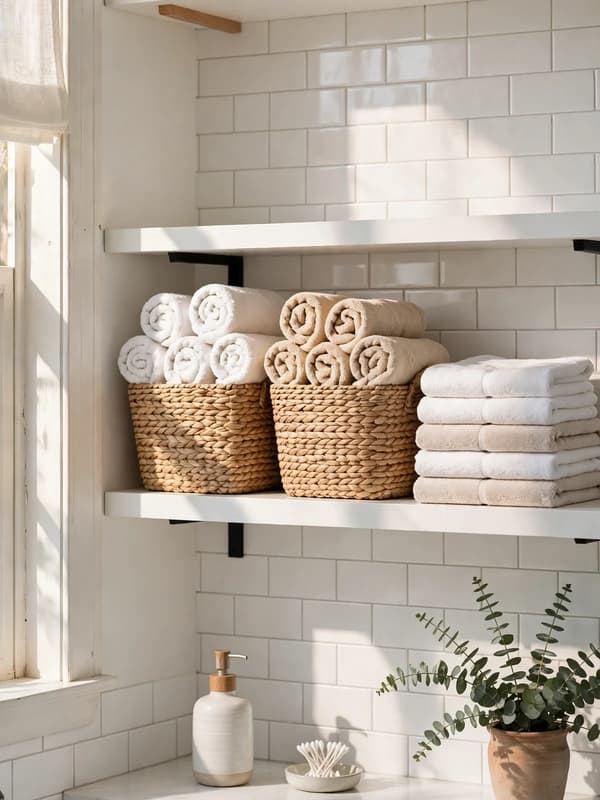
Not the whole house. One shelf, one corner, one little stretch of counter — and make it genuinely lovely. A plant, a framed photo, two books you love, a candle. Something that makes you stop and look every time you pass it.
Small and visible: the shelf above the kitchen counter, the top of the dresser, the hallway shelf. Somewhere you see it ten times a day.
Only things you love: nothing practical, nothing "useful", nothing you're keeping out of guilt. Just the good stuff.
Let it set the standard: once one corner looks like that, the messy corner next to it starts to bother you.
This is the one idea that isn't about removing things at all. It's a preview of the finished house, in miniature.
Count the Wins — Keep a Simple Tally

Motivation runs on evidence, so give yourself some. Keep a running count of what leaves your home: a note on the fridge, a line in your phone, a jar with a marble for every bag. However you count it, count it — because "I decluttered a bit" fades, and "47 bags out the door" doesn't.
Count bags, not items: one bag is one win. Counting items turns into a chore; counting bags turns into a score.
Make the tally visible: fridge door, hallway mirror, phone home screen. Somewhere you'll see it on a bad day.
Set the next milestone: 10 bags, 25 bags, 50 bags. A small treat at each one.
People quit because they feel like they're getting nowhere. A tally is a reliable witness — look at the number on the week you want to quit.
The Sunday Reset — 20 Minutes That Protect Everything

Here's the truth nobody puts on a motivational poster: decluttering never really ends. Things come in, life happens, surfaces fill up again. What ends is the big, overwhelming version of it — if you protect your progress with a small weekly reset.
Twenty minutes, same time every week: Sunday evening works for most people, before the week starts.
Surfaces first: clear the counters, the table, the entryway. Then one drawer or shelf, whichever is worst.
One bag out: every reset ends with one bag leaving the house. No exceptions.
The Sunday reset makes the other fourteen stick. Without it, a decluttered home slides back in three months and you start again from zero. With it, decluttering becomes maintenance instead of a project. For a fuller weekly rhythm, our guide on how to declutter your home room by room pairs well with this reset.
You don't need a free weekend or a perfect plan to get a calmer home. You need one small win, today, and then another one tomorrow. Start with the drawer, the surface, or the bag by the door — whichever feels easiest — and let the feeling of that first clear space carry you to the next one.
The real decluttering inspiration isn't a quote on a wall. It's your own before-and-after photos, your own tally on the fridge, your own Sunday evening when the counters are clear and the house feels like yours again. Keep the small habits going — one bag out, one shelf empty, one twenty-minute reset a week. If the pantry is the spot that keeps refilling fastest, our small pantry organization ideas show how to keep that one room under control for good.
Decluttering Inspiration FAQs
Expert answers & styling advice
How do I find motivation to start decluttering when I feel overwhelmed? ▼
Start smaller than you think is worth doing — one drawer, one surface, ten minutes with a timer. Overwhelm comes from looking at the whole house at once. The motivation usually arrives after the first small win, not before it.
What is the fastest way to see decluttering progress? ▼
Take a before photo, clear one surface completely, and take the same photo again. A cleared kitchen counter is visible progress you can point at the same day. Keeping a tally of bags out the door also helps — a number on the fridge is hard evidence.
How do I stay motivated to declutter after the first week? ▼
Switch from big pushes to small systems: a weekly photo of the same corner, a 20-minute Sunday reset, and the one-in-one-out rule. Motivation fades in week three for almost everyone, so build the routine before you need it.
What should I do with things I can't decide whether to keep? ▼
Put them in a maybe box, tape it shut, write today's date on it, and store it out of the way. If you haven't opened it in 30 days, donate the whole box unopened. The box separates removing things from your space from deciding their fate.
How often should I declutter to keep my home clear? ▼
Do a 20-minute reset once a week — surfaces first, one drawer or shelf, one bag out the door — and a deeper pass through one room each season. That rhythm keeps a home clear without another big project. If a room keeps refilling, the one-in-one-out rule usually finds the leak.