How to Declutter Your Home Room by Room (Beginner's Guide)

No weekend purge, no guilt, no matching storage boxes required. Walk through your home one room at a time with a simple keep, donate, trash method — and start every room with a task that takes just 15 minutes.
Table of Contents (10 Ideas)
If you've ever stood in the middle of a messy room, turned in a slow circle, and thought, where do I even start — this guide was written for you. Learning how to declutter your home doesn't take a free weekend, a skip bin, or a personality transplant. It takes one room at a time.
That's the whole idea here: we'll declutter your home room by room, all ten of them, from the kitchen to the garage. Every room gets the same gentle treatment — what to toss, what to keep, what to donate, one simple method, and a starter task that takes about 15 minutes.
Think of it as decluttering for beginners in the truest sense: small tasks, honest questions, and no judgement about how things got this way. If you're wondering where to start decluttering, the answer is the kitchen — and it's coming up first.
Prefer a day-by-day route instead? Our 30-day declutter challenge breaks the same idea into one small task a day.
The only method you need: keep, donate, trash
Before you touch a single room, set up three stations: a bag for trash, a basket for things that belong in another room, and a couple of sturdy donation boxes parked by the front door. Keep a marker with the boxes so you can write the room name on each one as it fills. Every item you pick up gets one of three answers — it stays (keep), it leaves with someone who'll use it (donate), or it's finished (trash or recycling). No fourth pile. No 'decide later' corner. That one rule carries you through all ten rooms.
The Kitchen

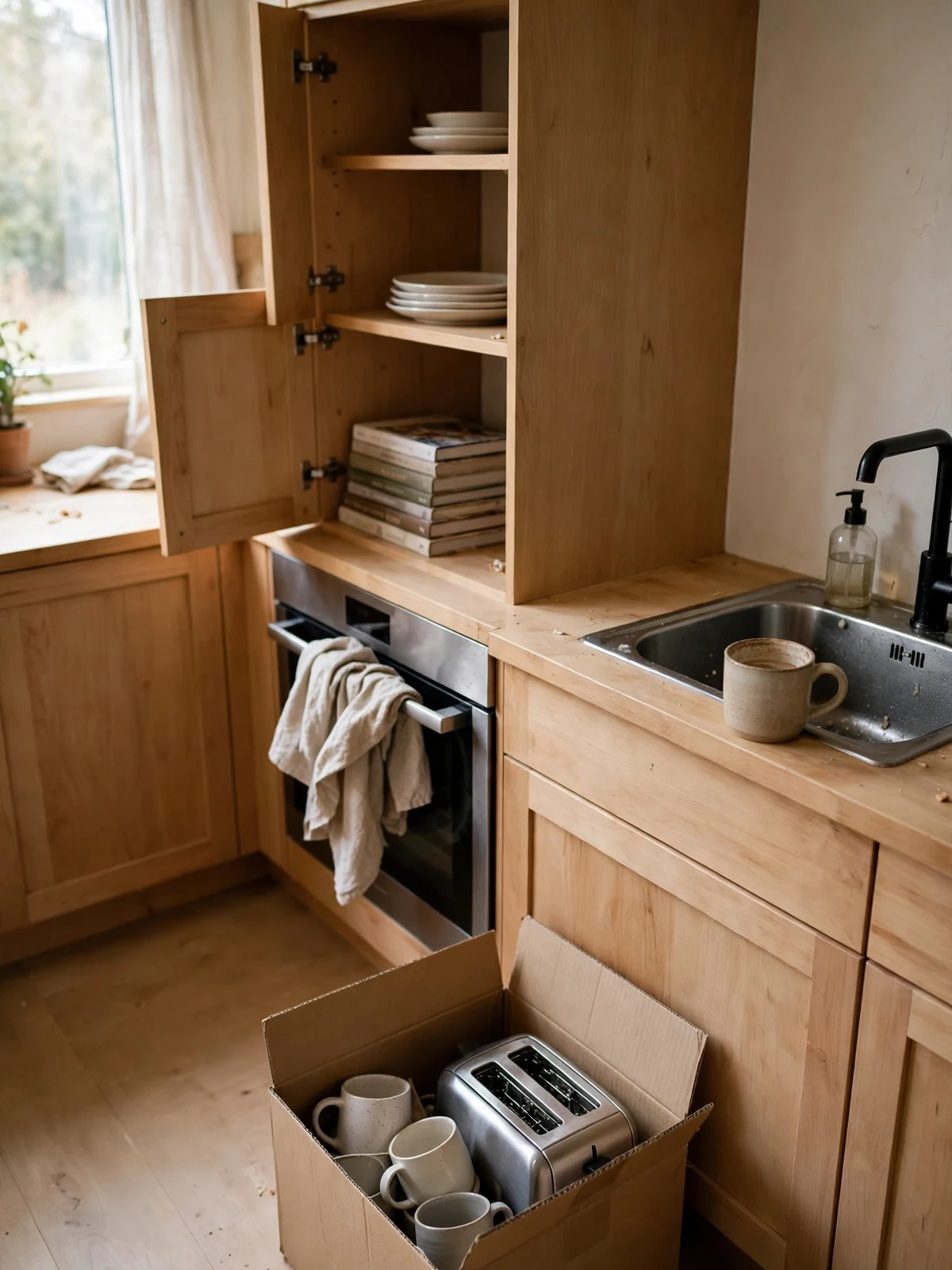
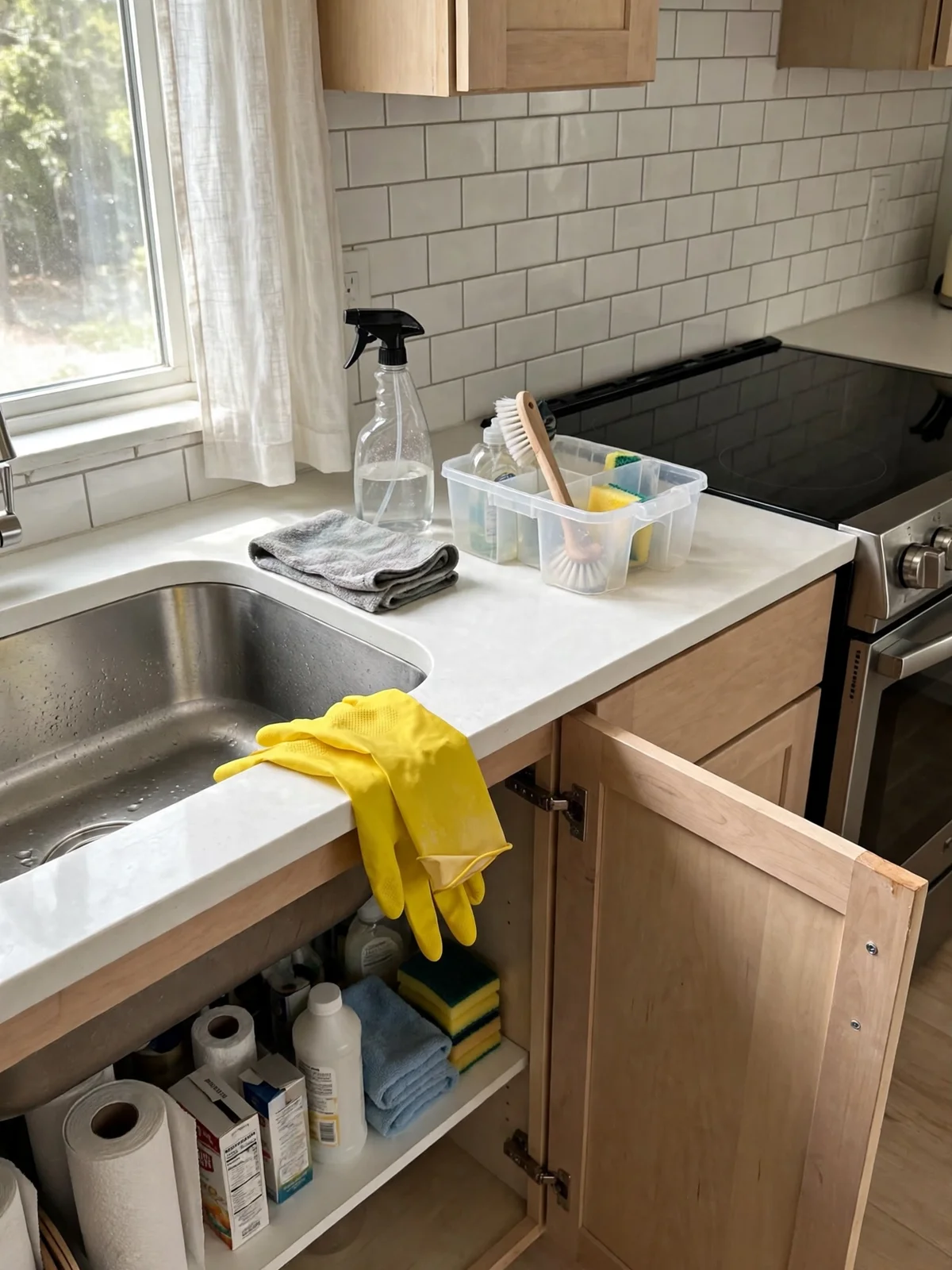
Start here, because the kitchen holds almost nothing sentimental — nobody cries over a duplicate potato peeler. Toss expired food, chipped mugs, warped containers and every lid that has no matching tub. Donate the extras honestly: the second toaster, the novelty mugs, the gadget you used twice in 2022. Keep the workhorses you reach for daily. Work one zone at a time — counters first, then one cabinet, then one drawer — and give homes to the survivors with drawer dividers so categories stop mingling. One honest warning: the mug cupboard and the plastic-container drawer are where kitchens hide their clutter, so don't skip them just because the counters look fine. The cupboard under the sink counts as its own zone; our under-sink storage ideas show how to keep it calm afterwards. Your 15-minute starter task: clear the counters completely, then fill one donation box with duplicates and put it by the door.
The Bedroom

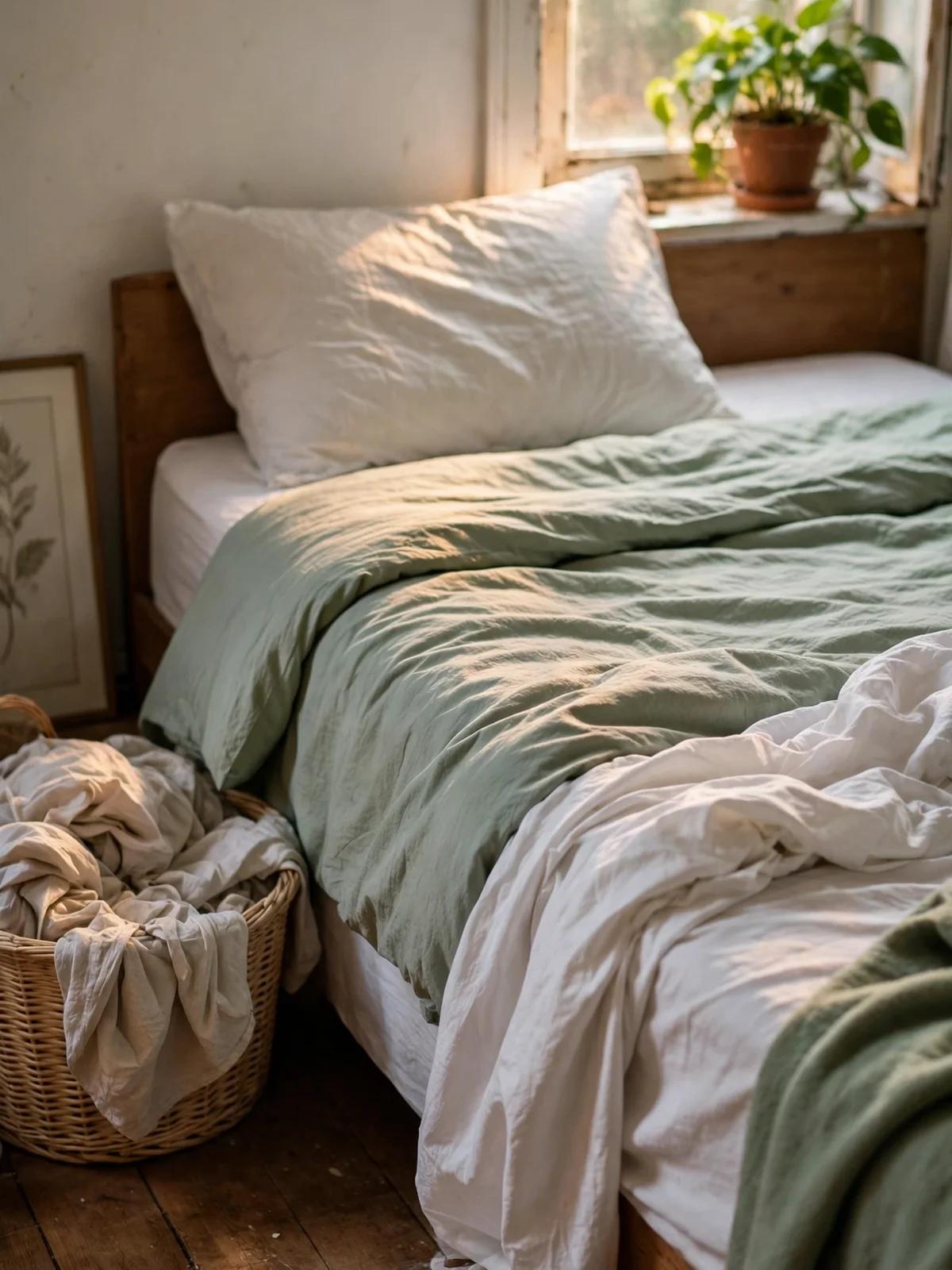
Your bedroom should be the calmest room in the house, and clutter here is usually soft and sneaky: clothes on the chair, books breeding on the nightstand, bedding you never rotate. First, make the bed — it becomes your sorting table. Toss stained or threadbare bedding, broken hangers and anything ripped beyond a quick repair. Donate clothes that don't fit your body or your life right now. Keep what you wear, read and use weekly. Sort everything else into piles right on the bed: keep, donate, belongs-elsewhere. When you reach the drawers, our dresser drawer organization ideas pair neatly with a set of drawer dividers to keep the piles from creeping back. While you're in here, check under the bed with a torch — it's a magnet for lost socks, empty glasses and things you swore you'd put away properly months ago. Your 15-minute starter task: clear both nightstands down to a book, a charger and a glass of water.
The Bathroom

Bathrooms are small, which makes them fast — and the clutter here is mostly bottles. Toss expired medicine (pharmacies take it back), ancient makeup, crusty half-empty products and the hotel minis you were never going to use. Donate unopened toiletries to a local shelter; they'll be used this week. Keep only what your daily routine actually touches. Work in passes: counter first, then the medicine cabinet, then under the sink, and wipe each surface while it's empty — ten seconds now saves a deep clean later. Group what survives by person or by job, so the morning version of you isn't digging around at 7 a.m. Keep one small backup of daily essentials if you like, but five spare bottles of the same shampoo is a stockroom, not a bathroom. Your 15-minute starter task: empty the medicine cabinet, check every date, and put back only the products you'd buy again today.
The Living Room

The living room is where clutter goes to be seen by guests, so this room pays you back fast. Toss dead batteries, remotes for TVs you no longer own, old magazines and anything broken that's been 'waiting for repair' for a year. Donate books you won't reread, games nobody plays and decor you've stopped actually seeing. Keep what's used weekly — the throw people fight over stays; the fourth cushion nobody touches can go. Start with surfaces: coffee table, shelves, the top of every cabinet. Then grab a laundry basket and sweep up everything that belongs in another room; our small apartment storage ideas are full of tricks if this room has to do three jobs at once. Be honest about the DVD shelf and the board-game stack, too — if nobody has opened them since the last phone upgrade, they've already told you their answer. Your 15-minute starter task: clear the coffee table down to one book and one plant, and do one full basket sweep of the room.
The Entryway

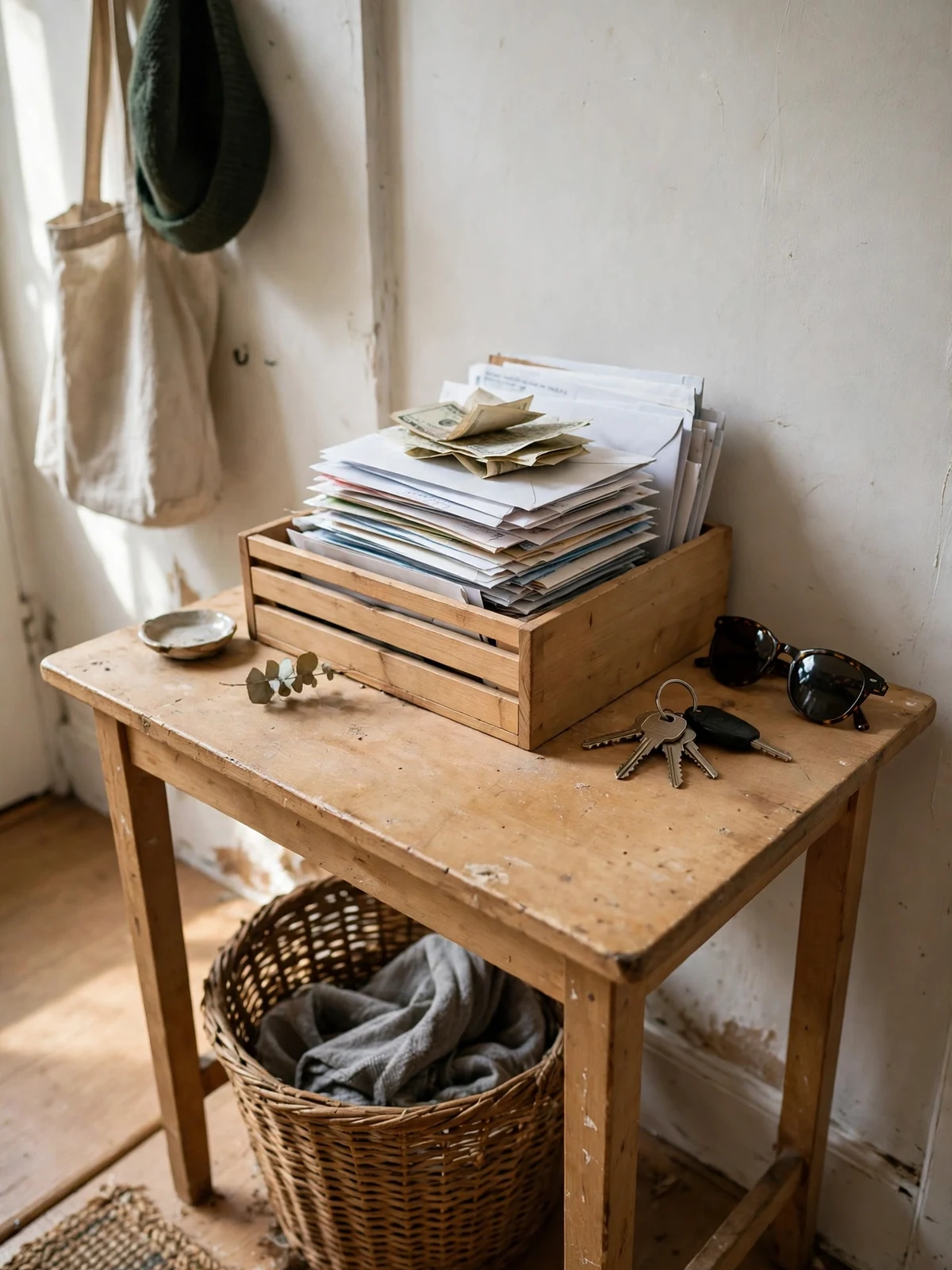
The entryway sets the tone for the whole home — it's the first thing you see and the last place clutter gets questioned. Toss single gloves, dead umbrellas, dried-out shoe polish and the stack of junk mail. Donate shoes and coats that haven't left the house in a year; someone will wear them this season. Keep only daily essentials here: one or two pairs of shoes per person, the coats in current rotation, one tray for keys and mail. Clear the drop zone back to completely bare, then let items earn their way back one by one — hooks and the shoe rack are for this week's life, not storage. A donate bag living by the door makes leaving with clutter as easy as leaving with your keys. Give mail a rule while you're here: it gets opened the day it arrives, and anything that survives goes straight into the tray, never onto the stairs. Your 15-minute starter task: line up every shoe by the door, match the pairs, and bag everything unworn since last season.
Halfway there — take the donations out today
Five rooms in, you probably have a box or two quietly filling up by the door. Don't let them become furniture. Put them in the car and drop them off today, even if they're not full. A donation that leaves the house is a decision finished — and the empty floor space you get back is the best motivation for the next five rooms.
The Closet and Wardrobe

Yes, the bedroom got its own section — the closet deserves one too, because this is where most of the volume hides. Toss stretched-out hangers, single socks past their mourning period, and clothes damaged beyond repair. Donate anything unworn in the last year, anything that doesn't fit, and anything you keep 'for when' — that day is not on the calendar. Keep the clothes that fit your actual week. Work one category at a time: all the tops, then all the trousers, and group the empty hangers at one end of the rail as proof of progress. Off-season pieces can live flat and out of the way — our under-bed storage ideas cover the best containers for exactly that. And mend-or-move-on applies to shoes as well: the pair waiting two years for new heels is a donation with extra steps. Your 15-minute starter task: pull just the tops, judge each one in two seconds, and hang the survivors back with breathing room.
The Kids' Room

Kids' rooms feel impossible because the clutter regenerates — but the real problem is usually volume, not mess. Toss broken toys, dried-out markers, puzzles with missing pieces and anything with a part you'll never find. Donate outgrown toys and books while they're still in good shape; they make another kid's week. Keep the true favourites, and keep them in just one or two bins — when the bins are full, something has to leave before something new arrives. Do a first pass alone for the obvious stuff, then bring the kids in for the rest. You'll be surprised how happily they release things when it's framed as passing them on. Do clothes in the same pass — anything a full size too small goes straight into the donation box, because it will not fit better next month. Your 15-minute starter task: dump one toy bin onto the rug, sort it into keep, donate and broken, and put back only the keep pile.
The Home Office

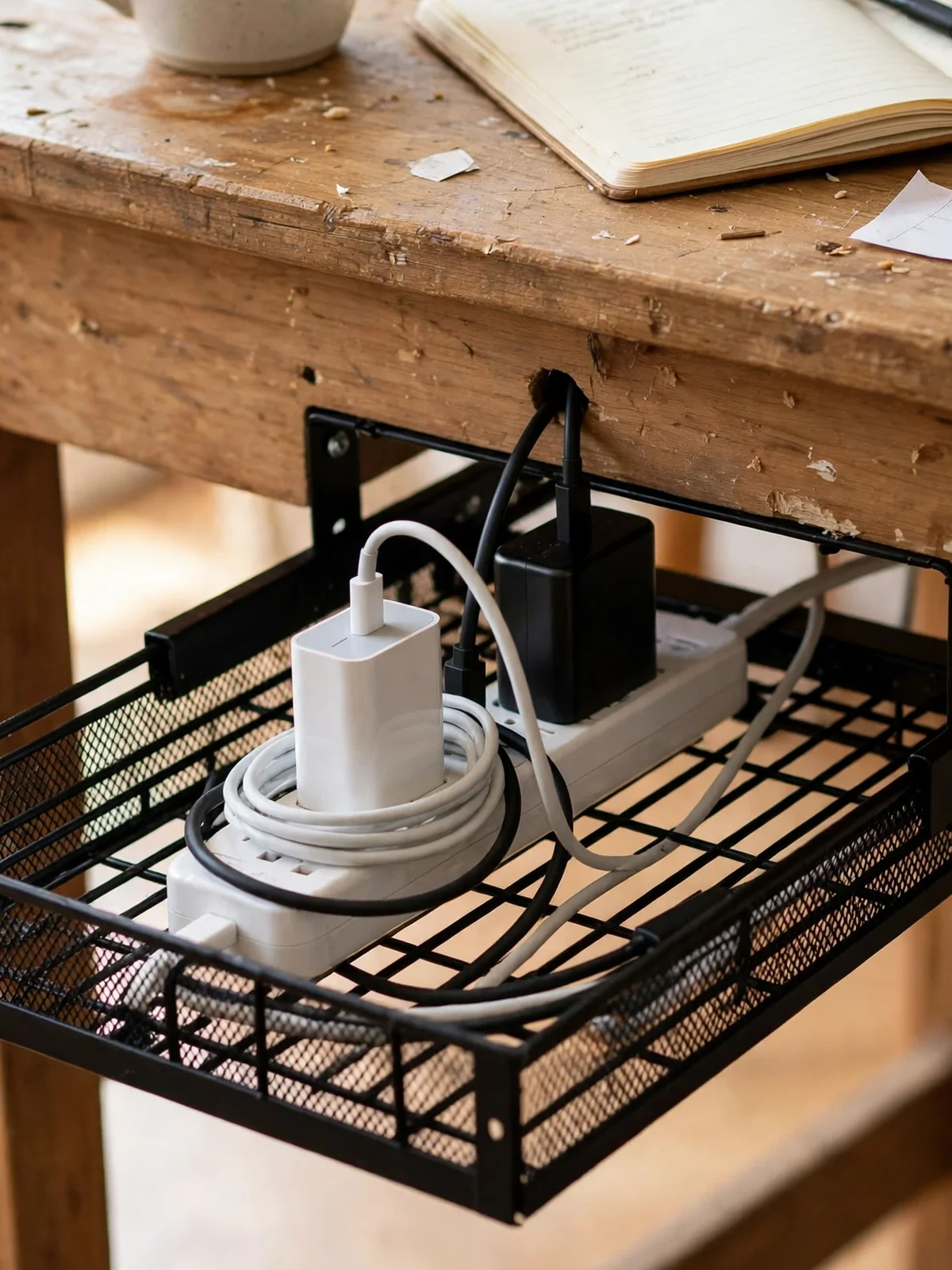
Whether it's a whole room or a corner of the kitchen table, a cluttered desk makes starting work feel twice as hard. Toss dead pens, cables for devices you no longer own, five-year-old paperwork and the stack of 'important' leaflets from 2023. Shred anything with personal details; recycle the rest without reading it first — reading is how the pile wins. Keep the desk itself almost bare: laptop, lamp, one notebook, one pen. Paper gets one tray, and only one tray — when it's full, it gets sorted, no overflow pile allowed. Tie the surviving cables along the back of the desk so they stop breeding. If you work from home, finish by emptying the desk drawer into the same three piles; it is a junk drawer wearing a blazer, and it knows it. Your 15-minute starter task: clear the desk to bare wood, wipe it, and rebuild it with only the four keepers listed above.
The Laundry and Utility Room

Small room, big dumping-ground energy. Laundry spaces collect empty bottles, single socks and everything that has no home anywhere else. Toss the empties, the mystery stain removers from brands that no longer exist, and anything that isn't actually laundry. The orphan socks get one week in a small lost-and-found basket; unclaimed after that, they go — closure is a gift. Keep it lean: one detergent, one stain treatment, a basket for folded laundry, and cleaning tools tucked in one corner. Evict anything that wandered in from other rooms; a toolbox or a toy in here is just clutter wearing a disguise. If this room also holds the household extras — batteries, lightbulbs, the good scissors — give them one labelled basket of their own so they stop migrating across every shelf. Wipe the top of the machine while it's clear. Your 15-minute starter task: empty the shelf, line up every product, and keep only the ones you'd replace tomorrow — everything else out.
The Garage and Storage

Last room, biggest feelings — save it for when your decision muscles are warmed up. Toss dried-out paint, broken tools, rusted mystery parts and every box that's been rained on, chewed on or emptied years ago. Donate the sports gear nobody has touched in two seasons and the duplicate tools. Keep seasonal decor, genuinely useful tools and the things you use at least once a year. Work in zones — one shelf, one corner — and protect one rule above all: a clear path you can walk without turning sideways. Put blank labels on every bin that stays; future you should never have to open three boxes to find the holiday lights. Old paint and chemicals usually can't go in household trash, so check your council or city website for the nearest drop-off day and put the cans by the door until then. Your 15-minute starter task: break down every empty cardboard box in the building. It takes minutes and magically finds you floor space.
Keeping it this way, without trying hard
A decluttered home stays decluttered with habits, not willpower. Keep a donation box permanently in one closet so there's always somewhere for things to go. Run a five-minute surface sweep once a week — basket in hand, like the living room task. And follow one-in, one-out for clothes and kitchen gear. That's the whole maintenance plan.
That's all ten rooms — and if you're reading this before starting, notice how none of them asked for a weekend, a skip bin, or a new storage system. Just three questions, one room at a time, and 15 minutes to get moving. You don't have to follow this order, either: kitchen first works because it's easy, but if the entryway is the room that greets you with stress every evening, start there instead. Done is a direction, not a deadline. Pick the first room, set a timer, and let one clear counter or one empty shelf prove to you that this works. The rest of the house is just the same small win, repeated ten times. When a room starts drifting again in a few months — and one will — you won't need this whole guide. Just open that room's section, run its 15-minute task, and you're back.
Room-by-Room Decluttering FAQs
Expert answers & styling advice
Where should a beginner start decluttering? ▼
Start with the kitchen. It holds almost nothing sentimental, so decisions are fast, and you use it every day, so the payoff arrives at breakfast tomorrow. If your kitchen is already in decent shape, start with the entryway instead — it's small, it's visible, and a calm doorway changes how the whole home feels when you walk in.
How long does it take to declutter a whole home? ▼
At the pace in this guide — one room at a time, working in short sessions — most people finish a first full pass in two to four weekends. The 15-minute starter tasks alone can clear the worst of every room in a single weekend. A deep garage or a very full home takes longer, and that's fine: the rooms you've finished stay finished while you work. How fast you go matters far less than keeping each finished room finished.
What should I do with everything I declutter? ▼
Usable items go in your donation boxes and out of the house within a day or two — charity shops, shelters and community groups take most household goods gladly. A few genuinely valuable pieces are worth selling, but set a deadline: if it hasn't sold in two weeks, donate it. Broken, stained or expired things go straight to trash or recycling. The one rule that matters: nothing decluttered ever lands in a 'decide later' pile.
How do I declutter when I feel overwhelmed? ▼
Shrink the job until it stops feeling big. Not the kitchen — one drawer in the kitchen. Set a timer for 15 minutes, work only until it rings, and then stop without guilt, even mid-shelf. Overwhelm usually comes from picturing the whole house at once; nobody declutters a whole house. They declutter one small space, then another. Finished and small beats ambitious and abandoned, every single time.
What if my family keeps bringing clutter back in? ▼
Most re-cluttering is a systems problem, not a people problem. Clutter piles up where things have no home, so give the daily stuff obvious landing spots: one tray for keys and mail, one donation box in a closet, bins in the kids' room that say when they're full. Get the family involved in their own spaces rather than policing shared ones, and make one-in, one-out a house habit instead of a rule you enforce alone.