
The 30-Day Declutter Challenge: One Small Task a Day


A whole-home reset without the weekend purge: 30 small daily tasks — one drawer, one shelf, one zone at a time — that take your home from cluttered to calm in 15 to 30 minutes a day.
Table of Contents (30 Ideas)
- 1.Day 1: The Junk Drawer
- 2.Day 2: The Fridge
- 3.Day 3: The Entryway Drop Zone
- 4.Day 4: Bathroom Counter and Medicine Cabinet
- 5.Day 5: The Nightstands
- 6.Day 6: Kitchen Counters
- 7.Day 7: Your Bag and Wallet
- 8.Day 8: The Pantry
- 9.Day 9: Pots, Pans and Cooking Tools
- 10.Day 10: Under the Kitchen Sink
- 11.Day 11: The Spice Cabinet
- 12.Day 12: Dresser Drawers
- 13.Day 13: The Shoe Collection
- 14.Day 14: The Linen Closet
- 15.Day 15: Your Main Wardrobe
- 16.Day 16: Coats and Seasonal Clothes
- 17.Day 17: The Paper Pile
- 18.Day 18: The Desk and Home Office Corner
- 19.Day 19: Phone Photos and Screenshots
- 20.Day 20: Email Inbox and Subscriptions
- 21.Day 21: The Bookshelves
- 22.Day 22: Toys and Games
- 23.Day 23: Storage Boxes and Holiday Decor
- 24.Day 24: The Laundry Room
- 25.Day 25: Under the Beds
- 26.Day 26: Under the Bathroom Sinks
- 27.Day 27: The Sentimental Box
- 28.Day 28: The Spare Room
- 29.Day 29: The Whole-Home Surface Sweep
- 30.Day 30: Final Walk-Through and Donation Drop-Off
If the idea of a weekend declutter purge makes you want to close this tab, you're in the right place. Most homes don't get cluttered in a day, and they don't get clear in one either — they get clear in small, ordinary moments, repeated.
This challenge is built on one simple rule: a tiny task beats a heroic effort. Every day for 30 days, you'll tackle one small, specific spot — a drawer, a shelf, a single category — in about 15 to 30 minutes. No renting a dumpster. No crying over a closet at midnight.
Work through the days in order if you can; the easy wins come first on purpose, and the deeper zones arrive once you've built some momentum. Miss a day? Just pick up where you left off. By Day 30, you'll have touched every corner of your home — gently. And when a space is cleared, keep it that way with our small closet organization ideas.
 Save Pin
Before you start
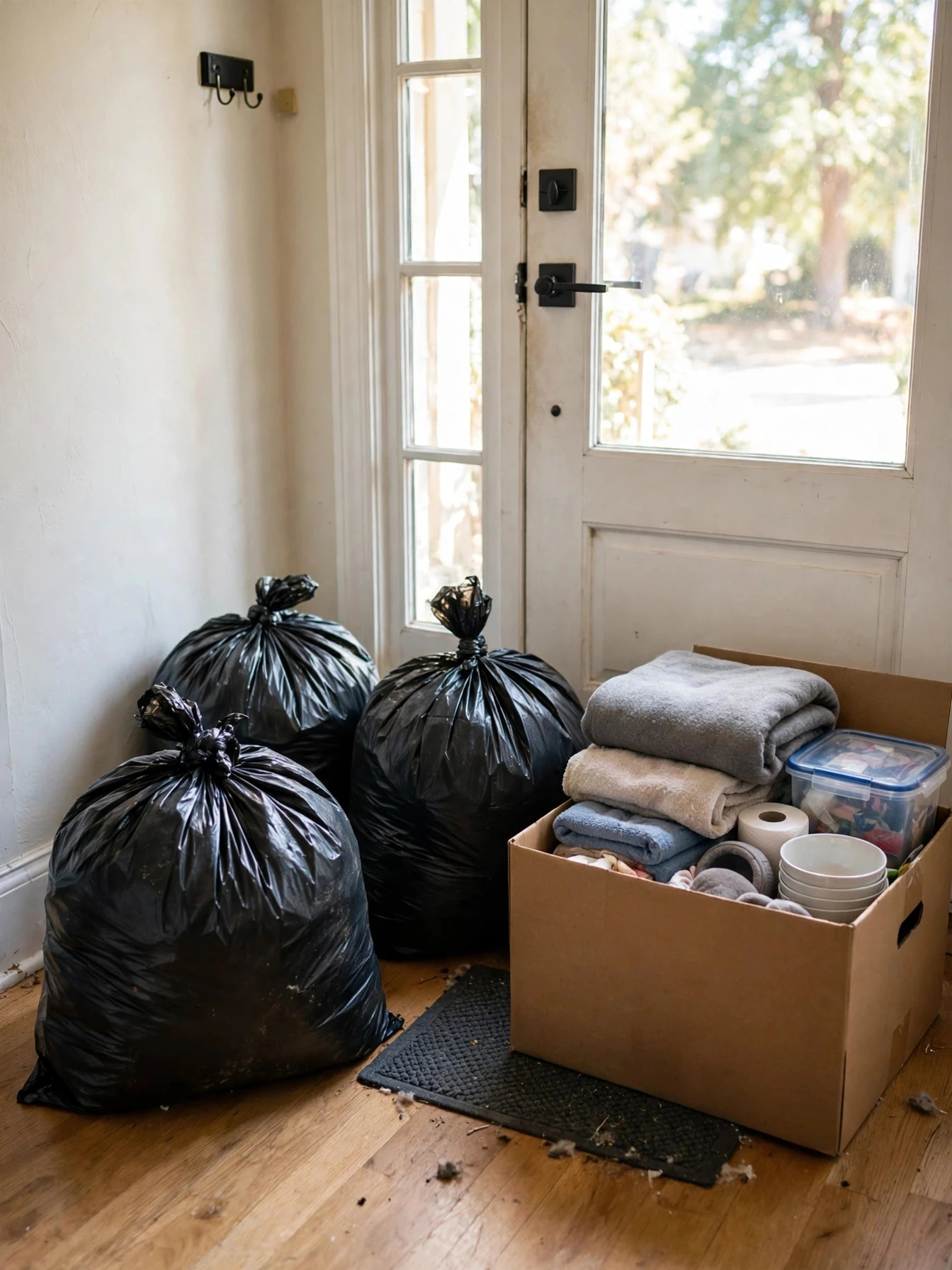
Set up three stations before Day 1 and the whole month gets easier: a box of donation bags for things leaving the house, a roll of trash bags for the genuinely finished stuff, and one keep-elsewhere box for items that belong in another room. When a bag fills up, it goes in the car the same day — out of sight, out of the house, done.
Day 1: The Junk Drawer

Everyone has one, and it's the kindest place to start. Tip the whole drawer out onto the counter. Toss dead pens, dried-out glue, mystery keys, and the tangle of chargers for phones you no longer own. Group what's left — batteries, tape, scissors, a small tool or two — and only put back what you'd actually come looking for here. Quick win, big momentum.
Day 2: The Fridge

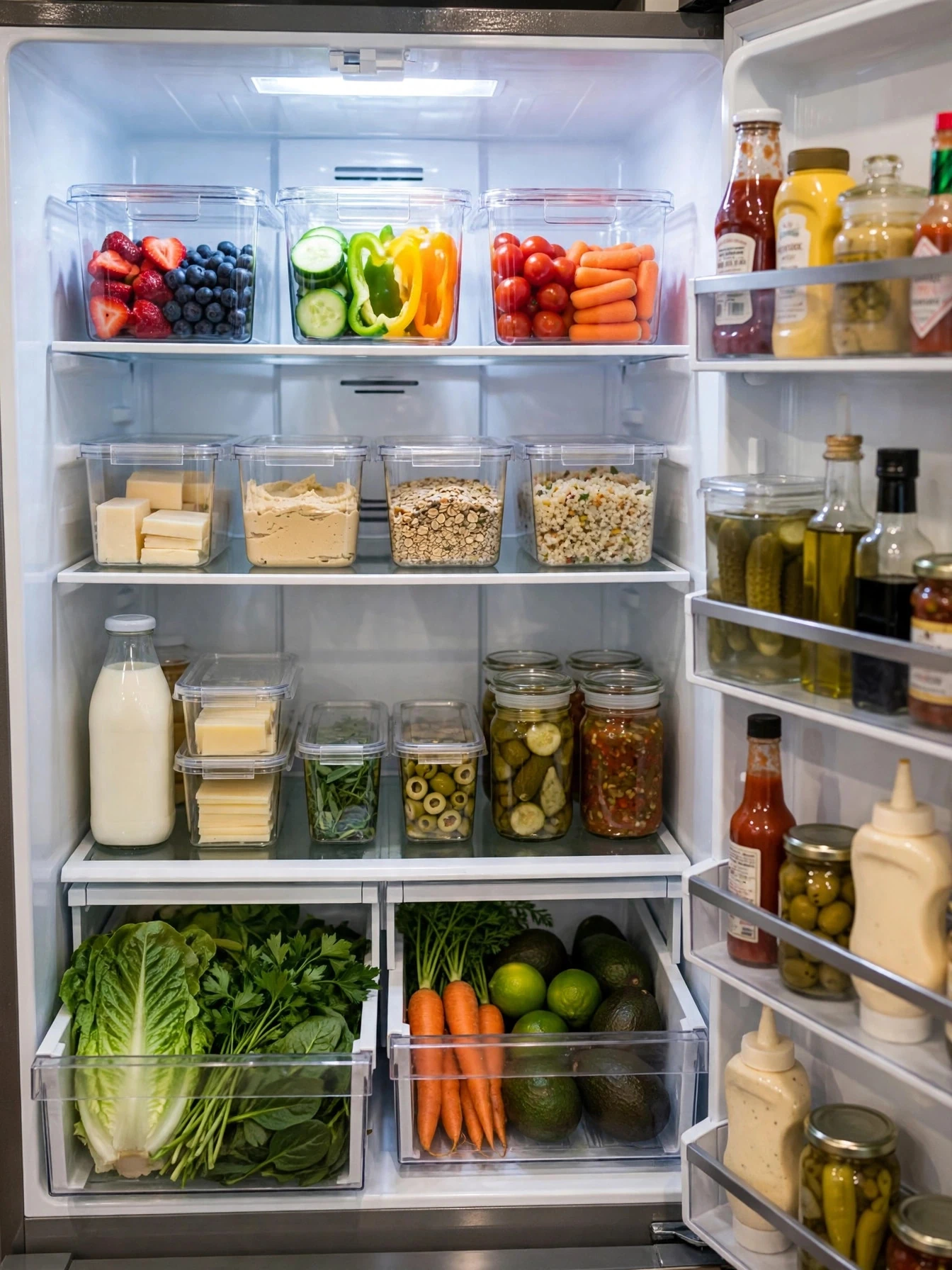
Open the fridge and be honest about what's lurking at the back. Toss anything expired, fuzzy, or unidentifiable, and wipe the shelves while they're half empty. Group what's left by type — condiments together, leftovers at eye level where they won't be forgotten. Nothing goes back without a reason. A clean fridge makes the whole kitchen feel lighter, and tomorrow's cooking easier.
Day 3: The Entryway Drop Zone

Shoes, mail, keys, bags — the entryway collects it all. Today, clear the whole drop zone back to bare. Every item gets a home or gets out: shoes you don't wear go in the donation bag, old mail goes to recycling, and only daily essentials stay. One hook or tray for keys, one spot for bags. Walking into calm beats walking into clutter.
Day 4: Bathroom Counter and Medicine Cabinet

Bathroom counters shrink under bottles nobody uses. Clear everything off, wipe the surface, then check every product: expired medicine goes to a pharmacy take-back, ancient makeup goes in the trash, and half-used products you hate don't earn a comeback. Keep daily items only. The rule is simple — if you wouldn't buy it again today, it doesn't live on your counter.
Day 5: The Nightstands

Nightstands quietly become mini junk drawers with lamps. Empty yours completely: old tissues, dead batteries, four lip balms, books you finished months ago. Keep the current book, your charger, water, and one or two true essentials. Everything else finds a real home or leaves. You'll feel this one tonight — a clear nightstand makes the whole bedroom feel calmer, and sleep comes easier.
Day 6: Kitchen Counters

Counters are workspace, not storage. Clear them completely and clean underneath everything. Then bring back only what you use daily — for most people that's the kettle or coffee maker and maybe a knife block. Appliances used weekly or less earn a cupboard spot instead. The test: if it hasn't been touched in seven days, it doesn't deserve counter space. Cooking feels different on clear counters.
Day 7: Your Bag and Wallet

Tip your everyday bag onto the table and prepare to be amazed. Old receipts, loose mints, three pens, a tangle of loyalty cards. Empty your wallet too — keep the cards you actually use and ditch the expired ones. Only the daily essentials go back in. A lighter bag sounds trivial, but finding your keys in two seconds flat is a small daily gift.
Day 8: The Pantry

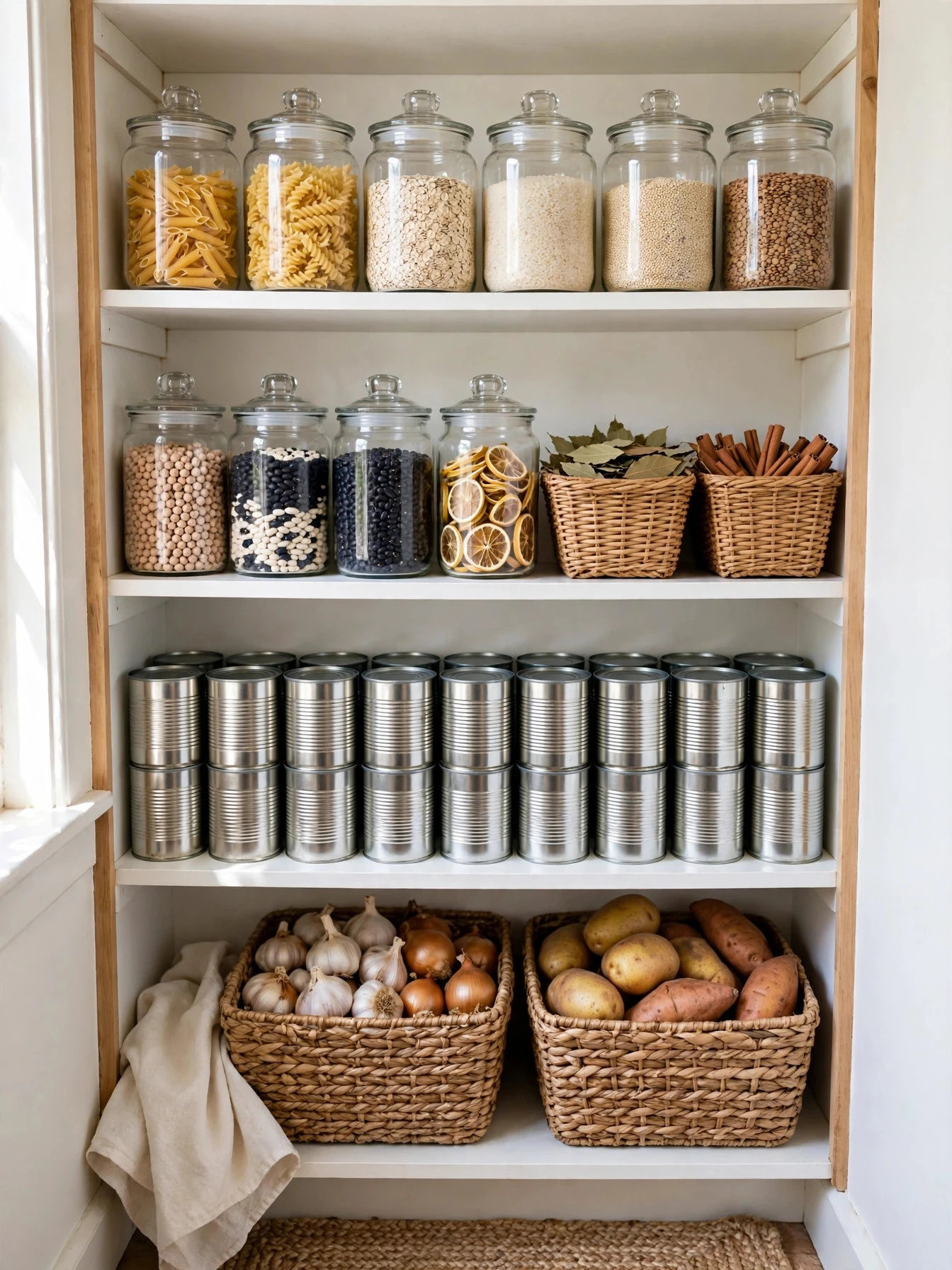
Work shelf by shelf so the pantry never becomes a bomb site. Check dates on everything — stale crackers, ancient spices, that sauce from two summers ago. Group what's left: baking together, snacks together, tins in one row. Face labels out so you can see what you own. Duplicates you won't use before they expire go into a food bank box.
Day 9: Pots, Pans and Cooking Tools

Open the cupboard where pots go to fight. Pull everything out and match each pan to its lid — lidless pans and potless lids both leave. Be honest about the scratched nonstick, the warped tray, and the third frying pan you never reach for. Keep the workhorses you use weekly. Stack or nest the survivors so nothing clangs at 7 a.m. again.
Day 10: Under the Kitchen Sink

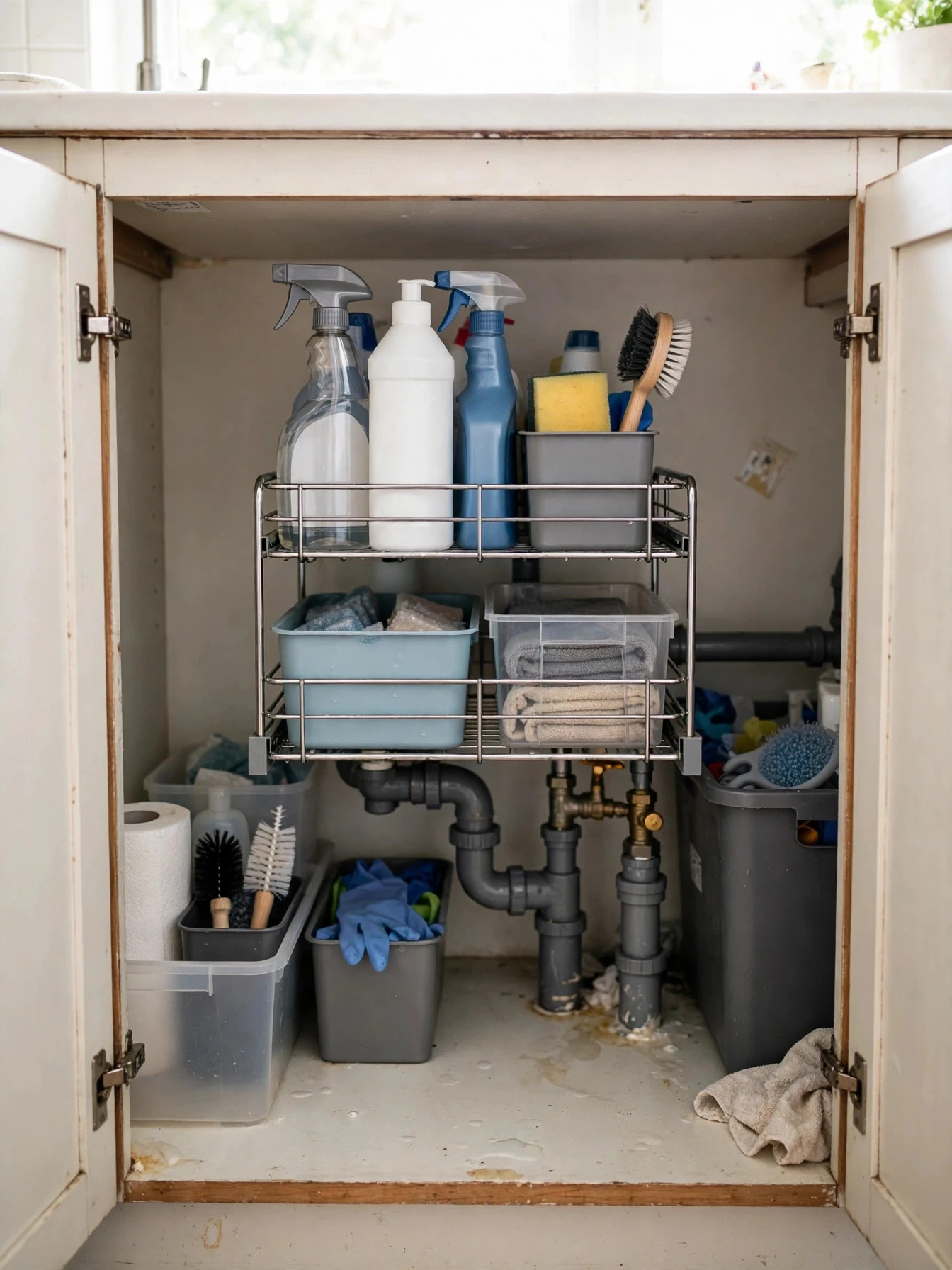
The under-sink cupboard hides leaks, half-empty bottles, and a forest of plastic bags. Empty it, check for damp, and wipe it dry. Combine duplicate cleaning products, toss the ones you never reach for, and corral the rest in one caddy or bin. Keep only what serves this sink. If you find a leak, today you also found your next repair job.
You're a third of the way there
Ten days in, pause and notice: a drawer that opens without a fight, a fridge you can actually see into, counters you can cook on. If a day felt hard, that's normal — momentum comes from small wins stacking up, not from motivation. Take a photo of your favourite fixed spot today. On the tougher days ahead, that photo is your reminder of why you started.
Day 11: The Spice Cabinet

Spices fade quietly, and most of us own triples of cumin. Empty the cabinet or drawer and sniff-test anything older than a year — ground spices that smell like dust are dust. From today, write the year on new jars with a marker so this never builds up again. Alphabetical order sounds fussy until you're mid-recipe. Merge duplicates into one jar and let the extras go.
Day 12: Dresser Drawers

Go one drawer at a time so you never face a mountain. Empty it, and hold each item for one second: worn in the last year? Fits? Feels good on? Anything failing two of the three goes in the donation bag. Refold what's left so you can see every piece at a glance — file folding works wonders here. Repeat per drawer, and rest between each.
Day 13: The Shoe Collection

Line up every pair you own — yes, all of them, in one place. It is always more than you think. Worn-out soles, pinching heels, and the trainers with the hole all leave today. Keep the pairs you genuinely wear each season and give each a spot by the door or in the closet. If you haven't worn them in a year, someone else will.
Day 14: The Linen Closet

Linen closets breed towels. Pull everything out and count honestly: how many towel sets does your household actually rotate? Keep the best two sets per bathroom, plus one for guests, and demote the rest to rags or the donation bag. Stained and threadbare sheets go. Refold the survivors into tidy stacks you can see at a glance. Bonus calm, every single wash day.
Day 15: Your Main Wardrobe

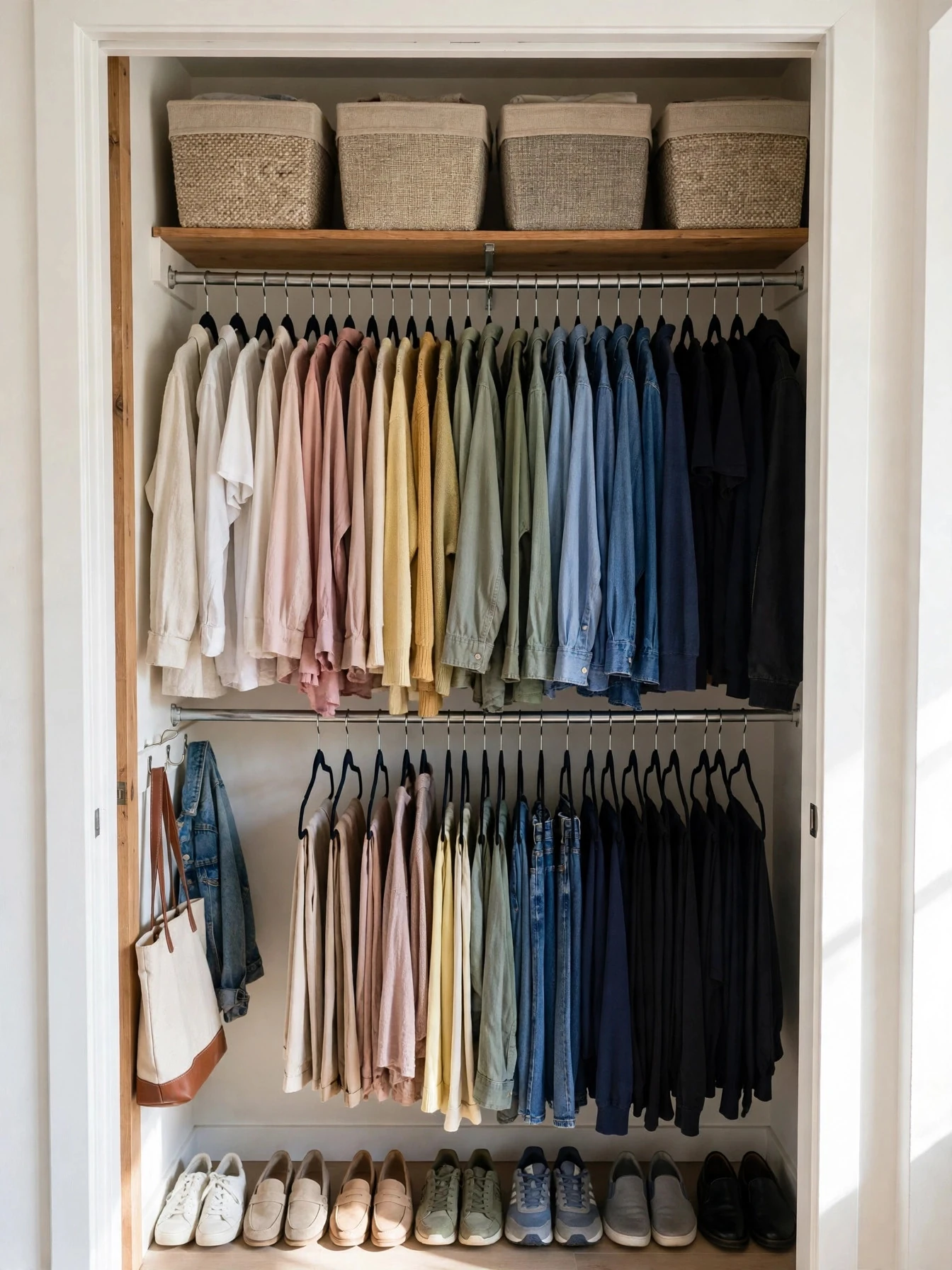
The big one — but you have a system now. Take out one category at a time: all the tops, then all the trousers. Hold each piece and ask the only question that matters: would I choose this in a shop today? If not, it goes. Keep the clothes that fit your actual life, not a fantasy one. Hang the survivors with breathing room around them.
Day 16: Coats and Seasonal Clothes

Seasonal clothes quietly eat half your storage. Pull out coats, scarves, and the off-season boxes. Anything unworn last winter isn't magically getting worn this one — into the donation bag it goes. Check pockets before you pack anything away; you may fund your coffee. Store what stays in one labelled place. Your future self, swapping seasons in ten minutes flat, says thank you.
Day 17: The Paper Pile

Every home has the pile: mail, leaflets, school notes, forms you'll deal with later. Today is later. Sort fast into three stacks — act, file, recycle — and be ruthless with the recycling. Most paper piles are 80% junk mail and old statements. From now on, set up one small tray as the only legal landing spot, and empty it every week.
Day 18: The Desk and Home Office Corner

Clear the desk to bare wood. Everything comes off, no exceptions. Wipe it down, then rebuild your workspace like you mean it: laptop, light, one notebook, one pen pot. Papers go to your tray system from Day 17, not back into piles. Drawers get the junk-drawer treatment if time allows. A clear desk makes starting work feel about half as hard.
Day 19: Phone Photos and Screenshots

Digital clutter counts too. Set a timer for twenty minutes and delete in batches: screenshots you've already used, duplicate bursts, blurry shots, photos of things you no longer own. Empty the deleted folder too, or it doesn't count. Star the true keepers and back them up if you can. Target: 300 deletions. Your camera roll should feel like memories, not storage fees.
Day 20: Email Inbox and Subscriptions

Twenty focused minutes on your inbox. Unsubscribe from five senders you never open — look for the link at the bottom of one email from each. Delete promotional mail in bulk by sender. Archive anything you might need later; keep the inbox itself for action only. Zero unread is optional; breathing room is the goal. Repeat weekly and it stays this way.
Two-thirds done — the home stretch
Twenty days down. Your kitchen, bedroom and inbox should all feel noticeably lighter by now. The final ten days go deeper — storage zones, sentimental things, and the spare room — so be kind to yourself and keep the tasks small. One rule for the home stretch: every donation bag that fills up leaves the house within 24 hours. No 'decide later' pile allowed.
Day 21: The Bookshelves

Books are emotional, so set a kind rule: keep the ones you'd reread, lend proudly, or reach for as reference. Duplicates, guilt-reads, and textbooks from a life you're not living can go to new readers. Fill one bag or box for the charity shop or a street library. Shelves should hold books you love, not a museum of former interests. Leave a little empty space.
Day 22: Toys and Games

If you have kids, do a first pass alone — broken toys, missing-piece puzzles, and games nobody has touched in six months. Then involve them for the rest; children often surprise you with what they'll happily release. Keep favourites accessible in one or two bins, not five. Board games with lost pieces go. The play space should invite playing, not overwhelm it. Donate the good outgrown things.
Day 23: Storage Boxes and Holiday Decor

Open the storage boxes you never open. Cables for dead devices, manuals for appliances you replaced years ago, decorations that haven't hung in three winters. Keep one clearly labelled box of true spares and let the hoard go. Holiday decor gets the same test: if it didn't go up last year, it isn't going up this year. Label what stays so next season starts easy.
Day 24: The Laundry Room

Laundry zones collect single socks, empty bottles, and everything with nowhere else to go. Clear the surfaces, toss the empties and the mystery stain removers, and evict anything that isn't laundry. Match the orphan socks or let them go — closure matters. Keep detergent, one stain treatment, and a small lost-and-found basket. Doing laundry in a calm room feels half as tedious.
Day 25: Under the Beds

Under-bed storage is where good intentions go to be forgotten. Pull everything out into the daylight. Forgotten luggage, gift wrap from two birthdays ago, the shoes you meant to return? Decide in the open: only flat, labelled, genuinely useful storage earns its place back — off-season bedding or spare blankets. Everything vague goes. Sweep the dust out while you're down there. Sleep above calm, not clutter.
Day 26: Under the Bathroom Sinks

Bathroom under-sinks rival the kitchen's for chaos. Empty, wipe, and check for drips. Combine duplicate products, toss the crusty bottles and the hotel minis you'll never use, and corral cleaning supplies into one small caddy. Keep a small basket for daily extras within reach. If two people share the sink, claim one side each — it ends the morning archaeology dig for good.
Day 27: The Sentimental Box

Today is gentle work. Gather the keepsakes scattered around the house into one box — cards, kids' artwork, tickets, photographs. One box is the limit, so choose the pieces that truly spark a memory, and photograph the rest before letting them go. This isn't about throwing away your past. It's about keeping the best of it where you can actually find it and enjoy it.
Day 28: The Spare Room

Spare rooms become the house's junk drawer. Set a timer and work in laps: trash first, then donations, then things that belong elsewhere in the house. The goal isn't a show home — it's a room with a purpose again, even if that purpose is simply a guest room with a clear bed. Every bag that leaves makes the whole house feel lighter.
Day 29: The Whole-Home Surface Sweep

Walk the whole home with fresh eyes and a laundry basket. Everything sitting on a surface that doesn't belong there goes in the basket; then walk again and put each item in its true home — or in the donation bag if it doesn't have one. This is the habit that keeps the challenge alive: surfaces are for using, not for storing. Fifteen minutes, tops.
Day 30: Final Walk-Through and Donation Drop-Off

Last day. Walk every room slowly and notice what changed: the drawer that opens without a fight, the counters you can cook on, the closet with breathing room. Take your final donation bags and boxes to the drop-off today — not soon, today. Then stand in your favourite room and enjoy it. You didn't do a purge. You built a lighter home, one small day at a time.
Day 30 isn't a finish line — it's the point where staying tidy gets easy. You now know exactly what 'done' looks like in every room, and that's what stops clutter creeping back. Protect it with three light habits: a five-minute surface sweep once a week, one-in-one-out for clothes and kitchen gear, and a donation bag that lives permanently in a closet, ready to be filled and dropped off. And when a drawer starts sticking again? You don't need another challenge. Just give it fifteen minutes — you already know you can. For the kitchen days, our fridge organization ideas go deeper than a quick declutter.
Declutter Challenge FAQs
Expert answers & styling advice
What if I miss a day? ▼
Nothing breaks. This challenge isn't a streak to protect — it's a route through your home. Miss a day, or even a week, and simply continue with the next task on the list. The order helps because the easy wins come first, but finishing matters far more than finishing on schedule.
How long should each day's task take? ▼
Most days take 15 to 30 minutes. A few deeper zones — the wardrobe on Day 15, the spare room on Day 28 — can stretch to 45. If a task feels huge, shrink the unit: one shelf instead of the whole pantry still counts. Small and finished beats big and abandoned, every time.
What do I do with everything I declutter? ▼
Anything usable goes into your donation bags and out of the house within a day or two — charity shops, shelters and street libraries all take them gladly. Anything broken, stained or expired goes straight to the trash or recycling. The one rule: decluttered items never land in a 'decide later' pile, or they'll quietly move back in.
Can I do the days out of order, or swap tasks? ▼
Yes — the route is a suggestion, not a contract. If your kitchen is already fine but your garage is a disaster zone, swap days around to match your home. The only thing worth keeping is the shape of the month: easy wins first, deeper and more emotional zones later, and the whole-home sweep at the very end.