15 Natural Cleaning Solutions With Vinegar (Non-Toxic & Cheap)

Natural cleaning made simple: 15 vinegar cleaning solution recipes — cheap, non-toxic homemade sprays, pastes and fizzes for every room, from pantry staples you already own.
Table of Contents (15 Ideas)
- 1.The Everyday All-Purpose Spray
- 2.Glass and Mirror Spray That Actually Shines
- 3.Citrus Peel Degreaser for the Kitchen
- 4.Bathroom Mildew Spray for Tile and Grout
- 5.Daily Shower Spray That Prevents Scum
- 6.Toilet Bowl Fizz Clean
- 7.Sink Drain Refresher
- 8.Microwave Steam Clean
- 9.Vinegar Mop Water for Tile and Vinyl
- 10.Stainless Steel Shine, No Fingerprints
- 11.Kettle and Coffee Maker Descale
- 12.Washing Machine Freshen-Up
- 13.Baking Soda Oven Paste, Finished With Vinegar
- 14.Grout Scrub Paste for Dingy Lines
- 15.Wood Furniture Polish With Olive Oil
Natural cleaning sounds like a compromise until you try it properly. A bottle of plain white vinegar, a box of baking soda and a lemon or two will handle most jobs in a normal home — counters, glass, the shower, the kettle, even a tired oven — for pennies per use, with no harsh fumes.
This list collects the 15 homemade cleaning solutions I actually keep in rotation. Every one is a simple vinegar cleaning solution at heart, with rough amounts, how long to leave it, and where not to use it — a few surfaces genuinely hate vinegar, and those are flagged as we go. You need no special equipment: two refillable spray bottles, a funnel, some cloths and an old toothbrush cover the whole list.
Start with the all-purpose spray and the glass spray. Once those two sit under your sink, the rest become five-minute jobs you grab when the moment appears — while the kettle boils, while the shower is still warm. Cheap, non toxic cleaning that fits real life: that is the whole idea. If you like working room by room, pair these recipes with our deep cleaning checklists and tackle one space at a time.
Three safety rules before you mix anything
Vinegar is gentle, but it is still an acid, so three rules come first. Never mix vinegar with bleach — the combination releases harmful chlorine gas. Keep vinegar off natural stone, marble and granite. And label every bottle you mix with what is inside and the date — a clear liquid in an unmarked bottle is an accident waiting in someone else's hands.
The Everyday All-Purpose Spray

This is the bottle that lives under the sink and does eighty percent of daily wiping. Mix 1 cup white vinegar and 1 cup water in a spray bottle, add a strip of lemon peel if you want a softer smell, and shake. Spray counters, tables, the fridge door, light switches and sticky spots, leave it a few seconds, then wipe with a clean cloth. The vinegar cuts grease and lifts grime without leaving residue behind. One honest warning: keep it off natural stone, marble and granite, because the acid can dull and etch them — plain soapy water is better there. Mixed fresh, it keeps happily for a few weeks.
Glass and Mirror Spray That Actually Shines

Forget blue sprays that leave their own streaks. Mix 1 cup water, 1 cup white vinegar and 1 tablespoon of cornstarch in a spray bottle, and shake well before every use — the cornstarch is the quiet trick that stops the smeary finish. Spray the mirror or window lightly, wipe with a flat-weave microfibre cloth in a zigzag, then buff once with the dry side. It clears toothpaste spots, fingerprints and shower-mirror fog marks in one pass. Work on a cool, cloudy moment if you can; hot sunshine dries the spray before you finish wiping and causes streaks. Prefer a shelf option? Windex Original is the familiar backup, but this costs cents.
Citrus Peel Degreaser for the Kitchen

Save your orange and lemon peels for a week and this one makes itself. Pack a clean jar with peels, cover completely with white vinegar, seal, and leave it in a cupboard for about two weeks. Strain, pour into a spray bottle and dilute half and half with water. The citrus oils help the vinegar cut through the film that builds up on stovetops, extractor hoods, cabinet doors near the hob and the top of the fridge. Spray, wait five minutes on stubborn grease, then wipe and buff dry. It smells like marmalade instead of a chip shop. Same rule as always: not for stone counters or marble splashbacks.
Bathroom Mildew Spray for Tile and Grout

For the pink and black spots that creep into shower corners and around the bath seal, reach for vinegar at full strength. Fill a spray bottle with undiluted white vinegar, spray the mouldy grout, silicone edges and tile corners generously, and leave it for at least an hour — this is a soak, not a wipe. Come back with an old toothbrush, scrub the loosened grime, and rinse with warm water. Repeat weekly and the corners stay ahead of the problem. Open the window while it works. And the golden safety rule, here and everywhere: never mix vinegar with bleach — together they create harmful chlorine gas.
Daily Shower Spray That Prevents Scum

The cheapest cleaning is the kind you never have to scrub for. Mix 1 cup white vinegar, 1 cup water and 1 teaspoon of washing-up liquid in a spray bottle and keep it in the shower. After your shower, while the glass and tiles are still warm and wet, give everything a quick mist and run a squeegee over the glass — thirty seconds, done. The vinegar stops limescale settling and the drop of soap cuts body-oil film before it hardens into scum. Used daily, it stretches the time between proper shower cleans from weekly to monthly. Avoid it on natural stone shower tiles; acid and stone do not mix.
The five-bottle cleaning cupboard
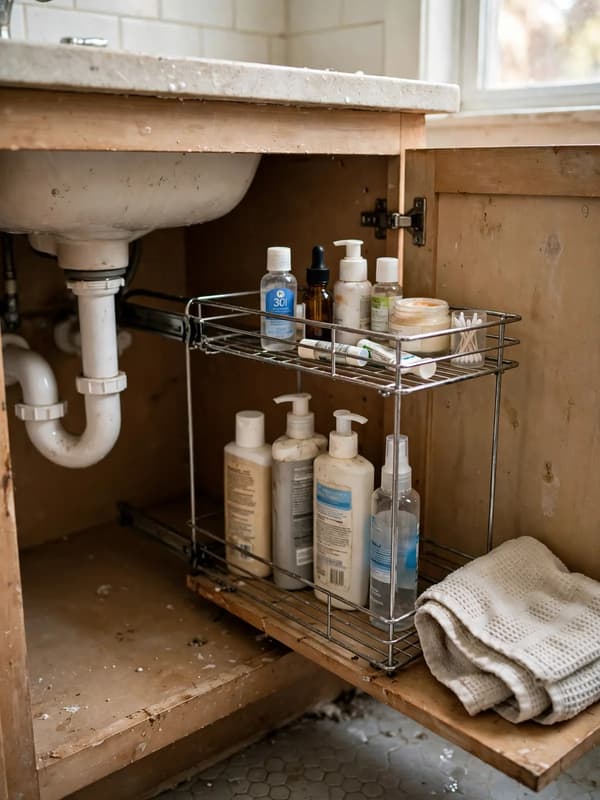
Every recipe here comes from the same tiny kit: white vinegar, baking soda, a lemon or two, ordinary washing-up liquid and water. Add two spray bottles, a funnel and a few cloths and you are stocked for months for the price of one branded spray. Keep it together in one caddy — our under-sink organization ideas show how to fit it under any sink.
Toilet Bowl Fizz Clean

This one is oddly satisfying and properly useful. Sprinkle 1 cup of baking soda all around the inside of the toilet bowl, under the rim included, then slowly pour in 1 cup of white vinegar. It will fizz enthusiastically — let it. Leave it for 10 to 15 minutes while the fizz loosens light limescale, stains and odour, then scrub firmly with the toilet brush and flush. The bowl comes up fresh without a drop of bleach, which matters in homes avoiding harsh chemicals around children and pets. For a hard-water ring, repeat the treatment and leave it half an hour before scrubbing. Simple, cheap, done.
Sink Drain Refresher

Slow, smelly drains usually just need a refresh rather than a plumber. Tip half a cup of baking soda down the plughole, follow with 1 cup of white vinegar, and quickly cover the drain with a small plate or a cloth — the fizz should work downwards, not up into the sink. Wait 15 minutes, then flush with a full kettle of just-boiled water poured slowly. It clears soap build-up, trapped grease films and the stale smell that rises from kitchen sinks. Do it monthly and drains stay sweet. Honest limit: this freshens and clears light build-up; a fully blocked drain still needs a plunger or a professional.



Microwave Steam Clean

Dried-on soup splatters surrender to steam, not scrubbing. In a microwave-safe bowl, mix 1 cup of water with 2 tablespoons of white vinegar — or swap the vinegar for half a lemon squeezed and dropped in. Microwave on high for about 5 minutes, until the window steams up, then leave the door shut for another 3 minutes so the steam can soften everything. Open carefully, lift the hot bowl out with a cloth, and simply wipe the inside walls, ceiling and door with a damp cloth. The baked-on bits slide off. Stubborn spots get a cloth dipped back in the warm bowl water.
Vinegar Mop Water for Tile and Vinyl

For tile, vinyl and laminate floors, fill a bucket with about a gallon of warm water and stir in half a cup of white vinegar. That is the whole recipe — no rinsing needed and no sticky residue for dust to cling to, which is the quiet problem with many shop floor cleaners. Mop as usual, working out of the room, and wring the mop well: floors want damp, not flooded, especially laminate. It lifts heel marks, kitchen drips and general dullness for almost nothing. Two cautions: skip vinegar on stone floors, and on waxed or unsealed wood, where it can dull the finish over time.
Stainless Steel Shine, No Fingerprints

Stainless fridges and ovens show every touch, but they clean up beautifully with the mildest mix on this list. Fill a small spray bottle with half vinegar, half water, mist the surface lightly, and wipe with the grain using a soft microfibre cloth — direction genuinely matters for a streak-free finish. For the final polish, put a few drops of olive oil on a clean dry cloth and buff the whole door; the thin film makes fingerprints far less visible for days. Avoid abrasive pads and powdered scourers, which scratch the grain permanently. Two minutes, and the kitchen looks newer than it has any right to.
When homemade is not the answer
Honesty helps here: vinegar is a cleaner, not a hospital disinfectant. For raw-meat spills, illness in the house, or anything that genuinely needs sanitising, use a proper disinfectant and follow its label. Homemade mixes also lose strength over a few weeks, so make small batches. Everything else — the daily grime of a lived-in home — these homemade cleaning solutions handle happily.
Kettle and Coffee Maker Descale

If your kettle sounds louder and takes longer, limescale is the reason. Fill the kettle halfway with equal parts water and white vinegar, bring it to the boil, switch it off and leave it to sit for 30 to 60 minutes. Tip it away, rinse, then boil a full kettle of plain water and discard that too — tea should taste like tea. For a drip coffee maker, run the same half-and-half mix through a brew cycle, let it sit 30 minutes in the pot, then run two plain-water cycles. Do it every month or two in hard-water areas and both appliances last noticeably longer.
Washing Machine Freshen-Up

The machine that cleans your clothes builds up detergent residue and mildew in the seal, and eventually the laundry smells of it. For a front loader, pour 2 cups of white vinegar into the detergent drawer and run the hottest empty cycle the machine has. When it finishes, wipe inside the rubber door seal and around the drawer with a cloth dampened in the same vinegar, leave the door ajar, and let everything dry. Once a month keeps the musty smell away entirely. Do not add baking soda to the same cycle — it just neutralises the vinegar. If you want the soda step, run it separately on another day.
Baking Soda Oven Paste, Finished With Vinegar

Harsh oven sprays are the one product most people happily ditch. Stir half a cup of baking soda with about 3 tablespoons of water into a spreadable paste, and smear it over the oven walls, base and door — avoiding the heating elements. Leave it overnight, or at least 8 hours. The next day, scrape the loosened paste off with a plastic scraper into the bin, then spray the residue with white vinegar; the gentle fizz lifts the last film so it wipes away with a damp cloth. It asks for patience rather than effort, and there are no fumes hanging over dinner. Store-bought fallback: Easy-Off Fume Free.
Grout Scrub Paste for Dingy Lines

When grout has gone grey-brown and a spray is not enough, a paste and a small brush win. Mix half a cup of baking soda with water, a tablespoon at a time, until it is toothpaste-thick. Spread it along the grout lines with an old toothbrush, then lightly spray with white vinegar so it fizzes, and scrub in small circles. Work a square metre at a time, wiping the slurry away with a damp cloth as you go so you can see the colour coming back. Rinse well at the end. Test a hidden patch first on coloured grout, and keep this paste off marble and natural stone tiles.
Wood Furniture Polish With Olive Oil

The gentlest recipe here is for wood that looks dry and tired. Shake together 3 parts olive oil and 1 part white vinegar — for a small batch, 3 tablespoons of oil to 1 tablespoon of vinegar — in a small jar. The vinegar cleans and cuts the old waxy film while the oil feeds the grain. Dip a soft cotton cloth in, wring it almost dry, and rub along the grain, then buff with a second clean cloth so nothing feels greasy. Tables, chairs and sideboards come up warm and deep-toned. Always test a hidden corner first, never use it on floors — polished wood underfoot is a skating rink — and make small batches fresh.
None of this asks you to become a different kind of housekeeper. It is one bottle of vinegar, one box of baking soda, and a handful of small habits: a mist in the shower, a fizz in the sink monthly, a paste left overnight when the oven finally bothers you. The bigger change is a cleaning cupboard with five things in it that you can name.
Pick two recipes this week, not fifteen. Put them where you will actually use them, and let them earn their place. If you want a rhythm to hang them on, our Sunday reset routine pairs beautifully with a homemade spray or two.
Natural Cleaning FAQs
Expert answers & styling advice
Is vinegar safe on every surface? ▼
No — the one thing to remember. Vinegar is an acid, so keep it off natural stone, marble, granite and unsealed grout, and be cautious with waxed wood, where it can dull the finish. On ceramic tile, glass, porcelain, stainless steel and most sealed counters it is completely safe. When in doubt, test a hidden corner first.
Can I mix vinegar and baking soda together? ▼
Yes — this list does it on purpose in the toilet, drain and grout recipes, because the fizz itself loosens grime. Just know that once the fizzing finishes, the two have mostly neutralised each other, so the power is in the fizzing moment, not a stored mixture. Never seal a fresh vinegar-and-soda mix in a closed bottle; the gas needs somewhere to go.
Does vinegar actually disinfect? ▼
Vinegar cleans very well and reduces some bacteria, but it is not a registered disinfectant and should not be relied on where real sanitising matters — after raw meat or during stomach bugs. Use a proper disinfectant there. For everyday dirt, grease, limescale and odours, vinegar is more than enough.
How long do homemade cleaning solutions keep? ▼
Plan on two to four weeks for the water-based sprays, then mix fresh — they have no preservatives, and the citrus degreaser is happiest within a month of straining. Pastes should be mixed fresh each time. Write the date on the bottle when you mix it; masking tape and a pen make it a two-second habit.
Will my home smell like vinegar afterwards? ▼
Only briefly. The sharp smell fades as the surface dries, usually within 15 to 30 minutes. If it bothers you, the citrus peel degreaser is the answer — steeped peels replace most of the sharpness with a marmalade scent. Opening one window while you clean speeds things along too.