15 Deep Cleaning Checklists, Room by Room

Fifteen room-by-room deep cleaning checklists with the actual tasks written out — top to bottom, floors last — so a seasonal deep clean feels like ticking boxes, not tackling chaos.
Table of Contents (15 Ideas)
- 1.Kitchen Deep Clean
- 2.Bathroom Deep Clean
- 3.Bedroom Deep Clean
- 4.Living Room Deep Clean
- 5.Windows and Glass
- 6.Floors Throughout
- 7.Appliances, Inside and Out
- 8.Entryway and Mudroom
- 9.Laundry Room Deep Clean
- 10.Home Office Deep Clean
- 11.Kids' Rooms and Play Spaces
- 12.Walls, Baseboards and Doors
- 13.Curtains, Blinds and Upholstery
- 14.Garage and Utility Spaces
- 15.The Whole-Home Final Pass
There comes a point, usually when the seasons change, when a normal tidy stops cutting it. The grout looks grey, the baseboards have a fur coat, and your cloth comes away dirty from a 'clean' surface. That's deep clean territory — and the only way it feels manageable is room by room, checklist in hand.
This deep cleaning checklist breaks the whole job into 15 zones, from the kitchen to the garage, with the actual tasks written out for each one. Work top to bottom inside every room — dust and crumbs fall down, so floors always come last — and you'll never re-clean something you just finished. Spread it over a weekend or a few evenings — one or two zones a day is a perfectly good pace.
Think of this as your seasonal reset: the Daily tidy keeps surfaces clear, the Weekly reset keeps rooms ticking over, the Monthly jobs stop grime building up — and a list like this handles everything those routines miss. If clutter is in the way before you can even start, run our 30-day declutter challenge first, then come back. Grab a caddy, put on some music, and start with the kitchen — it gives back the most.
Build your caddy before you start
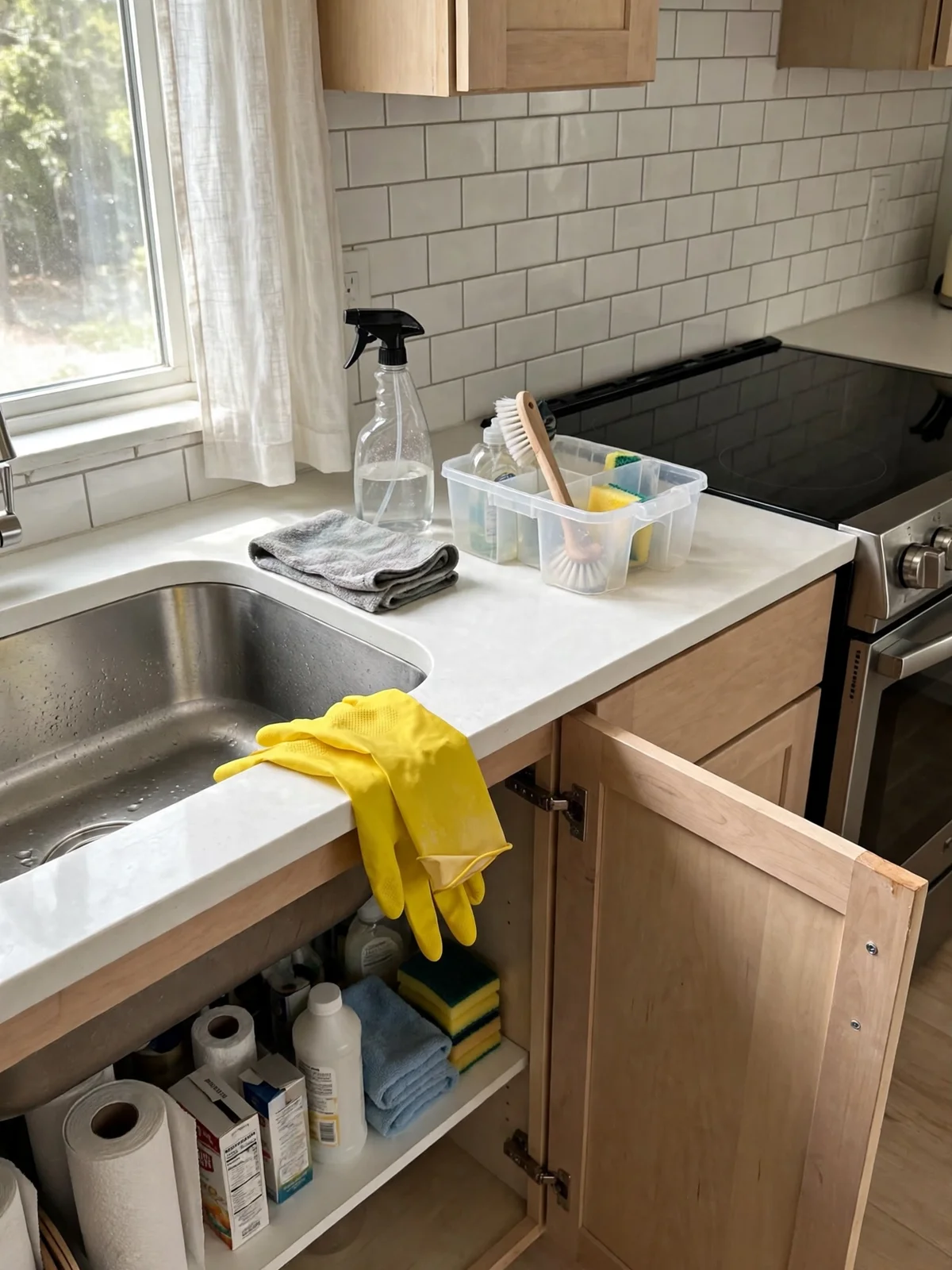
Half of deep cleaning is walking back for supplies unless you carry them. Load a cleaning caddy once: all-purpose spray, bathroom cleaner, glass cleaner, dish soap, baking soda, white vinegar, a stack of microfiber cloths (colour-code them — bathroom cloths never travel), two scrub brushes (one stiff, one old toothbrush for grout and taps), rubber gloves, a squeegee, bin bags and a melamine sponge. Refill it between rooms, wash the cloths at the end of the day, and the next zone starts in seconds instead of ten minutes.
Kitchen Deep Clean

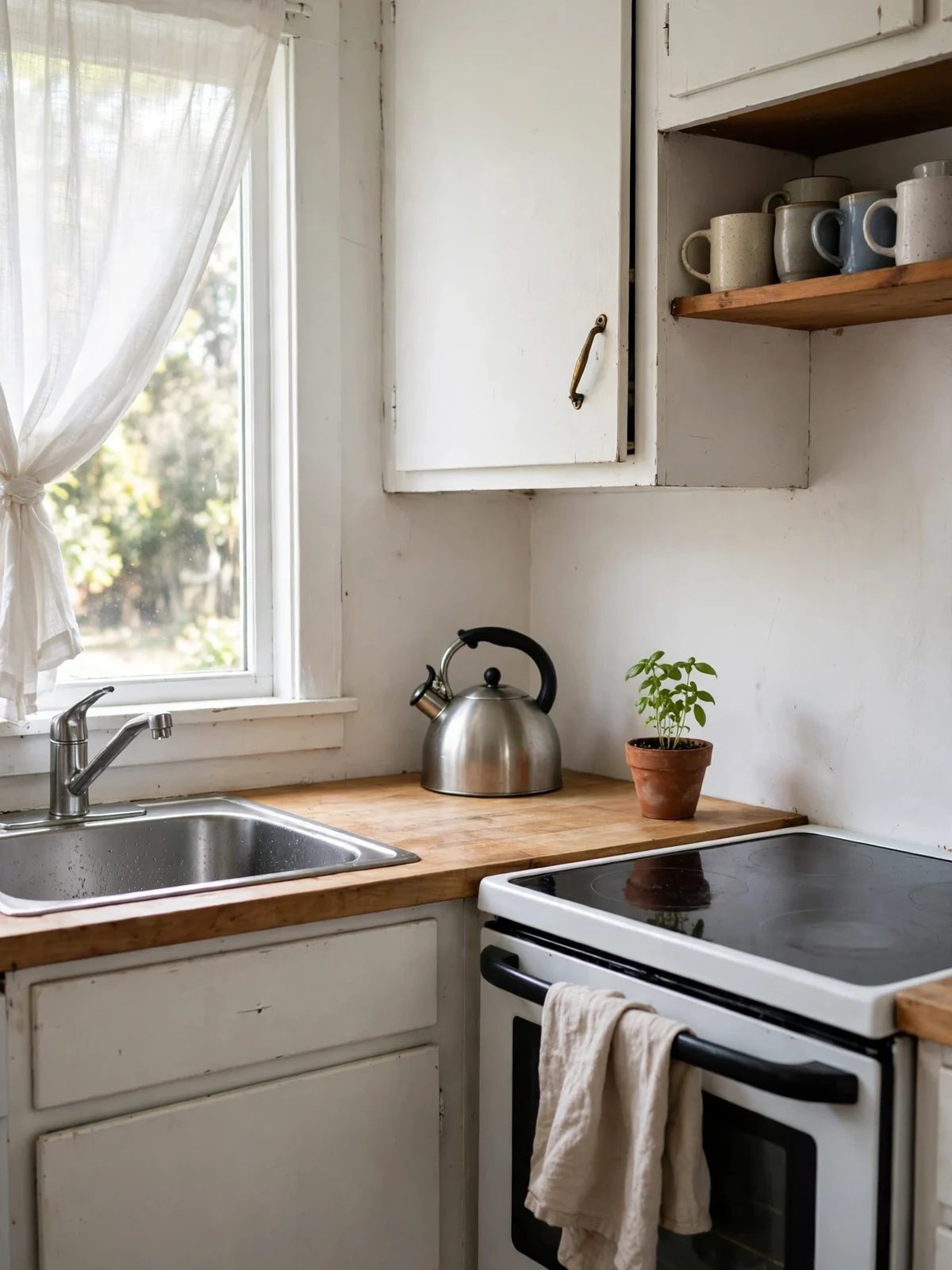
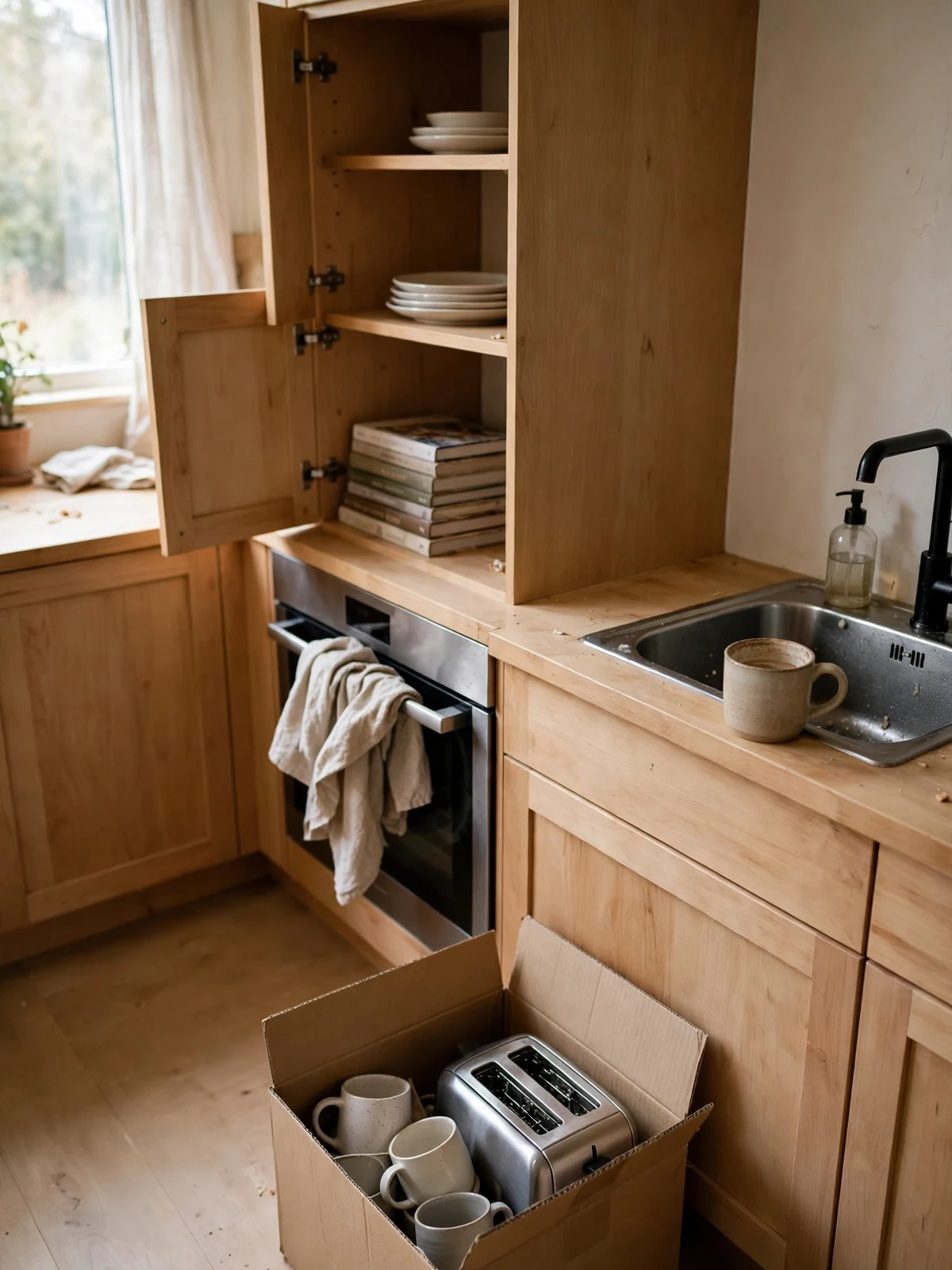
Start high and work down, or you'll clean the counters twice. Ceiling and lights: dust the ceiling corners, wipe light fixtures and degrease the tops of cabinets — that sticky film is mostly cooking grease and dust. Walls and backsplash: wash splash zones behind the stove and sink with hot soapy water. Cabinets and drawers: empty one at a time, vacuum crumbs, wipe shelves, and clean handles, which hold surprising grime. Counters and sink: clear everything off, scrub the sink and faucet base, then disinfect. Our under-sink storage ideas help once it's clean. Floors last: sweep, then mop into the corners and under the toe-kicks.
Bathroom Deep Clean

Bathrooms reward patience — give sprays time to work. Shower and tub: spray tile, grout and glass, leave it ten minutes, then scrub grout lines with an old toothbrush and rinse. Descale the showerhead in a bag of vinegar overnight if the spray has gone sideways. Toilet: disinfect inside the bowl, under the rim, around the base and — the part everyone skips — the hinge area behind the seat. Sink and mirror: scrub the faucet base and drain, polish the mirror, and wipe light fixtures. Surfaces and floor: disinfect handles and switches, empty and wipe the bin, then mop from the far corner out. Swap in fresh towels and the room feels new.
Bedroom Deep Clean

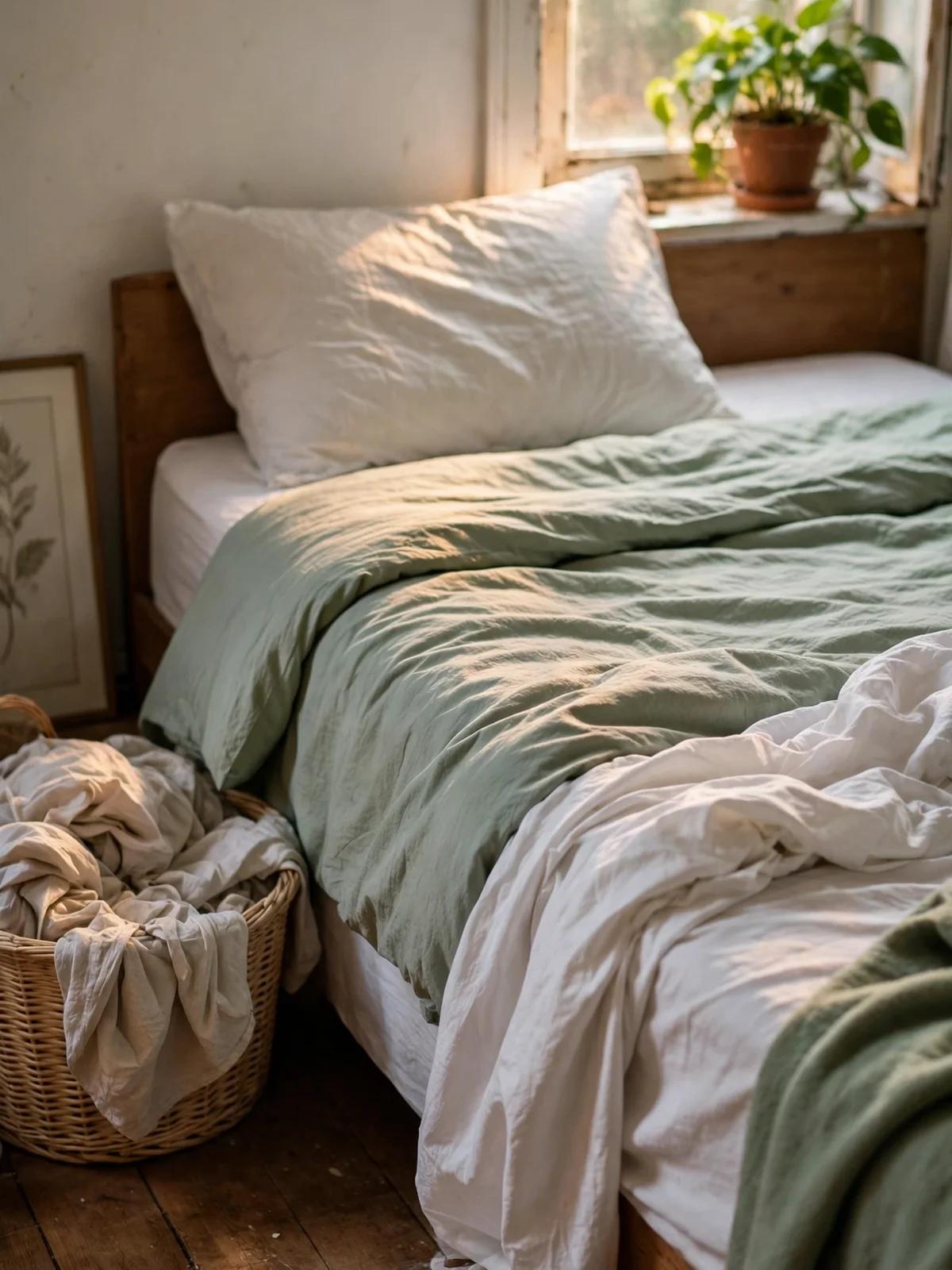
A deep-cleaned bedroom genuinely sleeps better — most of what you remove is dust. Strip the bed completely: sheets, pillowcases, duvet cover and mattress protector all go in the wash. Mattress: vacuum it with the upholstery tool, spot-clean stains, and rotate it if it's due. Dust top to bottom: ceiling fan blades (an old pillowcase traps the dust), light fixtures, shelves, dresser tops and nightstands — move everything, don't dust around it. Wardrobe touchpoints: wipe handles and the tops of doors. Under the bed: pull everything out, vacuum the dust bunnies, and only let flat, labelled storage go back. Finish with fresh bedding and crack a window for ten minutes.
Living Room Deep Clean

The living room hides dust in soft things, so work fabric-first. Ceiling and walls: dust corners, ceiling fan and light fixtures, then spot-wash scuffs. Sofa and soft furnishings: pull cushions off, vacuum underneath them, wash cushion covers and throws, and shake cushions outside if you can. Shelves and screens: dust books and shelves shelf by shelf, wipe the TV screen with a dry microfiber cloth, and untangle and wipe remotes and consoles. Tables and touchpoints: disinfect remotes, light switches and door handles — remotes are quietly the grubbiest objects in the house. Rug and floor: vacuum slowly, edges included, then mop hard floors.
Windows and Glass

Clean windows change the light in the whole house — and a cloudy day is best, since direct sun dries cleaner too fast and leaves streaks. Frames and tracks first: vacuum the tracks with the crevice tool, scrub the gunk out with an old toothbrush, and wipe frames and sills before any glass gets wet. Glass, inside then out: spray, squeegee in an S-pattern, and wipe the blade after every pass. Mirrors and glass doors: same treatment, lighter pressure. Screens: pop them out if you can, brush or rinse the dust off, and let them dry fully before they go back. Step back at the end and check from an angle — that's where the streaks hide.
Floors Throughout

Floors are always last — everything you dust lands on them. Move what you can: chairs up, small furniture out, mats and rugs lifted and shaken outside. Vacuum properly: slow passes, the crevice tool along every baseboard, and under furniture, not just around it. Hard floors: a steam mop lifts ground-in grime from hardwood, tile and laminate without a bucket of dirty water. Tile grout: scrub the worst lines with a paste of baking soda and water. Carpets: spot-treat stains, vacuum in two directions, and sprinkle baking soda for twenty minutes before the final pass if a room smells stale. Let everything dry before furniture goes back.
Appliances, Inside and Out

Appliances run better and smell better clean, so start with the fridge — it takes the longest. Fridge: everything out, shelves and drawers washed in hot soapy water, sticky spills soaked before scrubbing, and seals wiped — crumbs love the door seal. Our fridge organization ideas make restocking painless. Oven: racks soak in the tub, a baking soda paste sits on burnt spots for a few hours, then scrub and wipe until no paste remains. Microwave: steam a bowl of water and lemon for three minutes and the splatter wipes off. Small appliances: descale the kettle, empty the toaster crumb tray, wipe the coffee maker. Washer and dishwasher: run both empty on a hot cycle.
The three tools that punch above their weight
You don't need a cupboard of gadgets, but three things earn their keep. A steam mop sanitises hard floors with just water and lifts the grey film sprays leave behind. Microfiber cloths pick up dust instead of pushing it into the air — rinse them often and skip fabric softener, which coats the fibres. And a stiff scrub brush (plus its tiny toothbrush sidekick) does grout, taps, stove edges and baseboard grooves better than any spray left to 'do the work' alone.
Entryway and Mudroom

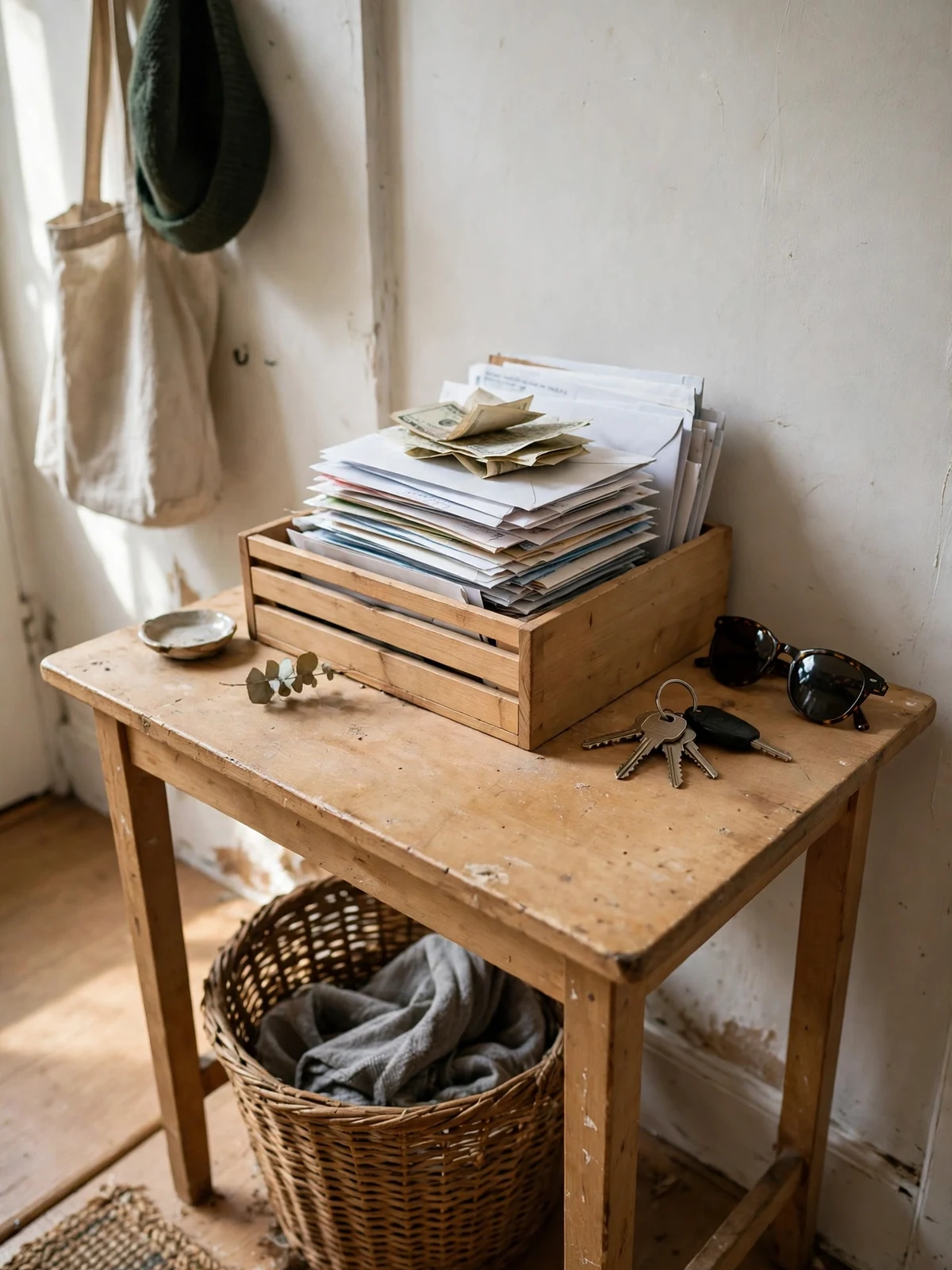
The entryway sets the tone for the whole house and collects the most outside dirt per square foot. Door and hardware: wash the door itself — hand height is grimier than you'd guess — and disinfect the handle, lock and letterbox. Walls and switches: wipe scuffs at bag and shoulder height, plus the light switch everyone touches with outdoor hands. Shoes and storage: pull every pair out, shake and brush off dried mud, wipe the rack or bench, and retire anything worn out. Mat and floor: take the doormat outside and beat or hose it, then sweep and mop right up to the threshold. A clean entry makes the rest of the house feel cleaner than it is.
Laundry Room Deep Clean

The room that cleans everything else gets neglected. Washer: pull out the detergent drawer and scrub the mould that grows underneath it, wipe the rubber door seal fold by fold, and run the hottest empty cycle. Dryer: clean the lint filter, then vacuum the slot it lives in — lint hides deeper than the filter. Sink and surfaces: scrub the utility sink, wipe the tops of both machines (detergent dust coats everything), and clear the lost-sock graveyard behind them if you can reach it. Supplies: combine half-empty bottles, toss the stain removers that never worked, and corral what's left in one spot. Floor: sweep the lint, then mop.
Home Office Deep Clean

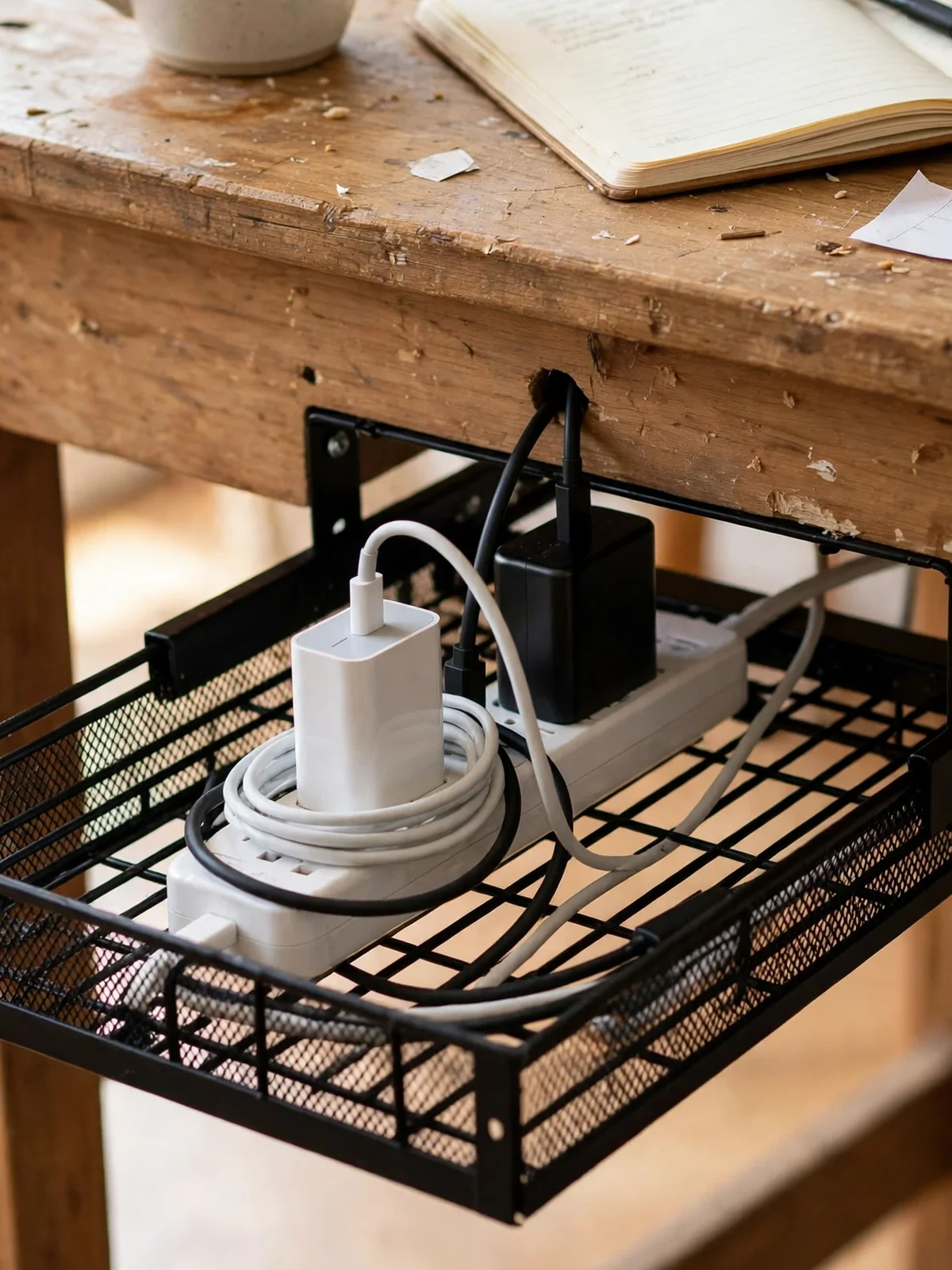
Desks collect dust right where you breathe all day. Clear and dust: everything off the desk, then dust the surface, shelves, monitor and the tops of books. Dust the printer and any speakers too. Keyboard and tech: tip the keyboard upside down and shake it out, wipe keys, mouse and phone with a barely damp cloth, and clean the screen properly. Cables: untangle, wipe the dust off each one, and bundle them so the floor underneath can actually be vacuumed next time. Chair: vacuum the fabric and wipe the armrests and base. Paper and floor: file or recycle the paper piles, empty the bin, then vacuum including under the desk. Sitting down to a clean desk on Monday feels different.
Kids' Rooms and Play Spaces

Kids' rooms need the deep clean most and get it least — the mess regenerates hourly. Soft toys and bedding: wash the favourite stuffed animals (most survive a gentle cycle in a pillowcase), and strip bedding including the mattress protector. Hard toys and surfaces: wipe plastic toys, blocks and toy bins with warm soapy water — sticky handprints are the whole story here — and let everything dry before it goes back. Furniture touchpoints: disinfect door handles, light switches and drawer pulls. Under and behind: pull out the bed and toy storage, vacuum the lost crayons and crumbs, and mop or vacuum properly. Books and shelves: wipe board-book covers; they get chewed, it matters. Remake the bed and restock the bins half-full.
Walls, Baseboards and Doors

This checklist makes a home look freshly painted without painting. Dust first, always: run a dry duster or the brush attachment along baseboards, door frames and the tops of doors before anything gets wet, or you'll make mud. Baseboards: wash with hot water and a drop of dish soap, using a scrub brush for the groove along the top edge where dust bakes on. Scuffs usually lift with a melamine sponge. Walls: spot-wash marks at hand height, around switches and behind where bins sit. Test a hidden patch first on delicate paint. Doors: wipe both sides, especially around handles. Work one room at a time and change the water often — dirty water just moves grey around.
Turn this into a rhythm, not a marathon
Once the deep clean is done, protect it with a simple cleaning routine checklist: a light cleaning schedule checklist on the fridge — kitchen and bathroom touch-ups weekly, one 'extra' zone a month on rotation — means the next deep clean is half the job. Most readers tell us the garage and the walls are the zones that slip; put those two on the calendar by name, twice a year, and they stop being the scary ones.
Curtains, Blinds and Upholstery

Fabric is where a home stores its smells, so this pass changes how a room feels. Curtains: check the label first — most cotton and linen curtains machine wash on gentle. Take them down, shake them outside, wash or vacuum with the upholstery tool, and rehang slightly damp so the creases fall out. Blinds: close and dust one direction, close and dust the other, then wipe stubborn slats with a damp cloth wrapped around tongs. Sofa and chairs: vacuum every surface including under cushions, spot-clean marks with the right cleaner for the fabric code, and wash removable covers. Mattresses too: a slow vacuum and an hour by an open window.
Garage and Utility Spaces

The garage is a deep clean you do with a broom and some honesty. Empty one zone at a time: everything out of one bay or shelving unit onto the driveway — never the whole garage at once. Sweep properly: cobwebs from ceiling corners and around the door track first, then a full sweep outwards. Wash oil spots with a degreaser or a paste of dish soap and hot water. Shelves and storage: wipe shelves before boxes go back, check stored paint and chemicals for leaks, and group what stays in labelled boxes off the floor. Utility corners: wipe the water heater and any laundry or freezer out here, and vacuum dryer vents you can reach. Finish: hose or mop the floor and let it dry before cars or boxes return.
The Whole-Home Final Pass

Every room is done — this last pass makes it feel finished, not just cleaned in patches. Walk it like a guest: start at the front door and move slowly, carrying a cloth and a small basket. Anything out of place goes in the basket, anything dusty gets wiped on the spot. High-touch sweep: every light switch, door handle, remote, and banister gets one disinfecting wipe — it takes ten minutes for a whole house. Glass and shine check: one mirror or window per room gets a final polish. Bins and air: empty and wipe every bin, put fresh bags in, replace the baking soda box in the fridge, and open windows for fifteen minutes if the weather allows. Then put the caddy away, wash the cloths, and enjoy it — the deep clean is officially done. If your home is compact, our small apartment storage ideas help keep it this way.
A deep clean isn't really about a spotless house — it's about resetting the baseline so normal cleaning works again. When the grout is scrubbed and the baseboards are white, a quick weekly wipe keeps things genuinely clean instead of moving dirt around. Don't aim for all 15 zones in one heroic day. Pick the rooms that bother you most, tick them off one at a time, and let the finished ones carry you through the rest. Future you, opening a clean oven in three months, says thanks.
Deep Cleaning FAQs
Expert answers & styling advice
How often should you deep clean your home? ▼
Most homes do well with a full deep clean two to four times a year — spring and autumn are the classic moments, plus one before big holidays or guests. Kitchens and main bathrooms benefit from a mini deep clean monthly; low-use rooms can go six months. Keep up a light cleaning routine checklist in between and the seasonal deep clean gets shorter every time.
What's the difference between cleaning and deep cleaning? ▼
Regular cleaning maintains what you can see: counters wiped, floors swept, bathroom surfaces done, bins out. Deep cleaning goes after the build-up underneath and behind — grout, appliance interiors, baseboards, vents, under furniture, inside the oven. Think of cleaning as the Daily and Weekly upkeep, and deep cleaning as the Monthly-to-seasonal reset that stops grime becoming permanent.
How long does a full deep clean take? ▼
For an average home, expect six to ten hours of actual work across all 15 zones — most people split it over a weekend or one room per evening for a week. Working top to bottom in each room, and keeping your cleaning schedule checklist nearby, saves more time than working faster.
Should you declutter before deep cleaning? ▼
Yes, at least a quick pass. Cleaning around clutter means moving the same objects five times, and the surfaces underneath never really get clean. Spend twenty minutes per room clearing surfaces, filling one donation bag, and putting strays back where they live. It doesn't need to be a full purge — just enough that your cloth and vacuum can actually reach everything.
What order should you deep clean rooms in? ▼
Start with the rooms that take longest to dry or need soaking time — bathrooms first (sprays need dwell time), then the kitchen, then bedrooms and living spaces, with utility areas and the garage wherever they fit your energy. Inside every room the order never changes: ceiling and lights, walls and windows, surfaces and furniture, floors absolutely last.