
Sunday Reset Routine: 12 Steps to Start the Week Clean

A calm Sunday reset list with 12 easy steps — bedding, laundry, fridge, floors and a simple plan — that takes about two hours and starts your week clean, without a bootcamp in sight.
Table of Contents (12 Ideas)
- 1.Strip the Beds and Get the First Wash On
- 2.Do a Laundry Catch-Up — Wash, Dry, Fold, Away
- 3.Give the Fridge a Quick Clear
- 4.Reset the Entryway
- 5.Wipe Down the Bathroom
- 6.Reset the Floors
- 7.Prep a Few Meal Basics
- 8.Sweep the Desk and the Paper Pile
- 9.Take the Trash and Recycling Out
- 10.Restock the Supplies You Will Reach for
- 11.Finish With a 10-Minute Whole-Home Tidy
- 12.Sit Down and Plan the Week
Sunday evening gets a bad reputation. The weekend is nearly over, Monday is hovering, and the house is carrying two days of living in it — shoes by the door, a fridge full of good intentions, laundry that somehow multiplied.
This Sunday reset list is my way of closing the weekend gently instead of scrambling into the week. It is 12 small steps, in a loose order that actually flows: start the laundry first so the machines work while you do, move room to room, and finish sitting down with a cup of tea and a simple plan. The whole thing takes about two hours in a normal apartment or small home, and a good chunk of that is just waiting for a wash cycle.
You do not need the polished weekly reset aesthetic you see online to get the benefit of this. No matching containers required. Think of it as an easy weekly checklist you can bend around your life — skip a step, swap the order, split it across Saturday afternoon if Sunday is busy. A cleaning routine weekly only works if it is light enough to repeat, and this one is built to be repeated. And if your home needs a deeper clear-out first, our 30-day declutter challenge is the gentle place to start — this reset is how you keep things calm afterwards.
Before you start
Put the kettle on, open a window or two, and put some music on — this reset should feel like winding down, not gearing up. Grab a laundry basket for carrying strays from room to room, a trash bag, and your usual cleaning cloth and spray. Work through the steps in order the first time; once you know the rhythm, shuffle it to fit your home and your Sunday.
Strip the Beds and Get the First Wash On

Start here, because clean sheets change how the whole week feels — and because the washing machine can be working while you do everything else. Strip every bed in the house: sheets, pillowcases, and the duvet cover if it is due. Shake them out as you go (you would be surprised what falls out of a teenager's bedding), then straighten the mattress and give it a quick once-over. Fresh set on straight away, so nobody faces a bare mattress at bedtime when energy is gone. Smooth the new bedding loosely rather than chasing hotel corners — a bed that looks calm and smells clean is the whole point. Time: about 15 minutes, plus the wash running in the background. If making the bed feels like a daily battle in a tight room, our bedroom ideas with no closet have small-space fixes that help.
Do a Laundry Catch-Up — Wash, Dry, Fold, Away

While the bedding washes, gather the week's stray laundry: the bathroom floor pile, the chair in the bedroom (we all have the chair), gym bags, tea towels from the kitchen. Sort into two or three honest loads — everyday clothes, towels and bedding, delicates if you bother separating them. The rule that keeps this step small is finishing properly: when a load is done, fold it straight away and put it away, ideally while something good is on the radio. A woven laundry basket that lives where clothes actually land — by the bed or the bathroom door, not hidden in a cupboard — stops most of the floor pile from forming in the first place. Time: about 15 minutes of active work spread across the afternoon; the machines do the rest.
Give the Fridge a Quick Clear

This is a ten-minute tidy, not a deep clean. Open the fridge and take out anything that has clearly finished its life: the soft cucumber, the mystery container from Tuesday, leftovers past their third day. Give the emptiest shelf a quick wipe while you can reach it, then put things back with a tiny bit of logic — leftovers and ready-to-eat food at eye level so they get eaten, raw ingredients lower down, condiments in the door. Make a mental note (or a note on your phone) of anything that needs using up early in the week; that note becomes Monday and Tuesday's dinner plan without any effort. Time: about 10 minutes. For a fuller sort-out with zones and storage ideas, our fridge organization ideas go much deeper.
Reset the Entryway

The entryway is the first thing you see on Monday morning, so it earns ten minutes on Sunday. Pick up everything that has drifted there — post, shoes, bags, the umbrella that lives on the floor — and put each thing in its real home. Line up only the shoes you will actually wear this week; the rest go back to the bedroom or a cupboard. Keys in their tray or on their hook, bag emptied of receipts and crumbs, coat hung up. Give the mat a shake outside if you can; it takes thirty seconds and the hallway instantly looks cared for. Walking out of a calm doorway on Monday genuinely changes the start of the day. Time: about 10 minutes.
Three helpers that earn their keep
You can do this whole reset with what you already own, but three things make it noticeably easier: a sturdy woven laundry basket that lives where clothes land, so piles stop forming on the floor; a refillable all-purpose spray bottle kept under the bathroom sink with a cloth, so wipe-downs take minutes; and a simple weekly planner notepad on the kitchen table, so the week's plan lives where you will actually see it.
Wipe Down the Bathroom

One bathroom, ten minutes, no deep scrubbing. Clear everything off the counter, then spray and wipe the counter, sink and taps. A refillable all-purpose spray bottle and one good cloth handle almost all of this — keep them under the sink and there is no hunting for supplies. Quick swipe of the mirror for the toothpaste spots, a fast wipe of the toilet seat and handle, fresh hand towel out, and check the bin — empty it if it is full. Put back only what lives there daily: toothbrushes, soap, the few products you actually use each morning. Everything else finds a cupboard or drawer. It will not be showroom clean, but Monday-you will walk into a bathroom that feels fresh instead of faintly chaotic. Time: about 10 minutes.
Reset the Floors

Floors are the biggest visual change for the least thinking, which is why they sit in the middle of the list when energy dips. Clear anything sitting on the floor first — that is half the job — then vacuum or sweep the main paths: hallway, kitchen, living room, around the beds. You do not need to move every piece of furniture; edges and under the sofa can wait for a deep-clean day. If you have hard floors, a quick damp mop of the kitchen and bathroom afterwards takes five extra minutes and makes the whole place smell clean. Put a podcast or a favourite playlist on and this step almost feels like a break. Time: 15 to 20 minutes, depending on the size of your home.

Prep a Few Meal Basics

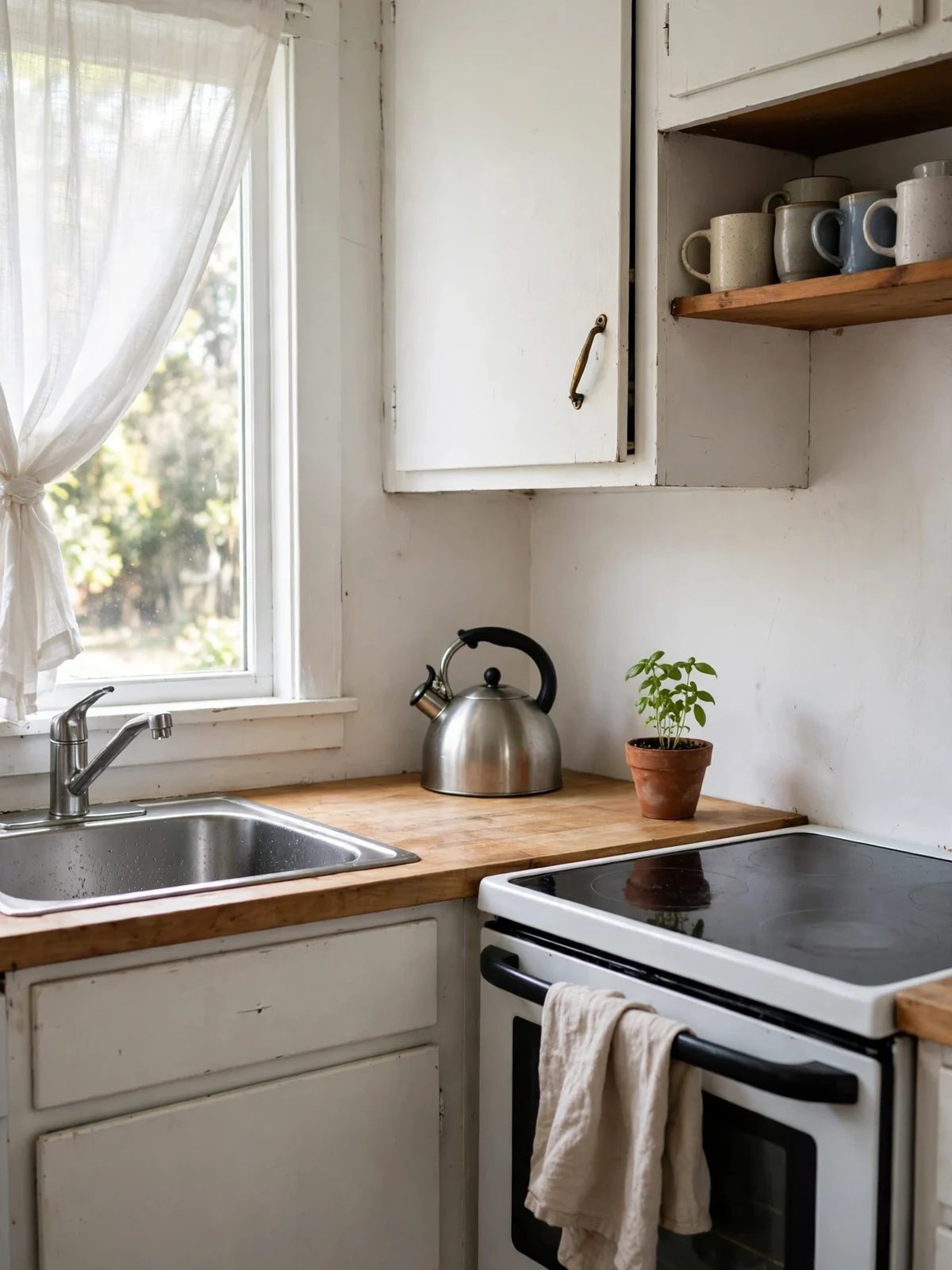
This is not full meal prep with seven matching containers — it is a head start. Wash and chop the vegetables you will use in the next few days. Cook one grain, like rice or pasta, and one simple protein if that suits how you eat. Put two or three easy lunches into containers so weekday mornings stop involving decisions. Hard-boil a few eggs, wash fruit so it is grab-and-go, and check you have the basics for Monday's dinner. While things cook, wash up and wipe the counters so the kitchen ends the day clear. Future-you, arriving home tired on Tuesday, will be quietly grateful. Time: 25 to 30 minutes, and most of it is waiting for a pan — use it to fold that laundry from step 2.
Sweep the Desk and the Paper Pile

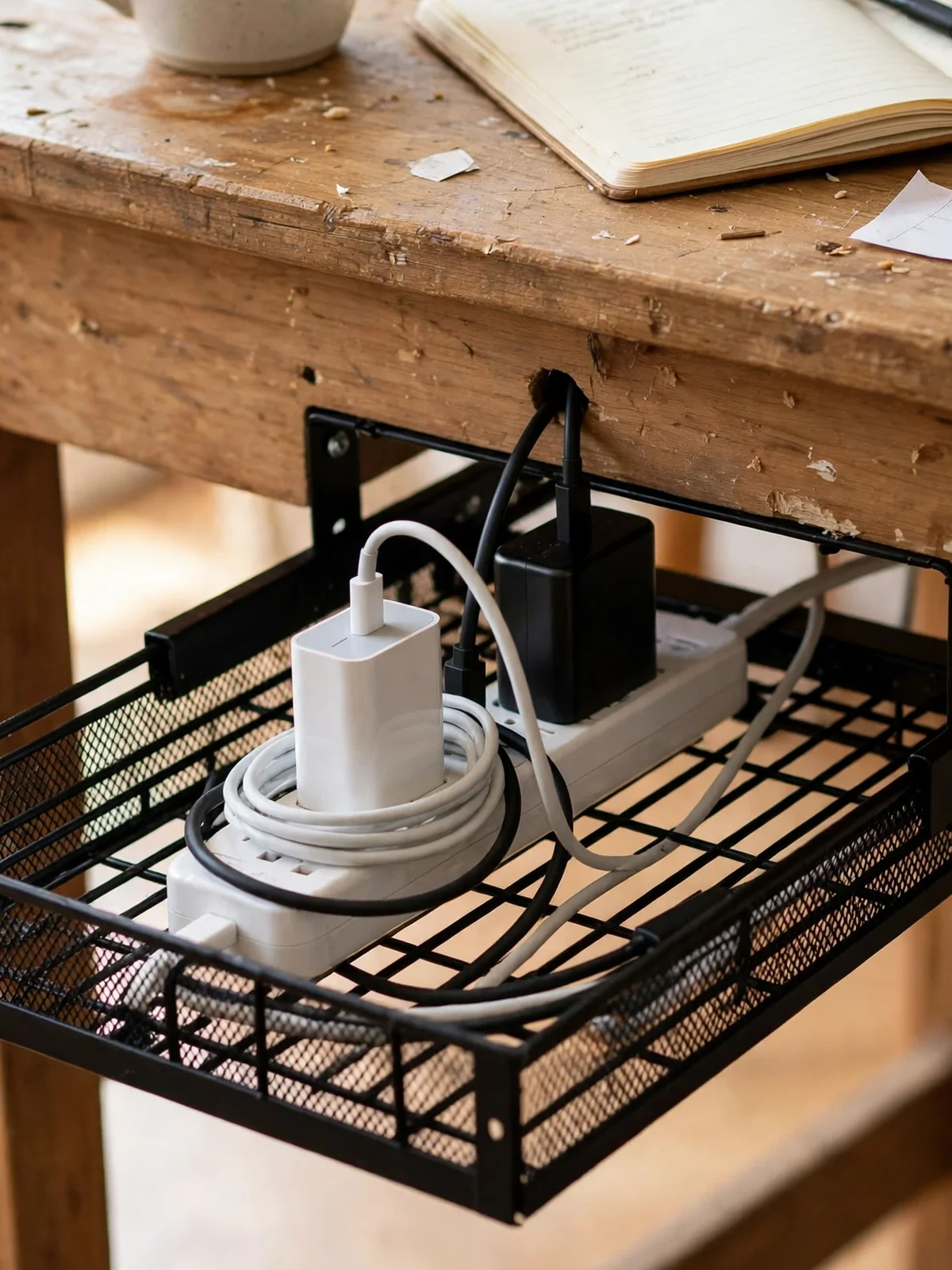
Paper creeps. Give it ten honest minutes. Collect every stray piece — post from the hallway, receipts from your bag, notes on the kitchen counter — and sort at the desk into three piles: deal with it this week, file it, recycle it. Be firm with the recycling; most of a paper pile is leaflets and envelopes. Then clear the desk itself back to what you actually work with: laptop, notebook, pen, mug. Everything else gets a drawer or leaves. A clear desk on Monday morning is a small thing that makes starting work feel noticeably easier. Time: about 10 minutes. If the pile has grown into a mountain, our paper clutter organization ideas will help you dig out properly.
Short on time? Shrink it, don't skip it
On a busy Sunday, do the five fast ones: beds (15 minutes feels long, but the wash does the work), fridge, entryway, trash out, and the 10-minute tidy. That is roughly 45 minutes and covers everything Monday morning will notice. The full list will be there next week — a smaller reset done beats a perfect one postponed.
Take the Trash and Recycling Out

The shortest step, and oddly one of the most satisfying. Walk through each room with fresh eyes: kitchen bin, bathroom bin, the recycling that has been stacking up by the door. Tie the bags, take everything out now — not tomorrow, now — and put fresh liners in straight away so the bins are ready for the week. While you are at it, flatten the cardboard pile; it takes a minute and the corner it lives in will look twice as tidy. A house that starts Monday with empty bins and no bag waiting by the door just feels finished. Time: about 5 minutes, including the trip outside.
Restock the Supplies You Will Reach for

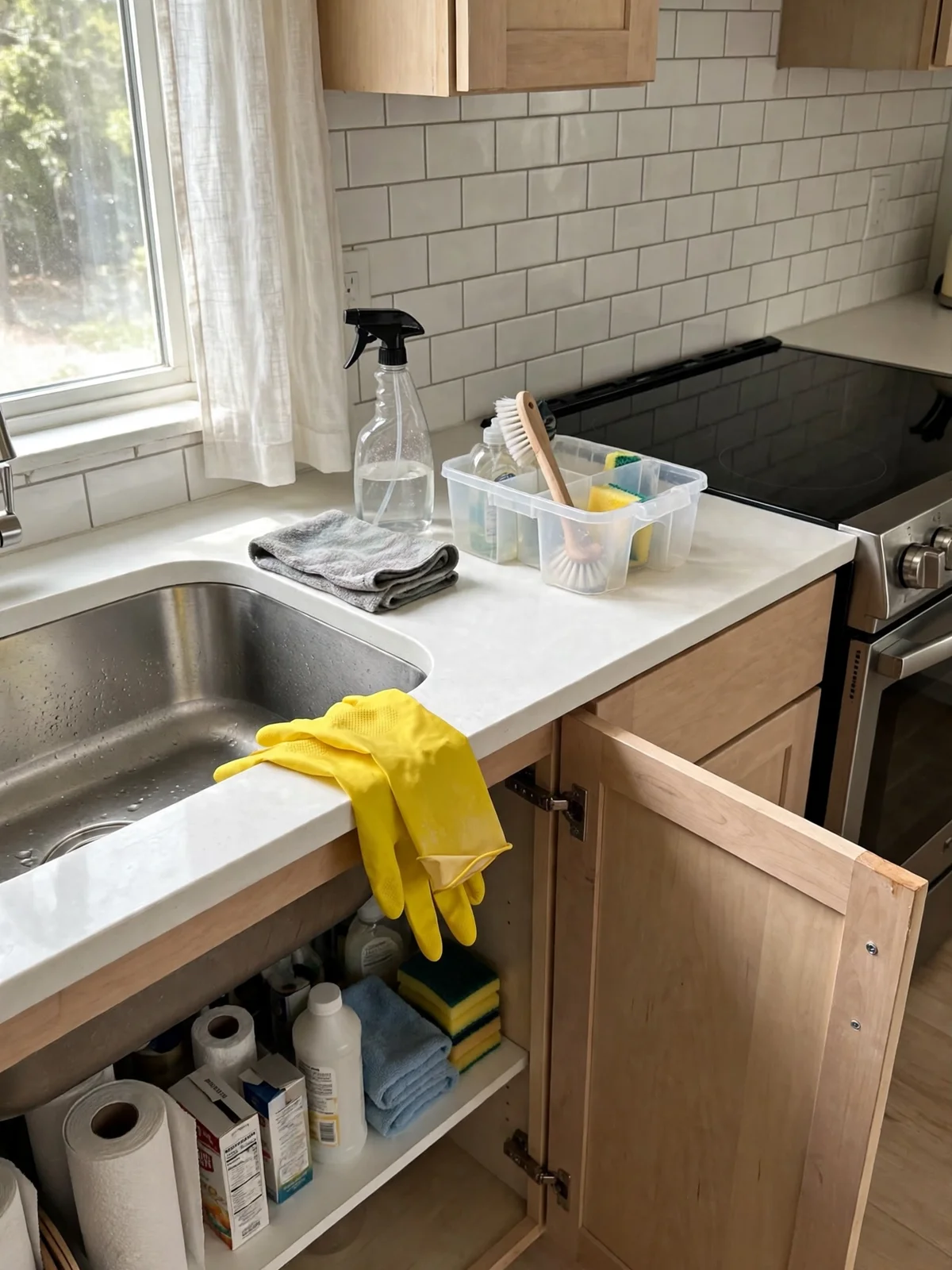
Five quiet minutes now prevent three annoying moments later in the week. Walk the house and check the things that always run out at the worst time: toilet paper in the bathroom, soap at the sinks, laundry pods or detergent, bin liners, a clean sponge at the kitchen sink, dish soap. Top up from wherever you store spares, and add anything genuinely low to the shopping list while you are standing there looking at it — not later, when you have forgotten. This is also the moment to swap the tired kitchen sponge for a fresh one. Nothing here is exciting, and that is exactly the point: a stocked house runs itself. Time: about 5 minutes.
Finish With a 10-Minute Whole-Home Tidy

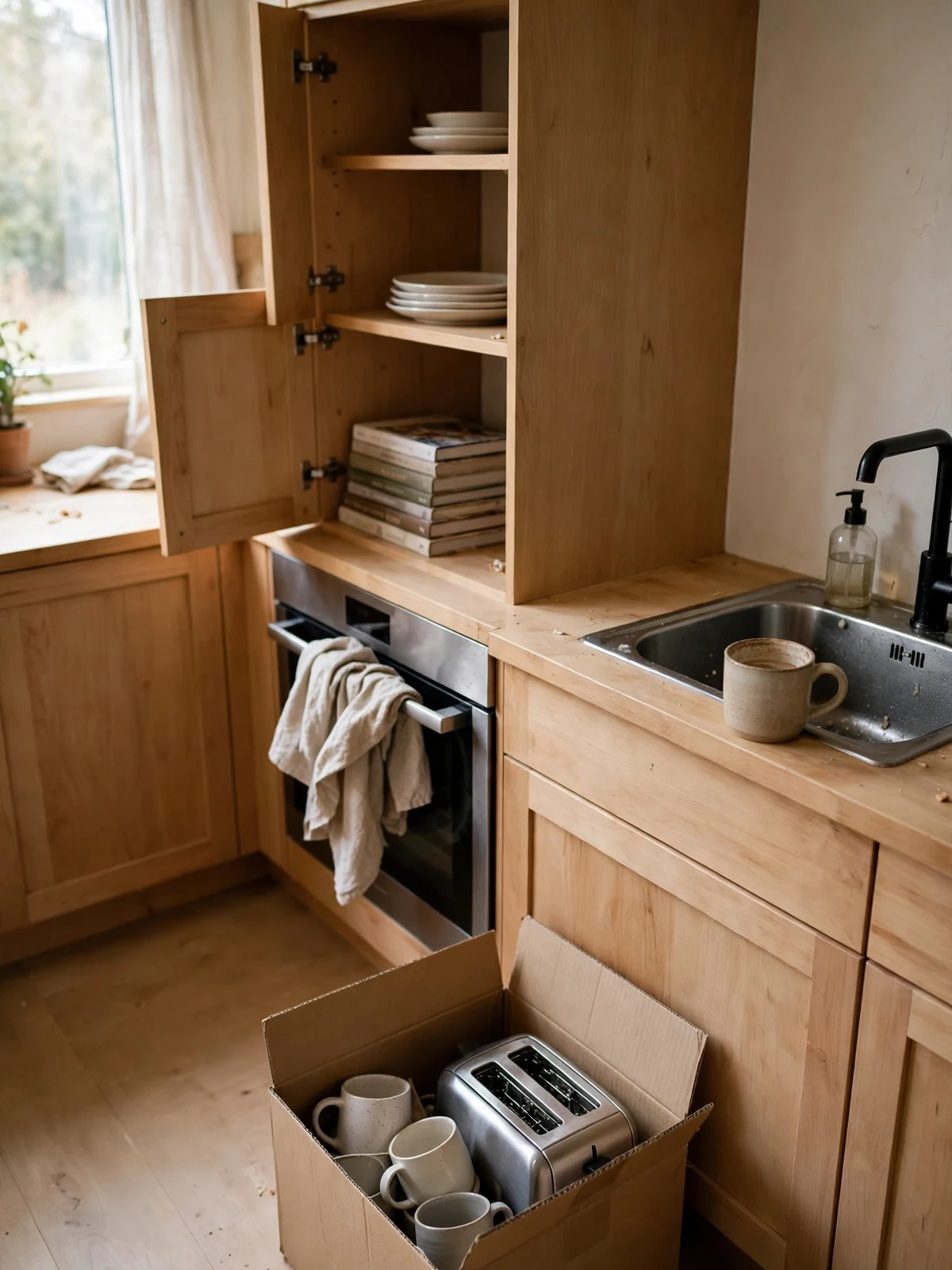
Set a timer for ten minutes, grab a laundry basket, and walk the whole home. Anything sitting where it does not belong goes in the basket — mugs, chargers, books, the jumper on the dining chair. Then walk again and deliver each item to its real home, or admit it does not have one and park it in a donation bag. Plump the sofa cushions, fold the throw, put remotes in one basket or tray. When the timer goes, stop, even if a corner is still imperfect. This sweep is the difference between a house that was cleaned room by room and a house that actually feels reset. Time: exactly 10 minutes — the timer is what keeps it light.
Sit Down and Plan the Week

The last step happens sitting down, on purpose. Make a tea, open your weekly planner notepad or whatever calendar you actually use, and look at the week coming: what is on, which evenings are busy, when the bins go out, what needs buying. Write the three things that would make the week feel handled if they got done — just three. Check your shopping list against the meal basics you prepped and add what is missing. Then close the planner. This ten minutes replaces the low-level Sunday-night worry with an actual look at the week, and it is the step people skip that holds all the others together. The house is reset; now so is your head. Time: about 10 minutes.
By the end of it, nothing in your home is deep-clean perfect — and that was never the deal. The beds are fresh, the fridge makes sense, the floors are clear, and Monday has a loose plan instead of a question mark. That is what a weekly reset is for: not a show home, just a calm starting line, rebuilt in a couple of easy hours.
Do it a few Sundays in a row and you will notice the steps start shrinking. The fridge stays clearer. The paper pile stops growing teeth. Keep the schedule soft, keep the checklist where you can see it, and let the routine bend on the weeks when life is loud. Clean enough, calm enough, done — go and enjoy what is left of your Sunday.
Sunday Reset FAQs
Expert answers & styling advice
How long does a Sunday reset take? ▼
About two hours in an average apartment or small home, including all 12 steps. A good chunk of that is passive time — laundry washing, rice cooking — while you get on with other steps. In a larger house, floors and laundry may push it towards two and a half hours, which is why many people split it across the weekend.
What if I only have 30 minutes? ▼
Pick the four steps Monday morning will actually notice: strip the beds and start a wash, clear the fridge of anything finished, take the trash and recycling out, and do the 10-minute tidy with a basket. Skip the rest without guilt. A 30-minute reset still gives you fresh bedding, an emptier fridge and clear surfaces — most of the calm, a quarter of the time.
Should I do the steps in order? ▼
The order helps the first few times because it follows the energy of the task — laundry first so machines work while you do, active steps in the middle, and planning last while you sit down. After that, shuffle freely. The only two worth keeping fixed are laundry early and planning at the end; everything in between can move around your home and your day.
What if I miss a Sunday? ▼
Nothing breaks. Do a shorter midweek version — fridge, trash, tidy, one load of laundry — or simply wait for next Sunday. This is a weekly rhythm, not a streak to protect. Homes get messy again either way; the reset is just the reliable way back, whenever you pick it up.
Can I split the reset across Saturday and Sunday? ▼
Yes, and plenty of people prefer it. Saturday suits the active jobs — laundry, floors, meal basics, trash out. Sunday then keeps the gentle ones: bedding is already done, so it is the bathroom wipe-down, the entryway, the tidy and planning with a cup of tea. Splitting it keeps Sunday evening itself free, which for some people is the whole point.