15 Paper Clutter Organization Ideas (Bills, Receipts & Files)

Fifteen calm ways to handle bills, receipts and files — one inbox tray, a weekly three-pile triage, a shredder corner, and a filing box that actually fits a real home.
Table of Contents (15 Ideas)
- 1.Start With One Inbox Tray — and Nothing Else on the Counter
- 2.The 10-Minute Weekly Triage: Act, File, Shred
- 3.A Desktop File Sorter for the Bills That Need Action
- 4.An Accordion File for the Papers You Actually Keep
- 5.A Shredder Corner So Junk Mail Dies on Day One
- 6.A Mail Sorting Station Right by the Front Door
- 7.One Tax Folder That Fills Up All Year
- 8.A Receipt Envelope You Empty Every Month
- 9.Labels on Everything, Courtesy of a Label Maker
- 10.A Simple Filing Box — Not a Filing Cabinet Lifestyle
- 11.Scan It, Save It, Let the Paper Go
- 12.One Binder Per Kid for School Papers and Art
- 13.A Warranties and Manuals Binder You'll Thank Yourself For
- 14.Wall File Holders for Projects Still in Motion
- 15.The Friday Reset and a Yearly Archive Box
Paper has a quiet way of taking over a house. It starts with one electric bill on the counter, then a school form joins it, then a receipt, a warranty card, a coupon you swear you will use. Two weeks later the pile has its own geography and you are scared to move it in case something important is in there.
You do not need a bigger filing cabinet or a free weekend. You need a few small homes for paper and a couple of habits that run on autopilot. These paper clutter organization ideas walk through the whole life of a piece of paper — where it lands, where it waits, where it lives, and when it finally leaves. Pick the first three, live with them for a month, and add the rest as you feel the itch.
 Save Pin
What you'll need
Most of this list runs on a short cast: a desktop file sorter, an accordion file organizer, a handheld label maker and a cross-cut paper shredder. Start with the tray and the sorter — they cost the least and calm the worst pile first. Everything else can arrive one payday at a time.
Start With One Inbox Tray — and Nothing Else on the Counter

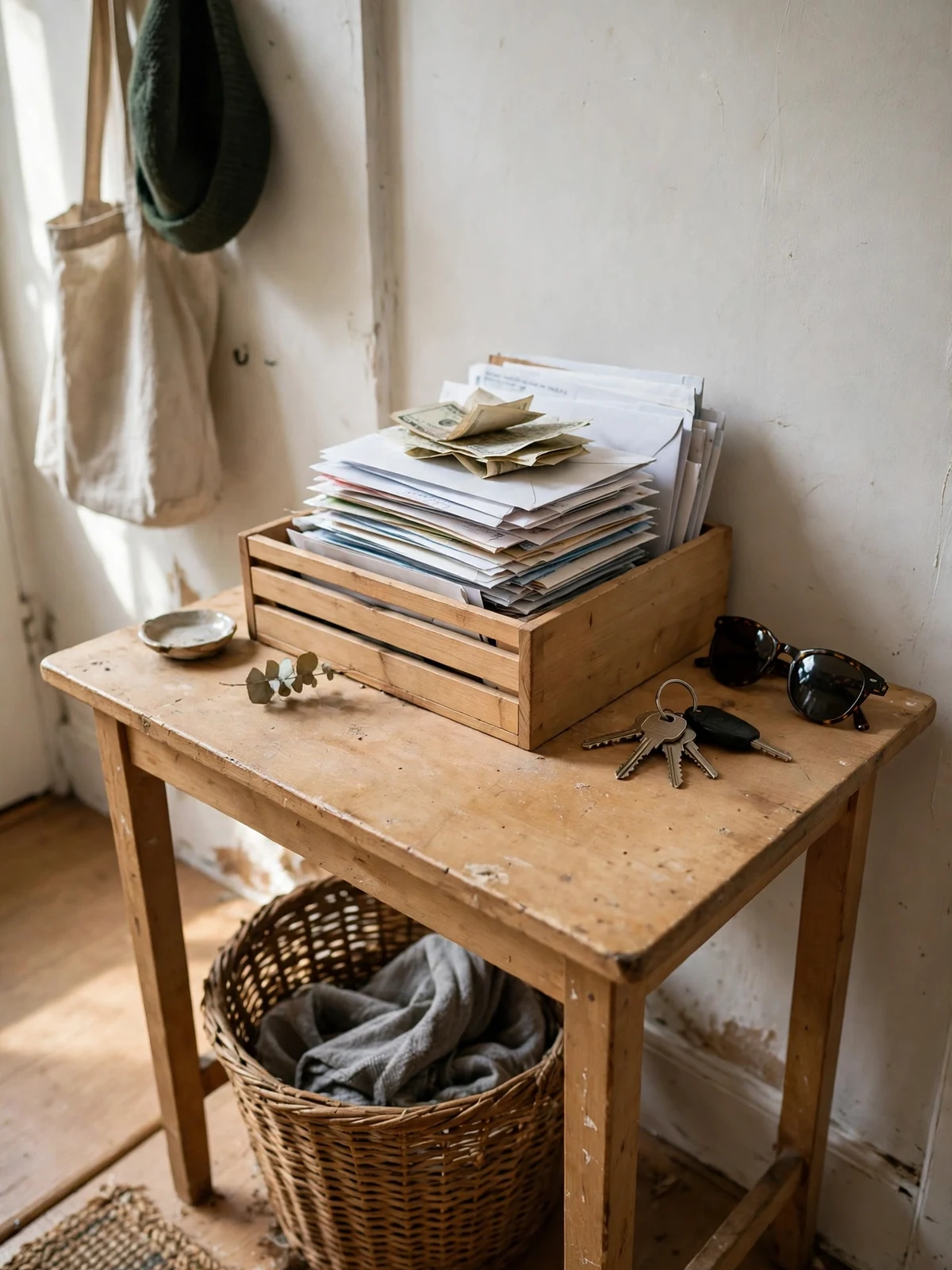
Paper clutter starts the second mail lands wherever your hand happens to be — the counter, the stairs, the top of the microwave. Pick one landing spot and defend it. A wooden inbox tray, about 14 inches long and $12 to $20, goes by the door or on the corner of the desk, and every single piece of paper that enters the house lands in it. Not next to it. In it. The tray looks a little full by Thursday, and that is fine — full is honest. Scattered is what stresses you out. When the tray is the only pile, you always know where an unpaid bill is hiding: it is not hiding at all.
The 10-Minute Weekly Triage: Act, File, Shred

Once a week — Sunday night works for a lot of people, coffee in hand — empty the inbox tray onto the table and sort every piece into three piles. Act means it needs something from you this week: pay it, sign it, reply to it. File means you keep it but nothing needs doing. Shred means it is done, junk, or full of numbers a stranger would love. Ten minutes, three piles, no fourth pile called I will decide later. That fourth pile is where paper clutter is born. This tiny routine is honestly the core of how to organize paperwork at home without turning it into a whole personality.
A Desktop File Sorter for the Bills That Need Action

The Act pile from your triage needs a home that is not a flat stack, because flat stacks bury deadlines at the bottom. A desktop file sorter — the upright wire or metal kind with four or five slots, usually $15 to $25 — keeps action papers standing up where you can see them. Give the front slot to bills due this week, the next to forms waiting on a signature, the next to anything you are waiting on someone else for. I like the metal mesh ones because you can see at a glance if a slot is getting fat. Three slots in use feels calm. Five slots stuffed is your warning light.
An Accordion File for the Papers You Actually Keep

For the File pile, skip the big cabinet for now and grab an accordion file organizer with 12 or 13 pockets — the fabric or sturdy plastic kind, $10 to $18. Label the pockets with the categories real life actually gives you: house, car, medical, school, pets, receipts, taxes, and a wonderfully honest one called miscellaneous, for now. An accordion file holds a surprising amount, closes with a flap, and slides onto a shelf or into a drawer when guests come. It is the filing system for people who swear they are not filing-system people. When a pocket starts to bulge, that one category gets ten minutes — not the whole house.
A Shredder Corner So Junk Mail Dies on Day One

Half of paper clutter is paper you never needed to keep in the first place — credit card offers, duplicate statements, envelopes with plastic windows. A cross-cut paper shredder, around $35 to $50 for a solid 8-sheet home model, parked right beside the desk or the inbox tray, changes the math. Junk goes straight in, still warm from the mailbox. Keep the shred pile honest: anything with an account number, a signature, or a barcode tied to you gets shredded, not tossed. Empty the bin into recycling when it is full and take the small win. It is weirdly satisfying, and it protects you in a way a trash can never will.

A Mail Sorting Station Right by the Front Door

If mail for different people piles up in your house, the inbox tray needs a partner. A wall-mounted mail station — a wooden sorter with two or three slots, $20 to $35 — goes right by the front door, at hand height, before the kitchen counter can claim anything. One slot per person, or one for in, one for out, and one for the recycling-bound stuff you sort standing up. Add a tiny shelf for stamps and a pen, hooks underneath for keys, and a small basket on the floor for junk headed out. Renters can hang it on removable hooks instead of screws, which fits nicely with the approach in our renter-friendly storage ideas.
Start here if paper owns your counter
Buy the desktop file sorter first and put the accordion file organizer second on your list. The sorter makes deadlines visible today; the accordion file gives everything you keep a pocket to live in tonight.
One Tax Folder That Fills Up All Year

Tax season panic is usually just a paper hunt in a costume. Fix it in January with one boring, beautiful habit: a single heavy-duty kraft folder — or one pocket of that accordion file — labeled for the tax year, living where you sort mail. Every pay stub summary, donation receipt, 1099 that drifts in, and deductible expense note goes straight into that folder the day it arrives, paper-clipped in little bundles if you are feeling fancy. Come spring, you hand over one folder instead of excavating drawers. I learned this the hard way after a night with a shoebox and a floor covered in receipts. Never again. One folder, all year, zero drama.
A Receipt Envelope You Empty Every Month

Receipts breed in purses, coat pockets and car door pockets, then fade into blank white curls. Give them one pit stop: a plain envelope — or a small wooden receipt box with a few envelopes inside, $10 to $15 — kept where you empty your pockets. Every receipt you might need for a return, a warranty or your budget goes in. On the first of the month, take five minutes: keep the big ones, photograph any you truly need long-term, and recycle the coffee-and-grocery confetti. This is the simple way to organize bills and receipts without scanning your whole life or keeping a drawer of fading paper spaghetti.
Labels on Everything, Courtesy of a Label Maker

Unlabeled folders are just future mystery piles. A handheld label maker, $20 to $30 with a tape cartridge that lasts ages, turns your system into something anyone in the house can use without asking you where things go — including future you, tired, on a Tuesday. Label binder spines, accordion pockets, the tax folder, the archive box. Keep the words short and plain: Bills, Car Insurance, School 2026. Fancy fonts and long sentences do not survive real life. If several binders share a shelf in your office corner, labeled spines are what make the whole setup pair so well with the zones in our small home office organization ideas.
A Simple Filing Box — Not a Filing Cabinet Lifestyle

When the accordion file outgrows itself, graduate to a portable filing box with hanging folders — a lidded plastic or fabric box, $18 to $28, that holds standard letter files. Twelve to fifteen hanging folders is plenty for most homes: home, auto, medical, insurance, bank, school, work, taxes by year. It slides under a desk, into a closet, or onto a shelf, and it moves with you in one hand. Skip the four-drawer steel cabinet unless you run a business from home. Big cabinets invite you to keep everything forever. A box with a lid quietly enforces a limit, and limits are the whole secret behind most paper clutter solutions that last.
Scan It, Save It, Let the Paper Go

Your phone is already a decent scanner — the notes or files app on most phones will crop, straighten and save a clean PDF in about twenty seconds. Build the habit in small bites: when a keep-worthy paper lands — a contract, a report card, a paid-off letter — scan it, name the file like a human (2026-car-insurance-policy), and drop it in one cloud folder called Household Papers, with a handful of subfolders. Then the paper copy can go to the file box, or, for most everyday things, straight to the shredder. Back the folder up once, somewhere automatic. Ten scans a month beats one miserable scanning marathon every December.
One Binder Per Kid for School Papers and Art

School paper is its own weather system: permission slips, report cards, and artwork that arrives home at a rate of roughly one masterpiece per day. Contain it with one three-ring binder with clear sleeves per child, $8 to $12, plus one keepsake box for the overflow. Slips that need signing go in the action sorter, not the binder — the binder is for keeps: report cards in the front sleeves, a few favorite art pieces per term, awards and the good stuff. When the box fills, you and your kid pick the top ten together and let the rest go with a photo first. Sentimental, yes. Buried in paper, no.
The rule behind all 15
Paper may only wait in three places: the inbox tray, the desktop file sorter, or a labeled folder. If it is sitting anywhere else — a counter, a chair, the stairs — it is not organized, it is just visiting. Give it a real home or let it go.
A Warranties and Manuals Binder You'll Thank Yourself For

The fridge manual is never in the drawer when the fridge starts humming at 2 a.m. It is in a pile, somewhere, under a pizza menu from 2023. One binder with clear sheet protectors, $10 to $14, ends that hunt for good. Slip each manual in a sleeve, staple or clip the receipt and warranty card right in front of it, and add a sticky note with the purchase date while you still remember it. Washer, dryer, water heater, the good vacuum — one binder, kept near the filing box. Half the manuals exist as PDFs online, true, but the receipt stapled to the warranty is the part you cannot download when something breaks.
Wall File Holders for Projects Still in Motion

Some papers are not bills and not files — they are projects. The kitchen quote, the trip printouts, the forms for a renovation permit. Flat on the desk, they spread. A set of wall-mounted file holders, two or three wire pockets for $18 to $30, lifts active projects up where you can see all of them at once, one project per pocket, a folder in each. It keeps the desk itself clear enough to work on, which matters if your setup is tight — the same thinking runs through our small desk organization ideas. When a project ends, the folder graduates to the file box or the shredder. Empty pocket, next project.
The Friday Reset and a Yearly Archive Box

Systems drift. Friday is when you un-drift them, in about fifteen minutes. Empty the inbox tray completely — act, file, shred, no survivors. Check the action sorter for anything due next week. Move this year's finished folders into one archive storage box, labeled by year, and send last year's box to a closet shelf. If paper has been piling up beyond the desk, pairing this reset with our 30-day declutter challenge clears the backlog fast. The archive rule keeps you honest: if it does not fit in one box per year, you are keeping paper out of habit, not need. Friday-you does the work; Monday-you gets a clean desk and a quiet brain.
You do not have to build all of this in one heroic Sunday. Start with the inbox tray, the weekly triage and the shredder habit — three changes, most of them free, and the counter already looks like a different house.
Paper will keep arriving. That part never stops. What changes is that every piece now has a route: land, sort, act, file, archive, or shred. No mystery piles, no bill hiding under a takeout menu, no tax-season floor excavation. A calm paper system is not really about paper at all — it is about walking into your own kitchen and not feeling behind on your own life. Start with the tray. The rest follows.
Paper Clutter Organization FAQs
Expert answers & styling advice
How do I start organizing paperwork when the piles are already huge? ▼
Start with the tray, not the piles. Set up the wooden inbox tray today so new paper stops adding to the problem, then work the old piles in 15-minute sessions with the three-pile triage: act, file, shred. One drawer or one stack per session. Most backlogs shrink faster than people expect, because a surprising share of any old pile is junk that can go straight to the cross-cut paper shredder.
How long should I keep bills, receipts and tax papers? ▼
A practical home rule: keep most paid bills and bank statements for one year, receipts for big purchases and anything warranty-related for as long as you own the item, and tax returns with their supporting papers for at least three to seven years, depending on your situation. When in doubt, scan it first — a clear PDF in your Household Papers folder lets you let the paper copy go with a lot less worry.
What is the easiest way to organize bills and receipts on a small desk? ▼
Keep it vertical and tiny. A desktop file sorter for bills that need action, one envelope for receipts that gets emptied monthly, and the accordion file organizer for what you keep. That trio fits on a corner of even a small desk and covers almost everything. Flat piles are the enemy — standing paper shows you what is waiting.
How do I keep up with paper organization when I am busy? ▼
Shrink the habits until they feel almost silly. Mail goes in the tray the second you walk in, junk goes to the shredder the same day, and the triage takes ten minutes once a week — that is the whole maintenance plan behind these paper clutter solutions. Miss a week and it costs twenty minutes, not a meltdown, as long as the tray kept catching everything in the meantime.
Is a paper system like this renter-friendly? ▼
Yes, completely. Trays, sorters, binders and a portable filing box all sit on furniture and move out with you, and a wall mail station or wall file holders can hang on removable adhesive hooks instead of screws. Nothing here needs drilling, built-ins, or a landlord's permission — and the whole system packs into two boxes on moving day.