19 Small Home Office Organization Ideas

Nineteen ways to turn a corner, closet or single wall into a real workspace — vertical shelves, a rolling cart, cable fixes and a five-minute Friday reset.
Table of Contents (19 Ideas)
- 1.Claim One Zone: A Desk Against the Wall, Not a Whole Room
- 2.Go Vertical With Shelves Above the Desk
- 3.A Rolling Cart as Your Supply Station
- 4.A Divider Tray for the One Desk Drawer
- 5.A Monitor Riser With Storage Underneath
- 6.A Cable Box and Velcro Ties to End Cord Chaos
- 7.A Pegboard Wall for Tools and Supplies
- 8.A Desktop File Box for Papers That Land Daily
- 9.Turn a Closet Into a Cloffice
- 10.Use the Dead Corner With a Corner Desk
- 11.A Labeled Bin for Chargers and Tech
- 12.One Inbox Tray for Every Piece of Paper
- 13.Under-Desk Hooks for Headphones and Your Bag
- 14.A Rolling Drawer Pedestal Under the Desk
- 15.A Fold-Down Wall Desk for the Tiniest Spaces
- 16.A Carry-Away Caddy for the End-of-Day Reset
- 17.A Command Board for the Week's Priorities
- 18.A Storage Ottoman That Doubles as a Guest Seat
- 19.The Five-Minute Friday Reset
A small home office is rarely a room. It is a corner of the bedroom, half the dining table, a closet with ambitions. And it gets messy faster than any big office, because every pen, cable and sheet of paper has exactly one place to be — on your desk.
The good news: small is workable, even pleasant, if you stop copying big-office setups and use what a small space actually offers — walls, corners, the underside of the desk, and furniture that does two jobs. These 19 small home office organization ideas start with claiming one honest zone and end with a five-minute Friday reset that keeps the whole thing alive. No renovation, no spare room required.
 Save Pin
What you'll need
Most of these ideas run on a few workhorses: a three-tier rolling cart, a monitor riser, a cable management box and a desktop file box. Claim your one zone first, then buy once. Everything else on this list is storage that uses walls, corners and the space under your desk.
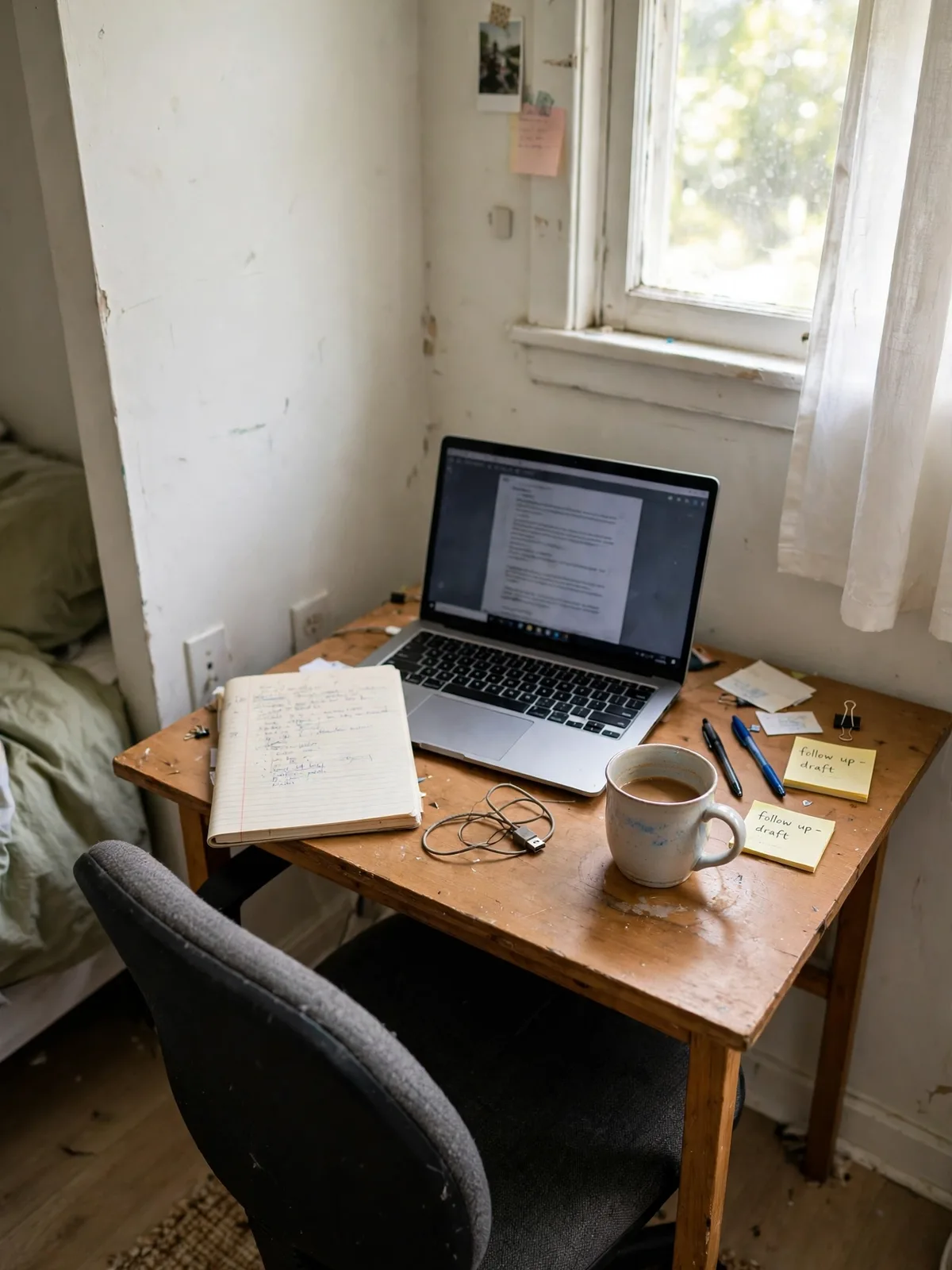
Claim One Zone: A Desk Against the Wall, Not a Whole Room

A small home office does not need a spare room. It needs one honest zone. Push a desk — even a simple 40-inch one, about $70 to $120 secondhand or flat-pack — flat against a wall, put the chair on one side, and call everything inside that rectangle work. Everything outside it is still bedroom, kitchen or hallway. That boundary sounds small, but it changes how the space feels at 6 p.m. Keep only daily tools inside the zone: laptop, notebook, one pen cup, a lamp. If it does not fit on or in the desk, it lives somewhere else. Start with our small desk organization ideas if your surface is already buried.
Go Vertical With Shelves Above the Desk

Walls are free storage, and most small desks have a big blank one doing nothing. Two floating shelves above the desk — 24 to 36 inches long, mounted into studs if you can — hold the reference books, the printer paper, the box of backup supplies. Keep the lowest shelf at least 20 inches above the desk surface so your monitor and your head clear it comfortably. Daily things go on the lower shelf, weekly things up top. A $6 thrifted shelf and a $25 one work exactly the same once they are level. Just do not overload them; shelves sagging over your screen will bother you every single day.
A Rolling Cart as Your Supply Station

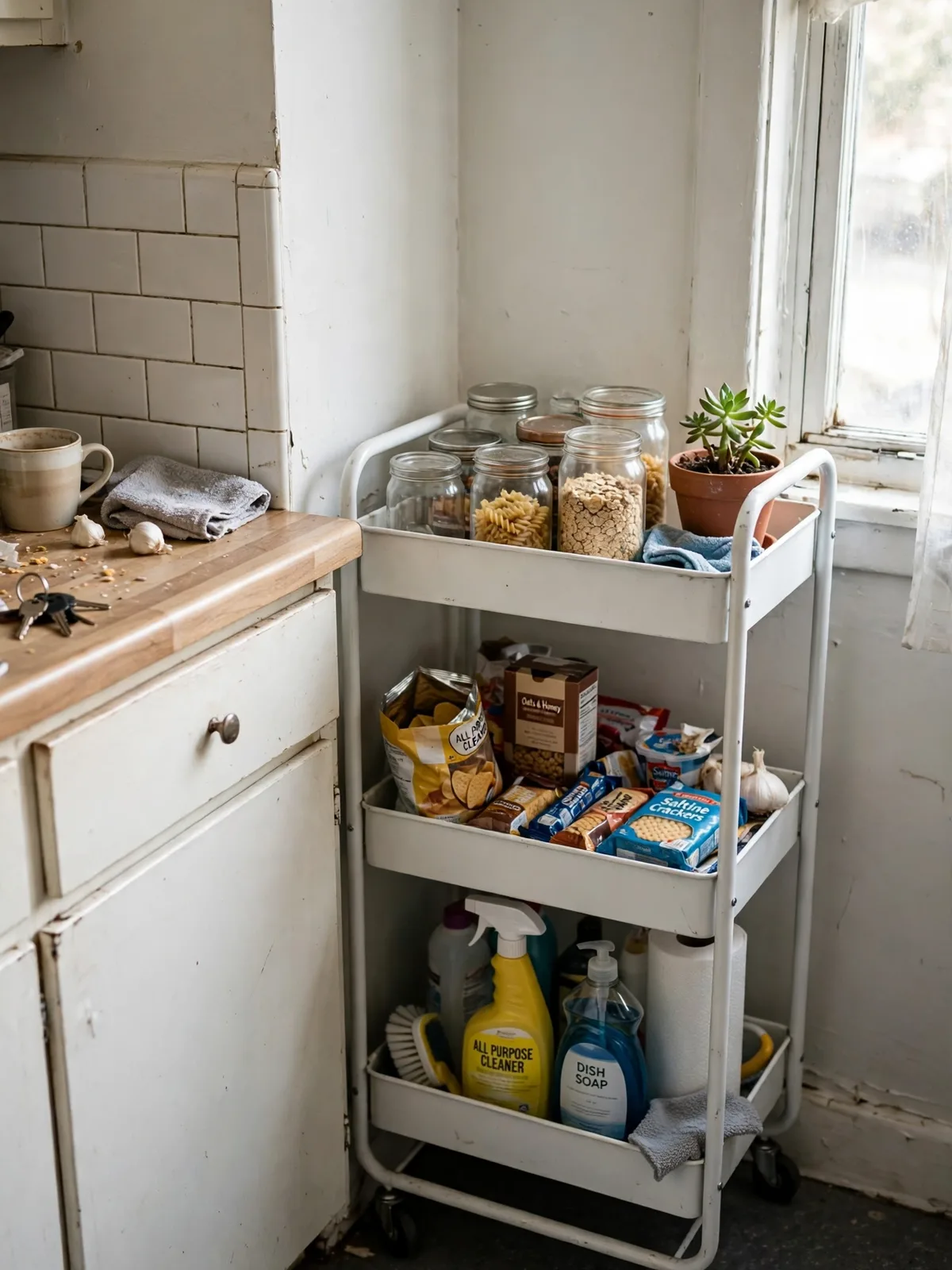
A three-tier rolling cart is the hardest-working $25 to $35 in a small office. It is a drawer tower, supply shelf and printer stand that never commits to one spot. Top tier: what you touch hourly — pens, sticky notes, charger, notebook. Middle: tools and paper. Bottom: the ugly stuff, backup cables and the stapler you use twice a month. Roll it beside your desk while you work, roll it into a closet or corner when guests come. The famous metal ones are about 12 by 17 inches, small enough to disappear. When a cart tier starts overflowing, that is your signal to purge, not to buy a second cart.
A Divider Tray for the One Desk Drawer

One shallow drawer can hold a shocking amount — if it is not one big sliding mess. A bamboo drawer divider tray, usually $12 to $20, or a few small boxes you already own, gives pens, clips, sticky notes, scissors and cables their own lanes. Measure the drawer first: most desk drawers are 3 to 4 inches deep, too shallow for tall organizers. Put what you grab daily at the front, because you will not dig to the back at 9 a.m. with coffee in one hand. Every item gets a lane, and anything without a lane does not go in the drawer. Simple rule, fewer junk drawers.
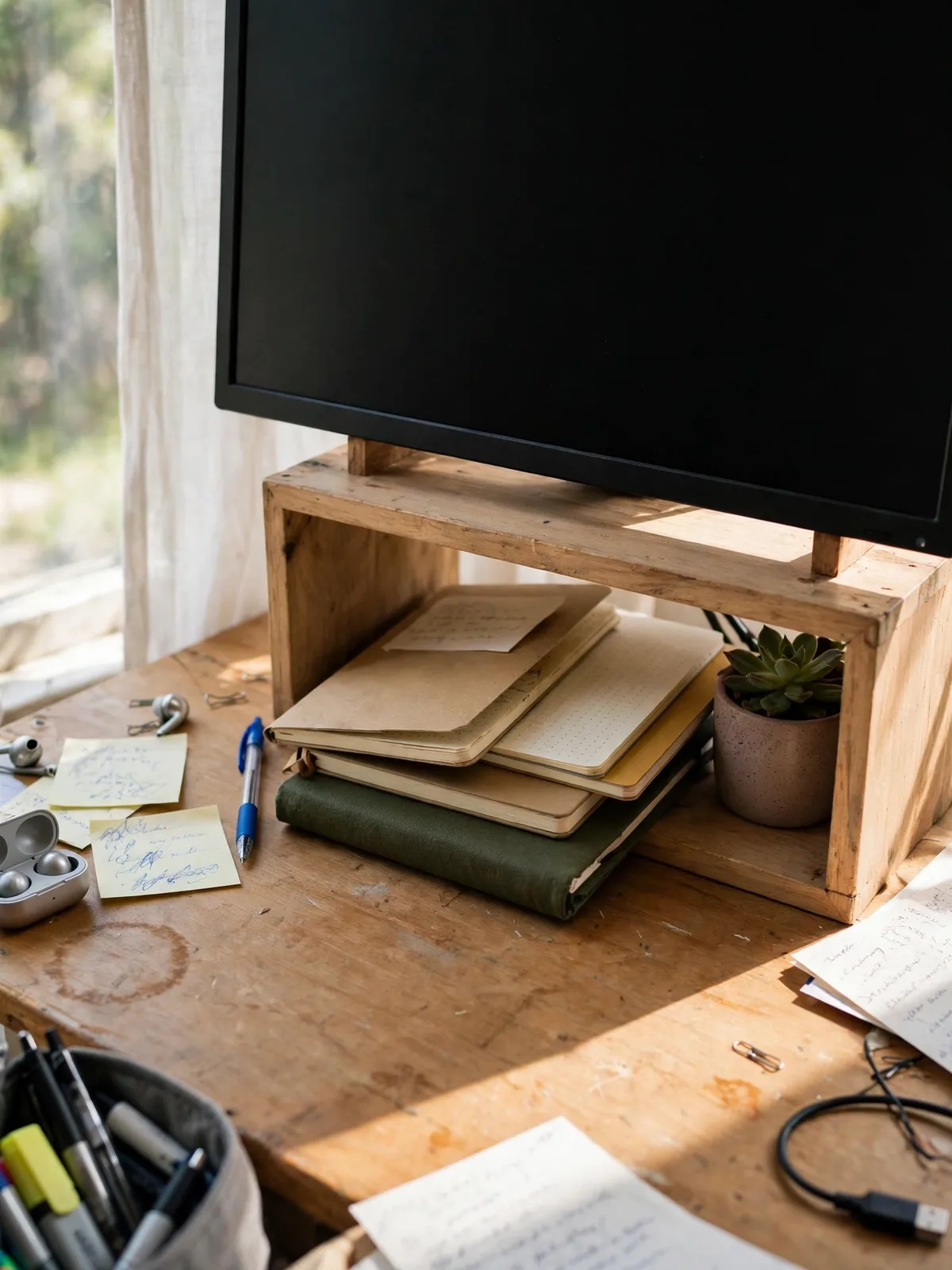
A Monitor Riser With Storage Underneath

A monitor riser fixes two problems at once: your screen sits too low, and your desk has nowhere to put anything. A wooden or metal riser, about $25 to $45, lifts the monitor 4 to 6 inches to eye level, and the space underneath becomes a garage for your notebook, keyboard at night, or a small drawer unit. Laptop users get the same win from a laptop stand plus an external keyboard. Measure the riser footprint against your desk depth — on a 20-inch-deep desk, a chunky riser eats real room. Pick one only as wide as your screen actually needs.
A Cable Box and Velcro Ties to End Cord Chaos

Cord chaos makes a tidy desk look messy, and messy desks feel smaller than they are. Start with a cable management box, around $15 to $25, that hides the power strip and the brick-sized adapters on the floor. Then bundle each cable run with reusable velcro ties — a $7 roll lasts years — instead of zip ties you have to cut. Label both ends of mystery cables with a bit of tape; future you, swapping a monitor at midnight, says thanks. Leave a little slack in every run. Cables pulled drum-tight strain ports and pop out of the box every time you move the desk.
Start here if you buy one thing
If you buy one thing, make it a three-tier rolling cart. It adds three shelves of storage in about two square feet, moves when your room needs to change, and costs less than most single drawers. Pair it with a cable management box and your desk already looks twice as calm.
A Pegboard Wall for Tools and Supplies

A pegboard turns one flat wall into storage that changes as fast as your work does. A 24-by-24-inch panel, roughly $20 to $35 with hooks and cups, holds scissors, tape, headphones, small baskets and the tools that otherwise colonize your desk. Hang what you use daily at arm height, and arrange it once, properly — pegboard only works if putting things back is faster than dropping them on the desk. Renters: lean a framed pegboard on the desk against the wall instead of drilling. It holds less weight, but pens and paper goods are light. Paint it the wall color and it almost disappears.
A Desktop File Box for Papers That Land Daily

Paper lands on a desk in one day and stays for a month because it has nowhere else to go. A desktop file box — a small hanging-file box, about $15 to $25 — gives daily paper a real home that is not a pile. Six folders cover most lives: To Do, To File, Bills, Receipts, Current Project, and one for whoever you share the house with. Keep the box on the desk, not across the room; paper systems fail on distance. When a folder gets fat, file it properly that week. If you prefer a sorter, fine — the box matters less than the six honest categories.
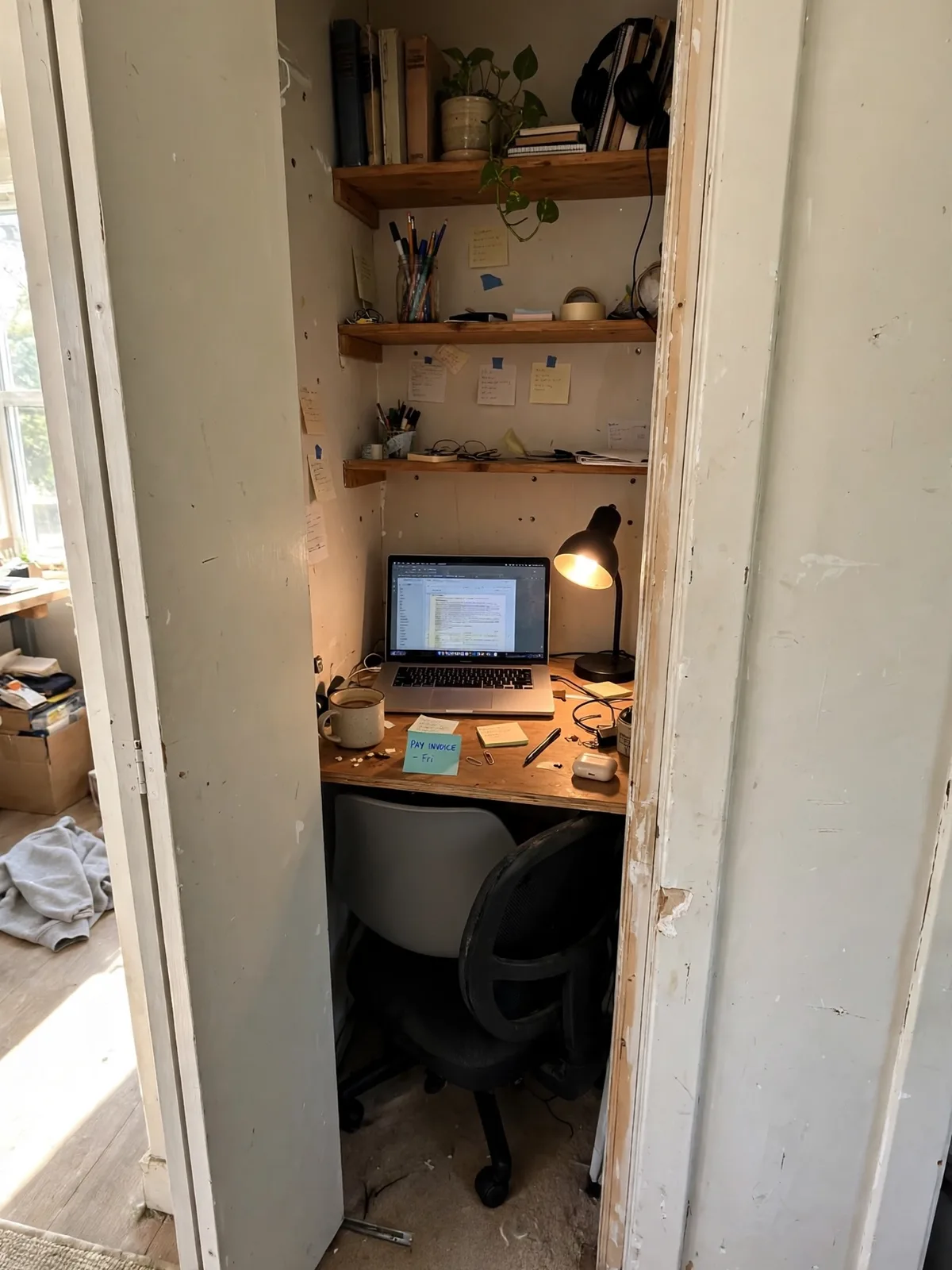
Turn a Closet Into a Cloffice

No spare room? Steal a closet. A cloffice — closet plus office — sounds like a social media trick, but a standard closet fits a narrow desk beautifully. Measure first, because many closets are exactly 24 inches deep. Remove the door or hang a curtain, add a shelf above the desk for supplies, run one power strip in, and use a small LED desk lamp since closets rarely have light. The best part is the ending: close the door or curtain at night and work is gone. Renters, keep the door and rod in a corner so everything can go back. This is the same trick that makes small apartment storage ideas work — one space, two jobs.
Use the Dead Corner With a Corner Desk

Every small home has a corner that does nothing — too awkward for a chair, too small for a shelf. An L-shaped corner desk, usually $90 to $160, is built for exactly that dead space, and the corner wedge holds a monitor perfectly while the two sides split into work surface and everything-else surface. No budget for a new desk? Push a small straight desk into the corner and add a corner shelf above it; you get most of the win. Face the corner, and distractions behind you disappear — many people focus better this way. Just leave room for your chair to roll back without hitting a wall or a bed.
A Labeled Bin for Chargers and Tech

Chargers breed. One phone cable becomes five cables, two power banks, earbuds and a mystery brick within a year. Corral them all in one labeled tech bin — a fabric bin or small box, $8 to $15 — that lives on a shelf or in your cart's bottom tier. Label it, because an unlabeled bin becomes a junk bin by Friday. Coil each cable loosely and secure it with a velcro tie before it goes in; tangles happen in bins, not on desks. One rule keeps it working: a new charger only enters when it has a named job. Duplicates go in a donate box the same day.
One Inbox Tray for Every Piece of Paper

Give every piece of paper one landing pad: a single inbox tray on the desk, $10 to $18 for a wood or metal one. Mail, school forms, receipts, that note you scribbled — all of it goes in the tray and only in the tray. No second pile on the chair. The tray is not storage, it is a queue: empty it twice a week, five minutes at a time, sending each sheet to your file box, the trash, or your to-do list. A tray you can see the bottom of by Friday is the whole goal. When the tray overflows, the problem is processing, never tray size.
Measure before you buy anything
Before any purchase, measure three things: desk depth (most small desks are 20 to 24 inches), knee clearance underneath, and the wall space above your desk. Write them in your phone. Half of all small-office clutter is organizers that almost fit — the rolling drawer pedestal that blocks your knees, the riser that eats the whole desk. Measure twice, buy once.
Under-Desk Hooks for Headphones and Your Bag

The underside of your desk is storage you already own. Two adhesive hooks or a screw-in hook strip, $8 to $12, hold your headphones and your work bag off the floor and off your chair. Headphones on a hook survive longer than headphones under a pile of paper — ask anyone who has sat on a pair. Hang things on the side away from your knees, and test knee room before you commit; a bag swinging into your shins all day will come down by Wednesday. Renters, strong adhesive hooks hold headphones fine, but bags are heavier — use a hook only if its rating says it can take the weight.
A Rolling Drawer Pedestal Under the Desk

If your desk has legs and nothing under them, a rolling drawer pedestal turns that air into three real drawers. Most are about 16 inches wide and 24 inches deep, $70 to $130, and they roll out when you need the floor space back. Top drawer: daily tools. Middle: paper and notebooks. Bottom, the deep one: the printer, a ream of paper, or the archive box. This is the piece that makes a cheap, drawer-less desk feel like actual office furniture. Check the height before you buy — pedestal plus desk clearance must leave room for your thighs, which is the measurement everyone forgets.
A Fold-Down Wall Desk for the Tiniest Spaces

The tiniest spaces — a hallway nook, a bedroom corner, the end of a kitchen — cannot spare a permanent desk. A fold-down wall desk, roughly $60 to $120, mounts to studs and folds flat to about 4 inches deep when you are done. Down, it holds a laptop and notebook fine for a few focused hours. Up, the room is a room again. The trade-off is honesty: no monitor army, no printer, just the essentials, and you must clear it fully to fold it — which, honestly, is a feature. Pair it with a folding chair that hangs on the wall and the whole office disappears in two minutes.
A Carry-Away Caddy for the End-of-Day Reset

Shared desk, dining table desk, couch desk — if your office moves, pack it like it moves. A carry-away caddy, a handled basket or divided tote around $12 to $20, holds your laptop charger, notebook, pens, headphones and water bottle, and at the end of the day the whole office lifts away in one hand. The reset takes thirty seconds, which is why it actually happens. Keep the caddy ruthless: if it does not fit, it is not part of the daily kit. This is also the kindest system for anyone whose office is the family table — dinner should not have to negotiate with your paperwork.
A Command Board for the Week's Priorities

A desk shows you tasks. A wall can show you priorities. A cork command board or small whiteboard above the desk, $15 to $30, holds this week's three priorities — three, not thirteen — plus a small calendar and the one card you keep avoiding. Seeing the week at a glance stops your desk becoming a landscape of sticky notes you stopped reading weeks ago. Update it every Monday in five minutes: last week off, this week on. Keep it small on purpose. A board bigger than about 24 by 18 inches invites clutter, and a command board covered in old notes commands nothing at all.
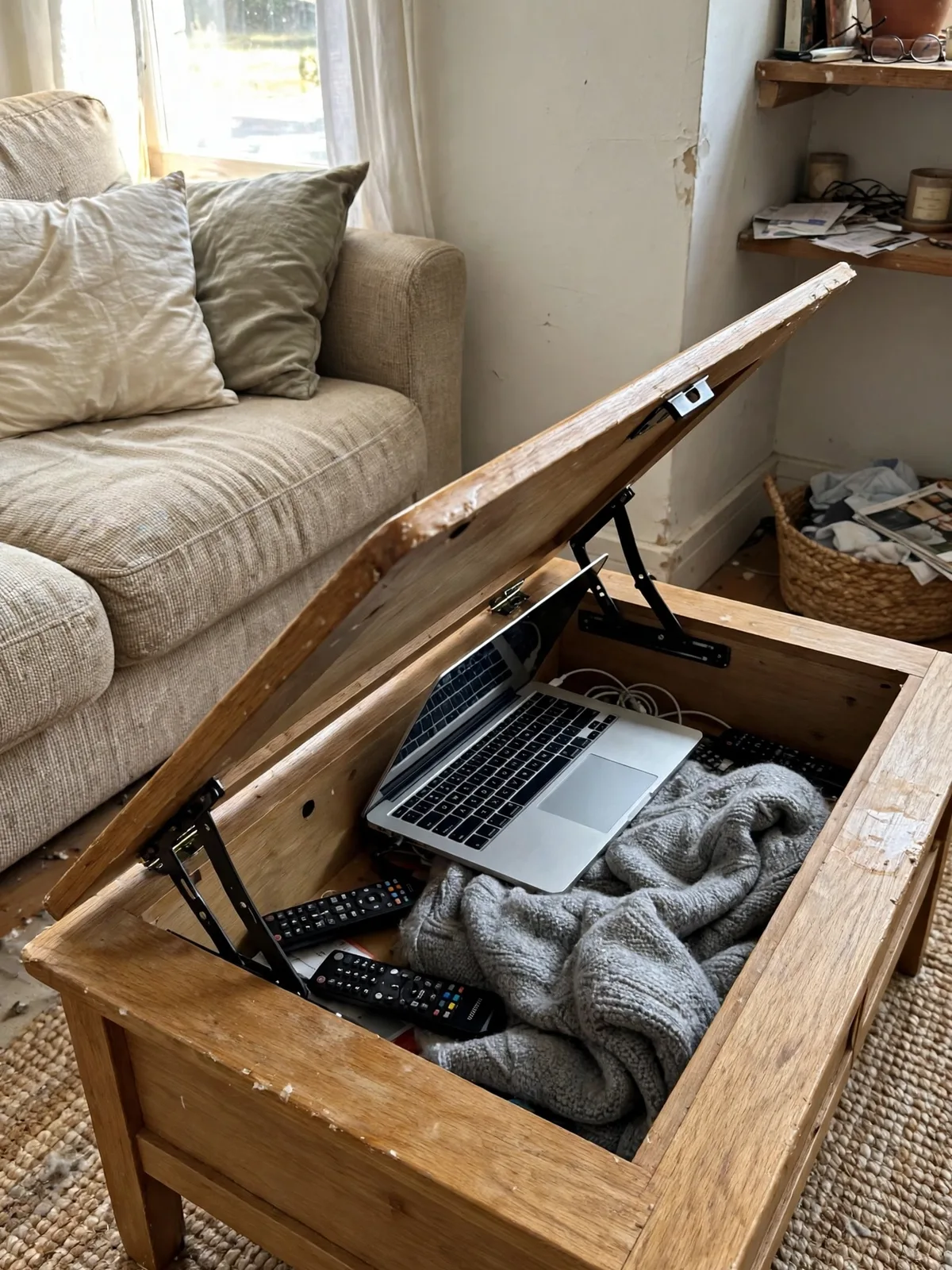
A Storage Ottoman That Doubles as a Guest Seat

Small rooms need furniture that does two jobs, and a storage ottoman does three: seat, footrest and hiding place. A fabric ottoman around $35 to $60 swallows the guest blanket, the extra laptop bag, board games, or the craft supplies that keep migrating to your desk. Put it beside the desk and it becomes the guest seat when someone perches to talk — or the printer stand, if the lid is sturdy and flat. Choose one with a lid you can lift one-handed, because a storage spot that is annoying to open is a storage spot you will stop using by next month.
The Five-Minute Friday Reset

Systems do not fail on Monday. They fail a little every day, then all at once. The fix is a five-minute Friday reset: timer on, papers from the inbox tray filed or trashed, cart tiers straightened, cables back in their box, desk wiped, chair in. Five minutes, before the weekend, while your brain still knows where everything goes. That small habit is what makes the other 18 ideas still work in March. If the whole room needs more than five minutes, pair the reset with our 30-day declutter challenge and let the desk be day one — the easiest win in the house.
You do not need all 19 ideas, and you definitely do not need them this weekend. Pick the three that match your actual mess — for most small offices that is a rolling cart for supplies, a cable box for the floor snake pit, and one inbox tray for paper. That alone makes a corner desk feel like a real workspace.
The goal is not a showroom desk nobody touches. It is sitting down on Monday, knowing where your charger is, seeing a clear surface, and starting work in thirty seconds instead of ten minutes. Small offices reward small systems, kept weekly. Start with your zone, and let the Friday reset do the rest.
Small Home Office FAQs
Expert answers & styling advice
How can I make a home office in a room that is not an office? ▼
Claim one zone instead of a whole room: a desk flat against a wall, a corner desk in a dead corner, or a cloffice inside a closet you can close at night. Add one three-tier rolling cart for supplies and keep everything work-related inside that one footprint, so the rest of the room stays a bedroom or living room.
What is the best storage for a very small desk? ▼
Go vertical and go mobile. Floating shelves above the desk and a pegboard beside it use walls instead of surface, while a rolling cart or rolling drawer pedestal adds drawers your desk never had. On the surface itself, keep only a desktop file box or one inbox tray — everything else should live off the desk.
How do I hide cables in a small home office? ▼
Put the power strip and adapters in a cable management box on the floor, bundle each run of cords with reusable velcro ties, and label both ends of any cable you cannot identify at a glance. Leave a little slack in every run so cables do not strain ports or pop loose when you move the desk.
How do I keep a small home office tidy long term? ▼
Systems, not weekend cleanups. Give paper one inbox tray, chargers one labeled bin, and supplies one cart — then run a five-minute Friday reset to file, straighten and wipe down before the weekend. Small spaces drift daily, so a tiny weekly reset beats a big monthly purge every time.