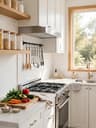
15 Kitchen Storage Organization Ideas That Give Every Item a Home

Fifteen whole-kitchen storage systems — work zones, deep drawer dividers, pull-out shelves, pantry zones, a spice drawer, and a weekly reset — so every item in your kitchen finally has one obvious home.
Table of Contents (15 Ideas)
- 1.Zone Your Kitchen Into Five Work Zones
- 2.Switch to Deep Drawers With Dividers for Utensils and Tools
- 3.Stand Plates, Trays and Boards Upright With Vertical Dividers
- 4.Give Your Pantry Zones and Labelled Bins
- 5.Add Pull-Out Shelves to Lower Cabinets
- 6.Move Spices Into a Drawer With Stepped Inserts
- 7.Stack Pots by Size and File the Lids Upright
- 8.File Food Container Lids Like Books
- 9.Keep Counters Clear With One Daily-Use Station
- 10.Turn the Under-Sink Cabinet Into a Cleaning Caddy Zone
- 11.Hang a Wall Rail for the Tools You Reach For Daily
- 12.Decant Dry Goods Into Matching Airtight Canisters
- 13.Rescue the Corner Cabinet With a Two-Tier Lazy Susan
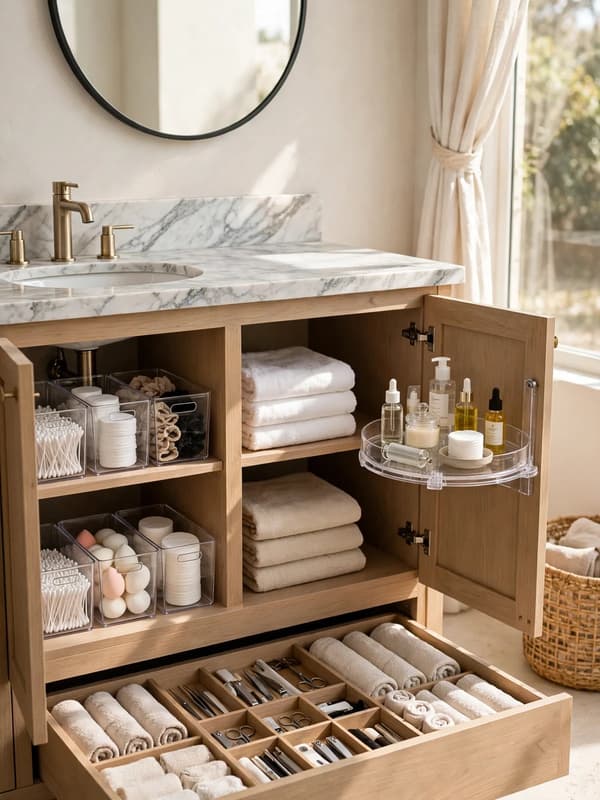
- 14.Use the Inside of Cabinet Doors for Spices and Wrap
- 15.Run a 10-Minute Weekly Reset and a One-In-One-Out Rule
Most kitchens do not have a storage problem. They have a system problem: every cabinet holds a little of everything, so nothing is where your hand expects it to be. Good kitchen storage organization is not about buying more containers. It is about giving every item one obvious home, grouped by how you actually cook.
These 15 kitchen storage organization ideas build that system zone by zone — cabinets, drawers, pantry, counters, and the vertical space in between — so the whole kitchen works as one calm setup instead of a set of crowded cupboards. If your kitchen is genuinely tiny, our small kitchen storage ideas cover the small-space workarounds; this guide is for any kitchen that needs a whole-kitchen plan.
Start with the zone that frustrates you most, add one idea a weekend, and let the system grow from there.
Sort first, shop second
Before you buy anything, empty one zone completely and sort what comes out into three piles: keep in this zone, move to another zone, and leave the kitchen. Most kitchens give up a third of their contents in this one step, and you will buy half the organizers you thought you needed.
Zone Your Kitchen Into Five Work Zones

A kitchen works best when it is split into five zones: prep, cooking, cleaning, storage, and serving. Put the cutting boards, knives, and mixing bowls where you chop; keep pots, pans, and cooking oils beside the stove; store plates and glasses near the dishwasher or sink so unloading takes seconds. When each zone holds only what its job needs, you stop walking back and forth across the kitchen for every meal. Draw the zones on a piece of paper first — most kitchens need only a small shuffle, not a renovation. The test is simple: stand at the stove and reach for the spatula, the oil, and the pan. If all three are within one step, the cooking zone is done. Repeat the test at the sink and the chopping board, and move anything that fails.
Switch to Deep Drawers With Dividers for Utensils and Tools

Deep drawers hold more than a cabinet shelf ever will, because you can see everything from above instead of digging to the back. Swap one set of lower cabinet doors for deep drawers, or fit dividers into the drawers you already have, and give every utensil a slot: forks and knives in one row, wooden spoons and spatulas in the next, measuring cups at the end. Bamboo dividers that expand to fit the drawer are the cheapest way in, and they stop the slow slide that turns every drawer into a jumble. Keep the drawer beside the stove for cooking tools and the one beside the sink for cutlery, so each drawer serves the zone above it.
Stand Plates, Trays and Boards Upright With Vertical Dividers

Plates stacked in a pile mean lifting five plates to reach the one at the bottom, and baking sheets stacked flat mean a noisy avalanche every time you need one. Stand them upright instead. A vertical divider — wood, metal, or a tension rod fitted inside the cabinet — turns plates, trays, cutting boards, and baking sheets into files you can pull out one at a time. It works best in a tall, narrow cabinet near the oven, where the trays live closest to where they are used. Keep the everyday plates at the front and the roasting pans at the back, and the cabinet stops being the place things go to hide.
Give Your Pantry Zones and Labelled Bins

A pantry without zones is just a big cupboard where things go to expire. Split it into breakfast, baking, dinner, and snacks, and give each zone a labelled bin or basket so the group stays together. Put the heavy staples — flour, rice, oil — at waist height, the everyday breakfast things at eye level, and the rarely used appliances up top. Our pantry storage ideas go deeper on bin sizes and shelf heights if your pantry needs a full rethink. The rule that keeps it working is one bin per group and nothing loose on a shelf: when a bin is full, something inside it has to be used up or moved out before anything new goes in.
Add Pull-Out Shelves to Lower Cabinets

The back half of a lower cabinet is where kitchen storage goes to die — you cannot see it, so you forget it exists and buy a second one. Pull-out shelves fix that by bringing the whole shelf to you. A two-tier metal pull-out holds pots on one level and glass containers on the other, and you can reach everything without kneeling or emptying the front row. They fit most standard cabinets and screw into the base in an afternoon. For the full cabinet-by-cabinet plan, see our kitchen cabinet organization ideas. Put the heaviest things on the bottom tier so the shelf glides smoothly, and leave a little breathing room on each tier — a shelf packed edge to edge is just a drawer you cannot open.
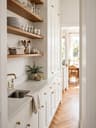
13 Butlers Pantry Ideas Layout Plans That Make a Pass-Through Work Harder
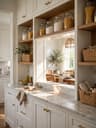
15 Butlers Pantry Ideas That Make a Pass-Through Kitchen Work Twice as Hard
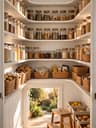
15 Corner Pantry Ideas That Put Every Awkward Corner to Work
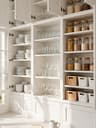
15 Kitchen Cupboard Organization Ideas That Make Mornings Easier
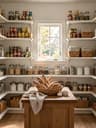
15 Kitchen Pantry Ideas That Make Cooking Easier Every Day
Move Spices Into a Drawer With Stepped Inserts

Spices are small, numerous, and impossible to find in a crowded cabinet, which is why they deserve their own drawer. Lay the jars flat in a shallow drawer with stepped inserts, labels facing up, so you can read every name at a glance instead of pulling jars out one by one. Matching jars make the drawer easier to scan, but the real win is the order: alphabetize them, or group them by cuisine if you cook that way. Keep the drawer beside the stove so the paprika is one reach away while you cook. Our spice organization ideas cover racks, risers, and pantry spice setups if a drawer is not an option in your kitchen.
Three helpers worth the money
If you buy only three things, make them these: a set of bamboo drawer dividers that expand to fit, a two-tier pull-out shelf for the worst lower cabinet, and a label maker or a pack of chalk labels. Measure the cabinet and the drawer first, and skip everything else until you have lived with the setup for a month.
Stack Pots by Size and File the Lids Upright

Pots nested in a stack with lids balanced on top are the noisiest, most annoying cabinet in most kitchens. Break the stack apart: nest pots by size with a pan protector between each one so the surfaces do not scratch, and file the lids upright in a divider slot beside them. A lid rack screwed to the inside of the cabinet door works too, and it costs almost nothing. Keep the two pans you use every day at the front and the stockpot you use twice a year at the back. The test is the same as every other zone: if you can lift out one pot without moving three others, the system works.
File Food Container Lids Like Books

Food containers multiply in the dark, and their lids multiply faster. Fix it with a matching set: pick one size range, recycle every container that has no matching lid, and cap the collection at what fits on one shelf. Stack the containers by size and file the lids upright in a wooden divider, like books on a shelf, so you can grab a matching pair in seconds. Our food container organization ideas walk through the full purge if your cupboard needs it. One new rule keeps it from growing back: a container only enters the house when its lid has a slot in the divider, and a lid with no container goes straight in the recycling.
Keep Counters Clear With One Daily-Use Station

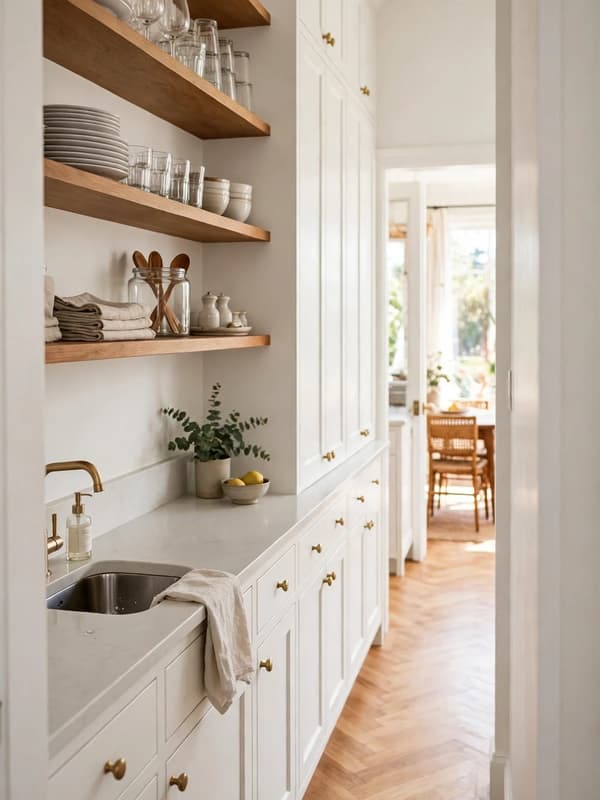
A clear counter is the fastest way to make a kitchen feel calm, and the trick is not willpower — it is giving the daily things one defined station. Pick one corner for the coffee maker, the mugs, and the beans, and let the rest of the counter stay empty. The toaster, the fruit bowl, and the knife block can each have a station too, but only if you use them every day; anything used weekly belongs in a cabinet. When a new appliance arrives, it earns its counter spot by being used daily for a month. If it fails the test, it goes in a cabinet, and the counter stays clear for the actual work of cooking.
Turn the Under-Sink Cabinet Into a Cleaning Caddy Zone

The cabinet under the sink is dark, damp, and full of pipes, which is exactly why it needs a system instead of a pile. A two-tier sliding caddy keeps the dish soap, sponges, and sprays in neat rows that pull out into the light, and a tension rod across the top holds spray bottles by their triggers so they stop tipping over. Line the base with a waterproof mat, because this is the one cabinet most likely to leak. Keep only cleaning supplies here — nothing food-related — and keep the total small enough that you can see every bottle. If a bottle has not been used in a month, it moves to the garage or gets used up first.
Hang a Wall Rail for the Tools You Reach For Daily

The wall between the counter and the upper cabinets is free storage, and a rail with hooks turns it into the most-used spot in the kitchen. Hang the tools you reach for every day — wooden spoons, a whisk, measuring cups, kitchen scissors — and keep the rest in a drawer. A brass or black rail about two feet long is enough for most kitchens; longer rails invite clutter. Mount it beside the stove so the spatula is one grab away while you cook, and leave one hook empty on purpose. That empty hook is the breathing room that keeps the rail looking calm instead of crowded, and it gives the next useful tool a home when it arrives.
The one-week test
Live with a new zone for one week before you buy anything else for it. If you reach for something that is not there, the zone is missing a home; if you never touch something in it, that item belongs in another zone — or out of the kitchen entirely.
Decant Dry Goods Into Matching Airtight Canisters

Half-empty bags of flour and rice are the messiest things in a kitchen: they tear, they spill, and you can never tell how much is left. Decant the dry goods you use most — flour, rice, oats, pasta, sugar — into matching airtight canisters, and the shelf instantly looks calmer and works better. Clear glass lets you see at a glance what needs refilling, and matching lids mean every canister stacks and seals the same way. Only decant what you use weekly; the once-a-year specialty flours can stay in their bags in a labelled bin. Refill from the bag over the sink so the inevitable drips go down the drain, not into the pantry.
Rescue the Corner Cabinet With a Two-Tier Lazy Susan

Corner cabinets are the deepest, darkest storage in the kitchen, and a two-tier lazy Susan is the simplest way to rescue them. The turntable brings the back of the cabinet to you with one spin, so the oils, jars, and cans at the back stop being forgotten. Put the tall bottles on the top tier and the jars and cans on the bottom, and leave the very back of the top shelf for the things you use least. A lazy Susan will not fix a corner cabinet that is stuffed full, so cap it: if the turntable cannot spin freely, something has to move out to the pantry or the garage.
Use the Inside of Cabinet Doors for Spices and Wrap

The inside of a cabinet door is a whole shelf you are probably not using. Slim wire racks screwed to the inside hold spice jars, measuring spoons, and a roll of foil without taking a single inch of shelf space, and they put the small things you grab constantly right at eye level. Measure the depth first: the rack has to clear the shelves when the door closes, so keep the jars small and the rack shallow. This is also the best home for the foil, cling film, and parchment rolls that never fit neatly anywhere else — one rack, three rolls, and the drawer they used to jam is suddenly free.
Run a 10-Minute Weekly Reset and a One-In-One-Out Rule

No storage system survives a kitchen that is never reset. Give the kitchen ten minutes once a week — Sunday evening works for most homes — and walk the zones: counters cleared, containers matched to their lids, pantry bins back in their zones, and anything that migrated to the wrong spot returned to its home. Pair the reset with a one-in-one-out rule: a new gadget, pan, or container only comes in when an old one goes out. The reset is also when you spot the system breaking — the drawer that is creeping full, the shelf that needs a new bin — and fix it while it is still a five-minute job instead of a weekend project.
A calm kitchen is not really about containers. It is about walking in, reaching for what you need without thinking, and cooking without moving a pile first.
Pick the zone that frustrates you most — usually the cabinets or the pantry — add one idea this weekend, and let the system grow from there. Then keep the weekly reset short and honest, and the kitchen that used to greet you with a hunt for the right lid will start greeting you with a bit of calm instead.
Kitchen Storage Organization Ideas FAQs
Expert answers & styling advice
What is the best way to organize kitchen storage? ▼
Start with zones, not containers. Split the kitchen into prep, cooking, cleaning, storage, and serving, and put each item in the zone where it is used. Then fix the worst cabinet with pull-out shelves or dividers, give the pantry labelled bins, and keep the counters to one daily-use station. Kitchen storage organization works when every item has one obvious home, so you can put it back without thinking.
How do I organize my kitchen cabinets? ▼
Empty one cabinet at a time and sort what comes out into keep, move, and leave. Then add the right insert for what is left: vertical dividers for plates and trays, pull-out shelves for deep lower cabinets, and a lazy Susan for corners. Put everyday things at eye level and heavy things low, and keep each cabinet for one group only — mixing baking, cooking, and containers in one cabinet is how the mess starts.
What should stay on kitchen counters? ▼
Only what you use every day: the coffee maker, the knife block, and maybe a fruit bowl. Everything used weekly — the blender, the food processor, the stand mixer — belongs in a cabinet or on a pull-out shelf. If a counter appliance has not been used in a month, move it off the counter and see if you miss it. A clear counter is not empty; it is ready to cook on.
How do I organize a kitchen without a pantry? ▼
Borrow the pantry's job from the cabinets: give one cabinet the pantry zones — breakfast, baking, dinner, snacks — with labelled bins for each group, and decant the dry goods into matching canisters so you can see what you have. A narrow pull-out shelf or a rolling cart between the fridge and the wall can hold the overflow. The zones matter more than the room; a pantry is just a cabinet with a door you can walk into.
How do I keep my kitchen organized long-term? ▼
Run a ten-minute weekly reset: clear the counters, match containers to lids, return anything that drifted to the wrong zone, and check the pantry bins. Pair it with a one-in-one-out rule so new gadgets only arrive when an old one leaves. Systems fail slowly, one extra item at a time, so the weekly reset is what catches the drift before it becomes another full clear-out.