17 Pantry Shelving Ideas That Double Your Shelf Space

17 shelf-first ideas — adjustable tracks, open shelves, pull-out drawers, risers, dividers and lighting — that double what your pantry holds without knocking down a single wall.
Table of Contents (17 Ideas)
- 1.Switch to Adjustable Track Shelving
- 2.Go Open With Shelves and No Doors
- 3.Add Thick Wood Floating Shelves
- 4.Use Tiered Shelf Risers for Cans
- 5.Add Pull-Out Shelf Drawers
- 6.Wrap the Corner With L-Shaped Shelves
- 7.Try Chrome Wire Shelving
- 8.Stand Flat Things Up With Shelf Dividers
- 9.Split Tall Gaps With a Half Shelf
- 10.Hang Baskets Under the Shelves
- 11.Stack Freestanding Mini Shelves
- 12.Put a Turntable on the Shelf
- 13.Add a Shelf Rack to the Pantry Door
- 14.Turn Deep Shelves Into Sliding Bins
- 15.Reserve the Top Shelf for Bulk and Backstock
- 16.Build Shallow Shelves for Spices
- 17.Light Every Shelf With LED Strips
Here is the thing nobody tells you about a crowded pantry: the problem is almost never the size of the room. It is the shelves. Fixed shelves set at the wrong heights leave six inches of dead air above every jar, and that dead air adds up to a whole shelf you are not using. I have seen pantries that felt stuffed hold twice as much once the shelving itself got fixed.
These 17 pantry shelving ideas are all about the shelves — how they are spaced, what they are made of, how they move, and what sits on them. No remodel, no new cabinets, no knocking down walls. Most of these cost less than a weekly grocery run, and a few are free if you already own a drill. If your pantry is tiny, start with our small pantry organization ideas alongside this list — the two work as a pair.
 Save Pin
Two numbers before you buy anything
Measure shelf depth (most pantries are 12 to 16 inches) and the height between shelves. Cans need about 5 inches of clearance, cereal boxes need 12 to 14, and tall oil bottles need 15. If a gap is taller than what sits in it by more than 3 inches, that is wasted space — and one of these pantry shelving ideas will claim it.
Switch to Adjustable Track Shelving

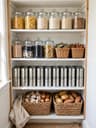
Fixed shelves are the single biggest space-waster in a pantry, because they were spaced for whoever built the house, not for your groceries. An adjustable track shelving system fixes that for good: two metal upright rails screwed into the studs, with brackets that clip in at any height. Move a shelf up two inches when the cereal boxes change size, drop one down for a row of short cans. A 12-inch-deep shelf holds cans and jars perfectly; go 14 to 16 inches deep for cereal boxes and bulk bags. Metal brackets will not sag under a full load of cans the way a long wooden shelf can.
Go Open With Shelves and No Doors

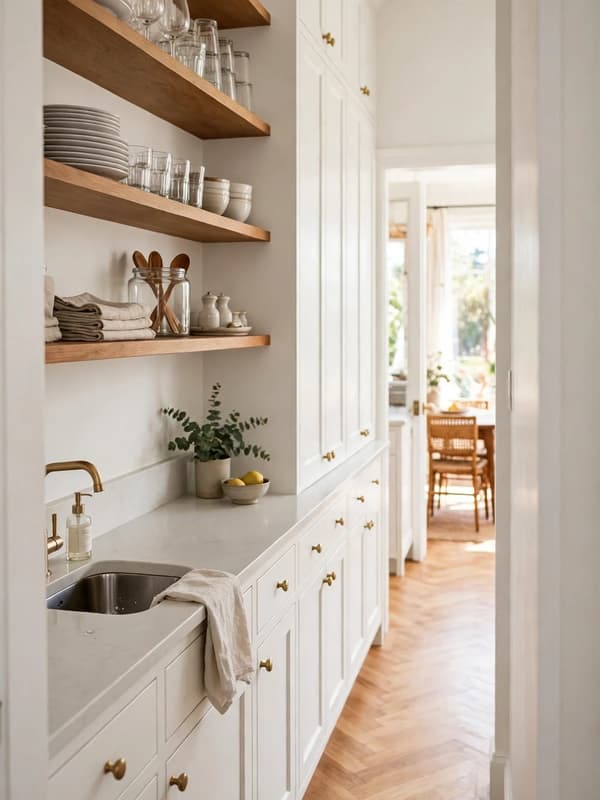
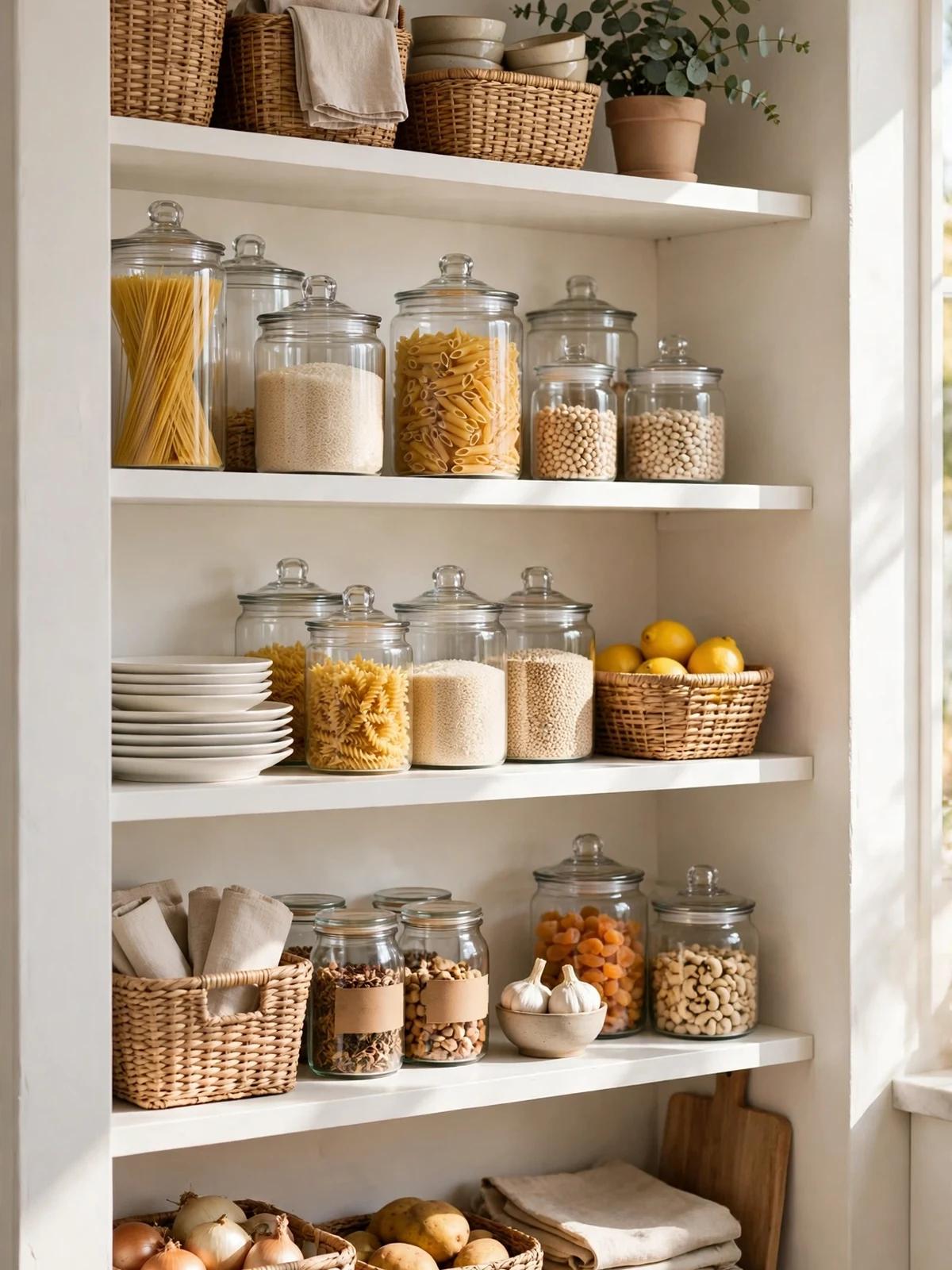
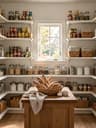
Taking the doors off a pantry sounds drastic until you try it for a week. Open pantry ideas work because you can see everything from the kitchen doorway — no more opening a door to discover you already owned three bags of rice. Five or six long shelves running floor to ceiling hold more than a closed cupboard of the same size, because there is no door swing eating into the room and no dark interior hiding the back row. Keep the shelves themselves tidy and matching, since they are now part of the kitchen's look: uniform jars on the middle shelves, baskets on the bottom, backstock up high.
Add Thick Wood Floating Shelves

A pantry does not have to look like a storage room. Thick wood floating shelves — solid oak or butcher block, about 1.5 to 2 inches thick — give a small pantry the feel of a proper kitchen feature instead of a cupboard. They are strong enough for a full row of glass canisters, which matters: a shelf holding flour, rice and oats can carry 30 pounds without breaking a sweat. Mount each one into wall studs with hidden brackets, not just drywall anchors, and keep the depth at 12 inches so jars sit fully on the shelf instead of hanging over the edge. Three shelves, spaced about 14 inches apart, cover most daily staples.
Use Tiered Shelf Risers for Cans

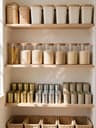
Cans are the worst space-wasters in a pantry: one flat row, and you can only read the front label. A tiered shelf riser turns that flat shelf into stadium seating — three stepped levels, every can visible, nothing buried at the back. Suddenly the chickpeas you bought twice because you forgot the first can are right there at eye level. Buy a riser that matches your shelf depth (most are 10 to 12 inches deep) and, if you can, an expandable one that stretches to fill the full width of the shelf instead of leaving a dead strip at the side. Risers work for spice jars and small sauce bottles too.
Add Pull-Out Shelf Drawers

Deep pantry shelves are where food goes to be forgotten — the front row looks tidy while the back grows a second, hidden pantry. Pull-out shelf drawers end that: a shallow wooden or metal tray on full-extension slides that rolls the whole shelf toward you like a drawer. Measure the depth first and buy a tray that uses nearly all of it; a tray that stops six inches short leaves a dead strip behind it, which is exactly the problem you are fixing. Full-extension slides matter more than the tray itself — cheap slides that only open halfway still hide the back row.
Wrap the Corner With L-Shaped Shelves

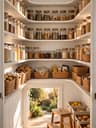
A corner pantry has a dead spot right where the two walls meet — too deep to reach, too awkward to leave empty. Small corner pantry ideas that actually work start with L-shaped shelves that wrap both walls, so the corner becomes the deepest, most useful part of the pantry instead of the part you ignore. Run the shelves all the way into the corner and put a turntable right at the bend for oils and sauces; the spin brings the corner to you. Keep the corner shelves a little deeper, 16 to 18 inches, and store bulky, rarely moved things there — the big rice bag, the spare oil, the baking trays.
Try Chrome Wire Shelving

Not every pantry needs built-in wood. A tall chrome wire shelving unit — four or five open tiers on slim poles — is the fastest way to add real shelf space to a walk-in pantry where you cannot drill. The open wire lets air move, so nothing goes stale in a damp corner, and you can see what is on the shelf below through the gaps. The shelves clip to the poles at any height, so you can set one tier at 5 inches for cans and the next at 14 for cereal. Buy the version with casters if you ever need to pull the whole unit out to clean behind it.
The three shelf buys that do the heavy lifting
If the budget only stretches to three things, make it a tiered shelf riser for the cans, a pull-out shelf drawer for the deepest shelf, and a set of shelf dividers for the flat stuff. Together they fix the three ways pantries waste space — hidden back rows, buried cans, and toppling piles — for less than one big grocery shop.
Stand Flat Things Up With Shelf Dividers

Baking sheets, cutting boards, tray lids and platters are flat, awkward, and impossible to stack — so they end up leaning in a pile that falls over every time you grab one. Shelf dividers fix that in five minutes: upright metal or acrylic dividers that clip onto a shelf and split it into vertical slots, so each flat item stands on its own edge like a book on a shelf. Space the dividers about 2 to 3 inches apart for lids and trays, wider for cutting boards. Put them on a lower shelf, since flat things are heavy and you do not want them dropping from above.
Split Tall Gaps With a Half Shelf

Look at your pantry shelves and find the gap that is twice as tall as what sits in it. That is free space, and a half shelf claims it. A half shelf is just a short extra board — or a freestanding mini shelf — that sits inside a tall gap and splits it into two usable levels. Spice jars and tea boxes go on the new upper level, taller canisters stay below. Measure the gap height first: if it is 14 inches and your jars are 6, a 7-inch half shelf gives you a full second row with room to spare. No drilling needed for the freestanding kind.
Hang Baskets Under the Shelves

The underside of every shelf is storage you already own and are not using. Under-shelf baskets — wire baskets that slide onto the shelf above and hang below it — turn that dead strip into a home for snack packets, small jars, tea boxes and wraps. They cost a few dollars each, need no screws, and slide on and off in seconds. Keep them light: packets, sachets and small jars, never full cans, or they will bow the shelf above over time. One basket per shelf is plenty; two makes the shelf below hard to reach into.
Stack Freestanding Mini Shelves

A stackable mini shelf is a small two-legged shelf that sits on top of a regular shelf and creates a second level — no tools, no screws, no commitment. Mugs, small jars and spice tins go on top; cans and taller bottles stay underneath. They are sold in pairs for a reason: two side by side fill a standard shelf width neatly, and you can pull one out and use it in a cabinet when the pantry changes. Look for a sturdy metal frame rather than thin plastic. Measure your shelf height before buying — you need at least 12 inches of clearance between shelves.
Put a Turntable on the Shelf

A shelf full of bottles is a shelf full of hiding places. A lazy Susan turntable on the shelf itself — not just in the corner — brings every bottle to the front with one spin: oils, vinegars, sauces, dressings, all in a neat circle. Pick one with a raised lip so nothing slides off mid-spin, and measure it against your shelf depth first; a 10-inch turntable fits a standard 12-inch shelf with room to spare, while a 15-inch one will jam. Two smaller turntables usually beat one big one — one for cooking oils, one for sauces — because a crowded turntable is just a crowded shelf that spins.
Add a Shelf Rack to the Pantry Door

The back of the pantry door is shelf space that does not take a single inch from inside the pantry. A door-mounted shelf rack adds four or five narrow shelves for spices, packets, wraps and small jars — the small things that otherwise eat a whole shelf inside. It hangs on hooks over the top of the door, so renters can use it too, with no screws and no damage. Two checks before you buy: measure the gap between the door and the shelves behind it, because a loaded rack needs about 4 inches of clearance to close, and put the heaviest jars on the lowest rack.
Turn Deep Shelves Into Sliding Bins

If pull-out drawers feel like too much of a project, deep bins do most of the same job for a fraction of the cost. Put each category in a long deep storage bin that reaches nearly to the back wall — one for baking, one for grains, one for cans — and the bin slides out like a drawer when you need something from the back. Buy bins that use nearly all of your shelf depth; a bin that stops short leaves a dead strip behind it, and dead strips collect forgotten food. Clear bins work best here, because you can see what is inside before you pull.
Light changes everything
A pantry can have perfect shelves and still feel unusable if the back row sits in shadow. A battery LED strip light under each shelf costs a few dollars, sticks on in minutes, and makes every label readable. If you do nothing else on this list, do the lighting — it makes every other idea work better.
Reserve the Top Shelf for Bulk and Backstock

The top shelf of a pantry is prime real estate that usually holds a dusty appliance and good intentions. Reclaim it for backstock: the extra rice, the spare jar of peanut butter, the second bag of coffee beans, the bulk cans from the warehouse shop. These are things you reach for once a month, so they earn the high shelf, while daily items stay between knee and eye level where they belong. Store backstock in one or two lidded storage bins so a quick grab does not turn into an avalanche, and keep a small step stool nearby if you need one.
Build Shallow Shelves for Spices

Spices are the one thing that should never live on a deep shelf. A shallow spice shelf — just 3 to 4 inches deep — holds a single row of jars with every label facing forward, so nothing hides behind anything else. A narrow strip of wall beside the pantry, the side of a cabinet, or even the inside of a door all work; the shelf itself can be a simple pine board on two small brackets. Decant into uniform small jars if your collection is a jumble of brands, because matching jars line up tighter and read faster. Keep the everyday spices at eye level and the once-a-year ones at the top.
Light Every Shelf With LED Strips

This is the cheapest idea that makes the biggest difference to how a pantry feels. A battery LED strip light stuck under the front edge of each shelf washes warm light down over the row below, so you can read every label without leaning in with your phone flashlight. The motion-sensor kind switches on when the door opens and off a minute later, which means the batteries last months and you never have to remember a switch. Fit them to the front third of the shelf, not the back — light from the front reaches the labels, light from the back just glows behind the jars.
You do not need all 17 ideas. Most real pantries calm down with four or five pantry shelving ideas: a way to move the shelves, something that brings the back row forward, a riser for the cans, and light so you can actually see what you own. Start there, live with it for two weeks, and only add more if a specific shelf is still bothering you.
The real test is a normal Tuesday night, cooking dinner in a hurry. If you can find the cumin, grab the right can and put everything back without moving three jars first, the shelves are doing their job. And once the shelves are sorted, the containers are the easy part — our food container organization ideas finish the job, and if the cabinet below the sink is the next mess, our under-sink organization ideas cover that too.
Pantry Shelving Ideas FAQs
Expert answers & styling advice
How deep should pantry shelves be? ▼
Most pantry shelves work best at 12 to 16 inches deep. Twelve inches fits cans, jars and most boxes with nothing hanging over the edge; 14 to 16 inches fits cereal boxes and bulk bags. Deeper than 16 inches and things start hiding at the back — if your shelves are already that deep, use pull-out drawers or long sliding bins so the back row stays reachable.
How far apart should pantry shelves be spaced? ▼
Space shelves to match what sits on them, not to a fixed number. Cans need about 5 to 6 inches of clearance, jars and boxes need 10 to 12, and cereal boxes and tall bottles need 13 to 15. Adjustable track shelving is the easiest way to get this right, because you can move a shelf by two inches in a minute when your groceries change size.
What is the best material for pantry shelves? ▼
For a walk-in pantry, painted plywood or solid wood holds heavy loads without sagging and is easy to wipe clean. Chrome wire shelving is a strong budget option and lets air circulate, which helps in damp pantries. Melamine looks tidy and wipes well, but a long melamine shelf loaded with cans can sag over time, so keep spans under 30 inches or add a middle bracket.
Can I add shelves to a pantry without drilling? ▼
Yes — freestanding wire shelving units, stackable mini shelves, tiered risers and under-shelf baskets all add shelf space with no holes in the wall. Over-door racks and tension-rod shelves work the same way. These are the best options for renters. If you own the place, a couple of screws into wall studs will hold far more weight, so drilling is worth it for the main shelves.
How do I stop my pantry shelves from sagging? ▼
Sagging comes from a shelf that is too long for its load. Keep spans under 30 inches for wood and melamine, add a centre bracket on anything longer, and use thicker boards — 3/4-inch plywood or 1.5-inch floating shelves — for heavy rows of cans and glass canisters. Spread the heaviest items across several shelves instead of loading one shelf with every can you own.