21 Small Pantry Organization Ideas That Make Every Inch Count


21 small, copy-worthy ideas — decanting, shelf zones, door racks, and labels — that turn a cramped pantry into one where everything fits and everything can be found.
Table of Contents (21 Ideas)
- 1.Empty It Out and Start With a Blank Slate
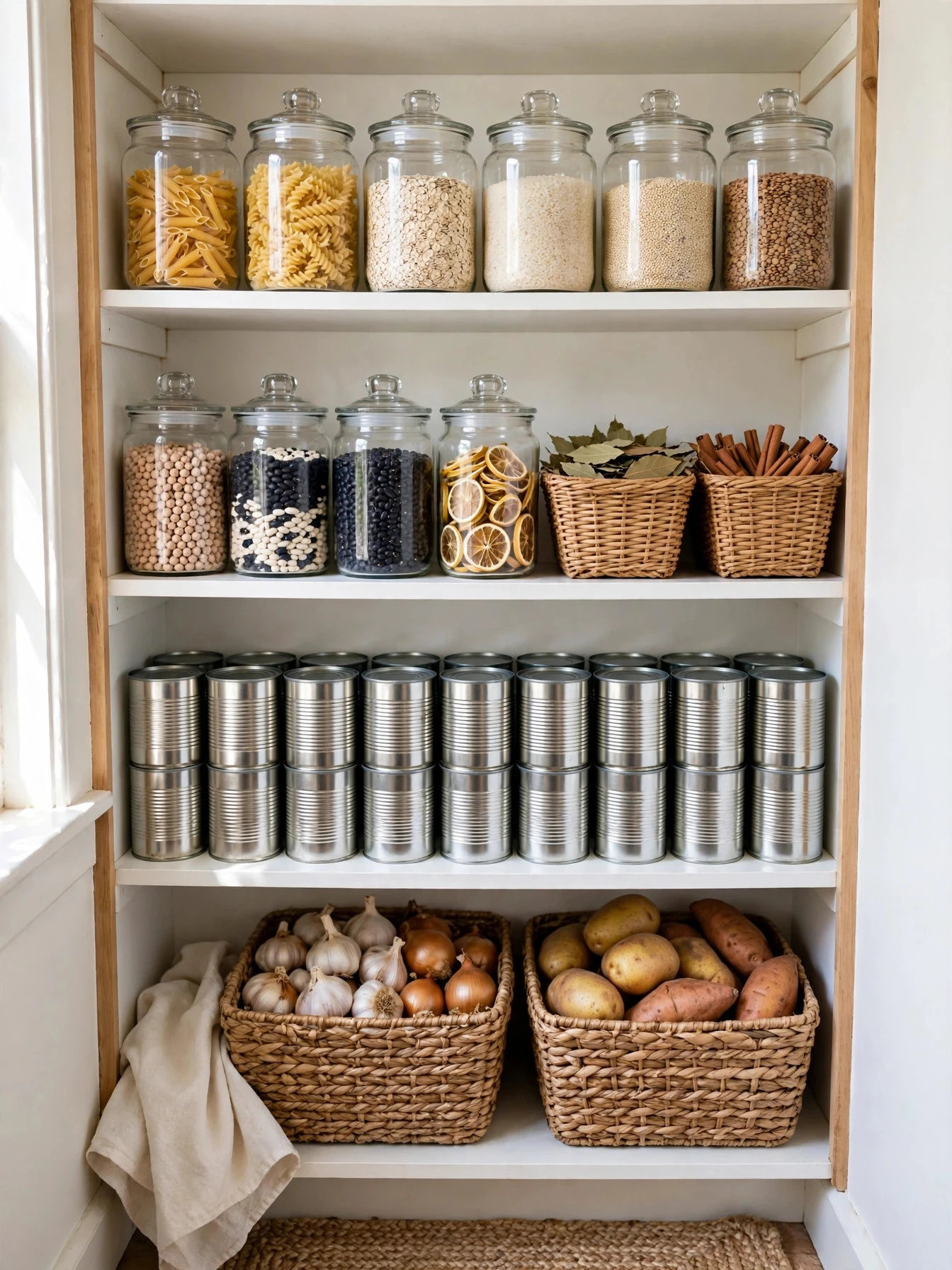
- 2.Decant Staples Into Uniform Airtight Canisters
- 3.Give Every Shelf a Zone
- 4.Add Tiered Shelf Risers for Cans
- 5.Put a Lazy Susan in the Corner
- 6.Hang an Over-Door Pantry Rack
- 7.Corral Snacks in Clear Bins
- 8.Use Baskets to Build Meal Kits
- 9.Label Everything — Honestly, Everything
- 10.Send Backstock and Bulk to the Top Shelf
- 11.Keep a 'Use First' Basket Where You Can't Miss It
- 12.Get Spices Out of the Shelf Shuffle
- 13.Stack Cans With a Gravity Can Organizer
- 14.Make Deep Shelves Pull-Out With Bins
- 15.Build a Baking Caddy You Can Lift Out
- 16.Don't Ignore the Floor
- 17.Slide a Slim Rolling Cart Into the Gap
- 18.File Packets and Pouches Upright
- 19.Corral Oils and Vinegars on a Tray
- 20.Hang Small Tools Inside the Door
- 21.Do a Ten-Minute Weekly Pantry Reset
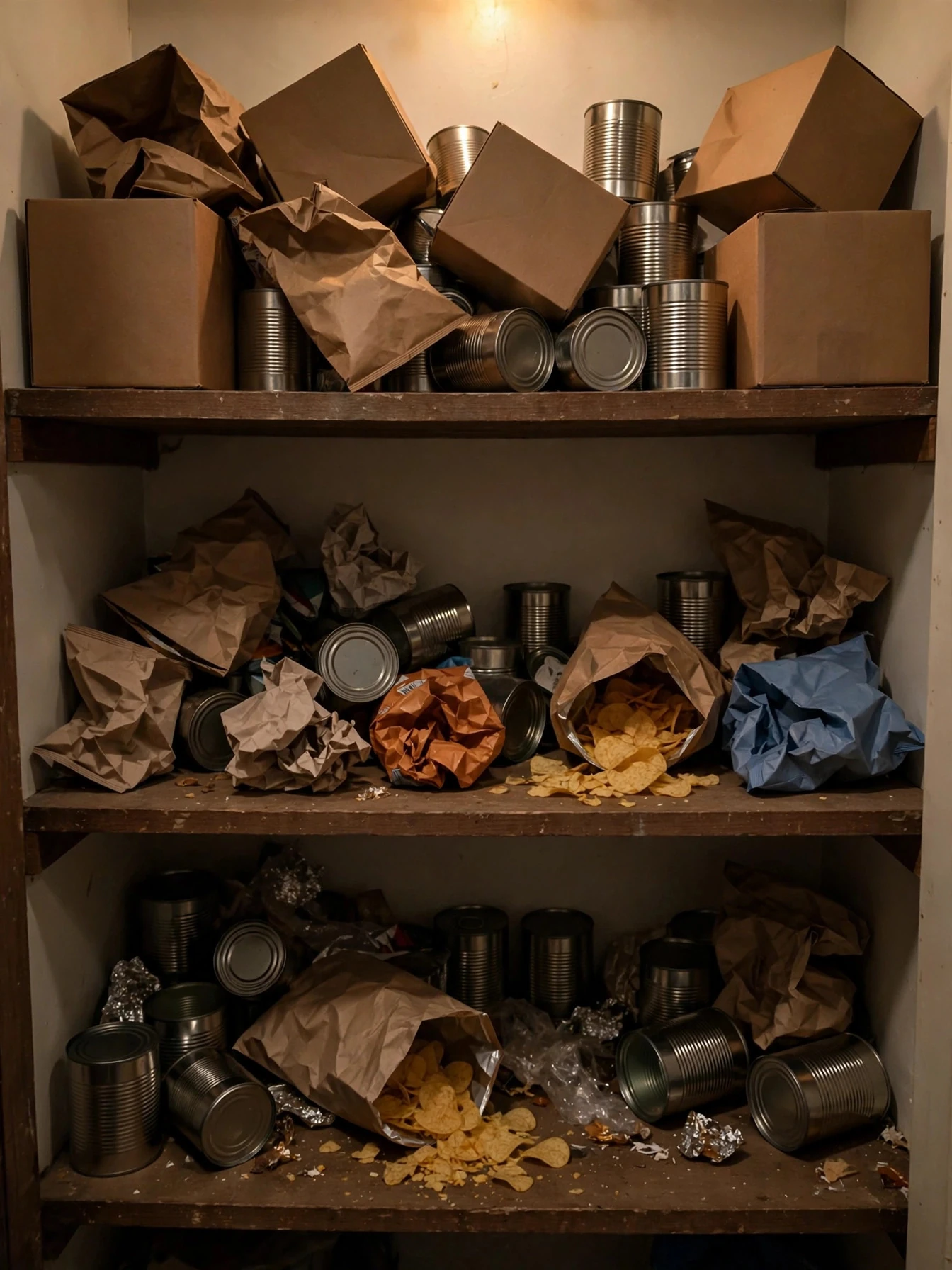
If your pantry is the size of a coat closet, you are not alone — and you are definitely not doing anything wrong. Small pantries don't fail because they're small. They fail because everything gets shoved in wherever it fits, and within a week you're buying a second bag of flour because the first one is hiding behind the cereal.
The fix isn't a bigger pantry. It's a smarter system: every shelf gets a job, every category gets a container, and every item gets a spot you can actually see. In a pantry this tiny, visibility is everything. If you can't see it, you won't use it — you'll just buy it again.
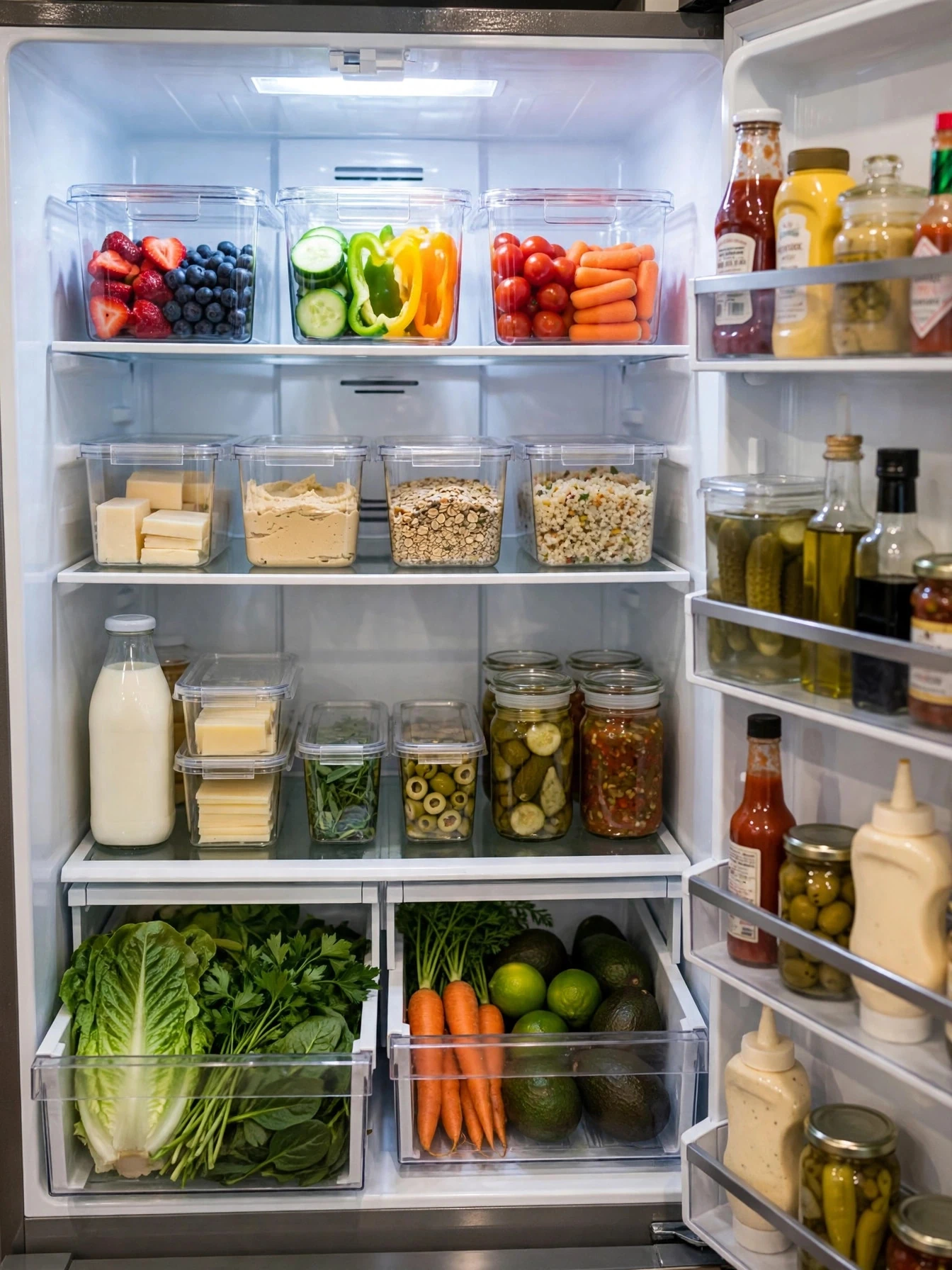
These 21 ideas are the ones that genuinely work in small pantries: reach-in cupboards, narrow closets, even one deep cabinet doing its best impression of a pantry. Start with the first three and the rest gets easier. Grab a trash bag — we're emptying the whole thing out. If the fridge needs the same treatment, start with our fridge organization ideas.
 Save Pin
What you'll need for most of these ideas
Most of this list runs on six things: airtight glass canisters, tiered shelf risers, an over-door pantry rack, clear stackable bins, a few woven storage baskets, and chalk labels with a chalk pen. Buy them in that order if you're spreading out the cost — the canisters and risers change the most, the fastest. Everything else in this article is just rearranging what you already own.
Empty It Out and Start With a Blank Slate

Yes, all of it. Every can, box, and mystery bag of pasta comes out onto the counter. You cannot organize a pantry you're still standing inside of, and this one honest hour saves you from shuffling clutter around for months. Check dates as you go and toss anything expired, stale, or unidentifiable without guilt — that half-bag of lentils from two moves ago is not a plan, it's a burden. Wipe the shelves down while they're empty (crumbs love corners), and only then start putting things back. What goes back in should be food you actually eat.
Decant Staples Into Uniform Airtight Canisters

Flour, rice, pasta, oats, sugar — the bags and boxes they arrive in are all different heights, they slump, and they never stack. Pour them into airtight glass canisters in one or two matching sizes and two things happen: your shelves instantly look calmer, and you can see at a glance when you're running low. Uniform containers stack in straight lines instead of leaning towers, which quietly buys you a whole extra row of space. Worried about losing the cooking instructions or the use-by date? Stick a small piece of tape with both on the bottom of each jar.
Give Every Shelf a Zone

A small pantry without zones becomes a junk drawer with a door. Decide what each shelf is for and defend it: top shelf for backstock and rarely used items, middle shelves for everyday cans and jars at eye level, lower shelves for heavy things and kid snacks. Within a shelf, group by category — all the baking together, all the canned tomatoes together. It sounds obvious until you realize most pantries are organized by 'wherever it fit on grocery day.' Zones end the daily treasure hunt, and putting groceries away becomes a two-minute job instead of a puzzle.
Add Tiered Shelf Risers for Cans

Cans are the worst space-wasters in a small pantry: one row deep, and you can only see the front one. Tiered shelf risers fix that by turning one flat shelf into stadium seating — three levels, every label visible, nothing buried. Suddenly the chickpeas you bought twice because you forgot the first can are right there at eye level. Risers work for spice jars and small bottles too. Measure your shelf depth before buying; the stepped kind that expands to fit the width of your shelf makes the neatest job of it and wastes no edge space.
Put a Lazy Susan in the Corner

Every pantry has a dead corner where bottles go to be forgotten. A lazy Susan turntable brings that corner back to life: oils, vinegars, sauces, and honey all ride the spin instead of hiding behind each other. One turn and you can read every label without moving a single bottle. Get one with a small raised lip so things don't slide off mid-spin, and slightly smaller than your shelf depth so it actually rotates. Two smaller turntables often work better in a narrow pantry than one big one — one for cooking oils, one for sauces and dressings.
Hang an Over-Door Pantry Rack

The back of the pantry door is the most underused real estate in your kitchen. An over-door pantry rack adds five or six shelves' worth of storage without touching a single wall — spices, packets, wraps, small jars, all in plain sight. It is the single fastest way to make a small pantry feel twice the size. Renters, this one is for you: it hangs on hooks, no screws, no damage. Just check that your door still closes cleanly once it's loaded, and put the heaviest jars on the lowest rack so the door doesn't swing like a pendulum.
Corral Snacks in Clear Bins

Loose snack bags are pantry chaos in its purest form — they slump, tear, and spill crumbs into everything. Drop them into clear stackable bins: one for sweet, one for salty, one for the kids' grab-and-go stuff. Clear matters, because a bin you can see into gets emptied and refilled, while an opaque box quietly becomes a snack graveyard. Clip chip bags shut, or stand them upright in the bin like files in a drawer. When kids or guests raid the pantry, they raid one bin — and the rest of your shelves stay exactly as you left them.

The two buys that do the heavy lifting
If the budget only stretches to two things, make it clear stackable bins and a lazy Susan turntable. Together they solve the two real problems of a small pantry — things hiding, and things toppling — for less than a takeaway pizza. Everything else on this list is refinement.
Use Baskets to Build Meal Kits

Instead of storing every ingredient by type, try storing a few by meal: one basket holds everything for taco night, another keeps the pasta, sauce, and parmesan for a fast weeknight dinner together. On a tired Tuesday you pull out one woven storage basket instead of hunting across five shelves. Baskets also tame the awkward stuff — onions, potatoes, bread — that never sits neatly on a flat shelf. Line the bottom with a tea towel if crumbs are a concern, and choose baskets with handles; in a deep pantry, pulling the whole category toward you is half the battle.
Label Everything — Honestly, Everything

Labels feel fussy right up until someone else puts the groceries away and everything still ends up in the right place. Use chalk labels or erasable tags on canisters and bins so the system survives whoever is unloading the bags. Label the shelf edge too, not just the containers — that's what turns 'zones' from an idea into a habit. Keep the chalk pen in the pantry itself, so relabeling takes ten seconds when the contents change. The point isn't a showroom look; it's that nobody has to guess, and guessing is exactly where the mess starts.
Send Backstock and Bulk to the Top Shelf

The top shelf of a small pantry is prime real estate that usually holds a dusty appliance and good intentions. Reclaim it for backstock: the extra rice, the spare jar of peanut butter, the second bag of coffee beans. These are things you reach for once a month, so they earn the high shelf, while daily items stay between knee and eye level where they belong. Keep a small step stool nearby if you need one, and store backstock in one or two lidded storage bins so a quick grab doesn't turn into an avalanche.
Keep a 'Use First' Basket Where You Can't Miss It

Food waste in a small pantry usually isn't overbuying — it's forgetting. Dedicate one small basket, front and center, to anything that needs eating soon: the open bag of rice, the can expiring this month, the half-used taco seasoning. Cook from this basket first when you're deciding what to make. It's the grocery store's first-in, first-out rule shrunk down for home, and it quietly saves real money over a year. When something is two-thirds gone, move it into the basket — 'almost finished' should never mean 'lost behind the cereal.'
Get Spices Out of the Shelf Shuffle

Spice jars dumped on a pantry shelf eat space and patience in equal measure. Move them to a dedicated spot: a tiered spice rack on the inside of the door, a slim stepped insert on a shelf, or magnetic tins on the side of the fridge if the pantry is truly tiny. Whatever you choose, the rule is one layer deep — if you have to move three jars to find the cumin, the system has already failed. Decant into uniform small jars if your collection is a jumble of brands; matching jars line up tighter than you'd believe.
Stack Cans With a Gravity Can Organizer

If your household runs on canned beans, tomatoes, and soup, a stackable can organizer with a gravity-fed ramp earns its keep fast: load cans in the top, take from the bottom, and the next one rolls down. Rotation happens automatically, so the oldest can is always the one you use — no more finding a swollen surprise from two years ago. These hold a surprising amount in a narrow footprint. No room for a full organizer? Even a simple two-tier stack, with cans grouped by type, beats the single-file line that hides everything behind the front can.
Make Deep Shelves Pull-Out With Bins

Deep shelves are where small pantries go to die — the front row looks tidy while the back grows a second, forgotten pantry. The fix is to stop treating the shelf as a shelf: put everything in deep storage bins that slide out like drawers. One bin for baking, one for grains, one for cans. You pull the whole category toward you, take what you need, and slide it back. Measure your shelf depth and buy bins that use nearly all of it; a bin that's too short leaves a dead strip behind it, and dead strips collect regrets.
A quick word about spices
Spices deserve their own plan: a tiered spice rack insert or magnetic spice tins you can read at a glance. The test is simple — if finding the smoked paprika takes more than five seconds, your spice storage is costing you time every single day.
Build a Baking Caddy You Can Lift Out

Baking supplies are small, numerous, and weirdly shaped — vanilla, baking soda, sprinkles, cupcake liners. Scattered across shelves, one of them is guaranteed to be missing mid-recipe. Load them all into one handled storage caddy: on baking day the whole operation comes out in a single trip, and when you're done it all goes back in a single trip. A caddy also quarantines the sticky stuff — honey, syrup, vanilla — away from the flour shelf. Small pantries run on this principle: group by activity, not just by ingredient, wherever the two don't agree.
Don't Ignore the Floor

Everyone organizes at eye level and forgets the floor, which in a small pantry can hold a serious amount: cases of drinks, bulk water, the big bag of rice, onions and potatoes in a ventilated storage crate. Keep floor items in hard containers, never loose bags — it stays cleaner, stacks better, and keeps stored food off the ground. Leave a hand's width of clearance so you can sweep around everything. The floor should be the bulk zone, not the overflow zone; if what's down there can't be named in one breath, it doesn't belong down there.
Slide a Slim Rolling Cart Into the Gap

That four-inch gap between the fridge and the counter — or beside the pantry door — is storage you already own. A slim rolling cart made for exactly those gaps holds spices, oils, wraps, and packets in tiers, then rolls out when you cook and disappears when you don't. It is the closest thing to free storage a small kitchen offers. Measure the gap before ordering, since they come in a few widths, and load heavier bottles on the bottom tier so it rolls straight instead of wobbling like a shopping cart with one bad wheel.
File Packets and Pouches Upright

Seasoning packets, sauce pouches, gravy mixes, and drink sachets are too small to shelf and too slippery to stack — they end up in a sad little drift in a corner. Stand them upright in a magazine file holder or a narrow bin, like files in a cabinet, and suddenly you can flip through them. Sort by type with a divider or two if you're feeling thorough. The same trick works for lids, small cutting boards, and baking sheets in a nearby cabinet. Vertical filing beats horizontal piling for anything flat — that's the entire trick.
Corral Oils and Vinegars on a Tray

Oils and vinegars are the pantry's mess-makers: every bottle wears a ring of drips, and the shelf underneath pays for it. Corral them on a washable shelf tray or a small rimmed baking sheet — the whole sticky family lifts out in one motion when you clean, and drips land on the tray instead of migrating across the shelf. It makes the daily grab faster, too: cooking oils together, salad oils together. If your pantry is too narrow for a tray, a turntable with a raised lip does the same job with a spin.
Hang Small Tools Inside the Door

The inside of the pantry door can do more than hold a rack. A few adhesive hooks turn it into command central: measuring cups and spoons on one hook, a small notepad or whiteboard for the running shopping list, a clip for this week's recipe. You see the list every time you open the door, which is exactly when 'we're out of cumin' occurs to you. Keep it light — doors complain about heavy loads by sagging — and if a full rack already lives on your door, hooks on the side walls do the same job.
Do a Ten-Minute Weekly Pantry Reset

No system survives contact with a real week of cooking unless it's maintained, and the maintenance here is genuinely small: ten minutes, once a week, ideally right before you write the grocery list. Put strays back in their zones, move anything nearly finished into the use-first basket, wipe the one sticky spot, and check what's running low while you're looking right at it. That's it. Skip the reset and the mess wins back a little ground each week; keep it, and the pantry you organized in idea one is still the pantry you have six months from now.
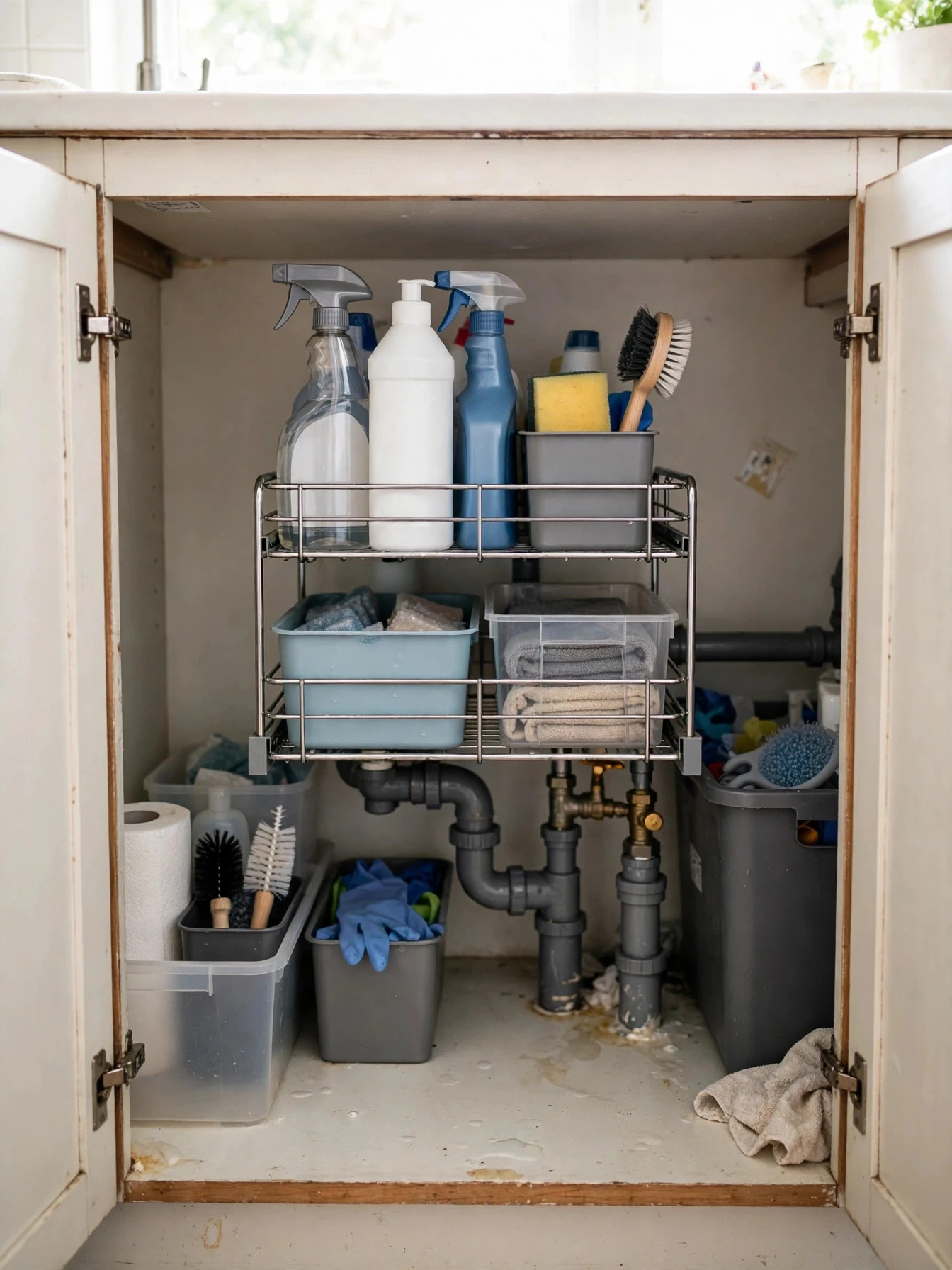
A small pantry will never hold everything a big one can — and that's fine. What it can do is hold exactly what you use, in a way that lets you find it in five seconds. Start with the empty-out, decant the staples, give every shelf a job, and keep the labels honest. You don't need all 21 ideas at once. Pick the five that solve your biggest headache, live with them for a week, then add more as you see what your pantry actually needs. Small pantry, calm kitchen — that's the whole goal. And for the cabinet everyone forgets, our under-sink organization ideas finish the kitchen off.
Small Pantry Organization FAQs
Expert answers & styling advice
How do I organize a small pantry with really deep shelves? ▼
Treat the shelf like a drawer, not a surface. Put each category in a long bin that reaches nearly to the back wall, and pull the whole bin out when you need something. Never store loose items behind other items — in a deep pantry, 'behind' means 'gone.' A quick audit every month helps too: if you forgot you owned it, it moves to the use-first basket.
Should I decant everything into matching jars? ▼
No — decant only the staples you reach for every week: flour, rice, pasta, oats, sugar, and your main grains. Things you use once a month are fine in their original packaging inside a bin. Decanting everything looks lovely but costs time and money, and half-empty jars of specialty items just become prettier clutter. The goal is visibility for the heavy rotation, not a showroom.
How do I keep a small pantry organized when I have kids? ▼
Give kids one shelf or one bin that's entirely theirs — snacks they can reach, in containers they can open, at a height that doesn't require climbing. Label it with pictures if they're little. Everything above that line stays adult-organized. The snack bin absorbs the daily chaos, and the rest of the pantry keeps its system. Refill their bin from backstock during your weekly reset.
How often should I reorganize my pantry? ▼
A full reorganization should only happen once — after that, it's maintenance. Ten minutes a week for the reset (strays back in their zones, use-first basket updated, shopping list checked against the shelves) and a proper fifteen-minute audit every three months to catch expired cans and forgotten backstock. If you find yourself reorganizing from scratch every month, the system — not you — needs adjusting. Usually a zone is simply in the wrong place.