15 Small Kitchen Storage Ideas That Make a Tiny Kitchen Work Harder

15 small, copy-worthy ideas — pull-out drawers, rolling carts, door racks, risers and wall rails — that squeeze real storage out of a tiny kitchen without a remodel.
Table of Contents (15 Ideas)
- 1.Hang a Wall Rail and Get Utensils Off the Counter
- 2.Swap Deep Cabinets for Pull-Out Drawers
- 3.Slide a Slim Rolling Cart Into the Gap Beside the Fridge
- 4.Put a Rack on the Inside of a Cabinet Door
- 5.Add Tiered Shelf Risers Inside the Cabinets
- 6.Mount a Magnetic Knife Strip and Free the Knife Block
- 7.Decant Dry Goods Into Clear Stackable Bins
- 8.Put a Lazy Susan in the Corner Cabinet
- 9.Hang Mugs Under the Wall Cabinets
- 10.Claim the Counter Corner With a Tiered Shelf
- 11.Give the Utensil Drawer a Bamboo Organizer
- 12.File Baking Sheets and Lids Upright With Dividers
- 13.Let an Over-Sink Rack Do the Drying
- 14.Stick Magnetic Spice Tins on the Side of the Fridge
- 15.Add a Rolling Cart as a Mini Island
A small kitchen is not a failed kitchen. It is a kitchen that punishes lazy storage — the one where the blender lives on the counter because there is nowhere else for it, the baking sheets lean against the wall, and you own three spatulas because you can only ever find one. These 15 small kitchen storage ideas are for that kitchen: the galley, the apartment corner, the one with two feet of counter and a single drawer that sticks.
None of them need a contractor. Most cost less than a weekly grocery run, and every one uses space you already have — the wall above the counter, the inside of a door, the four-inch gap beside the fridge, the dead air at the top of a cabinet. Start with the two or three that fix your worst daily annoyance and the rest of the kitchen gets easier to live with. If your kitchen has no pantry at all, our kitchen organization without a pantry pairs well with this list.
Before you buy anything, do the ten-minute audit: open every cabinet and pull out the things you have not touched in a month. The bread maker, the third mixing bowl, the fondue set from a wedding registry — they are not storage problems, they are stuff problems, and no organizer fixes those. Box up what you do not use and the cabinets you already own suddenly feel twice as big. Then work through these small kitchen storage ideas top to bottom, because they build on each other: free the counter first, then fix the cabinets, then claim the odd gaps and walls that are left.
The three buys that do the most
If the budget only stretches to three things, make them a wall rail with hooks, a slim rolling cart, and a set of clear stackable bins. Together they clear the counter, claim the gap beside the fridge, and stop dry goods from sliding around in the dark. Everything else on this list is refinement.
Hang a Wall Rail and Get Utensils Off the Counter

The fastest win in a small kitchen is getting things off the counter and onto the wall. A stainless steel wall rail with S-hooks, screwed into the backsplash or the wall above the worktop, holds your ladle, whisk, tongs, spatula and a small basket for dish towels — everything you reach for while cooking, right where your hand already is. It frees up a whole drawer and a chunk of counter in one move. Mount it at eye level, about 18 inches above the counter, so nothing dangles into your prep space. The real tip: hang only the five or six tools you use every single day. The moment the rail fills up with gadgets you touch twice a year, it stops being storage and starts being clutter on display.
Swap Deep Cabinets for Pull-Out Drawers

A deep base cabinet is where small kitchens go to hide things. You stack plates at the front, and behind them a second, forgotten layer of bowls you never see. Pull-out drawer inserts fix that by turning the cabinet into drawers: slide the whole shelf toward you and everything is in front of your eyes. Plates go in one drawer, bowls in another, food containers in the third. Measure the inside of your cabinet before ordering — most inserts come in 12, 15 and 18-inch widths, and a half-inch too wide means it does not fit at all. If you rent, look for the no-drill kind that sits on the existing shelf. This is the priciest idea on the list, usually $40 to $80 per cabinet, so start with the one cabinet you open most.
Slide a Slim Rolling Cart Into the Gap Beside the Fridge

Almost every small kitchen has a gap — four to six inches between the fridge and the counter, or between the stove and the wall — that collects dust and the occasional dropped spoon. A slim rolling cart made for exactly those gaps turns dead space into three tiers of storage: spices and oils on top, wraps and packets in the middle, cleaning supplies or extra towels at the bottom. Measure the gap first — these carts come in a few widths, and a quarter-inch too wide is useless. Load the heaviest bottles on the bottom tier so it rolls straight instead of tipping. In a rented apartment this is one of the best small kitchen storage solutions because it needs no screws, no holes, and it moves with you.
Put a Rack on the Inside of a Cabinet Door

The inside of a cabinet door is free wall space you already own. A wire over-door rack adds two or three shallow shelves without touching a single wall: spices, sauce packets, measuring spoons, small jars, all in plain sight the moment you open the door. It is the quickest way to make a small kitchen feel like it has an extra cabinet. Renters, this one is for you — it hangs on hooks over the top of the door, no drilling, no damage, and it comes off in thirty seconds when you move. Check the door still closes cleanly once it is loaded, and put the heaviest jars on the lowest tier.
Add Tiered Shelf Risers Inside the Cabinets

Look inside any upper cabinet and you will find the same waste: one layer of jars on the shelf, and six inches of empty air above them. Tiered shelf risers — the little stepped platforms — turn that dead air into stadium seating: three levels, every label visible, nothing buried behind the front row. They work for spice jars, cans, small bottles and mugs, and they cost less than a takeaway dinner. Buy the expandable kind if your cabinets are different widths, and measure the shelf depth first; a riser that is too deep stops the door from closing.
Mount a Magnetic Knife Strip and Free the Knife Block

A knife block eats a full foot of counter in a kitchen that cannot spare it. A magnetic knife strip screwed to the wall — or stuck on with heavy-duty adhesive if you rent — holds the same five knives in a strip of wall you were not using anyway, and it keeps the blades in plain sight so you grab the right one first time. Mount it above the counter but below the wall cabinets, at a height where the longest blade clears the counter by a couple of inches. Keep it away from the stove, where steam and splatter will coat the blades in grease.
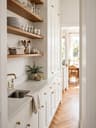
13 Butlers Pantry Ideas Layout Plans That Make a Pass-Through Work Harder
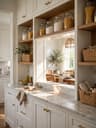
15 Butlers Pantry Ideas That Make a Pass-Through Kitchen Work Twice as Hard
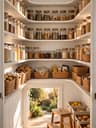
15 Corner Pantry Ideas That Put Every Awkward Corner to Work
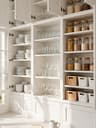
15 Kitchen Cupboard Organization Ideas That Make Mornings Easier

15 Kitchen Pantry Ideas That Make Cooking Easier Every Day
Decant Dry Goods Into Clear Stackable Bins

Flour, rice, pasta, oats, sugar — the bags and boxes they arrive in are all different heights, they slump, and they never stack. Pour them into clear stackable bins in one or two matching sizes and two things happen: your shelves instantly look calmer, and you can see at a glance when you are running low. Uniform containers stack in straight lines instead of leaning towers, which quietly buys you a whole extra row of space. Clear matters: a bin you can see into gets used, while an opaque box becomes a graveyard for half-used ingredients. Worried about losing the cooking instructions or the use-by date? Stick a small piece of tape with both on the bottom of each bin. For more ideas that work in rented flats, see our small apartment storage ideas.
Renting? Almost everything here is renter-safe
The rail, the rolling cart, the door rack, the knife strip, the bins, the lazy Susan and the magnetic spice tins all go in without a drill. If your lease says no holes, you can still do 13 of these 15 ideas.
Put a Lazy Susan in the Corner Cabinet

Every small kitchen has a corner cabinet where bottles go to be forgotten. A lazy Susan turntable brings that corner back to life: oils, vinegars, sauces and honey all ride the spin instead of hiding behind each other. One turn and you can read every label without moving a single bottle. Get one with a small raised lip so things do not slide off mid-spin, and slightly smaller than your shelf depth so it actually rotates. If the corner cabinet is the black hole in your kitchen, our corner cabinet organization ideas go deeper on exactly this problem.
Hang Mugs Under the Wall Cabinets

Mugs are the quiet space-eaters of a small kitchen: a stack of eight takes a whole shelf, and the one at the bottom is always the one you want. Screw a row of small under-cabinet hooks into the underside of a wall cabinet and hang the mugs by their handles instead. Six mugs, zero shelf space, and they dry properly after washing instead of sitting in a damp stack. If you rent, the adhesive-backed hooks rated for a couple of pounds each do the same job — just test one with your heaviest mug for a day before you trust the whole row.
Claim the Counter Corner With a Tiered Shelf

The corner of the counter is the hardest spot in a small kitchen to use — too far back to chop on, too awkward for the toaster. A two-tier corner shelf turns it into the home for the things you reach for daily: the olive oil, the salt and pepper mills, a small herb pot, a stack of bowls. It lifts them off the worktop so you still have the flat surface in front, and it stops the corner from becoming the place where random jars go to pile up. Pick one that fits your corner properly — measure both walls, because corners are rarely a perfect right angle in older apartments. One shelf, one job: daily cooking essentials, nothing else.
Give the Utensil Drawer a Bamboo Organizer

Open the average small-kitchen drawer and you find a tangle: the whisk poking the can opener, the measuring spoons under everything. A bamboo drawer organizer with fixed dividers ends that in one move — one slot for wooden spoons, one for spatulas, one for cutlery, one for the measuring cups. Bamboo is worth the few extra dollars over plastic because it does not slide around when you yank the drawer open, and it wipes clean. Measure the drawer first and buy the expandable kind if your drawer is an odd size; a tray that rattles in a drawer that is two inches too wide is worse than no tray at all.
File Baking Sheets and Lids Upright With Dividers

Baking sheets, cutting boards and pot lids are flat, so they get stacked — and a stack of flat things means the one at the bottom might as well not exist. Stand them upright instead. Vertical dividers in a narrow cabinet turn a pile into a filing cabinet: each sheet and lid has its own slot, and you pull out exactly the one you need without lifting five others. A tension rod across a cabinet does the same job for lids if you do not want to buy a divider rack. For renters and keen cooks, this is one of the best small apartment kitchen storage ideas — it ends the lid avalanche for good.
Measure before you buy — every time
Almost every idea on this list fails for the same boring reason: the organizer is a half-inch too wide, too deep, or too tall. Measure the inside of the cabinet, the gap beside the fridge, and the space under the wall cabinet before you order anything. A tape measure costs less than one returned rolling cart.
Let an Over-Sink Rack Do the Drying

In a kitchen with one tiny sink and no dishwasher, the dish rack usually eats the only clear counter you have. An over-sink dish rack spans the sink itself: plates, bowls and a cutting board dry right over the basin, and the water drips where it belongs instead of pooling on the counter. When the dishes are done, the rack folds or lifts away and the sink is a sink again. Pick one that fits your sink width — most come in a few sizes, and the adjustable kind that expands to fit is worth it if your sink is an odd size.
Stick Magnetic Spice Tins on the Side of the Fridge

Spice jars dumped on a shelf eat space and patience in equal measure. Magnetic spice tins with clear lids move the whole collection onto the side of the fridge — a wall you were not using at all — in neat rows you can read at a glance. One layer deep is the rule: if you have to move three tins to find the cumin, the system has already failed. Decant into matching tins so they line up tight, and label the lids, not the sides, because the lids are what you see. For the full spice plan, our spice organization ideas covers racks, drawers and door storage too.
Add a Rolling Cart as a Mini Island

When a small kitchen has no island and not enough counter, a rolling kitchen cart with a butcher block top is the closest thing to adding one. It gives you a second prep surface, open shelves for cookbooks and mixing bowls, and a basket underneath for vegetables — then it rolls against the wall when dinner is over. Look for one with locking wheels, because a cart that drifts while you are chopping onions is a hazard, not a helper. This is the priciest idea on the list, but it is also the one that changes how the kitchen feels to cook in, which is the whole point of these 15 small kitchen storage ideas.
A small kitchen will never hold everything a big one can — and that is fine. That is the whole point of most small kitchen organization ideas: not more space, but better use of the space you have. What it can do is hold exactly what you use, in a way that lets you find it in five seconds and put it back in two. Start with the wall rail and the rolling cart, then fix the worst cabinet. You do not need all 15 at once. Pick the five that solve your biggest headache, live with them for a week, then add more. Small kitchen, calm cooking — that is the whole goal. And for the cabinets themselves, our kitchen cabinet organization ideas finish the job.
Small Kitchen Storage FAQs
Expert answers & styling advice
How do I add storage to a small kitchen without remodeling? ▼
Use the space you already have: the wall above the counter, the inside of cabinet doors, the gap beside the fridge, and the dead air at the top of cabinets. A wall rail, an over-door rack, a slim rolling cart and tiered shelf risers add a surprising amount of storage with no drilling and no contractor.
What is the best way to store pots and pans in a small kitchen? ▼
Hang what you can and file the rest upright. A wall rail or a few strong hooks hold the two or three pans you use daily, and a lid organizer or vertical dividers inside a deep cabinet keep the rest from becoming a noisy stack. If you only have one deep cabinet, pull-out drawers are worth the money — they stop the back of the cabinet from becoming a graveyard.
How can I organize a small kitchen with no pantry? ▼
Turn one cabinet into your pantry: give it zones, one shelf for breakfast, one for cooking staples, one for snacks, and use clear stackable bins so nothing slides to the back. Spices go on the inside of a door or on magnetic tins on the fridge, and bulk backstock lives on the top shelf or in a rolling cart.
Where should I put spices in a tiny kitchen? ▼
Anywhere but loose on a shelf. The best spots are a tiered riser inside a cabinet, a rack on the inside of a door, or magnetic tins on the side of the fridge — all three keep the jars one layer deep so you can read every label. Decant into matching jars if your collection is a jumble of brands; they line up tighter and you can actually see what is running low.
How do I keep a small kitchen counter clear? ▼
Give everything on the counter a home somewhere else, then enforce a one-in, one-out rule. The knife block goes on a wall strip, the mugs go under the cabinet, the utensils go on a rail, and the fruit bowl gets one corner — everything else lives in a cabinet. A clear counter is not about owning less; it is about the daily stuff having a place that is not the worktop.