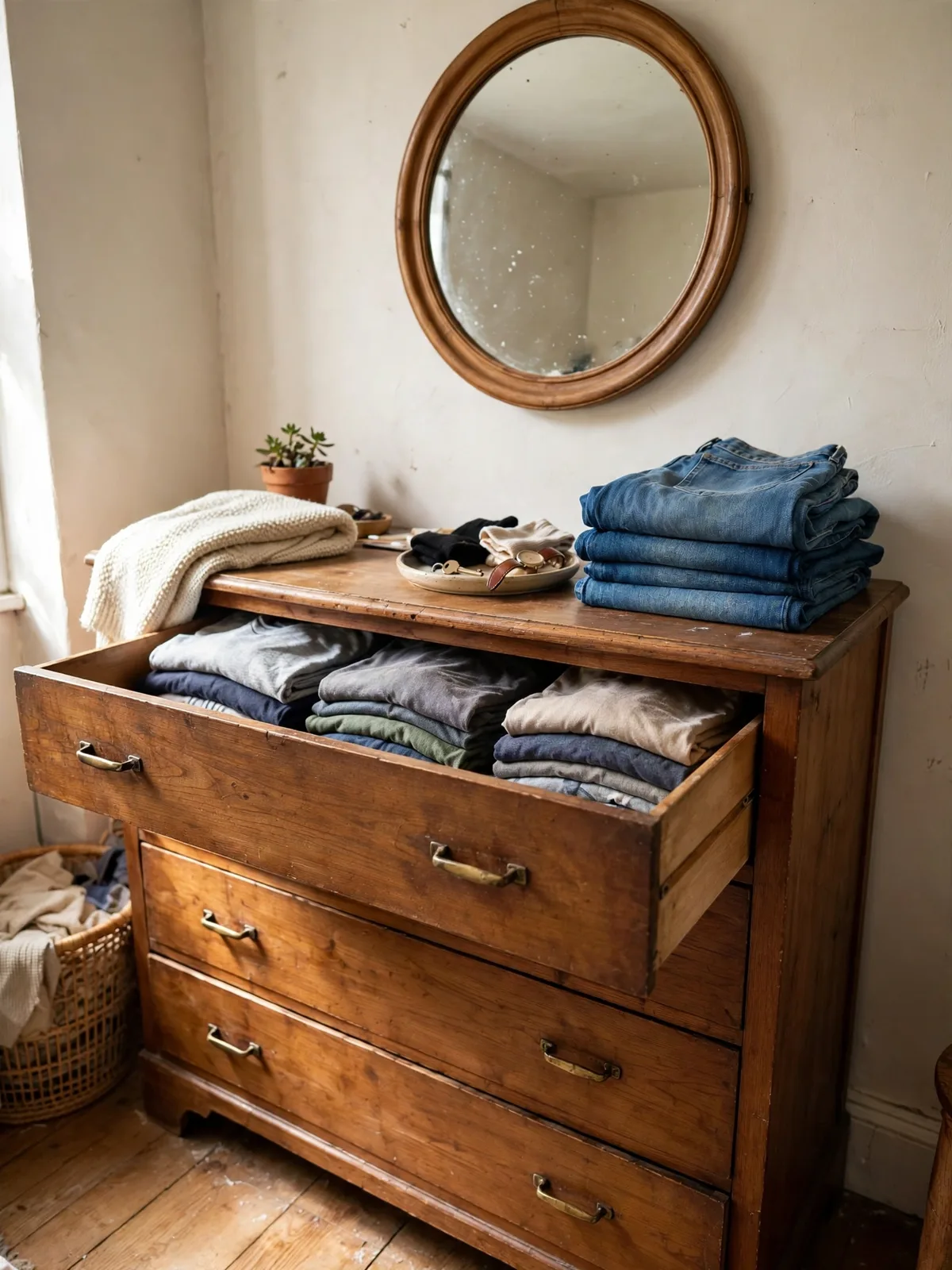
17 Bedroom Ideas With No Closet (Renter-Friendly)


No built-in closet, no problem: 17 renter-friendly ways to hang, fold and hide a full wardrobe — garment racks, armoires, curtains, hooks and under-bed systems that leave no holes behind.
Table of Contents (17 Ideas)
- 1.Start With a Sturdy Open Garment Rack
- 2.Pick a Freestanding Wardrobe When You Want Doors
- 3.Hang a Curtain to Fake a Closet Wall
- 4.Bring in a Secondhand Armoire
- 5.Use Removable Hooks for Tomorrow's Outfit
- 6.Claim the Back of the Door
- 7.Roll Clothes Under the Bed
- 8.Make Your Dresser Do Closet Duty
- 9.Add a Small Rolling Rack for Overflow
- 10.Build a Corner Closet With a Tension Rod
- 11.Stack Storage Cubes Into a Custom Wall
- 12.Switch to Slim Hangers and Double Your Rail
- 13.Keep Shoes on a Low Tiered Rack
- 14.Use Baskets and Bins for Folded Basics
- 15.Add a Ladder Rack for Bags and Layers
- 16.Rotate Seasonal Clothes Into Labeled Bins
- 17.Do a Weekly Ten-Minute Reset
A bedroom with no closet sounds like a dealbreaker until you live in one for a month. Then you realize a closet is just a set of jobs — somewhere to hang, somewhere to fold, somewhere for shoes — and every one of those jobs can be done by furniture that moves out when you do.
I have set up no-closet rooms in studios, old houses with one tiny wardrobe for three bedrooms, and rentals where the landlord counted every nail hole at checkout. The rooms that worked all had the same shape: one strong hanging anchor, one closed piece for the messy stuff, and a place for shoes that was not the floor.
These 17 ideas follow that shape. Everything here is renter-friendly, most of it needs no tools at all, and nothing asks you to drill into a wall you do not own. If your whole place is short on storage, our small apartment storage ideas covers the rest of the home the same way.
 Save Pin
What you'll need
Most of these ideas run on five workhorses: a sturdy garment rack, a freestanding wardrobe or armoire, removable adhesive hooks, under-bed storage bins, and a low tiered shoe rack. Buy the rack first, live with it for a week, then add only what your clothes actually ask for.
Start With a Sturdy Open Garment Rack

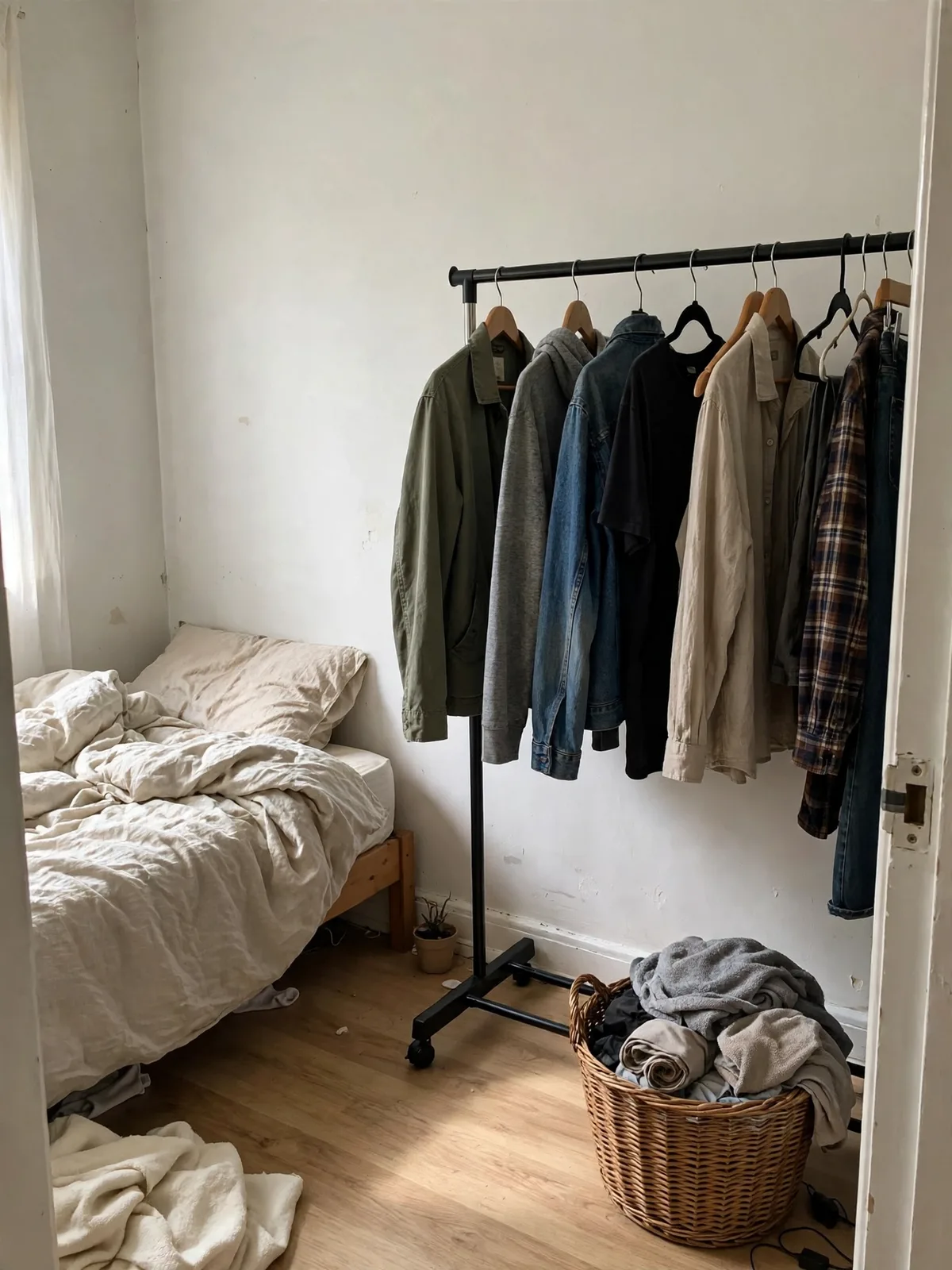
Start here if your bedroom has no closet at all. A sturdy garment rack becomes your anchor, the one place hanging clothes actually live instead of chairs and door handles. Skip the flimsy $15 versions that lean after a month. Look for steel tubing, a wide base, and a rating of at least 75 to 100 pounds — a full rack of winter clothes is heavier than you think. Most good ones run $35 to $65 and assemble with no tools. Set it on the longest empty wall, leave two inches behind it for airflow, and stop there for a week before you buy anything else.
Pick a Freestanding Wardrobe When You Want Doors

An open rack is honest, but some people just want doors they can close. A freestanding wardrobe gives you that closet feeling without building anything. Fabric versions start around $50, flat-pack wood ones run $120 to $250, and both move out with you. Measure your ceiling height and your doorway first — wardrobes are famous for fitting the room but not the hallway turn. Put heavier items low so it does not tip, and if you have kids or a big dog, use the anti-tip strap that comes in the box with a removable adhesive mount instead of screws.
Hang a Curtain to Fake a Closet Wall

This is the trick that makes a rack look intentional. Hang a linen curtain or a simple cotton panel in front of your rack or corner setup and the visual clutter disappears in one second. A tension rod between two walls needs no drilling, and a ceiling-mounted option with removable strips works in wider rooms. Pick a curtain a few inches longer than you need so it pools just slightly — too short looks like a shower curtain, and you will notice it every day. Neutral colors calm the room down. Patterns are fun, but they fight with your clothes for attention.
Bring in a Secondhand Armoire

If you like furniture with some weight to it, hunt for a secondhand armoire. People sell solid wood ones for $75 to $200 when they move, often cheaper than a new flat-pack wardrobe, and they hold a lot: a hanging bar up top, shelves or drawers below. Bring a friend and a tape measure, check for a musty smell you cannot wash out, and look at the back panel for water damage. In a rental, an armoire is perfect because it asks nothing of the walls. It just stands there, does its job, and leaves with you.
Use Removable Hooks for Tomorrow's Outfit

Not everything needs a rail. Removable adhesive hooks handle the in-between clothes: tomorrow's outfit, your work jacket, the jeans you will wear again Thursday. The large strips are rated for 4 to 7 pounds each, which covers a coat if you use two hooks side by side. Stick them at eye level near the door, not behind it, so getting ready is one grab. The renter rule is simple — pull the tab straight down when you leave and the paint stays put. I learned that the hard way in a deposit review once. Slow pull, no drama, full deposit back.
Claim the Back of the Door

Your bedroom door is storage you already pay rent on. An over-the-door hook rack slips over the top, needs no tools, and holds robes, hats, scarves, and the bag you grab every day. Metal racks run $12 to $25 and beat the clear plastic ones, which crack at the hinge side after a few months. Add felt pads where the hooks touch the door so it does not rattle at night or scrape paint. Keep it to everyday items only. If the door will not close smoothly, you have loaded it too much — heavy coats belong on the rack, not here.
Start here if you buy one thing
If you buy one thing, make it the sturdy garment rack — and spend the extra $15 for the steel version rated over 75 pounds. It is the anchor every other idea on this list hangs off, literally. A wobbly rack makes a whole room feel temporary.
Roll Clothes Under the Bed

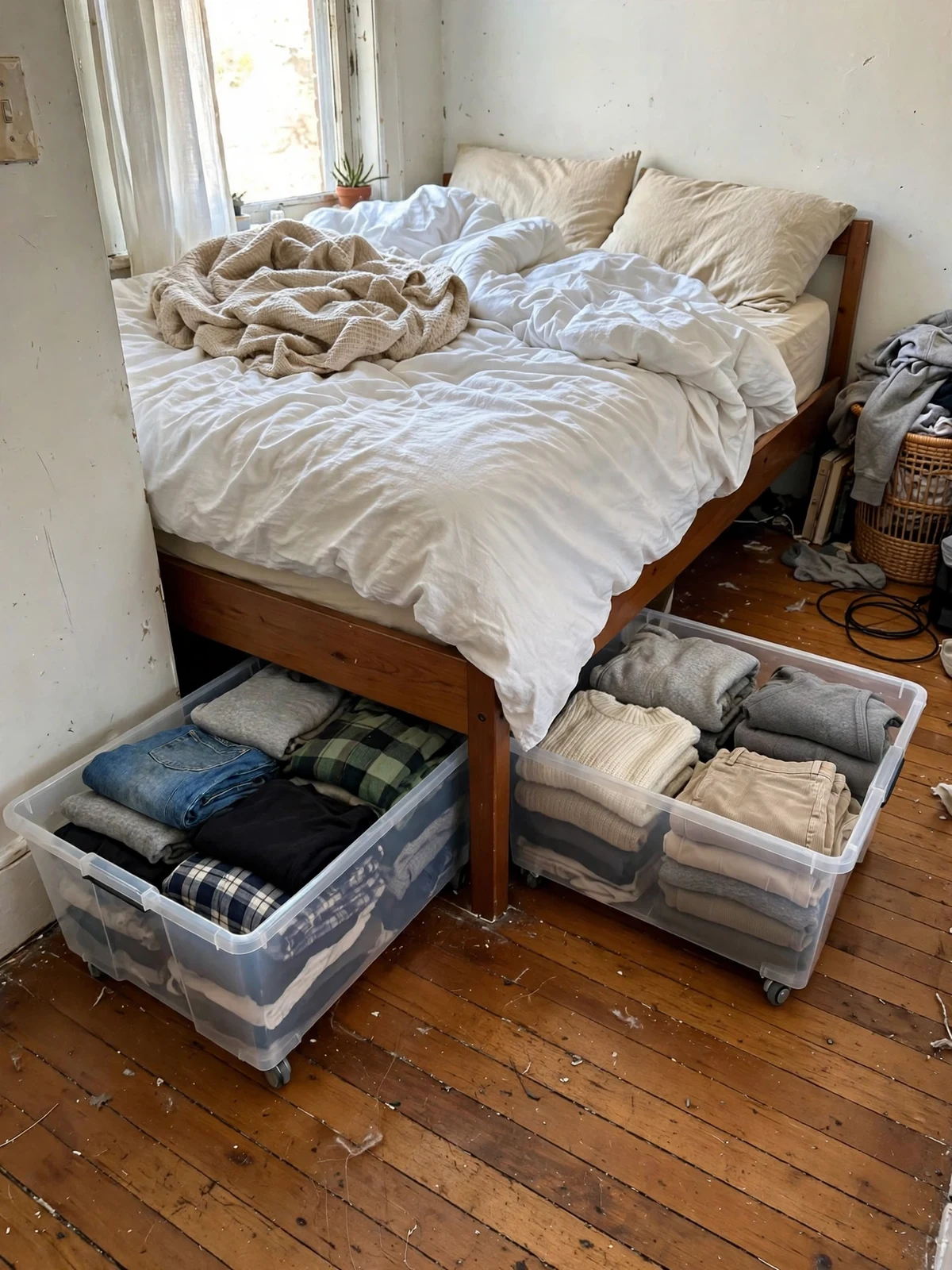
The space under your bed is roughly the size of a small closet, lying down. Use it. Under-bed storage bins with wheels, or low fabric bags, are ideal for the clothes you do not wear this season. Measure the clearance first — most frames give you 6 to 8 inches, some give you almost nothing. If your frame is too low, cheap bed risers add height for about $15 and no landlord will ever notice. Keep one bin for off-season clothes and one for extra bedding. Our guide to under-bed storage ideas goes deeper on sizing if you want the full system.
Make Your Dresser Do Closet Duty

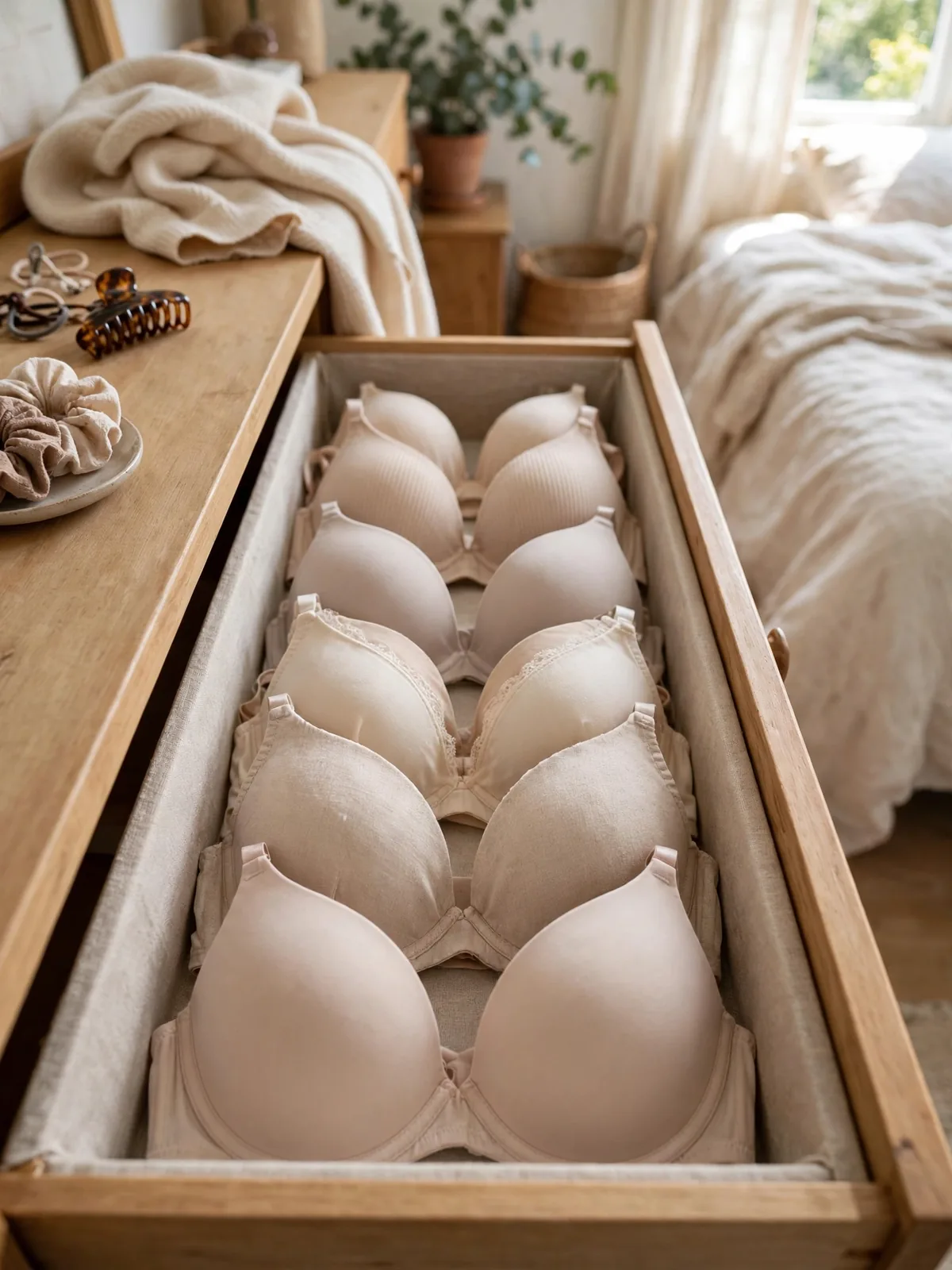
A dresser is not a compromise, it is half a closet already. Give your dresser drawers a real system: one for tops, one for bottoms, one for underwear and socks, filed upright so you can see every piece at once. Folding upright takes ten minutes to learn and doubles what a drawer holds. The top of the dresser becomes your landing strip — a small tray for watch and keys, a stack of folded jeans, nothing else. If drawers feel messy within a week, add simple dividers. We use the same filing method in our dresser drawer organization ideas, and it works just as well here.
Add a Small Rolling Rack for Overflow

One rack is the system, a second small one is the pressure valve. A rolling clothes rack handles guests' coats, laundry-day overflow, or the capsule of work clothes you want separate from everything else. Because it rolls, you can park it in a corner, pull it out to choose an outfit, and push it back in ten seconds. Locking wheels matter on wood floors. Prices sit around $25 to $45 for one that will not wobble. In very small rooms, this can live in a hallway nook or even a wide bathroom, then roll in when you need it.
Build a Corner Closet With a Tension Rod

Every no-closet bedroom has one awkward corner doing nothing. A tension rod wedged between two walls turns that corner into a real hanging nook, no brackets, no screws. Measure the span carefully — most rods cover 28 to 48 inches — and put a small shelf or a set of cubes underneath for shoes and folded items. A corner holds more than you expect because clothes hang at an angle to the room, out of your walking path. Add the curtain trick from earlier if you want it hidden. This is often the cheapest full closet on this list, under $30 all in.
Stack Storage Cubes Into a Custom Wall

Storage cubes are the building blocks of a no-closet system. Stack them two or three high along a wall, drop fabric bins into half of them, leave the rest open for folded stacks and books, and you have a wall unit that fits your exact space. A six-cube set runs $30 to $55 and reconfigures in minutes when you move or get bored. Keep heavy bins low, light ones up top. Leave one cube completely empty at first — you will fill it within a month, and having the space waiting stops the floor pile from starting. It grows with you, which built-ins never do.
The renter rule for walls
No drilling is the default here. Removable adhesive hooks, tension rods, and over-the-door racks cover almost every hanging job in a bedroom, and all three leave with you. If a product needs screws to work in a rental, there is almost always a version that does not.
Switch to Slim Hangers and Double Your Rail

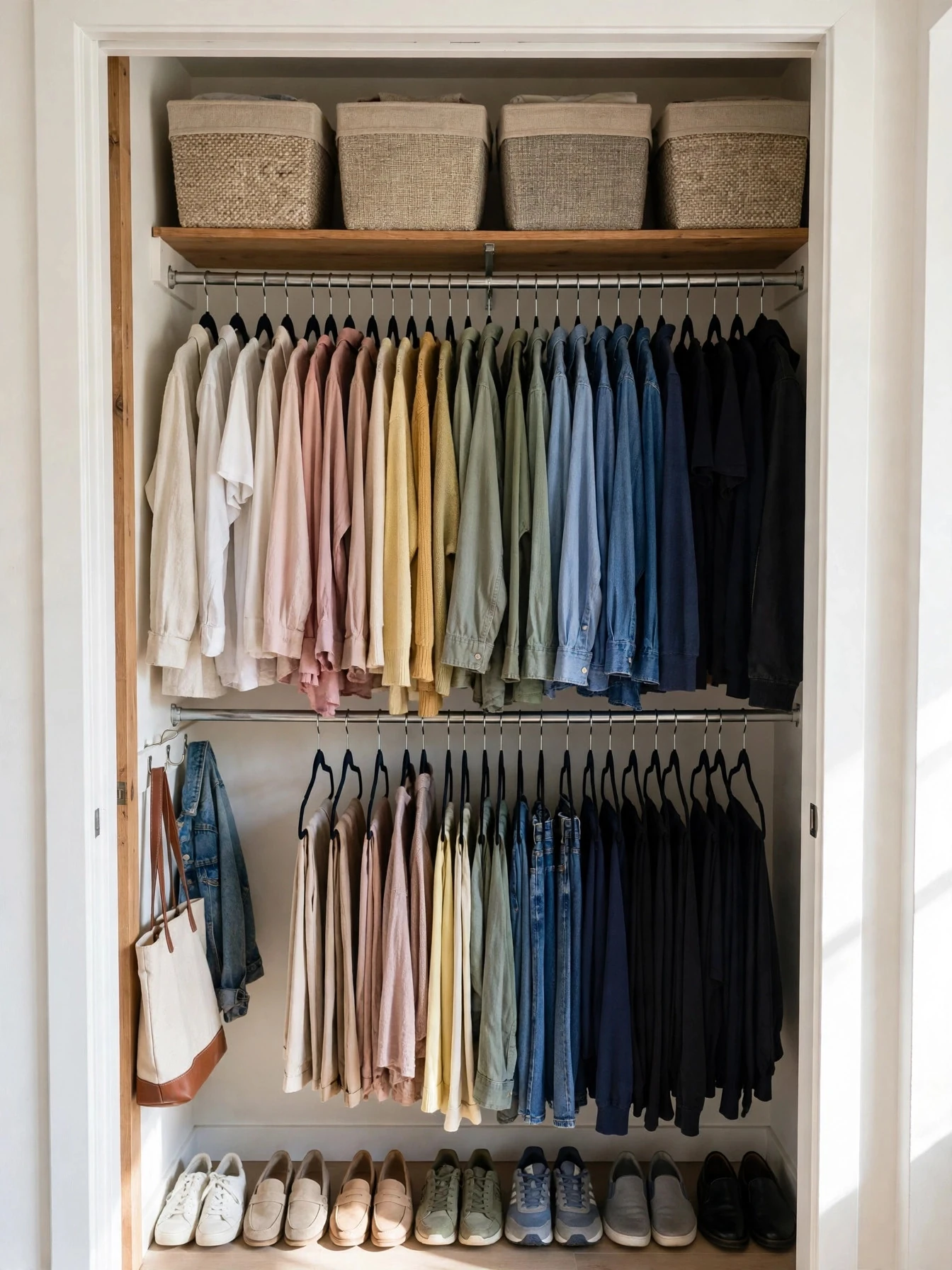
Before you buy a second rack, check your hangers. Bulky plastic and wood hangers eat rail space for no reason. Slim velvet hangers are about half the thickness, so the same rack suddenly holds close to twice as many shirts, and the velvet grip stops blouses sliding off at 6 a.m. A pack of 50 costs around $20. Swap them all at once, not a few at a time, or the mixed heights will annoy you daily. This is also a good moment to be honest about what you actually wear. If it has not left the rack in a year, it is storage, not clothing.
Keep Shoes on a Low Tiered Rack

Shoes are where no-closet bedrooms fall apart first. They migrate, they pair up wrong, they end up under the bed in dust. A low tiered shoe rack by the door or under your garment rack gives every pair one address. Two tiers hold six to eight pairs for most people, which is a useful limit to set. Tall boots can stand beside the rack instead of forcing a taller unit. Bamboo and metal racks run $18 to $35 and assemble in minutes. If you own more shoes than the rack holds, that is information, not a reason to buy a bigger rack on day one.
Use Baskets and Bins for Folded Basics

Basics do not need hangers or drawers, they need baskets. Fabric bins and woven baskets on a cube shelf or on top of a wardrobe corral socks, underwear, gym clothes, and pajamas into grab-and-go groups. One basket per category, no lids — lids slow you down and stuff hides under them. This is also the friendliest system for shared rooms, since each person can have their own color. Washable fabric bins are worth the small extra cost. Cotton and canvas ones run $8 to $15 each, and three or four of them will quietly organize most of your folded life.
Add a Ladder Rack for Bags and Layers

A leaning ladder rack leans against the wall — no drilling, just gravity and a pair of non-slip pads — and holds the awkward middle layer of your wardrobe: bags, scarves, cardigans, the blanket you use every night. It takes up about four inches of depth, so it fits behind a door or in that narrow strip beside a wardrobe where nothing else works. Wooden ones cost $35 to $70 and look like furniture, not storage. Keep it to five or six items max. A ladder rack overloaded looks like a yard sale, but lightly loaded it looks like a boutique trick you stole on purpose.
Closed storage hides the chaos
Open racks look great for about a week, then real life shows up. Keep at least one closed option — a freestanding wardrobe, an armoire, or labeled storage bins — for the visual clutter: gym clothes, laundry overflow, and everything you do not want to look at before coffee.
Rotate Seasonal Clothes Into Labeled Bins

In a no-closet room, you cannot afford to store all four seasons in your daily space. Twice a year, pack the off-season into labeled storage bins and move them under the bed, on top of the wardrobe, or into a hallway closet if you have one. Clear bins beat opaque tubs because you can find the one sweater you need without opening three lids. Add a simple paper label with the contents and the month you packed it. This rotation is what keeps a small system feeling roomy. It is the same habit behind our small closet organization ideas — less in view, less stress.
Do a Weekly Ten-Minute Reset

Open systems only work if you reset them, because there are no doors to hide a bad week behind. Once a week, set a timer for ten minutes: rehang the chair pile, pair the shoes, put the laundry basket back where it lives, and pull one thing out to donate or toss. That is the whole job. Pair it with music or a podcast and it stops feeling like a chore. If your whole home needs the same treatment, our 30-day declutter challenge breaks it into daily pieces. Ten honest minutes a week beats a miserable full-day purge every spring.
You do not need all 17 ideas, and you definitely do not need them this weekend. Start with the rack, add closed storage when the open rack starts to bother you, give shoes their own spot, and let the rest arrive one payday at a time. A no-closet bedroom that works is not the one that looks like a boutique. It is the one where you can get dressed in five minutes, find a clean shirt without a search party, and get your full deposit back when you leave. That is a low bar, and every idea on this list clears it.
Bedroom With No Closet FAQs
Expert answers & styling advice
How do I store clothes in a bedroom with no closet? ▼
Build the system in layers: a sturdy garment rack for hanging, a dresser or storage cubes for folded clothes, under-bed bins for off-season items, and a low rack for shoes. One anchor piece plus closed storage for the messy categories covers almost every wardrobe.
Are garment racks sturdy enough for a full wardrobe? ▼
The good ones are. Look for steel tubing, a wide or braced base, and a weight rating of at least 75 to 100 pounds. Cheap thin racks lean and collapse under winter clothes, so spend $35 to $65 once instead of replacing a $15 rack twice.
How can I make a no-closet bedroom look tidy? ▼
Hide the visual clutter. Hang a curtain in front of an open rack, keep at least one closed piece like an armoire or wardrobe for messy categories, use matching slim hangers, and do a ten-minute weekly reset. Open storage looks calm when everything on it is spaced and sorted.
Will these ideas damage my rental walls? ▼
No — that is the point of the list. Tension rods, over-the-door racks, leaning ladder racks, and removable adhesive hooks need no drilling. When you move out, pull adhesive tabs straight down, take the furniture with you, and your walls look exactly as they did on move-in day.