15 Dresser Drawer Organization Ideas & Folding Methods


Fifteen ways to fix the drawer you have to hip-check shut — file folding, rolling, dividers, honeycomb inserts and the half-empty drawer rule.
Table of Contents (15 Ideas)
- 1.Empty and Sort One Drawer First
- 2.File Fold T-Shirts So Everything Stays Visible
- 3.Roll Soft Basics to Save Deep Drawer Space
- 4.Add Adjustable Drawer Dividers for Instant Zones
- 5.Use Small Inserts for Socks and Underwear
- 6.Fold Sweaters Without Stretching Them Out
- 7.Stack Jeans by Weight, Not by Habit
- 8.Give Bras a Row, Not a Pile
- 9.Line Drawers So Clean Folds Actually Stay Put
- 10.Set Up a Top Drawer as a Morning Station
- 11.Fold Workout Clothes Into Tight, Grabbable Bundles
- 12.Use the Shallow Drawer for Tanks and Camis
- 13.Sort Kids' Clothes by Outfit, Not by Type
- 14.Keep One Drawer Half-Empty on Purpose
- 15.Do a Five-Minute Drawer Reset Every Sunday
You know the drawer. The one you have to hip-check shut. The one where the shirt you want is always, without exception, at the very bottom of the stack.
Dresser drawers go wrong for two simple reasons: clothes get folded in a way that hides most of them, and drawers get treated like boxes instead of like shelves you pull toward you. Fix the folds and give every drawer zones, and the whole dresser changes personality.
These 15 dresser drawer organization ideas cover both halves of the problem — folding methods like file folding and rolling, plus the dividers, inserts and habits that keep drawers working. If your dresser is part of a bigger storage puzzle, it pairs well with our small closet organization ideas. Start with idea one. It is deliberately unglamorous, and it makes everything after it easier.
 Save Pin
What you'll need
You do not need much: a set of adjustable drawer dividers, one honeycomb drawer insert for socks and underwear, a roll of non-slip drawer liner and one small divided tray for the top drawer. Measure each drawer's inside width, depth and height first — standard drawers run about 30 inches wide, but yours may not — then buy once.
Empty and Sort One Drawer First

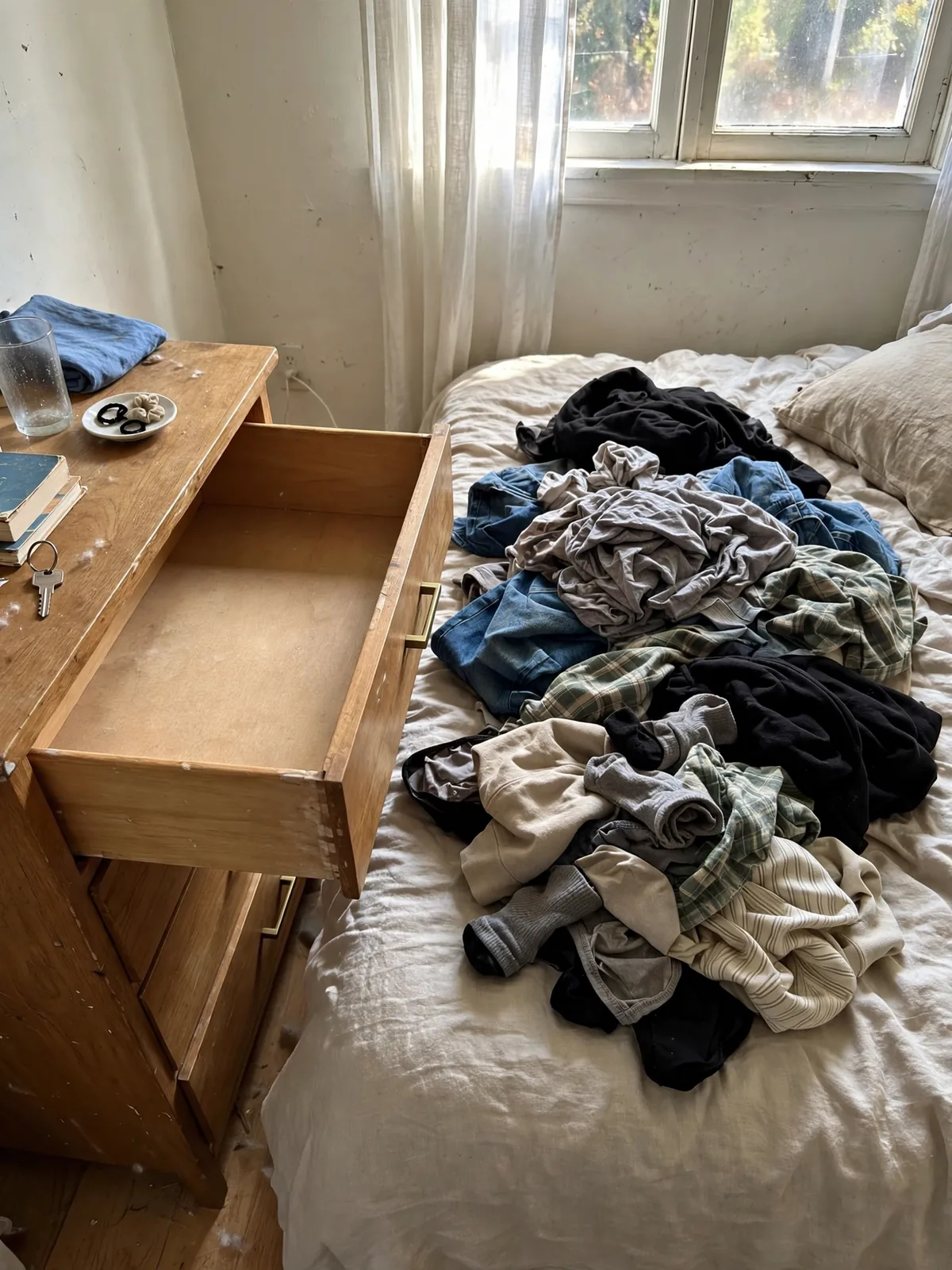
Start with one drawer. Not the whole dresser, not a Saturday project, just one drawer — the messy one you avoid opening in front of guests. Dump everything onto the bed and sort it into four piles: keep in this drawer, move to another drawer, wash, and donate or toss. You will find things you forgot you owned. Everyone does. A standard dresser drawer is about 30 inches wide and 4 to 6 inches deep, and it fills up fast when nothing has a category. Our 30-day declutter challenge breaks the same sorting job into tiny daily bites. Wipe the empty drawer out before anything goes back in. Crumbs live in drawers. Nobody knows how.
File Fold T-Shirts So Everything Stays Visible

File folding is the fold that fixes most drawers. Fold each t-shirt into a rectangle roughly 9 by 6 inches — fold the sleeves in, fold it in half, then in thirds — and stand it upright in the drawer like a file in a filing cabinet. Every shirt stays visible at once, so you stop wearing the top three shirts on rotation while the rest wrinkle at the bottom of a stack. Pulling one shirt out does not disturb its neighbors, which is the part flat stacking can never promise.
Roll Soft Basics to Save Deep Drawer Space

Deep drawers — the 7- or 8-inch kind at the bottom of the dresser — swallow flat folds whole. Rolling works better down there. Pajamas, leggings, soft tees and loungewear all roll into tight little logs that pack side by side with almost no wasted air between them. Roll from the bottom hem up, smooth as you go, and tuck the last inch under so the roll holds itself. Thin, soft fabrics roll best; stiff denim and bulky knits do not, and forcing them just makes lumpy sausages that unroll in the night.
Add Adjustable Drawer Dividers for Instant Zones

A drawer without zones is just a box, and boxes become junk drawers with better PR. Adjustable drawer dividers — the spring-loaded kind that press between the front and back of the drawer — split one big space into two or three lanes, so tees live in one lane and shorts in another. Measure your drawer's inside depth before buying; most dividers adjust between about 13 and 17 inches, and a divider that's slightly too short will pop out at 6 a.m. and take your good mood with it. Bamboo versions look nicer and grip a little better than plastic. Two dividers per drawer is plenty for most people.
Use Small Inserts for Socks and Underwear

Socks and underwear are too small to fold-and-stack and too numerous to leave loose. A honeycomb drawer insert gives every pair its own little cell, so you see all of them at a glance and the drawer stops being a ball pit. Ball up socks only if you hate elastic — folding them flat in pairs or rolling them gently keeps the cuffs alive much longer. Underwear folds neatly into thirds and files into the cells the same way. One honest warning: count your cells before you buy.
Fold Sweaters Without Stretching Them Out

Sweaters are the drawer item people ruin without noticing. Never hang a knit — it stretches at the shoulders — and never cram it, either. Fold each sweater in half lengthwise, tuck the sleeves straight down along the fold, then fold it up in thirds into a soft brick about 12 by 9 inches. Store them in a single layer, two stacks of three at the most, with the heaviest knit at the bottom. Squeezing one more sweater in always feels efficient in October and looks like regret in January, when everything comes out creased and lumpy.
Start here if you buy one thing
If you buy one thing, make it adjustable drawer dividers. Zones are what turn a box of clothes into a system, and dividers are how you get zones without a custom closet budget. Add the honeycomb drawer insert second, for the sock drawer that is currently a ball pit.
Stack Jeans by Weight, Not by Habit

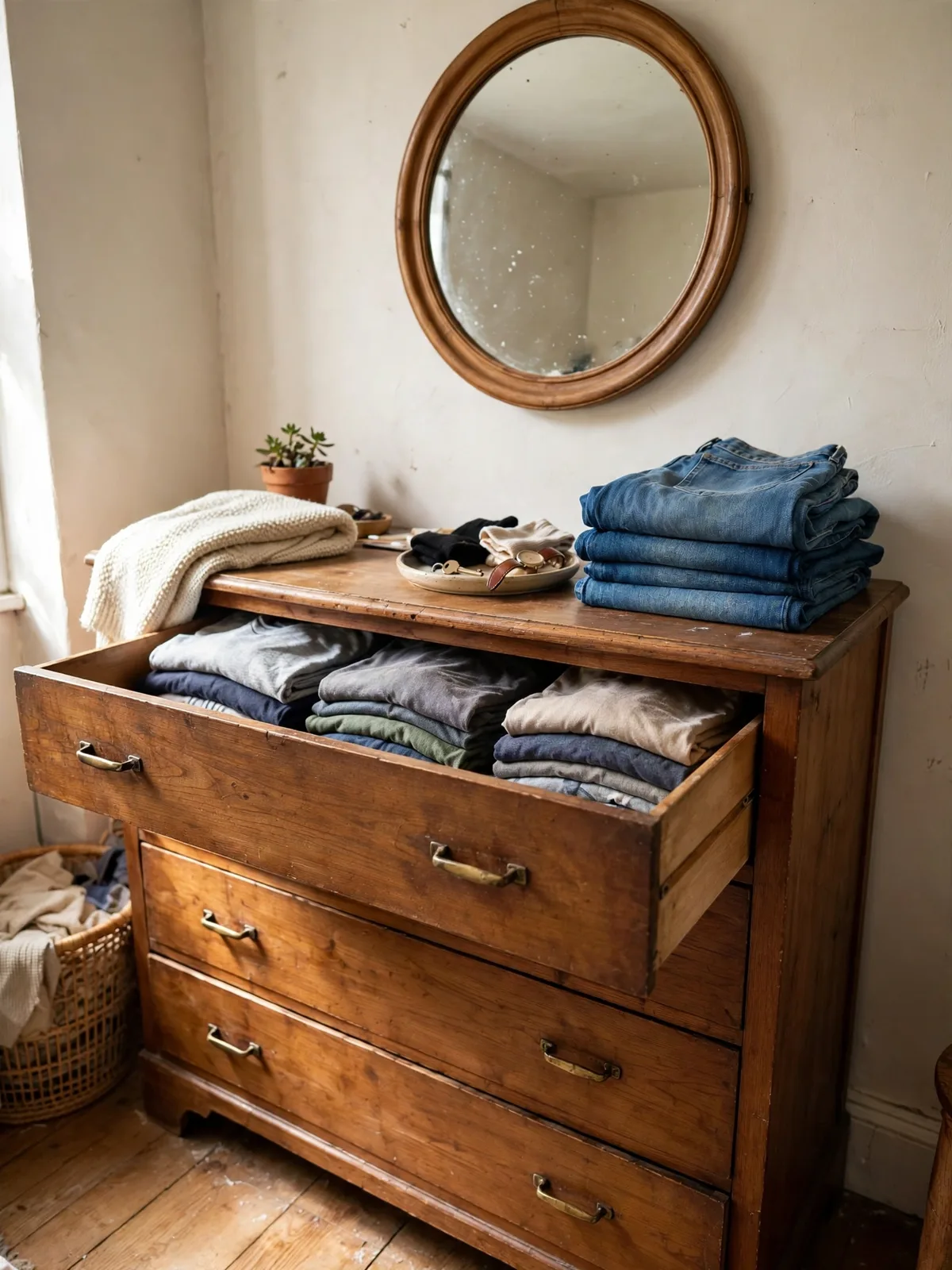
Jeans are heavy, stiff and oddly shaped, which is why they wreck a drawer that was fine yesterday. Fold them in half lengthwise, fold the crotch flap in so you get a clean straight edge, then fold in thirds. Keep stacks short — four pairs maximum — and put the heavy, stiff pairs at the bottom of the drawer and in the bottom of the stack, lighter and softer denim on top. If your jeans drawer groans when it opens, it is not an organization problem. It is a too-many-jeans problem, and it has a donate pile shaped answer.
Give Bras a Row, Not a Pile

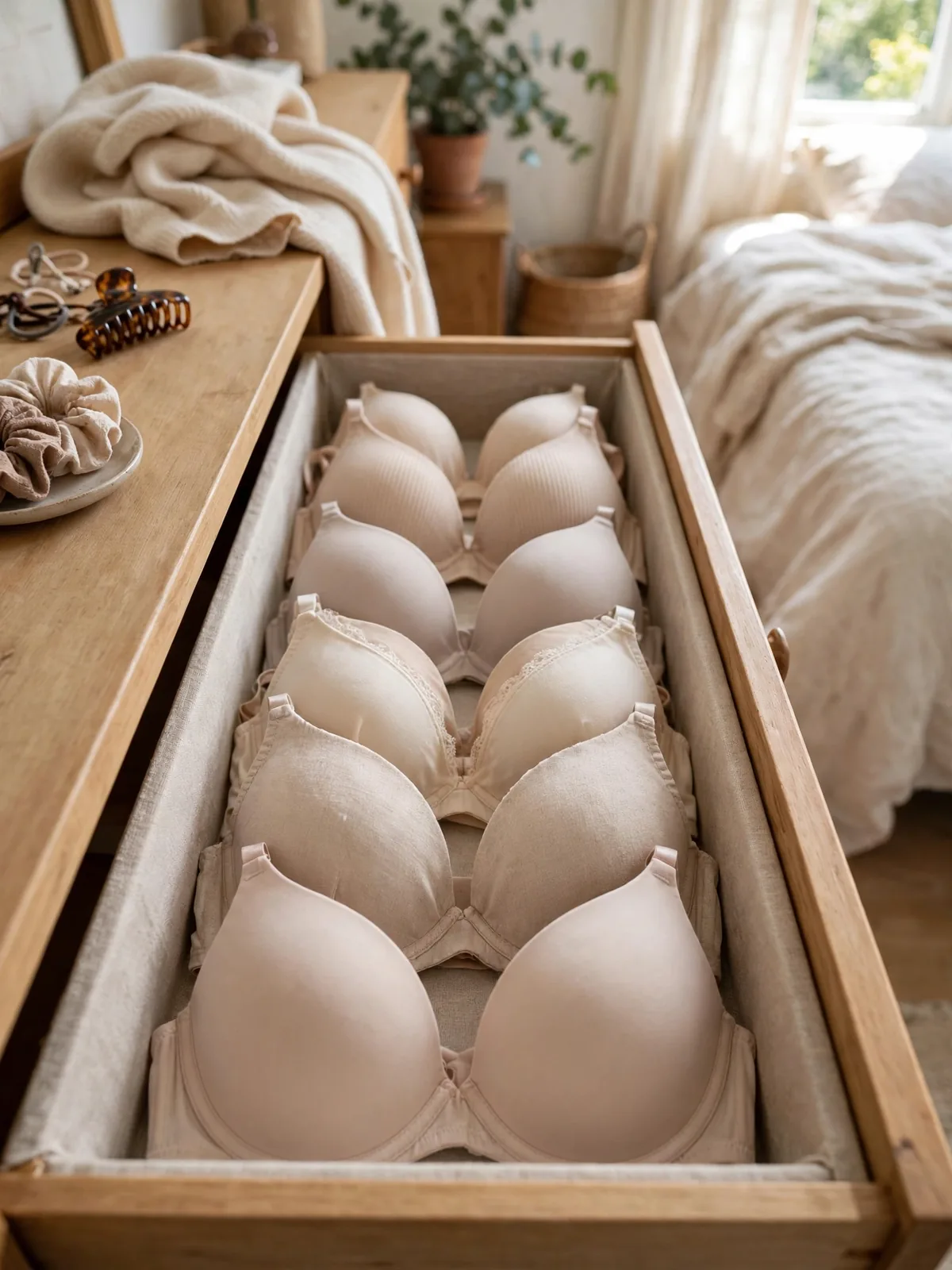
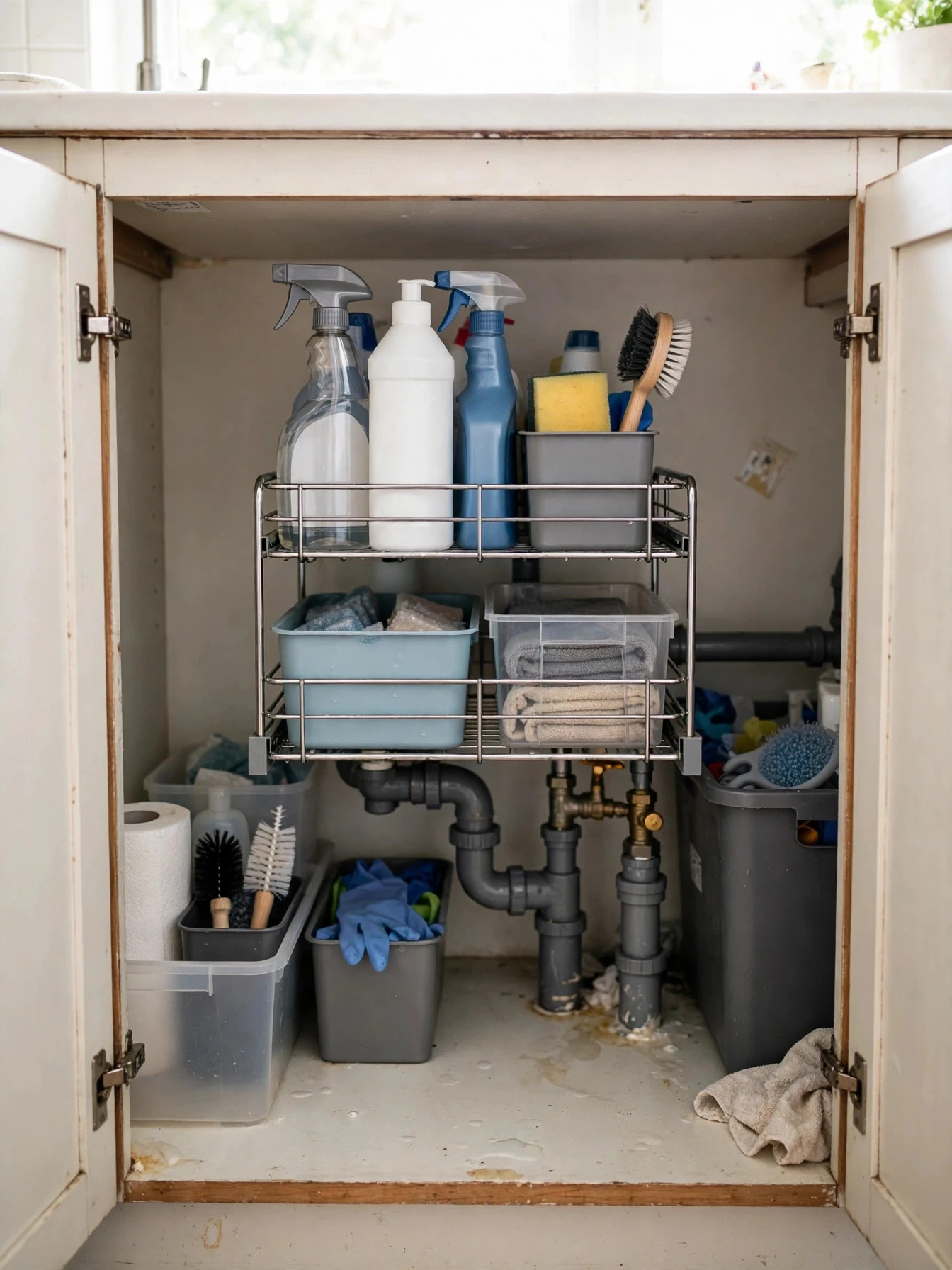
Tossed in a pile, bras tangle, cups dent, and the underwire of one always ends up hooked through the strap of another. Line them up instead: fasten the back clasp, tuck the straps inside the cups, and nest each bra right behind the front one like spoons, all facing the same direction in a single row. The cups hold each other's shape, nothing crushes, and you can see every color you own before you choose. Sports bras are less precious — fold those in half and file them at the end of the row. This one small drawer, organized this way, makes getting dressed feel oddly calmer. It takes four minutes to set up the first time.
Line Drawers So Clean Folds Actually Stay Put

Half of drawer chaos is physics: smooth wood lets folded stacks slide every time the drawer slams. A non-slip drawer liner fixes the physics. Cut it to fit — most rolls are 18 or 24 inches wide, so one cut usually covers a standard drawer — and lay it flat with no bubbles. The grip keeps file folds standing and stacks where you left them. Pick the unscented, washable kind — you can rinse it when it gets dusty. Skip adhesive liners if you rent or ever plan to sell the dresser. Future you does not want to scrape that off.
Set Up a Top Drawer as a Morning Station

The top drawer is prime real estate, and most of us fill it with souvenir keychains and dead batteries. Claim it as a morning station instead: the things you reach for in the first ten minutes of the day, in small trays, in the same spot every time. Underwear and socks on one side, a small divided tray for a watch, hair ties, lip balm and the earrings you actually wear. Keep it ruthless — if you have not touched it in a month, it does not belong in the top drawer.
Fold Workout Clothes Into Tight, Grabbable Bundles

Workout clothes are slippery. Leggings slide off stacks, sports tops vanish between them, and somehow the matching set is never in the same place. Bundle them instead: lay a top flat, place the folded leggings or shorts on top, fold the sides in and roll the whole outfit into one tight bundle. Bundles stack like bricks, they do not slide, and on a groggy 6 a.m. morning you grab one bundle and you are dressed — no decisions, no excavation. Sort bundles by type if you have enough: run, lift, yoga.
Use the Shallow Drawer for Tanks and Camis

Every dresser has one shallow drawer, about 3 to 4 inches deep, that seems too small for anything useful. It is actually perfect for the thinnest clothes you own: tank tops, camisoles, slips and lightweight tees. Fold each one in thirds lengthwise, then in half, and file them in a single layer so every color shows. Straps tangle less if you tuck them inside the fold before filing. What does not belong here: anything bulky. One sweater in a shallow drawer lifts the whole layer into a dome and the drawer stops closing properly. Ask me how I know.
The fold that fixes most drawers
If you learn one fold from this whole list, learn file folding: rectangle about 9 by 6 inches, stood upright, everything visible. It works for t-shirts, tanks, kids' clothes and underwear — basically anything thin enough to stand up. Rolling handles the soft stuff, stacking handles the heavy stuff, and file folding handles everything in between.
Sort Kids' Clothes by Outfit, Not by Type

Adult logic says sort by type: all shirts here, all pants there. Kid logic — the real, 7 a.m. kind — says sort by outfit. Fold a top and matching bottom together into one little bundle and file the bundles in the drawer. A five-year-old can pick a whole outfit in one grab, a tired parent can too, and the drawer survives both of them rummaging. Keep everyday drawers at kid height and out-of-season stuff up high. When an outfit bundle starts looking tight on them, the whole bundle moves to the donate bag together. Simple.
Keep One Drawer Half-Empty on Purpose

This one sounds wrong until you try it. Leave one drawer deliberately half-empty. It becomes the landing pad for the things that cause drawer chaos everywhere else: the new sweater that has no home yet, laundry that got folded but not sorted, the gift-shop t-shirt from a trip. Without a landing pad, those things get shoved into whichever drawer has a gap, and every drawer slowly turns into every other drawer. The half-empty rule breaks that cycle. Guard that empty half — once it fills past halfway, something in it has to find a real home or leave the house.
Do a Five-Minute Drawer Reset Every Sunday

No drawer system survives contact with real life unless somebody maintains it, and the maintenance has to be small enough that you will actually do it. Five minutes, once a week — Sunday evening works — one drawer at a time on rotation. Pull out anything that drifted into the wrong zone, re-fold the two or three slumped items, and take the strays back to their own drawers. That's all. A drawer reset is not a reorganization; it is sweeping the floor before it needs mopping.
You do not need all 15 ideas, and you definitely do not need to do them this weekend. Pick the drawer that annoys you most, empty it, and give it zones and a fold that keeps everything visible.
A calm dresser is not really about the dresser. It is about mornings that start with finding the shirt on the first try, laundry that takes five minutes to put away because every category has a home, and drawers that close without a hip-check. Once the drawers behave, the overflow can go where overflow belongs — our under-bed storage ideas cover the best spots for the out-of-season extras.
Dresser Drawer Organization FAQs
Expert answers & styling advice
What is the best way to fold clothes for dresser drawers? ▼
File folding works best for most things: fold each item into a rectangle about 9 by 6 inches and stand it upright so every piece stays visible. Roll soft basics like pajamas and leggings, and stack heavy items like jeans in short piles of four or fewer. Match the fold to the fabric — thin and soft folds or rolls well, stiff and heavy stacks better.
How do I keep dresser drawers organized long-term? ▼
Three things: give every drawer zones with adjustable drawer dividers so categories cannot drift together, keep one drawer half-empty as a landing pad for new clothes, and do a five-minute reset once a week — one drawer at a time, re-folding what slumped and moving strays back home. Systems stay organized when the upkeep is tiny.
Are drawer dividers or drawer inserts better? ▼
They do different jobs. Adjustable drawer dividers split a whole drawer into lanes for folded clothes, while honeycomb drawer inserts give tiny items like socks and underwear individual cells. Most dressers end up happiest with both: dividers in the big clothing drawers, one insert in the sock and underwear drawer.
How many clothes should fit in a dresser drawer? ▼
A standard drawer, roughly 30 inches wide and 5 inches deep, comfortably holds about 12 to 15 file-folded t-shirts or 8 to 10 rolled pajama sets in a single layer. If you have to press clothes down to close the drawer, it is over capacity — move a category out, store off-season pieces elsewhere, or let a few things go.