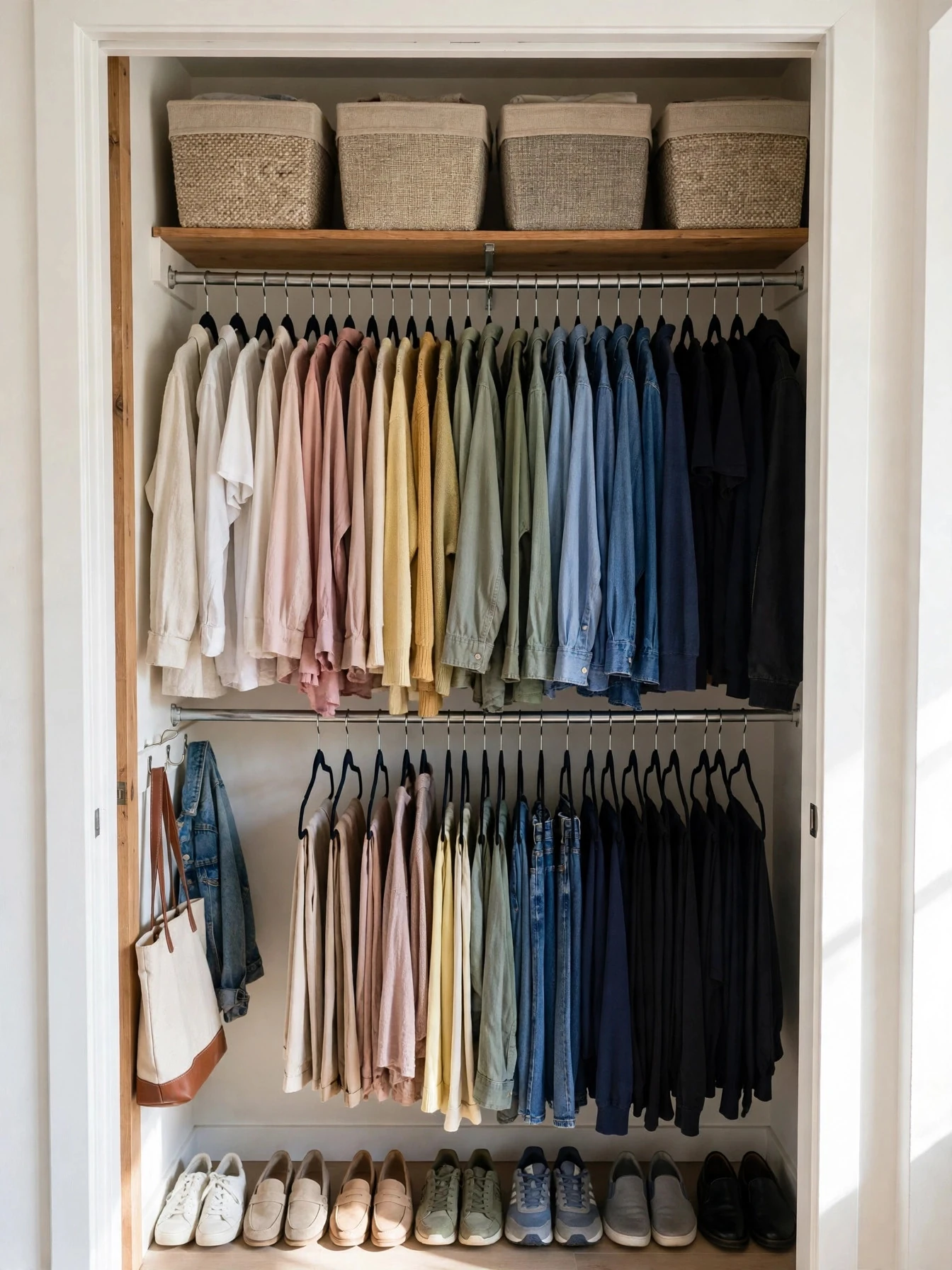
21 Small Closet Organization Ideas That Double Your Space


Twenty-one small, renter-friendly ideas — a second rod, slimmer hangers, door storage, smart zones — that squeeze double the storage out of the same tiny closet.
Table of Contents (21 Ideas)
- 1.Start With a Ruthless Empty-Out
- 2.Add a Second Hanging Rod
- 3.Switch to Slim Velvet Hangers
- 4.Claim the Dead Space Above the Top Shelf
- 5.Stop Stacks From Toppling With Shelf Dividers
- 6.Corral Folded Clothes in Clear Bins
- 7.Turn the Door Into a Storage Wall
- 8.Give Shoes Their Own System
- 9.Vacuum-Bag the Off-Season Stuff
- 10.Use a Tension Rod for a Bonus Row
- 11.Hang Vertically With Cascading Hooks
- 12.Slide Baskets Under the Shelf
- 13.Add Stick-On Lights So You Can Actually See
- 14.Zone It Like a Tiny Boutique
- 15.Hang Accessories on Removable Hooks
- 16.Tame Boots With Shapers and Clips
- 17.Use the Side Walls for Bags and Belts
- 18.File-Fold Everything in Bins and Drawers
- 19.Run a Seasonal Capsule Rotation
- 20.Keep the Floor Completely Clear
- 21.Protect It With a 10-Minute Weekly Reset
Let's be honest about small closets: most of them aren't actually too small — they're just badly organized. The average reach-in closet holds a surprising amount once every inch has a job, but left to chance it turns into a black hole where sweaters go to be forgotten and shoes go to lose their partners.
I have seen closets the size of a phone booth work beautifully, and giant walk-ins that were total chaos. The difference is never square footage. It is a handful of smart systems — a second rod here, slimmer hangers there, the forgotten door put to work — that stack up faster than you'd expect.
These 21 ideas are the ones that genuinely earn their keep in tiny closets. No renovation, no custom carpentry, and most of them are renter-friendly. Steal three or four this weekend, and your closet will already feel twice the size. If you need to clear out before you organize, our 30-day declutter challenge clears the excess first.
 Save Pin
What you'll need
You don't need much — most of this list runs on six workhorses: slim velvet hangers, a tension rod for a second hanging row, clear shelf dividers, an over-door shoe organizer, vacuum storage bags for the off-season, and stick-on LED closet lights. Everything else is just using the space you already have.
Start With a Ruthless Empty-Out

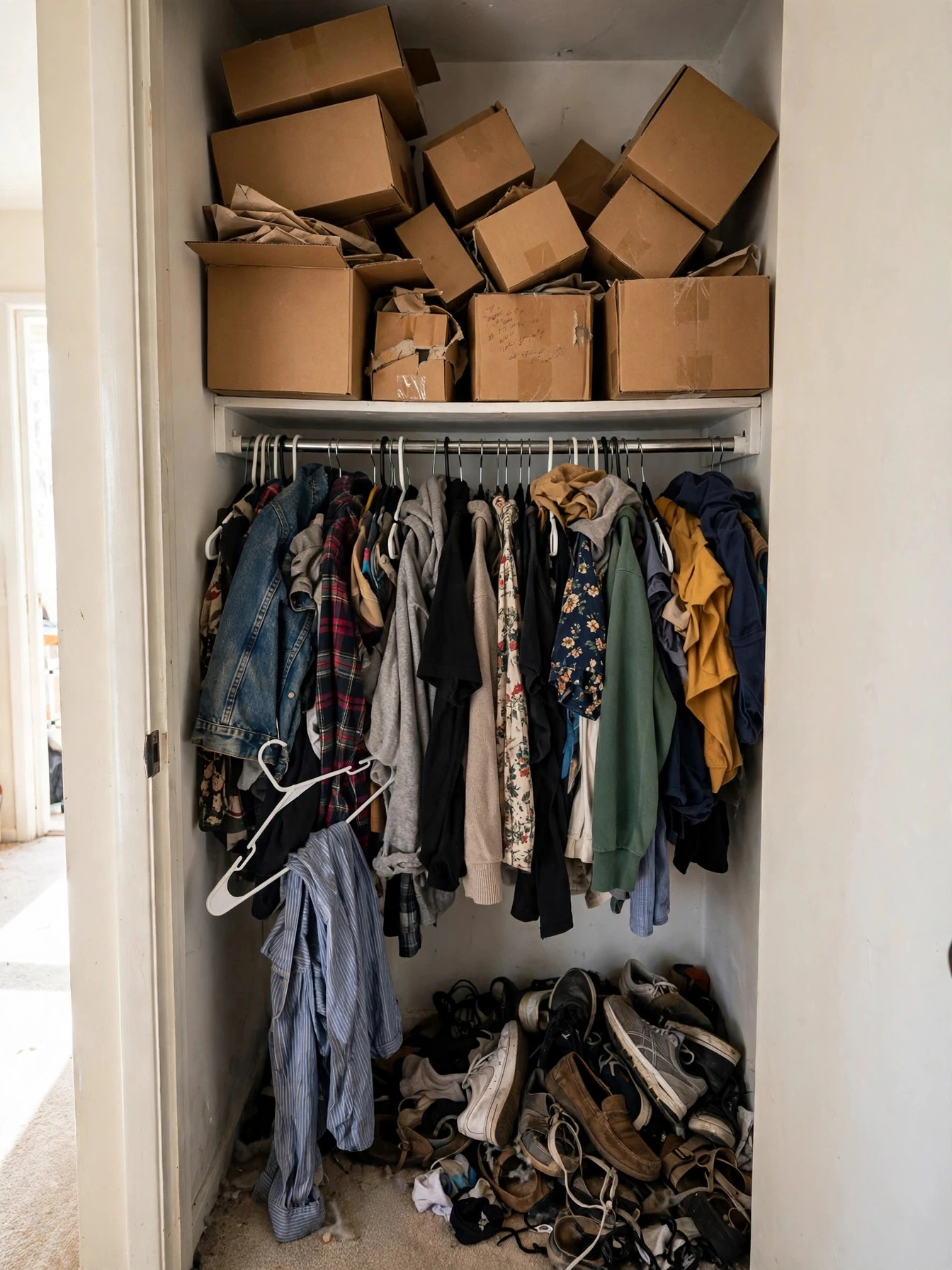
You cannot organize a closet that is still stuffed with things you never wear. Pull everything out — every hanger, every shoe, every mystery box — and pile it on the bed. Try on anything you are unsure about and be honest: if it has not been worn in a year, it does not deserve prime space in a tiny closet. Sort into keep, donate, and relocate piles. Wipe down the empty shelves and vacuum the corners while you can actually reach them. Most people discover they were storing 20 to 30 percent pure clutter. The closet already feels twice as big, and you have not bought a single thing yet.
Add a Second Hanging Rod

Most small closets waste half their height because shirts and blouses hang at eye level while the space below them sits empty. Fix it with a closet doubler rod or an inexpensive tension rod mounted underneath the existing one. Hang shirts and tops on the upper rod, pants and skirts below, and you have literally doubled your hanging capacity in the exact same footprint. In a reach-in closet, place the second rod roughly 40 inches below the main one so shorter garments clear the floor. It is the single highest-impact change on this list, it takes fifteen minutes, and the tension style needs no tools at all.
Switch to Slim Velvet Hangers

Bulky plastic and wire hangers are silent space thieves. A set of slim velvet hangers is barely a quarter-inch thick, so swapping them in can free up 30 to 40 percent of your rod — often a whole extra foot of hanging space. The velvet coating grips silky blouses and wide-neck tops that normally slide straight off, and the uniform look calms the visual chaos instantly. Buy one matching set instead of collecting random hangers over the years. Everything hangs at the same height, nothing bunches or tangles, and getting dressed stops feeling like a wrestling match every single morning.
Claim the Dead Space Above the Top Shelf

Look up. In most small closets there is a full shelf — sometimes two feet of vertical air — sitting empty above the top storage shelf. That is premium space for things you reach for a few times a year: spare blankets, luggage, keepsake boxes, off-season hats. Use stackable storage bins with lids so you can build upward safely, and label the front of each one so you never have to pull everything down just to find one scarf. Keep a small step stool nearby if the shelf is high. Dead space is really just storage you have not claimed yet.
Stop Stacks From Toppling With Shelf Dividers

Folded stacks on a shelf have a short half-life: pull one sweater from the middle and the whole pile leans, slides, and eventually avalanches. Clear shelf dividers clip onto the shelf edge and work like bookends for your clothes, keeping stacks of jeans, tees, and knits upright and separated. The clear acrylic practically disappears, so the shelf still looks calm instead of busy. Divide by category — one bay for denim, one for sweaters — and suddenly you can see exactly what you own. No more buying a third black cardigan because the other two were buried at the bottom of a collapsed stack.
Corral Folded Clothes in Clear Bins

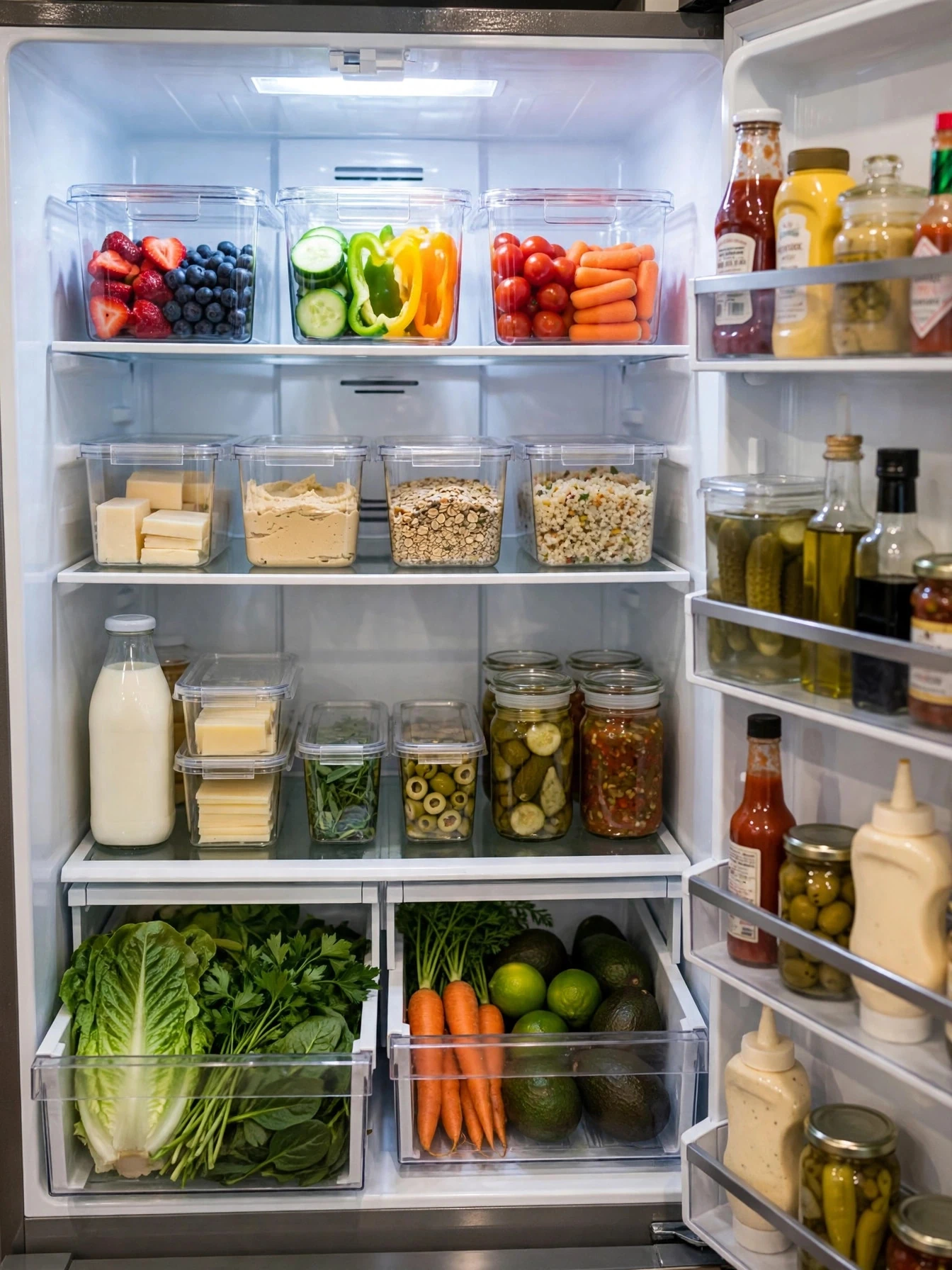
Loose folded clothes and small items drift into a jumbled heap within weeks, no matter how neatly you stack them on day one. Clear bins fix that by giving every category a firm boundary. Use clear stackable bins for folded tees, workout clothes, and pajamas so you can see the contents at a glance, and slide them onto shelves like drawers. Smaller bins work beautifully for scarves, gloves, and belts. Because the bin is the boundary, a slightly messy fold inside still looks neat from the outside — which, honestly, is most of the battle in a closet you open every day.
Turn the Door Into a Storage Wall

The back of your closet door is a blank wall begging for a job. An over-door shoe organizer with clear pockets holds far more than shoes: rolled scarves, clutches, sunglasses, gloves, belts, and all the small things that normally vanish into the back of drawers. The clear pockets matter — you see everything at once, so nothing gets forgotten. If shoes are your bigger problem, use the pockets for footwear and free up the floor entirely. It installs in two minutes with no screws, which makes it perfect for renters. Just pad the hooks with felt if the door rattles when it closes.
Two buys that do the heavy lifting
If you buy only two things from this whole list, make it a closet doubler rod and one matching set of slim velvet hangers. Together they add more real hanging space than any other purchase on this page — a whole extra row, plus roughly a third more room on the rod you already have.
Give Shoes Their Own System

Shoes dumped on the closet floor steal walking space and make everything above them harder to reach. Give them a real system instead: a low two-tier shoe rack keeps pairs visible and off the ground, while stackable shoe boxes with drop fronts let you build upward without unstacking anything to reach the pair at the bottom. Store everyday pairs at the front and occasion shoes up high or at the back. If you are really tight on room, alternate shoes heel-to-toe — it sounds silly, but it genuinely saves a couple of inches per pair on a crowded rack.
Vacuum-Bag the Off-Season Stuff

Bulky winter coats and spare duvets can eat half a small closet for six months of the year. Shrink them. Vacuum storage bags pull the air out of soft items and compress them to a fraction of their size, so the off-season wardrobe slides under the bed or up onto that high shelf instead of hogging the rod. Sort one bag per category — sweaters in one, coats in another — and write the contents on the outside. When the season flips, the swap takes twenty minutes. Your everyday wardrobe finally gets the whole closet to itself, all year round.
Use a Tension Rod for a Bonus Row

A spare tension rod is the cheapest extra storage you will ever install, because it needs no screws, no brackets, and no landlord permission. Wedge one low across a corner to hold heels by their heels, or run one across the top of the closet for scarves and spare hangers. Short closets with a stepped or sloped side wall are perfect candidates — that awkward wedge of space becomes a mini hanging zone for ties, belts, or kids' clothes. Measure the gap first, twist to tighten, and give it a firm tug before you trust it with any real weight.
Hang Vertically With Cascading Hooks

When rod length runs out, go vertical. Cascading hanger hooks clip onto a hanger's hook and let the next hanger drop a few inches below it, so five shirts can hang in the width of one — like a gentle waterfall down the rod. They are ideal for tank tops, camisoles, and lightweight tees that do not need shoulder support. A multi-tier pants hanger does the same trick for trousers and jeans, holding five pairs in the space one hanger used to take. Just keep cascading chains to lighter garments; heavy coats will strain the top hanger and the rod itself.
Slide Baskets Under the Shelf

The gap between a shelf and the clothes hanging below it is usually six wasted inches of air. Under-shelf baskets hook over the shelf above and hang down into that gap, creating an instant extra compartment in mid-air. They are perfect for the small stuff that never seems to have a home: clutches, wallets, rolled belts, sunglasses cases. In closets short on drawers they hold folded tees beautifully too. No tools, almost no measuring, and they come back off in seconds if you rearrange. It is one of those ideas that makes you wonder why every closet does not come with them already installed.
Add Stick-On Lights So You Can Actually See

You cannot organize what you cannot see, and most small closets are lit like caves. Stick-on LED closet lights — motion-activated, battery-powered, peel-and-stick — change everything for just a few dollars. Mount one under the top shelf or along the door frame and the whole closet lights up the moment you open it. Suddenly the black-versus-navy guessing game ends, and the back corners stop hiding clothes you forgot you owned. Rechargeable USB versions mean no raiding the battery drawer. It sounds like a luxury; in a windowless reach-in closet, it feels more like finally turning the lights on in a room you use every day.
Zone It Like a Tiny Boutique

Treat your closet like a tiny boutique and give every section a job. One zone for work clothes, one for casual, one small corner for dressy pieces — and within each zone, hang items in the same order, sleeveless to long-sleeved, light to dark. It sounds fussy until the first rushed morning, when you can grab a complete outfit half-asleep without thinking. Zoning also exposes duplicates instantly: six nearly identical white tees standing in a row make the case for decluttering better than any advice. If you share the closet, simple rod divider discs keep each person's zone honest.
The shoe problem, solved twice
Shoes eat small closets alive. The two fixes that pay off fastest: an over-door shoe organizer to get pairs off the floor, and stackable drop-front shoe boxes so you can build upward without unstacking everything just to reach the pair at the bottom.
Hang Accessories on Removable Hooks

Claim the stretch of wall right beside the closet opening for the things you reach for daily. A row of removable adhesive hooks holds tomorrow's outfit, your everyday tote, hats, and the belt you grab constantly — the true daily drivers that otherwise end up draped over a chair. Keeping these five or six items outside the closet's tight core reduces the dig-through effect that slowly destroys any organizing system. Because the hooks are removable, renters can do this without a second thought. Group them by routine rather than item type, and the wall quietly becomes part of getting dressed.
Tame Boots With Shapers and Clips

Boots are the bullies of a small closet: tall, floppy, and always falling into the walkway. Keep pairs upright with boot shapers slipped inside the shaft, or hang them from boot clips on a low rod or the bottom rung of a shoe rack so they float just off the floor. Ankle boots fit neatly into the pockets of an over-door organizer or a shallow bin. However you store them, keep all boots together in one zone — hunting for a single missing boot in a small closet somehow takes longer than reorganizing the entire thing from scratch.
Use the Side Walls for Bags and Belts

The side walls of a reach-in closet are usually bare drywall doing absolutely nothing. A few wall hooks or a narrow peg rail transforms one side into storage for handbags, hats, belts, and scarves — items that are slim, light, and used constantly. Hang bags by their straps in a neat column; they keep their shape far better than when crushed on a shelf, and you can see the whole collection at once. In deeper closets, the side wall can even hold a valet hook for staging tomorrow's outfit. Slim items on the walls leave shelves and rods free for actual clothes.
File-Fold Everything in Bins and Drawers

How you fold matters as much as where you store. File folding — folding each item into a neat rectangle and standing it upright in a bin or drawer, like files in a cabinet — lets you see every single piece at a glance instead of digging through a stack and wrecking it. It works for tees, underwear, workout gear, kids' clothes, even jeans in a deep bin. Pair it with drawer dividers to keep the rows from slumping sideways. The first folding session takes a little practice; after that, laundry day becomes weirdly satisfying, and your bins hold noticeably more than stacked piles ever did.
Run a Seasonal Capsule Rotation

You do not need to own less clothing overall — you need less clothing in the closet at one time. Run a simple capsule rotation: keep four to six weeks of outfits in the closet, and store the rest of the season's pieces in a labeled bin somewhere else. Every month or so, swap a few things in and out so the selection feels fresh without ever being crowded. The closet breathes, you can see everything you actually have available, and getting dressed gets faster because every option fits the season and the space. It is the closest thing to a bigger closet that costs nothing.
Keep the Floor Completely Clear

A visible floor is what makes a small closet feel big. If shoes, bags, and laundry creep across it, the whole space reads as chaotic no matter how neat the shelves are. Move the laundry hamper out — to the bathroom or a bedroom corner — and give the closet floor one job only, or none. A slim rolling cart tucked at one end can hold overflow accessories while still sliding out easily. When you can see wall-to-wall floor, the closet feels calmer, vacuuming takes thirty seconds, and nothing gets stepped on, lost, or quietly ruined at the bottom of the pile.
Protect It With a 10-Minute Weekly Reset

Here is the unglamorous secret behind every effortlessly organized closet: it gets ten minutes of attention a week. Pick a moment — Sunday evening works well — and do a fast reset: rehang anything that migrated, refold one messy stack, return shoes to their zone, and pull one thing for the donation bag. Ten minutes is short enough that you will actually do it, and it stops the slow slide back into chaos that quietly undoes most organizing projects by month two. Think of it as brushing your closet's teeth: small, regular, and the whole reason the system still works a year from now.
Doubling a small closet is not about one dramatic makeover — it is about stacking small wins. A second rod here, slimmer hangers there, the door and side walls finally put to work. Pick the three ideas that fix your worst pain point first, live with them for a week, and then layer in a few more. Protect the result with that tiny weekly reset, and the system will still be working a year from now. Your closet will never be a walk-in, but it can absolutely feel like one every single morning. Now go claim those wasted inches. Small kitchens benefit from the same zones-and-labels approach — see our small pantry organization ideas.
Small Closet Organization FAQs
Expert answers & styling advice
How can I double my closet space without remodeling? ▼
Start with the three highest-impact changes: add a second hanging rod for short clothes, swap bulky hangers for slim velvet ones, and move shoes into an over-door organizer. Together they typically free up 30 to 50 percent more usable space — no tools or construction needed.
What are the best hangers for a small closet? ▼
Slim velvet hangers. At roughly a quarter-inch thick, they take up a fraction of the rod space of plastic or wooden hangers, and the velvet surface stops silky tops from sliding off. One uniform set also makes the whole rod look calmer.
How do I organize a small closet with no shelves? ▼
Create your own storage vertically: hanging fabric shelves for folded clothes, stackable bins on the floor or a high ledge, a tension rod for a bonus hanging row, and the back of the door for shoes and accessories. Think in zones from floor to ceiling.
How often should I reorganize my closet? ▼
Do a big reset twice a year when you swap seasonal clothes, and a quick 10-minute tidy once a week — rehang strays, refold one stack, return shoes to their spot. The weekly habit is what stops a small closet from sliding back into chaos.