15 Small Room Storage Ideas That Make a Tiny Room Work Twice as Hard

Fifteen ways to make a tiny room hold twice as much — rolling under-bed bins, a pegboard wall, floating shelves, a fold-down desk, vacuum-sealed bags and a reset that keeps it all working.
Table of Contents (15 Ideas)
- 1.Go Tall With a Narrow Shelving Unit That Uses the Corner
- 2.Slide Rolling Bins Under the Bed for Shoes and Out-of-Season Clothes
- 3.Hang a Clear Pocket Organizer on the Back of the Door
- 4.Park a Storage Ottoman at the Foot of the Bed
- 5.Float Two Shelves Above the Bed for Books and Baskets
- 6.Tuck a Slim Rolling Cart Into the Gap Beside Your Desk
- 7.Put Up a Pegboard Wall for Bags, Hats and Everyday Bits
- 8.Shrink Bulky Clothes With Vacuum-Sealed Bags on the Top Shelf
- 9.Add Shelf Dividers and Risers Inside the Wardrobe
- 10.Hang a Bedside Caddy and Skip the Nightstand
- 11.Mount a Fold-Down Desk That Disappears After Work
- 12.Stack Cube Boxes as a Nightstand That Holds More Than a Table
- 13.Turn the Back of the Door Into a Shoe and Bag Station
- 14.Roll a File Cart Under the Desk and Organize Every Drawer
- 15.Line Up Labelled Baskets on Top of the Wardrobe
A small room does not need less stuff. It needs better homes for the stuff it already holds. When every surface is doing two jobs and the floor is the only storage left, the room feels crowded even when it is tidy.
These 15 small room storage ideas are built for that exact problem: bedrooms that double as offices, box rooms with one wardrobe, and rentals where you cannot drill into the walls. They use the height of the walls, the space under the bed, and the back of the door — the three places most small rooms waste. The goal is not a showroom bedroom. It is a room where everything you own has one obvious home, so the chair stops being a wardrobe and the floor stops being a shelf.
Start by standing in the middle of your room and naming the three things that never have a home. That short list — not a photo you liked online — is what your small room storage ideas should solve first.
Measure first, buy second
Before you buy anything, measure three things: the height from floor to ceiling where a shelf would go, the clearance under your bed frame, and how far your door swings open. A shelf that is too deep blocks the door, and under-bed bins that are too tall simply do not slide in.
Go Tall With a Narrow Shelving Unit That Uses the Corner

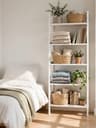
The corner of a small room is usually dead space, and a tall, narrow shelving unit is the simplest way to claim it. At about 12 inches deep it fits beside the bed without blocking the walkway, yet five shelves hold folded clothes, books, baskets, and plants all the way up to the ceiling. Put the things you reach for daily at waist height, the prettiest things at eye level, and the rarely used things at the top. A woven basket on each shelf hides the messy bits — chargers, spare bedding, off-season scarves — so the unit looks calm instead of crowded.
Slide Rolling Bins Under the Bed for Shoes and Out-of-Season Clothes

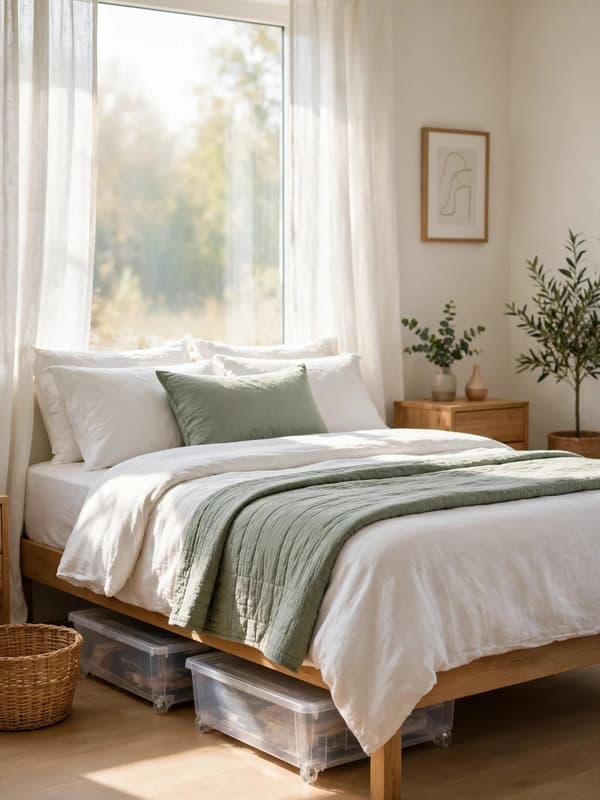
The space under the bed is the biggest empty box in most small rooms, and rolling bins are the easiest way to use it. Clear bins on wheels slide out like drawers, so you can see what is inside without dragging everything onto the floor. Give each bin one job — one for shoes, one for out-of-season clothes, one for spare bedding — and label the end you can see. Measure the clearance first: most bed frames leave 6 to 8 inches, and a bin that is even half an inch too tall will not slide in. Our under-bed storage ideas have more ways to use this hidden space.
Hang a Clear Pocket Organizer on the Back of the Door

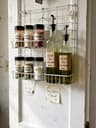
When the walls are full and the floor is full, the back of the door is the last surface left — and it is usually empty. A clear over-the-door pocket organizer hangs from two hooks over the door, needs no screws, and holds scarves, sunglasses, belts, and hair accessories in see-through pockets, so you can find things without digging. Put the things you grab on the way out at eye level and the rarely used things at the bottom. One caution: keep the pockets light. A door organizer stuffed with heavy things swings, bangs, and eventually pulls the hooks off. For more no-drill tricks, see our over-the-door storage ideas.
Park a Storage Ottoman at the Foot of the Bed

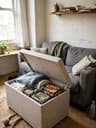
A storage ottoman is the quietest piece of furniture a small room can own: it looks like a seat, it hides a surprising amount of blankets and books, and it takes up no wall at all. Pick one in a washable fabric, about 30 inches long, and park it at the foot of the bed. Lift the lid, drop the spare blanket in, close it, and the bed looks made again. Keep the heavy things — books, spare bedding — in the ottoman and the light things on top of it, so the lid stays easy to lift. It is one of the best hidden storage ideas for a room where every piece of furniture has to earn its floor space.
Float Two Shelves Above the Bed for Books and Baskets

The wall above the bed is wasted space in most small rooms, and two floating shelves turn it into a bookcase that touches no floor at all. Hang them about 12 inches above the pillows so you can sit up without bumping your head, and keep the shelves shallow — 8 to 10 inches deep is plenty for folded towels, books, and a small plant. Put the heavy books on the lower shelf and the light, pretty things on the upper one, and fix the shelves into studs or proper wall anchors so they never sag.
Tuck a Slim Rolling Cart Into the Gap Beside Your Desk

Every small room has a gap — between the desk and the wall, between the bed and the wardrobe — that is too narrow for furniture and too wide to ignore. A slim three-tier rolling cart is made for exactly that gap. At about 10 inches wide it slides in beside the desk, holds notebooks, stationery jars, and a small plant, and rolls out when you need it and back when you do not. Give each tier one job so the cart does not become a junk tower: top tier for what you use today, middle tier for notebooks, bottom tier for spares. The wheels matter more than they look — a cart you can pull out with one hand gets used, and a cart you have to drag gets ignored.
Three helpers worth the money
If you buy only three things, make them these: a set of clear rolling under-bed bins so you can see what is stored, a pack of vacuum-sealed bags for bulky winter clothes, and a row of strong adhesive hooks for bags and hats. Measure the gaps first, and skip everything else until you have lived with the setup for a month.
Put Up a Pegboard Wall for Bags, Hats and Everyday Bits

A pegboard panel is the most flexible storage a small room can have, because you can move everything on it in seconds. Mount a light wood panel above the desk, add hooks for a tote bag and a cap, small baskets for chargers and stationery, and a peg for sunglasses. When your routine changes — a new hobby, a new bag, a season of scarves — you move the pegs instead of buying new furniture. A pegboard with breathing room looks calm and works better than one packed solid, because you can actually see what is hanging on it. It is one of the simplest small room storage hacks for renters, because one panel leaves only a few small holes to fill when you move out.
Shrink Bulky Clothes With Vacuum-Sealed Bags on the Top Shelf

Bulky winter jumpers and spare duvets eat a wardrobe alive, and vacuum-sealed bags shrink them to about a third of their size. Fold the clothes flat, slide them into the bag, seal it, and roll or vacuum the air out until the bag goes flat and firm. Stack the flat bags on the top shelf of the wardrobe, where their low height is an advantage — you can fit two layers where one bulky jumper used to sit. Label each bag with a strip of masking tape so you know what is inside without opening it.
Add Shelf Dividers and Risers Inside the Wardrobe

A wardrobe shelf without dividers is a landslide waiting to happen: one stack of jumpers leans, then the whole shelf slides. Shelf dividers fix that for a few pounds — upright panels that split one long shelf into bays, so each stack of folded clothes stands on its own. Add a shelf riser underneath and you get a second level for folded t-shirts above the jumpers, doubling the shelf without a single screw. Put the heaviest stacks at the bottom and the lightest at the top, and leave one bay empty for the clothes you are wearing this week. Our closet storage ideas have more ways to make a small wardrobe hold twice as much.
Hang a Bedside Caddy and Skip the Nightstand

A nightstand takes up floor space a tiny bedroom cannot spare, and a bedside caddy replaces it completely. The fabric organizer drapes over the side of the bed or tucks under the mattress, with pockets for a book, a phone, reading glasses, and a water bottle — everything you reach for in the night, within arm's reach and off the floor. Pick one with a stiff pocket for the water bottle so it cannot tip, and keep the phone pocket separate from the glasses pocket so the screen never gets scratched. It is the cheapest idea on this list, it needs no tools at all, and it frees the whole corner where a nightstand used to sit.
Mount a Fold-Down Desk That Disappears After Work

A full desk eats a small room, but a fold-down wall desk gives you a desk only when you need one. Mounted at sitting height with a shelf above for books and stationery, it folds down for work and folds flat against the wall when you are done, sticking out barely two inches. Fix it into studs or proper wall anchors and test it with your full weight before trusting it with a laptop. It is one of the best tiny room storage solutions for a bedroom that has to be an office by day and a bedroom by night.
One in, one out
The rule that keeps a small room working is simple: one thing in, one thing out. Every time something new crosses the doorway — a jumper, a book, a bag — something old has to leave the room. Without that rule, even the best storage fills up in a month.
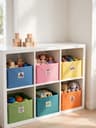
Stack Cube Boxes as a Nightstand That Holds More Than a Table

Cube storage boxes are the most forgiving furniture a small room can have, because they do whatever the room needs. Stack two or three beside the bed and they become a nightstand that holds folded clothes and books inside, with a lamp and a plant on top. Stack them by the desk and they become a printer stand. The trick is to stop at three: a stack taller than three cubes starts to wobble and look like a tower. Pick boxes in one colour so the stack reads as one piece of furniture, and put the heaviest things in the bottom cube so the whole stack stays steady.
Turn the Back of the Door Into a Shoe and Bag Station

Shoes are the hardest thing to store in a small room, because they are bulky, dirty, and needed daily. The back of the bedroom door solves all three problems at once: a hanging shoe organizer with clear pockets holds a pair per pocket where you can see them, and a row of hooks above it takes the jacket and the tote bag you grab tomorrow. Keep the pairs you wear this week at eye level and the occasion shoes at the bottom, and cap the collection at what the organizer holds — when a new pair arrives, an old pair has to move to a closet or leave the house.
Roll a File Cart Under the Desk and Organize Every Drawer

Desk drawers only work if they have dividers, and a rolling file cart gives you both the drawers and the dividers in one piece. Tuck the cart under the desk and it holds files, chargers, and stationery in shallow drawers that roll out to you, so nothing gets buried at the back. Put a small tray organizer inside each drawer — one tray for pens and clips, one for cables, one for notebooks — and the drawer stays sorted even when you are in a hurry. Label the front of each drawer with what lives inside, because a drawer you have to open to check is a drawer you will stop using.
Line Up Labelled Baskets on Top of the Wardrobe

The top of the wardrobe is the most ignored shelf in the house, and a row of matching labelled baskets turns it into proper storage. Use light baskets you can lift down with one hand, and put the rarely used things up there — spare bedding, out-of-season hats, the bag you use twice a year — so you are not climbing up every day. Label the front of each basket in big letters you can read from the floor, and keep the baskets in one colour so the top of the wardrobe looks calm instead of cluttered. A small step stool kept beside the wardrobe makes the top shelf usable instead of forgotten. For more whole-room ideas, see our small apartment storage ideas.
A calm small room is not really about furniture. It is about walking in, putting everything down in a spot you do not have to think about, and having the floor clear enough to cross the room without stepping over anything.
Pick the wall idea first, add one under-bed home and one door home, and let the rest wait until you know what you actually miss. Then keep the weekly reset short and honest, and the tiny room that used to feel crowded will start feeling like it was made for you instead.
Small Room Storage Ideas FAQs
Expert answers & styling advice
What is the best way to organize a very small room? ▼
Start with the wall and the bed, because those are the spaces you are probably wasting. One tall shelving unit or two floating shelves, plus rolling bins under the bed and a pocket organizer on the door, covers most small rooms. These small room storage ideas work because they give clothes, shoes, books, and everyday bits one obvious home each, so nothing has to pile up on the floor.
How do I add storage to a small room without buying furniture? ▼
Use the space under the bed, the top of the wardrobe, and the back of the door. Rolling bins under the bed hold shoes and out-of-season clothes, labelled baskets on top of the wardrobe hold spare bedding, and a hanging organizer on the door holds accessories. Vacuum-sealed bags shrink bulky winter clothes to about a third of their size, which frees a whole shelf on its own.
What storage works best in a rented small room? ▼
A bedside caddy is the cheapest fix — it replaces the nightstand for the price of a takeaway. A fold-down wall desk gives you a workspace that disappears after work, and a slim rolling cart slides into gaps no furniture fits. A pegboard panel above the desk holds bags, hats, and chargers with only a few small holes to fill when you move out.
How do I stop shoes taking over a small bedroom? ▼
Cap the pairs and give them a boundary. A hanging shoe organizer on the back of the door holds one pair per pocket, and rolling bins under the bed take the rest. When the organizer is full, that is the limit working as intended — a new pair means an old pair moves to a closet or leaves the house. Wipe the soles before they go in, and the organizer stays clean enough for a bedroom.
How do I keep a small room tidy once it is organized? ▼
Follow the one-in-one-out rule: every time something new crosses the doorway, something old has to leave the room. Then do a five-minute reset once a week — bins rolled back under the bed, door pockets checked, desk cleared, and anything that migrated into the room returned to its real home. Small rooms stay tidy because of the reset, not because of the furniture.