15 Toy Room Organization Ideas That Make Cleanup Easy for Kids

Fifteen ways to make toy cleanup easy for kids — picture-labelled bins, a rolling art cart, a toy rotation system, clear bins for small toys, a cleanup chart with a five-minute timer, and zones that keep every toy in its place.
Table of Contents (15 Ideas)
- 1.Label Every Bin With a Picture So Kids Can Clean Up Without Reading
- 2.Roll the Art Supplies to the Table on a Three-Tier Cart
- 3.Rotate the Toys: Six Out on the Shelves, the Rest in Labelled Bins
- 4.Drop the Shelves to Kid Height So Little Hands Can Reach Everything
- 5.Sort Small Toys Into Clear Stackable Bins With Lids
- 6.Hang a Toy Hammock in the Corner for the Stuffed Animal Mountain
- 7.Face the Books Out on a Low Ledge So Kids Choose by the Cover
- 8.Give Dress-Up Clothes Their Own Rack With Hooks at Kid Height
- 9.Roll Toy Bins Under the Bed and Turn Wasted Space Into a Toy Garage
- 10.Pick an Activity Table With Bins Built Into Its Base
- 11.Hang a Pegboard Wall So Every Craft Supply Has a Visible Home
- 12.Use the Back of the Door for Dolls and Small Accessories
- 13.Put Up a Picture Cleanup Chart and Race a Five-Minute Timer
- 14.Split the Room Into Zones: Reading, Building, and Art
- 15.Stuff the Plush Toys Into a Bean Bag Chair That Doubles as a Seat
A toy room does not get messy because your kids own too many toys. It gets messy because every toy lives in one big pile and nobody — not even you — knows where anything belongs. The fix is not a bigger room or more storage. It is a home for every kind of toy that a child can actually see, reach, and put back on their own.
These 15 toy room organization ideas are built around that one rule. Every idea below uses low shelves, clear bins, or picture labels, so cleanup is something a four-year-old can do without asking you where things go. Most of them cost less than a single toy run, and several use space you already have — under the bed, behind the door, and in the corner where the stuffed animals pile up. The goal is not a room that looks perfect in a photo. It is a room where your kids can find what they want, play with it, and put it away in five minutes flat.
Start by watching how your kids actually play for one afternoon. The toys they reach for every day deserve the lowest shelf and the easiest bin. Everything else can wait its turn in a closet.
Sort before you store
Sort before you store. Pull every toy out, keep only the ones your kids played with in the last month, and box the rest for rotation or donation. A one-in-one-out rule keeps the room from filling up again: every new toy means one old toy leaves. Buying bins before you declutter just gives the clutter nicer boxes to live in.
Label Every Bin With a Picture So Kids Can Clean Up Without Reading

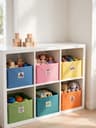
Picture labels are the most useful trick in toy room organization, because they let kids who cannot read yet clean up on their own. Set up a low cube shelf at child height and give every bin one job: blocks in the blue bin, dolls in the pink bin, cars in the yellow bin. Stick a photo or a simple drawing of what goes inside on the front of each bin, so a child can match the toy to the picture without asking you. Our entryway organization ideas for families with kids use the same picture-label trick for coats and shoes by the front door.
Roll the Art Supplies to the Table on a Three-Tier Cart

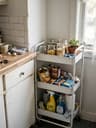
A three-tier rolling cart is the toy room's answer to the art-supply explosion. Load the top tier with colouring books and crayons, the middle with markers and stickers, and the bottom with play dough and small building sets, then wheel the whole cart to the table when it is craft time and park it in a closet or against the wall when it is not. Because everything lives in one moveable unit, there is no trail of crayons from the shelf to the table, and cleanup is literally one push.
Rotate the Toys: Six Out on the Shelves, the Rest in Labelled Bins

Toy rotation is the cheapest way to make old toys feel new again, and it is the reason toy rooms with fewer toys out often look tidier than rooms with everything on display. Keep six to eight toys out on the low shelves and store the rest in labelled bins with lids in a closet or on a high shelf. Every week or two, swap a few toys out and bring a few back in — the blocks and the doll that were boring last week suddenly get played with for an hour.
Drop the Shelves to Kid Height So Little Hands Can Reach Everything

If your kids cannot reach a shelf, they cannot use it — and they certainly cannot clean it up. Low open shelves at child height fix that by putting every toy where small hands can grab it and put it back. Keep the shelves one toy deep so nothing hides behind the front row, and give each shelf a single category: wooden toys on one, books on another, cars lined up on the top edge where they look like a display instead of a mess.
Sort Small Toys Into Clear Stackable Bins With Lids

Small toys are the hardest to store because they are the easiest to scatter: one box of building bricks becomes a hundred pieces across the floor in about thirty seconds. Clear stackable bins with lids solve the two real problems at once — kids can see what is inside without opening every box, and the lid keeps the pieces in when the bin gets knocked over. Give each bin one category only: building bricks in one, toy cars in another, small animals in a third, and label the front in big letters so even a non-reader can learn which bin is which.
Hang a Toy Hammock in the Corner for the Stuffed Animal Mountain

Stuffed animals multiply faster than any other toy, and they are too soft and bulky for bins — which is exactly why they end up in a mountain on the bed. A mesh toy hammock stretched across a corner uses the empty air near the ceiling, a spot no shelf can reach, and holds a dozen plush toys where your kids can still see and grab them. Hang it high enough that it clears the bookshelf below but low enough that a child standing on tiptoe can pull a favourite bear down. When the hammock is full, one stuffed friend has to find a new home before another moves in.
Buy the bins last
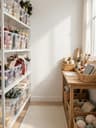
Buy the bins last. Measure the shelf first, count how many toy categories you actually have, and only then buy containers to fit. A cube shelf with 11-inch openings takes standard fabric bins; a rolling cart takes small clear tubs; an under-bed space takes shallow bins no taller than 6 inches. Bins bought before measuring are the ones that end up stacked empty in a closet.
Face the Books Out on a Low Ledge So Kids Choose by the Cover

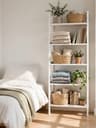
Kids choose books by their covers, so a forward-facing book ledge turns the bookshelf into a shop window they actually want to browse. Mount one or two shallow picture ledges at child height and stand the books up with their covers facing out — seven or eight books per ledge is plenty, and the rest live in a basket or a bin nearby. Rotate the books every week or two, swapping in a few from the basket, and the old favourites feel new again, just like toy rotation.
Give Dress-Up Clothes Their Own Rack With Hooks at Kid Height

Dress-up clothes are the worst kind of toy-room clutter because they are long, tangly, and impossible to fold — a cape draped over a chair, a princess dress on the floor, crowns in the toy box. A child-height rack with hooks fixes all of it: hang the three or four most-worn costumes on wooden hangers where your kids can see them, and keep the accessories — hats, crowns, wands, badges — in one basket underneath. Cap the costumes at what fits on the rack; when a new one arrives, an old one gets donated.
Roll Toy Bins Under the Bed and Turn Wasted Space Into a Toy Garage

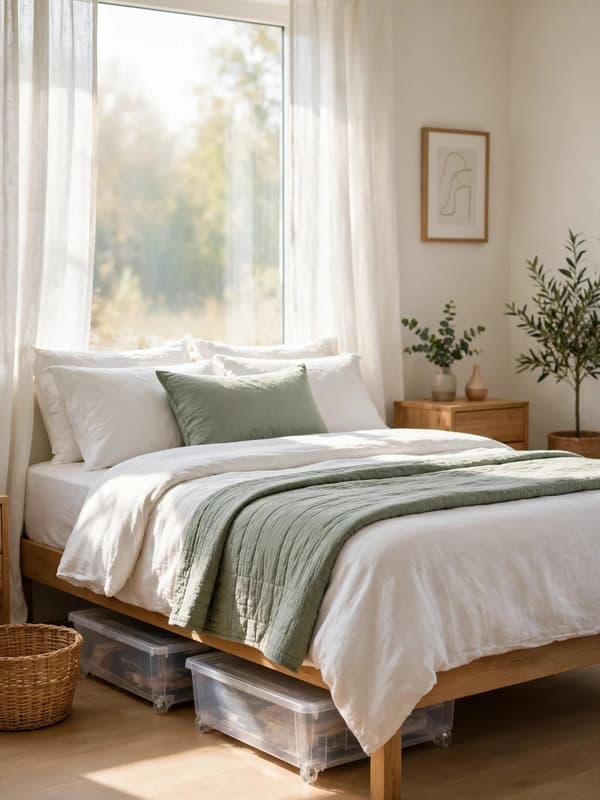
The space under the bed is the biggest unused storage spot in most kids' rooms, and shallow rolling bins turn it into a toy garage that disappears when playtime ends. Use clear bins on wheels no taller than 6 inches, one for toy cars and one for building blocks, so your child can pull a bin out, play, and roll it straight back under. Label the end that faces out, because that is the only side anyone ever sees, and keep the bins shallow — a deep under-bed box becomes a black hole where the favourite car vanishes for months. Our under-bed storage ideas show more ways to use this hidden space for toys, shoes, and out-of-season clothes.
Pick an Activity Table With Bins Built Into Its Base

An activity table with bins built into its base is the one piece of furniture that does two jobs at once: it is the table your kids draw and build on, and it is the storage for everything they draw and build with. Slide colourful bins under the tabletop — crayons in one, paper in another, building bricks in a third — so the supplies are always within arm's reach and cleanup means pushing the bins back in, not carrying armfuls across the room. Keep the tabletop clear except for what is being used right now: one tray of crayons, one stack of paper, and the rest stays in the bins.
Hang a Pegboard Wall So Every Craft Supply Has a Visible Home

Craft supplies are small, sharp, and endlessly spillable, which is why a pegboard wall above the craft desk beats a drawer every time. Hang small baskets from the pegboard hooks — one for crayons, one for scissors, one for paintbrushes — and mount ribbon spools on pegs so they unwind without tangling. Everything is visible at a glance, nothing hides at the back of a drawer, and when your child outgrows a supply you move the basket instead of buying new furniture. Our craft room organization ideas use the same pegboard trick for grown-up supplies.
Kid height or it doesn't work
Kid height or it does not work. If your child has to climb, ask, or drag a chair over to reach a toy, that toy will never get put away. Mount hooks, ledges, and shelves at your child's shoulder height or lower, and keep the grown-up-only things — paint, glue, tiny pieces — on the high shelf instead.
Use the Back of the Door for Dolls and Small Accessories

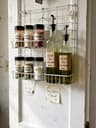
The back of the door is the last empty surface in most toy rooms, and a clear over-the-door pocket organizer turns it into storage for all the small things that never fit in a bin. Dolls stand in the top pockets where your child can see them, hairbrushes and doll accessories fill the middle rows, and hair clips, bows, and small play food sit in the bottom pockets at grab height. Because the pockets are clear, kids find what they want without dumping a whole bin, and because the organizer hangs from two hooks, it needs no drilling — a real bonus for renters. Our over-the-door storage ideas show the same trick working in bedrooms, bathrooms, and closets.
Put Up a Picture Cleanup Chart and Race a Five-Minute Timer

The best toy room organization system in the world fails if cleanup feels like a chore with no end, so give it a visible finish line. Hang a picture cleanup chart on the wall above the toy shelf with four steps a child can follow without reading: pick up the toys, sort them by bin, put them away, all done. Next to it, put a sand timer set for five minutes, and make cleanup a race against the sand, not a lecture. The trick is to clean up one kind of toy at a time — blocks first, then cars, then plush — because telling a child to clean the whole room is overwhelming, while telling them to put away the blocks is a job they can finish.
Split the Room Into Zones: Reading, Building, and Art

A toy room without zones is just one big floor where everything mixes: blocks under the reading chair, crayons in the doll house, puzzle pieces in the block bin. Split the room into three clear zones instead — a reading nook with a small chair, a book basket, and a cushion in one corner; a building zone with a low table and sorted block bins in another; and an art zone with the table, the rolling cart, and the pegboard on one wall. A round rug marks each zone on the floor so clearly that even a toddler learns where the blocks belong and where the books belong.
Stuff the Plush Toys Into a Bean Bag Chair That Doubles as a Seat

When the stuffed animals outnumber the kids, a bean bag chair that stores them is the kindest solution of all. These big soft chairs have a zip pocket or an opening you fill with plush toys, so the whole collection becomes the stuffing — and the chair becomes an extra seat for reading time. Kids can see their favourites through a clear pocket, pull one out to play with, and stuff it back in when they are done, which makes putting away feel like part of the game instead of a chore. When it is full, that is the collection's limit — one in, one out.
A calm toy room is not really about the bins. It is about a child who can find the toy they want, play with it, and put it back without a grown-up standing over them.
Start with the picture-labelled bins, add one rolling cart and one under-bed bin, and let the rest wait until you know which toys your kids actually reach for. Then keep the five-minute cleanup chart on the wall, and the room that used to greet you with a floor full of toys will start greeting you with a bit of calm instead. For more ideas that work the same way in tight homes, see our small apartment storage ideas.
Toy Room Organization Ideas FAQs
Expert answers & styling advice
How do I organize a toy room with too many toys? ▼
Start by decluttering before you buy anything. Pull every toy out, keep only what your kids played with in the last month, and put the rest into rotation bins or a donation box. Then give every remaining toy one home at child height — a labelled bin, a low shelf, or a clear pocket — so cleanup is a matching game, not a mystery. Good toy room organization starts with fewer toys out, not with more storage boxes.
How can I get my kids to clean up their toys? ▼
Make cleanup short, visual, and winnable. Use picture labels so kids can match toys to bins without reading, hang a four-step picture cleanup chart at eye level, and race a five-minute sand timer. Clean up one kind of toy at a time — blocks first, then cars — instead of telling a child to clean the whole room. A star on the chart or a high five at the finish turns it into a game they want to repeat.
What is the best storage for small toys like LEGO and toy cars? ▼
Clear stackable bins with lids, one category per bin. Building bricks in one, toy cars in another, small animals in a third, with a big label on the front of each. The clear sides let kids see what is inside without opening every box, the lid keeps the pieces in when a bin tips over, and stacking them no more than three high keeps the bottom bin reachable.
How do I organize a small toy room or a shared bedroom? ▼
Use the walls, the door, and the space under the bed, because the floor is already full. Low shelves at child height, a forward-facing book ledge, an over-the-door pocket organizer, and shallow rolling bins under the bed add storage without taking a single extra square foot of floor. Split what is left into two zones — reading and building — and keep the art supplies on a rolling cart that parks in a corner.
How often should I rotate toys? ▼
Every one to two weeks is the sweet spot. Swap out three or four toys and bring three or four back in, and let your child help choose what goes away and what comes back — they will play with the returning toys far longer when they picked them. If a toy sits untouched through two full rotations, it is ready to be donated, and the bin it lived in stays empty until something earns the space.