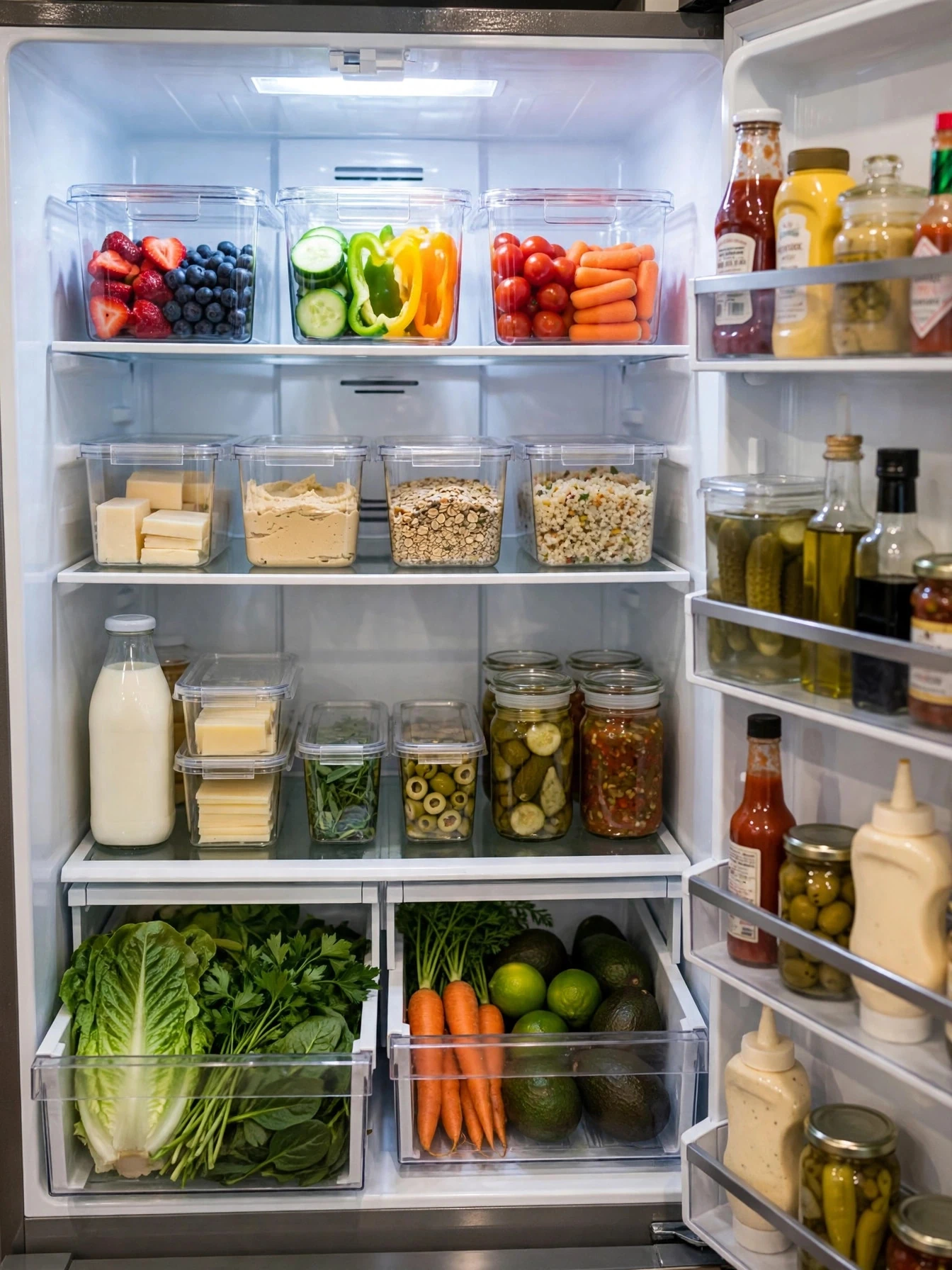
15 Fridge Organization Goals You'll Want to Copy Tonight


Fifteen small, copy-worthy ideas — bins, zones, labels, and one 10-minute habit — that turn a chaotic fridge into one that stays organized (and wastes less food).
Table of Contents (15 Ideas)
- 1.Empty the Whole Thing First
- 2.Give Every Shelf a Job (Zone It)
- 3.Group Like Items in Clear Bins
- 4.Label Everything — Yes, Everything
- 5.Add a Turntable for Condiments
- 6.Keep the Door for Condiments Only
- 7.Line Your Produce Drawers
- 8.Create an 'Eat Me First' Bin
- 9.Switch to Uniform Leftover Containers
- 10.Give Eggs Their Own Tray
- 11.Build a Little Drink Station
- 12.Lay Down Washable Shelf Liners
- 13.Dedicate a Deli Drawer
- 14.Do a 10-Minute Weekly Reset
- 15.Shop From a Fridge List, Not From Memory
Be honest — when was the last time you really looked inside your fridge? Not a quick grab-the-milk glance, but a proper look. For most of us, the refrigerator is where good intentions quietly expire behind the jam jars.
Here's what nobody tells you: an organized fridge isn't about having a prettier kitchen. It's about wasting less food, spending less money, and never again discovering a science experiment growing on the second shelf. Households throw away a shocking amount of food every year, and a huge share of it died in a disorganized fridge.
The good news? You don't need a renovation or a hundred dollars of matching containers. You need one free afternoon, a trash bag, and about fifteen small ideas that actually stick. These are the same tricks professional organizers use for those jaw-dropping fridge makeovers all over Pinterest — adapted for real fridges with real families.
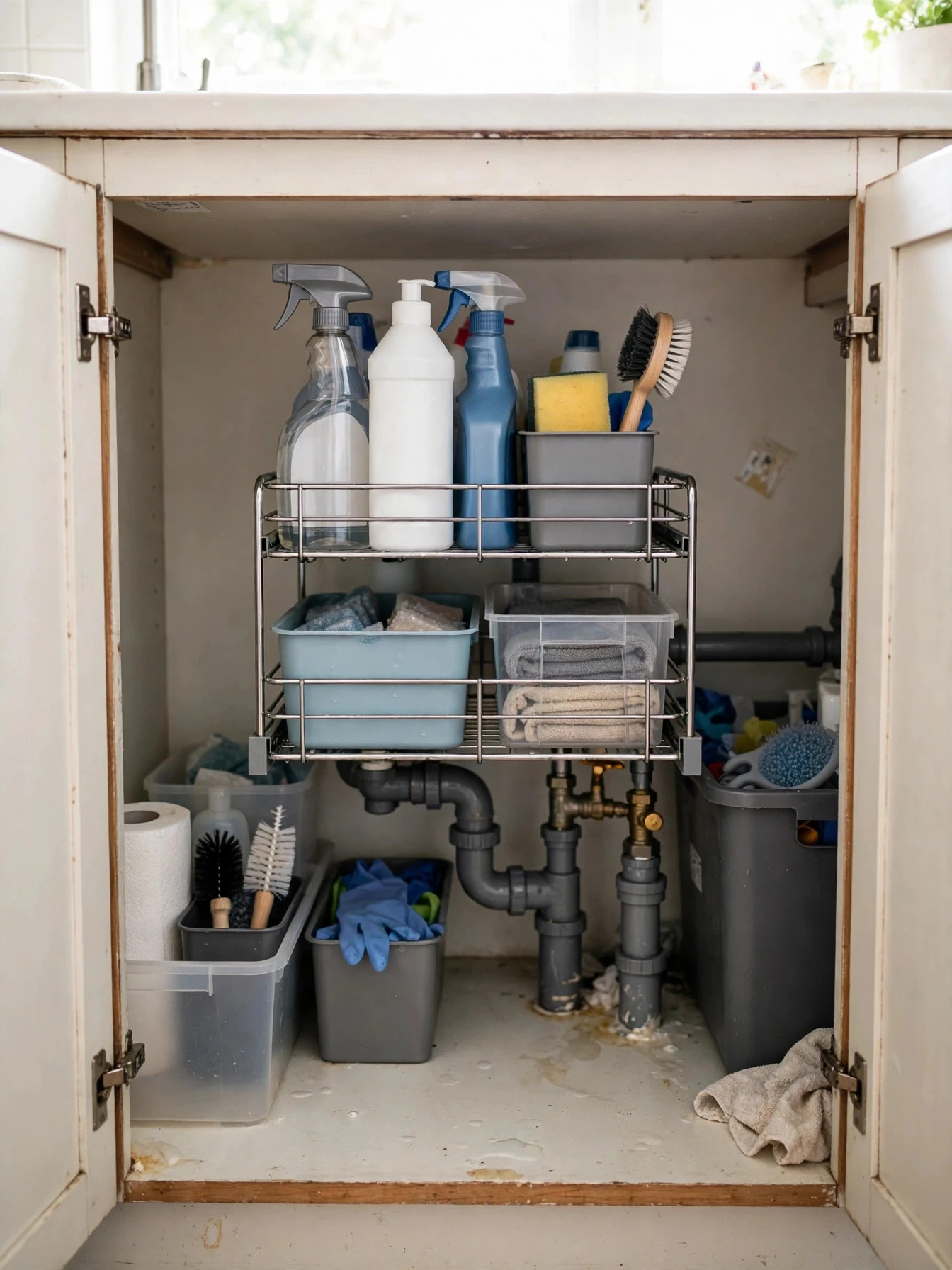
Let's start with the least glamorous step. It's also the most important one. And when you are ready to tackle the cabinet below the sink too, our under-sink organization ideas pair perfectly with a tidy fridge.
 Save Pin
What you'll need for most of these ideas
Most of this list runs on five simple things: clear stackable fridge bins, a lazy Susan turntable, chalkboard bin labels, washable shelf liners, and a set of uniform glass containers. That's genuinely it — no renovation required.
Empty the Whole Thing First

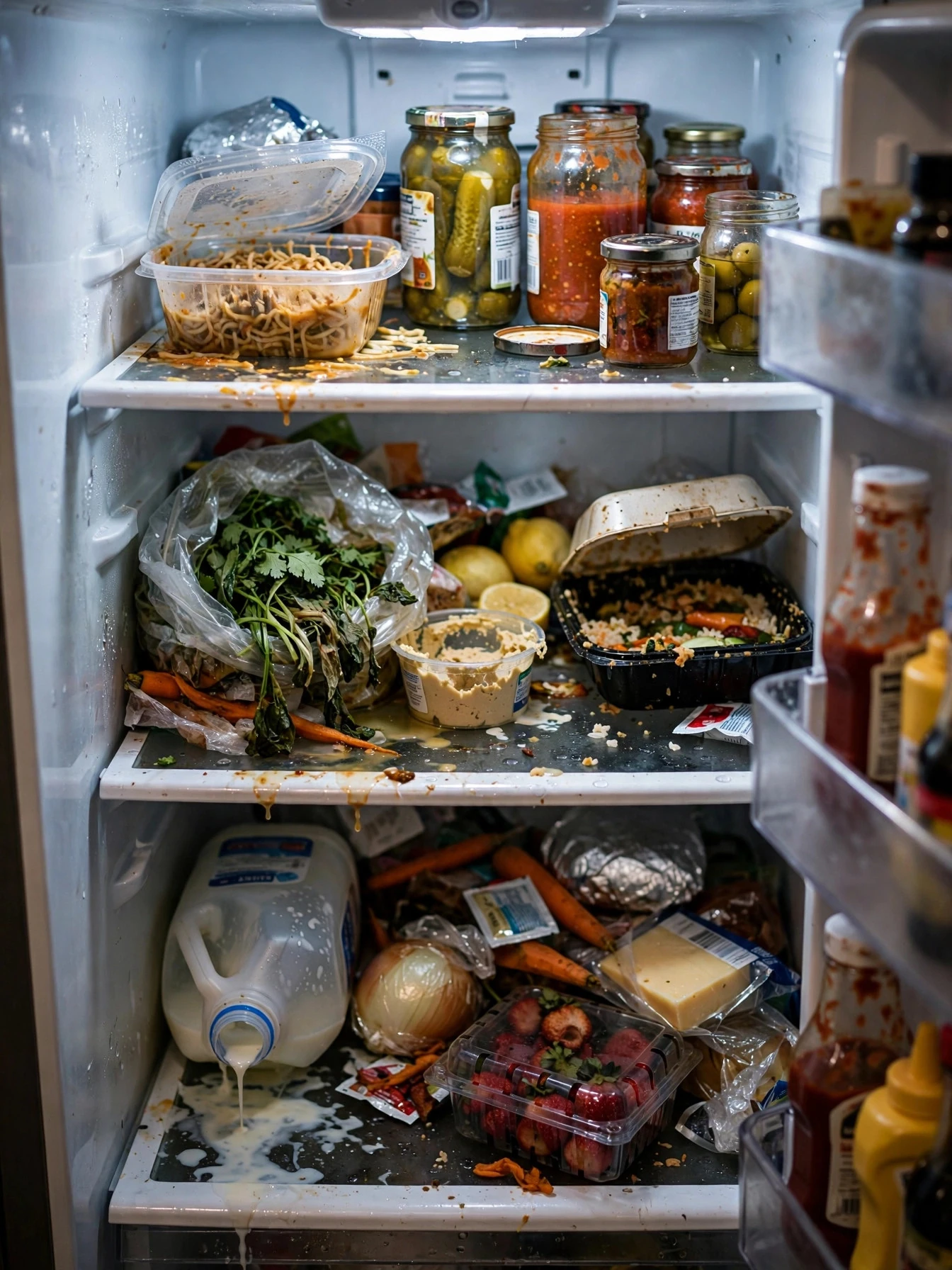
You cannot organize around clutter — it's like trying to clean a room without picking anything up. Pull everything out of the fridge and onto the counter. Yes, everything. Then check every date and toss what's expired, fuzzy, or a mystery. Be ruthless: that half-used sauce from three months ago is not 'still fine.' Wipe the shelves while they're empty — you'll never get a better chance. This one unglamorous hour makes every step after it ten times easier, because you're organizing what's left, not Tetris-ing around junk.
Give Every Shelf a Job (Zone It)

A fridge without zones is just a cold junk drawer. Here's the system that works: top shelf for drinks and ready-to-eat foods, middle shelves for dairy and leftovers, bottom shelf for raw meat (coldest spot, and drips can't contaminate anything below), drawers for produce, door for condiments. Once every category has a home, putting groceries away takes two minutes instead of twenty — and everyone in the house knows where things live.
Group Like Items in Clear Bins

This is the single highest-impact trick on this list. Decant nothing — just group. Put all the yogurts in one clear stackable fridge bin, all the kid snacks in another, all the cheese in a third. Now instead of shoving individual items onto a shelf, you pull out one bin, grab what you need, and slide it back. Clear matters: if you can't see it, you'll forget it exists and buy a duplicate. Stackable matters: it doubles your vertical space overnight.
Label Everything — Yes, Everything

Labels feel fussy until the first time your partner actually finds the pasta sauce without calling you. Use chalkboard bin labels, kraft tape, or a simple label maker — whatever you'll actually maintain. Label the bins, not every jar: 'Snacks,' 'Breakfast,' 'Leftovers — eat by Friday.' The magic isn't the label itself; it's that labels force you to decide what belongs where, and that decision is what keeps the system alive.
Add a Turntable for Condiments

The back of a fridge shelf is where condiments go to be forgotten. A lazy Susan turntable fixes it in one move: spin, grab, done. It works for sauces, small jars, vitamins — anything short that used to hide behind the milk. Get one with a raised edge so bottles don't slide off mid-spin. This is one of those five-dollar-feeling upgrades that makes the fridge feel twice as big.
Small buys that do the heavy lifting
If you buy two things, make it clear stackable bins and a lazy Susan turntable. Together they fix roughly 80% of fridge chaos — grouping and visibility — for less than a family pizza night.
Keep the Door for Condiments Only

Here's a fact that ruins most fridges: the door is the warmest part of your refrigerator, and its temperature swings every time you open it. Milk and eggs living in the door spoil days faster than they should. Move them to a back middle shelf, and reserve the door for things that don't care — ketchup, mustard, jam, pickles, soda. Your groceries will last longer and your milk will stop going off 'early.'
Line Your Produce Drawers

Crisper drawers get gross fast — one leaked bag of lettuce and the whole drawer smells. Line the bottom with paper towels or washable produce liners; they absorb excess moisture, which is exactly what makes greens go slimy. Store leafy vegetables loosely (not crammed), keep fruits in a separate drawer from vegetables (fruit gases ripen veggies faster), and swap the liners weekly. Your produce will genuinely last longer — most people notice it within one grocery cycle.

Create an 'Eat Me First' Bin

Food waste usually isn't about buying too much — it's about forgetting what you have. Dedicate one small bin, right at eye level, for anything that needs to be eaten in the next two or three days: the half onion, the yogurt expiring Thursday, last night's leftovers. Label it 'Eat First.' When someone's hunting for a snack, this bin is the answer. This one habit quietly saves more money than every other organizer on this list combined.
Switch to Uniform Leftover Containers

A fridge full of random tubs and takeout boxes can't stack, can't be seen into, and can't be trusted. Swap to a set of uniform glass meal-prep containers with lids that all match. Uniform containers stack like bricks, so leftovers stop avalanching. Glass means you see dinner at a glance — and leftovers you can see are leftovers you actually eat. Start with one set of eight to ten; you don't need to replace everything at once.
Give Eggs Their Own Tray

Egg cartons are flimsy, opaque, and somehow always in the way. A clear egg holder tray (usually with a lid, so things can stack on top) keeps eggs protected, visible, and off the warm door shelf. You'll always know at a glance whether you're down to your last three — which, honestly, prevents more emergency grocery runs than you'd expect.
Don't forget the tray
A lidded egg holder tray is the most underrated fridge upgrade there is: protected eggs, stackable top, and a permanent answer to 'do we have eggs?'
Build a Little Drink Station

Bottles and cans scattered across three shelves make a fridge feel smaller than it is. Corral them into one zone: a can dispenser that rolls the next soda forward, water bottles standing together, juice on one shelf edge. Cold drinks in one place also stops the door standing open while someone conducts a full fridge archaeological dig for a lemonade. Small zone, outsized calm.
Lay Down Washable Shelf Liners

Fridges get sticky. It's not a character flaw; it's physics. Washable fridge shelf liners turn a spill from a 20-minute scrub session into a 30-second rinse under the tap. Cut them to fit each shelf, and when something leaks (something always leaks), the mess stays on the liner instead of migrating into every corner. This is the unglamorous purchase you'll thank yourself for at 11 p.m. some Tuesday.
Dedicate a Deli Drawer

Cheese slices, deli meats, and tortillas deserve one shared home — ideally a shallow drawer or a wide, flat bin. Keeping them together stops the 'cheese lost behind the condiments' problem and makes lunch-packing a one-stop grab. If your fridge has a deli drawer with a temperature control, keep it on the coldest setting; deli meats are the most perishable things most of us own.
Do a 10-Minute Weekly Reset

Here's the secret the 'perfect fridge' people won't tell you: their fridges don't stay organized by magic. They reset them. Pick one moment a week — the night before grocery day is perfect — and spend ten minutes: toss what's dead, wipe the one sticky spot, push everything back into its zone, and glance at what needs eating first. Ten minutes a week is the entire maintenance cost of everything on this list.
Shop From a Fridge List, Not From Memory

The final boss of fridge organization happens at the store. Before you shop, snap a photo of your open fridge or keep a running list on the door of what's inside and what's running low. You'll stop buying your fourth jar of mayo, and you'll stop forgetting the one thing you actually needed. An organized fridge only stays organized if what comes in is as deliberate as how it's stored.
An organized fridge isn't a personality trait — it's fifteen small decisions you only have to make once. Start with the empty-out, add bins and labels, and let the zones do the daily work for you. Then protect it all with a ten-minute weekly reset.
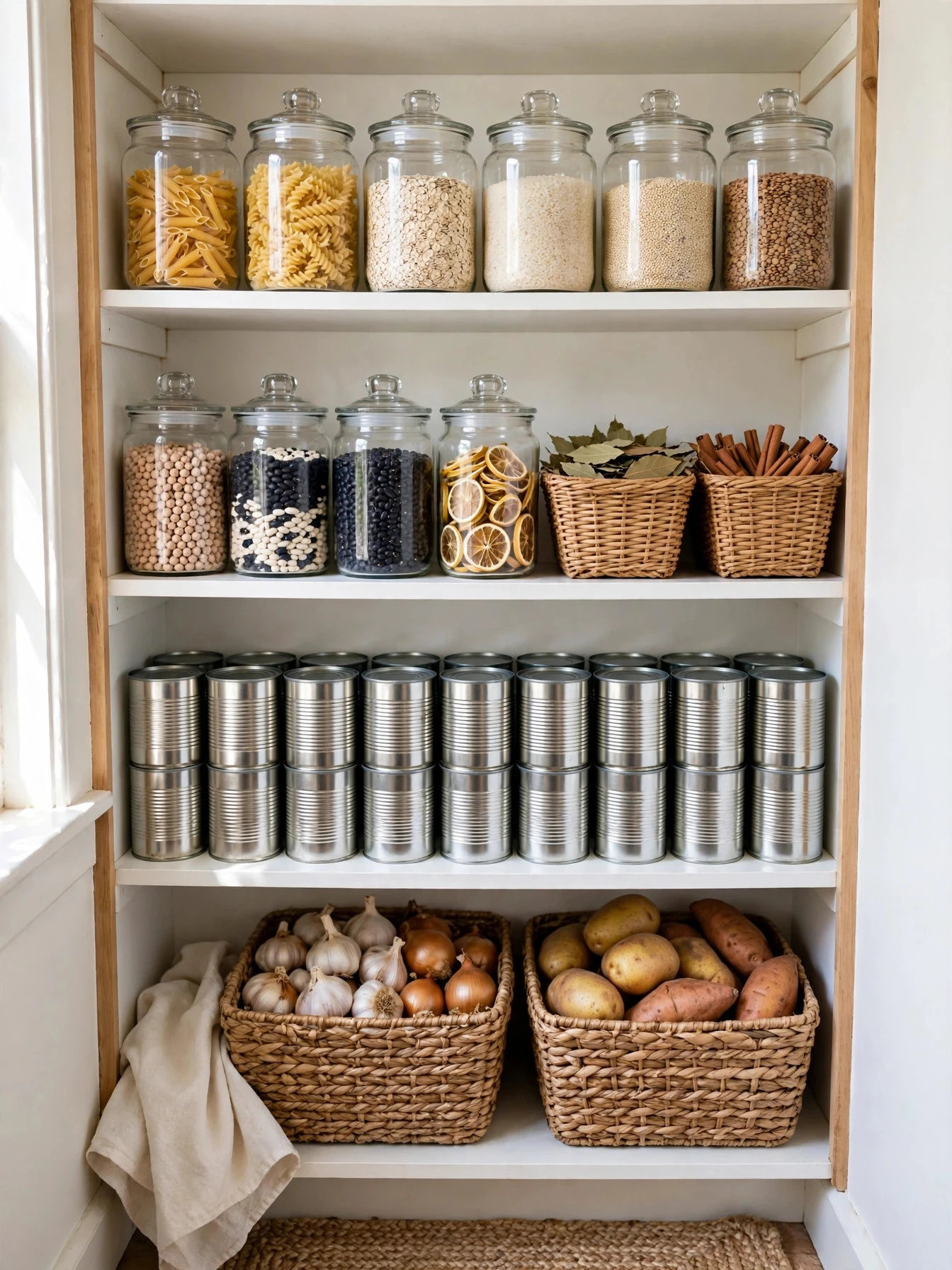
Pick just three ideas from this list for this weekend if fifteen feels like a lot. The fridge you open on Monday morning will already feel different — and yes, it will absolutely be goals-worthy. Pair this reset with our small pantry organization ideas and the whole kitchen starts working as one calm system.
Fridge Organization FAQs
Expert answers & styling advice
How often should I clean out my fridge? ▼
Do a quick 10-minute reset once a week (toss expired items, wipe spills, re-zone). A full empty-out and deep clean every 3–4 months keeps odors and sticky shelves away for good.
What are the best containers for fridge organization? ▼
Clear, stackable, and uniform. Clear bins and glass containers let you see everything at a glance, and matching shapes stack efficiently so you use vertical space instead of spreading out.
How do I keep the fridge organized with kids? ▼
Give kids their own labeled snack bin at their eye level, keep the 'Eat First' bin visible, and label every zone. When everything has an obvious home, even kids put things back in the right place — most of the time.
Where should milk actually go in the fridge? ▼
On a middle or back shelf, not the door. The door is the warmest, most temperature-unstable spot in the fridge, so milk and eggs spoil there days faster.