15 Spice Organization Ideas for Cabinets, Drawers & Pantries

15 simple spice organization ideas for cabinets, drawers and pantries — tiered risers, lazy susans, drawer inserts, mason jars and small-space fixes that end the dig for cumin.
Table of Contents (15 Ideas)
- 1.Put a Tiered Riser Inside the Cabinet So Every Label Shows
- 2.Spin a Lazy Susan in the Cabinet Corner
- 3.Lay an Angled Tier Insert in a Shallow Drawer by the Stove
- 4.Use a Deep Drawer With Jars Standing Upright and Labels on the Lids
- 5.Decant Into Uniform Mason Jars With One Label Style
- 6.Mount Racks Inside a Cabinet or Pantry Door
- 7.Slide a Narrow Pull-Out Into the Filler Gap Beside the Stove
- 8.Stick Magnetic Tins on a Wall Strip or the Side of the Fridge
- 9.Set a Tiered Shelf Organizer on a Pantry Shelf
- 10.Corral Packets and Refills in Clear Labeled Bins
- 11.Spin a Two-Tier Turntable on a Deep Pantry Shelf
- 12.Hang a Small-Space Rail With Jars Under an Upper Cabinet
- 13.Keep a Daily-Cooking Drawer Right Under the Cooktop
- 14.Alphabetize Everything and Audit the Expiry Dates
- 15.Run a Refill Station: Bulk Lives Elsewhere, the Working Set Stays Small
If your spices live in a jumble at the back of a shelf, cooking slows down right when it should feel easy. You dig, you shake mystery jars, you buy a second paprika because the first one is hiding. These spice organization ideas fix that without a kitchen remodel or a matching-jar shopping spree.
Start by picking the spot that fits how you cook. Spice organization in cabinet setups suit most kitchens, a spice organization drawer keeps everything at waist height by the stove, and there are honest spice organization small space tricks here for tiny kitchens too — door racks, magnetic tins, even a rail under a cabinet.
Work through the list, choose one or two ideas, and set them up this week. Small, finished beats big and half-done, every time.
Start with what you own
Before buying anything, pull every spice out and group them on the counter: everyday, baking, blends, and the sad expired ones. Most kitchens need just one fix from this list — a tiered cabinet riser, a bamboo lazy susan turntable, or a drawer spice insert — not all three. Measure your shelf or drawer first, twice, and let those numbers pick the product.
Put a Tiered Riser Inside the Cabinet So Every Label Shows

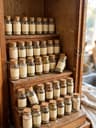
If your spice organization in cabinet setup is one flat shelf, the back row is basically lost. A simple three-step riser fixes that in about ten minutes. Measure the shelf first — most upper cabinets are 11 to 12 inches deep and fit a 10-inch-wide riser nicely — then line up your jars so the tallest go at the back. Put the spices you grab daily, like cumin and paprika, on the front step where your hand lands first. A basic bamboo or plastic riser runs $12 to $18 and holds 18 to 24 standard jars. No screws, no fuss. Just lift it out when you wipe the shelf. For a bigger cabinet sort-out to pair with this, see our kitchen cabinet organization ideas.
Spin a Lazy Susan in the Cabinet Corner

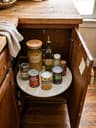
Corner cabinets swallow spices. You reach in, knock three jars over, and still cannot find the oregano. A Lazy Susan turntable turns that dead corner into a spot that actually works. Pick one that is 12 to 15 inches across — leave about an inch of clearance so it spins without clipping the door frame. Oils and taller bottles go in the middle, smaller jars around the edge where you can read them as it turns. Give it a slow spin test after loading; if a bottle wobbles, it is too tall for that shelf. One honest warning: do not overload it. A turntable packed shoulder to shoulder stops being helpful and just becomes a merry-go-round of clutter.
Lay an Angled Tier Insert in a Shallow Drawer by the Stove

That shallow drawer next to the stove — the one full of tangled utensils — is prime spice real estate. An angled tier insert drops in and tilts each jar toward you, so you read the label from above without picking anything up. Most inserts suit drawers 3 to 4 inches deep and come in widths from 12 to 24 inches; measure inside the drawer box, not the front panel. This is classic spice organization drawer territory: jars on their backs, labels up, one glance while the pan is heating. Leave the last row for the odd jars that do not match the set. Life is too short to force those in.
Use a Deep Drawer With Jars Standing Upright and Labels on the Lids

Got a Deep drawer under the counter? That is the best spice spot in a lot of kitchens. Stand the jars upright, 4-ounce size works well, and put the label on the lid instead of the side. From above you see a neat grid of names — chili flakes, coriander, garlic powder — and you pull the one you want without moving the others. A simple grid divider or a few snug rows stops jars sliding when the drawer slams. This suits bigger collections, 30 jars or more, and it keeps spices in the dark, which helps them last. If your deep drawer is in a corner run, our corner cabinet organization ideas cover the awkward spots nearby.
The label rule that saves every system
Whatever you choose, label the same way everywhere: name on the front, and the month and year you opened it written small on the back or the lid. A uniform label set for spice jars and a fine-tip paint pen for lids cost a few dollars and end the sniff-and-guess game for good. Future you, mid-recipe, says thanks.
Decant Into Uniform Mason Jars With One Label Style

Mixed supermarket jars in five sizes will fight any system you build. Decanting into uniform Mason jar storage — the small 4-ounce size for most spices, 8-ounce for things like chili flakes you buy in bulk — makes every shelf and drawer easier. Pick one label style and stick to it: same size, same pen or printed set, name on the front and the purchase month written small on the back. Pour slowly with a funnel, tap the jar to settle it, and do not fill right to the brim. It looks calm, yes, but the real win is practical. Same-size jars stack, line up, and fit the inserts in this list without wasted gaps.
Mount Racks Inside a Cabinet or Pantry Door

The inside of a door is storage most kitchens ignore. A slim rack there holds a surprising amount — two or three rows of small jars — and puts spices right at eye level when you open up. Check the clearance before you buy: close the door slowly and make sure the racks clear the shelves inside by at least half an inch. Screw-mounted racks hold weight better than over-door hooks, which can rattle. Keep the lightest, most-used jars here — the heavy bulk jars belong on a shelf. This is a kind fix for renters too if you use a pantry door and fill the holes when you leave, or pick a tension style that needs no screws at all.
Slide a Narrow Pull-Out Into the Filler Gap Beside the Stove

See that 3- to 6-inch gap beside your stove, the one covered by a filler panel? In many kitchens it hides a pull-out just waiting to happen. Slim rolling racks made for exactly that gap hold two or three shelves of jars, and the whole thing slides out with one finger while you are cooking. Salt, pepper, smoked paprika — all an arm's length from the pan. Measure the gap at its narrowest point, usually near the floor, before ordering. Prices sit around $30 to $60 for a freestanding rolling version, no cabinet work needed. Keep heat-sensitive spices a shelf up from the oven side if your stove runs hot.


Stick Magnetic Tins on a Wall Strip or the Side of the Fridge

When counter and cabinet space are gone, go vertical. Magnetic tins on the side of the fridge or on a steel wall strip are a proper spice organization small space trick — they use a surface that was doing nothing. The 2- to 3-ounce tins with clear lids let you spot the turmeric by color before you even read a label. Stick to one tin size so the rows look tidy and the magnets sit flat. A word of caution: keep them away from the steamy spot right above the kettle, and do not hang them over the stove. Heat and steam dull spices fast. On the fridge side, though, they can live happily for months.
Set a Tiered Shelf Organizer on a Pantry Shelf

Pantry shelves are deep, and spices get buried behind the pasta. A tiered shelf organizer — basically stadium steps for jars — lifts the back rows into view. Place it against the back of the shelf and keep the front few inches free for the things you grab without thinking, like salt. This works best on shelves at waist to eye height; any higher and you are reading labels on tiptoe. Bamboo steps around $15 handle a dozen jars per tier. If your whole pantry needs this kind of thinking, our small pantry organization ideas walk through the full reset, shelf by shelf.
Corral Packets and Refills in Clear Labeled Bins

Every spice collection has a messy backstage: half-used packets, bulk bags, the backup paprika. Clear bins give that chaos a home. One bin for packets, stood upright like files so you can flick through them. One for refill bags and bulk buys. One small one for empties waiting to be washed and refilled. Label the front of each bin in big, plain words — at a glance beats pretty here. Choose bins without lids for the pantry shelf so nothing slows you down mid-recipe. This is also where duplicates get caught. Two open bags of cumin? Now you see them before you buy a third. Our food container organization ideas use the same bin logic for the rest of the pantry.
Three helpers worth the money
If you buy nothing else, these three earn their drawer space: a small stainless funnel for clean refills with no powder everywhere, a two-tier bamboo turntable for deep shelves where jars go to hide, and magnetic spice tins with clear lids for the side of the fridge when cabinets are full. Buy one, live with it a month, then decide if you need more.
Spin a Two-Tier Turntable on a Deep Pantry Shelf

One turntable is good. On a deep pantry shelf, a two-tier version earns its keep. The top tier takes small spice jars, the bottom takes taller bottles — vinegars, hot sauces, the big salt. You get double the storage in the same footprint and nothing hides at the back, because a quarter-turn brings it all around. Check your shelf height before buying; most two-tier models need 10 to 12 inches of clearance. Load the heavy bottles first and spin it gently the first few times to learn its balance. About $20 to $28 buys a sturdy bamboo one that does not wobble, which is the whole difference between useful and annoying.
Hang a Small-Space Rail With Jars Under an Upper Cabinet

The strip of air under your upper cabinets can hold a rail, and that rail can hold your spices. Small jars hang from hooks or clip under the cabinet in a neat row, right above the counter where you prep. It is a lovely spice organization small space move for tiny kitchens and rentals with one sad cabinet. Keep the set small — eight to twelve jars you use weekly — and hang them away from the stove's steam. Stainless rails around 16 to 20 inches fit most cabinet runs and cost about $15 to $25 with hooks. Tighten the screws after the first week; new rails settle, and a wobbly rail with glass jars is nobody's friend.
Keep a Daily-Cooking Drawer Right Under the Cooktop

Here is the quiet secret behind most of these ideas: you probably cook with the same ten or twelve spices 90 percent of the time. Give just those a home in the drawer right under the cooktop. Salt, pepper, garlic powder, paprika, cumin, oregano, chili flakes — your everyday set, whatever it is. Everything else can live in the pantry or a cabinet further away. Cooking gets faster because your hand learns the drawer, and the drawer stays tidy because it is small on purpose. When a jar runs low, that is your shopping list signal. If you cook without a pantry at all, our kitchen organization without a pantry ideas lean hard on this same everyday-set rule.
Alphabetize Everything and Audit the Expiry Dates

Any system above falls apart without this 20-minute reset, done two or three times a year. Empty the spices onto the table. Check dates and be honest: ground spices fade after about a year, whole spices last longer, and that dusty jar from three moves ago is done. Sniff it — if it smells like cardboard, it will taste like it too. Tip the dead ones out, wash the jars, and put everything back in alphabetical order within its home, whether that is a drawer, a riser, or a door rack. Alphabetical sounds fussy until you are mid-recipe with messy hands. Then it feels like a gift from past you. Write the toss list in a notebook so restocking takes one trip.
Run a Refill Station: Bulk Lives Elsewhere, the Working Set Stays Small

Last rule, and it protects all the others: separate storage from use. Bulk bags and big backup jars live in one spot — a high pantry shelf, a hall cupboard, wherever — with a small funnel and a scoop kept beside them. That is your refill station. The working set near the stove stays small and gets topped up from there, maybe once a month, in five quiet minutes. Why bother? Because the moment bulk bags move into your cooking zone, drawers jam and shelves overflow again. A small stainless funnel and one consistent jar size make refills clean instead of powdery chaos. When a bulk bag empties, it goes on the shopping list the same day, not when the working jar runs dry mid-dinner.
Good spice storage is not about a perfect photo. It is about finding the cumin the first time, every time, with a pan already hot. Pick the idea above that matches your kitchen — cabinet, drawer, pantry, or a wall doing double duty — and give it one shelf or one drawer this week.
Then protect it with the two habits at the end of the list: the quick alphabetical audit a few times a year, and the refill rule that keeps bulk out of your cooking zone. That is the whole secret. A small system you keep beats a big one you abandon by March.
Spice Organization FAQs
Expert answers & styling advice
What is the best spice organization in cabinet setup for a small kitchen? ▼
Start with a tiered riser on the shelf you already have — it costs the least and shows every label at once. If the cabinet is a corner, swap the riser for a Lazy Susan so the back comes to you. Add door racks only if you still need room; in a small kitchen, one good fix beats three half-used ones.
Is a spice organization drawer better than a cabinet? ▼
For most home cooks, yes, if the drawer is near the stove. A shallow drawer with an angled insert, or a Deep drawer with labels on the lids, lets you read everything from above while you cook. Cabinets win when your drawers are few or already full — in that case a riser or turntable inside the cabinet does the same job.
How do I organize spices in a small space with no pantry? ▼
Think vertical and think small sets. Magnetic tins on the fridge, a rail under an upper cabinet, and a daily-cooking drawer with just ten or twelve jars cover most needs. That is spice organization small space thinking at its simplest: the everyday set lives by the stove, and everything else earns its spot or goes.
Should I decant spices into matching jars? ▼
Only if mismatched jars are why your current setup fails — and for a lot of people, they are. Uniform 4-ounce jars, Mason jar style or square ones, fit inserts and risers without wasted gaps. Keep the original expiry date by writing the month and year on the new label when you decant.
How long do organized spices stay fresh? ▼
Ground spices are at their best for about 6 to 12 months, whole spices for 1 to 2 years, stored away from heat and steam. A cabinet by the stove is handy but warm, so keep backups and bulk in a cooler pantry spot. The sniff test still rules: if it smells faint, it will season faintly too.