17 Under-Sink Organization Ideas for Kitchen and Bathroom


Seventeen ways to tame the most awkward cabinet in your home — pull-outs, stackable bins, a tension-rod trick and a leak mat — for kitchen and bathroom sinks alike.
Table of Contents (17 Ideas)
- 1.Measure Around the Pipes First
- 2.Slide In a Two-Tier Pull-Out Organizer
- 3.Stack Clear Bins in the Dead Zones
- 4.Hang Spray Bottles From a Tension Rod
- 5.Put a Lazy Susan in the Deep Corner
- 6.Lay a Leak Mat Before Anything Else
- 7.Use the Inside of the Cabinet Door
- 8.Corral Cleaning Supplies in a Carry Caddy
- 9.Give Bathroom Bottles Clear, Lidded Bins
- 10.Add a Tiered Riser for Everyday Toiletries
- 11.Hang the Hair Tools on the Door
- 12.Slide In Slim Stacking Drawers
- 13.Work Around the Pipes With U-Shaped Shelves
- 14.Keep Trash Bags Right Where You Use Them
- 15.Decant the Jumbo Refills Into Smaller Bottles
- 16.Keep One 'Restock' Bin for Backups
- 17.Do a Two-Minute Reset Every Month
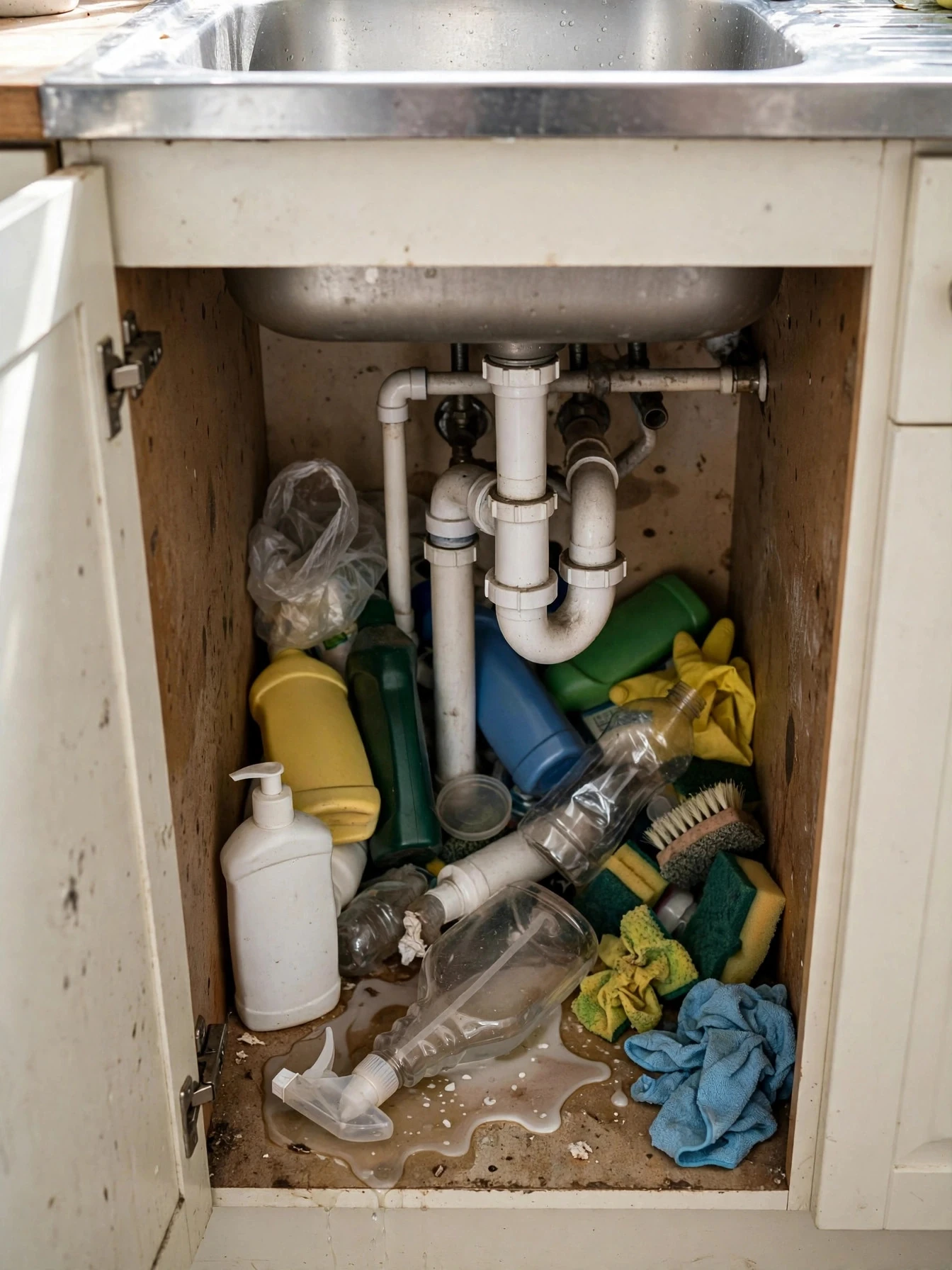
Let's be honest about the cabinet under the sink. It's where cleaning bottles go to tip over, where the spare sponges multiply, and where you once found a bottle of something so old the label had faded to a rumor. Everyone has this cabinet. Almost nobody feels good opening it.
The problem isn't you — it's the space. Pipes run right through the middle of it, the back corners are too dark to see into, and most organizers are designed for the kind of neat, rectangular cabinet that only exists in catalog photos.
So this list is built for real cabinets: real pipes, real drips, real clutter. Seventeen under-sink organization ideas for the kitchen and the bathroom, starting with the two minutes of measuring that makes everything else on this list actually work. It pairs well with our fridge organization ideas if the whole kitchen is getting a reset.
 Save Pin
What you'll need
Most of these ideas run on a handful of workhorses: a two-tier pull-out organizer, stackable under-sink bins, a small tension rod, a waterproof under-sink mat and one cleaning caddy. Measure your cabinet first — width, depth and where the pipes sit — then buy once. Everything else on this list is a variation on these five.
Measure Around the Pipes First

Before you order a single bin, get on your knees with a tape measure. Note the width between the pipes, the depth from the door to the back wall, and how low the garbage disposal hangs if you have one. Under-sink cabinets are all different, and most returned organizers die right here — bought on hope, not measurements. Jot the numbers in your phone. Every idea on this list gets easier once you know the exact awkward space you're working with, instead of guessing from a product photo. It takes four minutes and saves you a return trip.
Slide In a Two-Tier Pull-Out Organizer

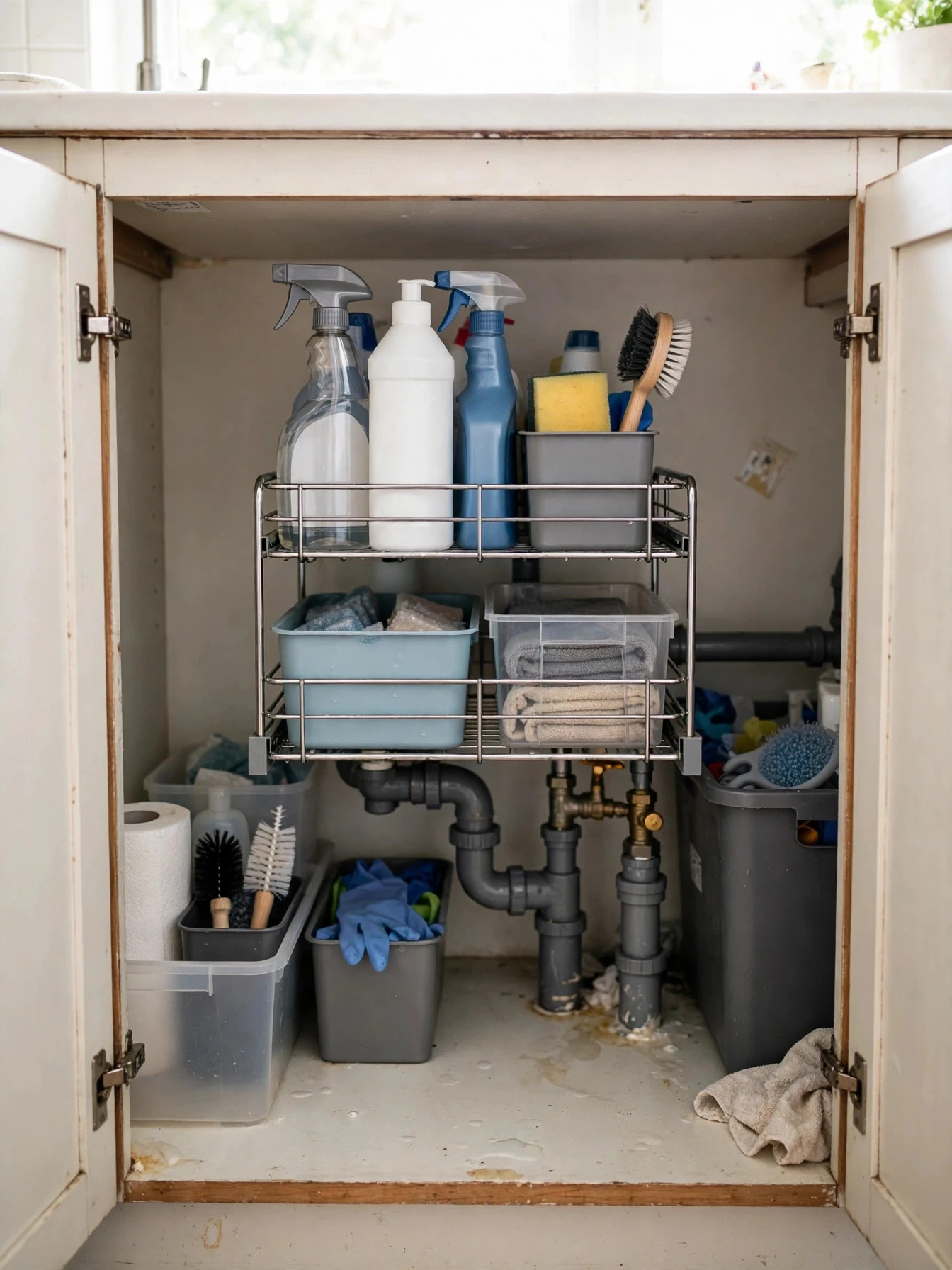
This is the single best upgrade for a kitchen under-sink cabinet. A two-tier pull-out organizer works like a tiny drawer system: the bottom tier holds tall bottles, the top tier slides out so nothing hides at the back. The frame is usually narrow enough to dodge the pipes, and the sliding motion means no more kneeling and reaching into the dark. Look for one with adjustable height between the tiers — dish soap and spray bottles vary more than you'd think. Measure your tallest bottle before you buy. Installation is usually four screws, or none at all for the freestanding frames.
Stack Clear Bins in the Dead Zones

The spaces on either side of the pipes are usually wasted. Stackable under-sink bins turn that dead air into two levels of storage. Bottom bin: the stuff you grab monthly, like extra sponges and dishwasher pods. Top bin: the weekly things. Clear plastic beats opaque baskets here because you can see at a glance what's running low. Leave a finger's width between the stack and the pipe so you can slide bins out without a wrestling match. Two stacks, one on each side, and suddenly the cabinet has 'zones' instead of chaos. It is a small change that makes the whole cabinet feel twice as big.
Hang Spray Bottles From a Tension Rod

The cheapest trick on this list, and maybe the smartest. Fit a small tension rod across the top of the cabinet, just under the sink basin, and hang your spray bottles by their trigger handles. They dangle in space that was doing nothing, and the floor of the cabinet frees up for bins. It costs a few dollars, needs zero tools, and renters can take it with them when they move. One warning: measure the cabinet width twice — tension rods are sold by range, and a rod that's too short will drop your bottles at 2 a.m.
Put a Lazy Susan in the Deep Corner

Every under-sink cabinet has a corner where bottles go to be forgotten. A small lazy Susan turntable fixes that: one spin and the all-purpose cleaner from three months ago is back in your life. Pick a compact one, around 10 inches, with a raised lip so bottles don't topple when you spin. It works best for round bottles — oils, cleaners, polishes — grouped in one spot. In the bathroom it is perfect for the skincare and hair products that multiply under there. Just don't overload it; a crowded turntable spins like a shopping cart with a bad wheel.
Lay a Leak Mat Before Anything Else

Under-sink cabinets get ruined quietly: a slow drip from a pipe, a leaking soap bottle, one spill that soaks into the wood. A waterproof under-sink mat, also sold as a drip tray liner, catches all of it and wipes clean in seconds. The good ones have raised edges that hold a surprising amount of liquid. This is a boring purchase that saves you a cabinet floor — and if you're renting, possibly your deposit. Cut it to size, lay it down first, then organize on top of it. Most mats come in grey or clear, and nobody will ever see it anyway.
Start here if you buy one thing
If you buy one thing, make it the two-tier pull-out organizer. It's the upgrade people write back about: no more kneeling, no more bottles hiding behind the pipes. Pair it with a waterproof under-sink mat underneath and the cabinet basically maintains itself.
Use the Inside of the Cabinet Door

The door is storage space you're already paying for. A slim over-the-door rack or a couple of adhesive hooks can hold the things you grab daily: rubber gloves, a scrub brush, the sink stopper, a roll of trash bags. In the kitchen, a door rack sized for plastic wrap and foil boxes is a classic for a reason. Keep it light, though — heavy bottles on door racks strain the hinges over time. If adhesive makes you nervous, the over-the-door style that hooks on top needs no commitment at all. Zero tools, zero holes.

Corral Cleaning Supplies in a Carry Caddy

If you clean more than one room with the same supplies, stop storing them loose. A cleaning caddy with a handle keeps the bathroom spray, the all-purpose cleaner, cloths and gloves in one grab-and-go kit. Park it under the kitchen sink, carry it to the bathroom, bring it back. It also forces a healthy limit: when the caddy is full, you own enough cleaners. Choose one with a divided interior so bottles stand upright instead of leaking sideways onto each other mid-carry. A caddy with taller sides keeps spray triggers from catching on the cabinet frame when you pull it out.
Give Bathroom Bottles Clear, Lidded Bins

Bathroom under-sinks collect a special kind of clutter: half-used lotions, spare toothpaste, a hair dryer, cotton balls in a torn bag. Sort it into clear bins with lids — one for hair, one for skin, one for first aid and medicine. Lids matter here because bathroom cabinets sit under pipes that occasionally drip, and nobody wants a soggy bandage box. Label the lids, not the sides; you read labels from above when the bin is under a sink. Stack two high at most, or the bottom bin becomes a drawer you never open.
Add a Tiered Riser for Everyday Toiletries

Daily-use stuff shouldn't live in a bin you have to dig through. A small tiered shelf riser — like a tiny stadium step — lifts your moisturizer, contact solution and vitamins into view at the front of the bathroom cabinet. Everything behind it stays visible because each row sits higher than the one in front. It takes two minutes to set up and ends the morning routine of knocking over four bottles to find one. Wood or bamboo versions handle bathroom humidity better than the cheap wire ones. Put the riser on the side you reach from most; it makes the morning grab automatic.
Hang the Hair Tools on the Door

Hair dryers and straighteners are the worst-shaped objects in any bathroom: bulky, corded, always tangled. An over-cabinet-door hair tool holder gives them a heat-safe metal basket that hangs inside the vanity door, cords and all. It keeps hot tools off the counter while they cool, and the cord stops swallowing everything else in the cabinet. Check the basket depth against your door clearance first — it needs to close without hitting the pipes or your bins. Most holders also have a small slot for brushes, which finally gives the round brush a home that isn't the countertop.
Slide In Slim Stacking Drawers

For bathroom cabinets with lots of small things — makeup, nail supplies, medicines — slim stacking drawers beat open bins. Each drawer is its own category, they pull toward you instead of making you reach, and the flat top becomes another shelf. The narrow profile, around 6 to 8 inches wide, fits beside most plumbing. This is the setup that finally ends the 'everything in one deep bin' problem. Start with two drawers; you can add a third on top if the cabinet height allows it. Clear fronts help here too, so you can spot the nail clippers without opening all three.
Built for awkward plumbing
Working around plumbing? The two products designed for it are the U-shaped under-sink shelf, which wraps around the pipes, and slim stacking drawers, which fit beside them. Between those two shapes, almost every awkward cabinet has a workable layout.
Work Around the Pipes With U-Shaped Shelves

Standard shelves fail under sinks because the pipe sits exactly where the shelf wants to be. A U-shaped under-sink shelf is built with a cutout in the middle, so it wraps around the plumbing and gives you a raised platform on both sides, plus a second level on top. It's the closest thing to custom shelving without hiring anyone. Measure the pipe's position from the back wall before ordering — the cutout has to line up, not just roughly fit. Adjustable versions let you move the panels, which helps if your plumbing sits off-center.
Keep Trash Bags Right Where You Use Them

The roll of trash bags always seems to live anywhere except under the kitchen sink, two steps from the trash can. Fix it once: mount a simple trash bag holder, or a single adhesive hook, inside the cabinet door or wall, and keep the roll there. Some people slide the roll onto the same tension rod as the spray bottles. Small thing, but it's the kind of friction that makes a kitchen feel subtly annoying every single day — and it costs almost nothing to remove. While you're at it, park the spare rolls in the restock bin at the back.
Decant the Jumbo Refills Into Smaller Bottles

Under-sink cabinets fill up with warehouse-size refill jugs that fit nowhere and pour terribly. Decant them into smaller, uniform bottles that stand in a row, and store the big jugs in a garage or closet instead. Uniform bottles look calmer, waste less vertical space, and you stop discovering three open jugs of the same floor cleaner. Label each bottle clearly — what it is and, for cleaners, that it's not food. A funnel lives in the cabinet now too; future you says thanks. Keep one shelf of the cabinet for the working bottles only.
Keep One 'Restock' Bin for Backups

Backups are necessary; backups scattered everywhere are chaos. Give spares their own home: one labeled restock bin at the very back of the cabinet for extra toothpaste, spare soap, the second bottle of shampoo. When the bathroom runs out, you check one bin instead of excavating the whole cabinet. This also stops the classic mistake of buying a fourth deodorant because the other three were hiding behind the pipes. When the restock bin empties, that's your shopping list — no guessing. It also makes sales useful: you can stock up on a deal knowing there's exactly one place the extras will live.
Do a Two-Minute Reset Every Month

Systems fail slowly, then all at once. Once a month — tie it to paying a bill or the first weekend — spend two minutes under each sink: pull everything out of one zone, wipe the mat, toss the empties and the mystery bottle nobody can identify, and put things back in their homes. That's it. Two minutes is short enough that you'll actually do it, and it's the difference between a cabinet that stays organized for years and one that's back to chaos by spring. Set a phone reminder if you have to — the habit matters more than the timing.
You don't need all seventeen ideas. Pick the three that match your worst cabinet — most people start with the pull-out organizer, the leak mat and the spray-bottle tension rod — and stop when opening that door stops annoying you. That's the real goal here: not a cabinet that looks good in a photo, but one where you can find the glass cleaner on the first try, spot a drip before it becomes a repair bill, and never buy a duplicate bottle again. The under-sink cabinet will never be the prettiest spot in your home. It can absolutely be the calmest. Next up, give the shelves the same treatment with our small pantry organization ideas.
Under-Sink Organization FAQs
Expert answers & styling advice
How do I organize under the sink when the pipes are in the way? ▼
Measure around the pipes first, then choose organizers built for the gaps: U-shaped shelves that wrap the plumbing, narrow pull-out organizers and slim drawers that sit beside it. Store tall bottles in front of the pipes and low bins underneath them — and never force a full-width shelf into a cabinet with pipes.
What's the best under-sink organizer to start with? ▼
A two-tier pull-out organizer. It turns the deepest, darkest part of the cabinet into a sliding drawer, works in both kitchens and bathrooms, and fits most standard cabinets. Add a waterproof under-sink mat underneath it and you've covered storage and leak protection in two purchases.
How do I protect the cabinet floor from leaks and spills? ▼
Line the floor with a waterproof under-sink mat with raised edges, keep bottles upright in bins or a caddy so a tipped bottle can't spread, and check under the pipes during your monthly two-minute reset. Catching a slow drip early is what actually saves the cabinet floor.
Are these under-sink organization ideas renter-friendly? ▼
Most of them, yes. Tension rods, pull-out organizers, bins, caddies and over-the-door racks need no drilling at all, and adhesive versions exist for anything that mounts. Everything here can move out with you — which is more than can be said for the clutter.