13 Entry Way Shoe Storage Ideas That End the Pile by the Door

Thirteen ways to give every pair a home right by the front door — a bench with cubbies, a slim tilt-out cabinet, a boot tray, floating shelves, a hall tree, woven baskets, and a tall boot rack for the muddy season.
Table of Contents (13 Ideas)
- 1.Sit Down on a Bench With Shoe Cubbies Underneath
- 2.Mount a Slim Tilt-Out Shoe Cabinet That Sits Almost Flat on the Wall
- 3.Catch the Mud With a Boot Tray Right Inside the Door
- 4.Float Two Low Shelves on the Wall and Keep Shoes Off the Floor
- 5.Let a Hall Tree With a Mirror and a Shoe Drawer Do the Whole Job
- 6.Stack Three Open Cubbies for Shoes You Can Actually See
- 7.Hide Shoes in Baskets Under a Cushioned Bench
- 8.Use the Back of the Front Door When the Wall Is Already Full
- 9.Hide Shoes in a Pull-Out Drawer Inside a Slim Console
- 10.Give Every Person a Woven Basket, Not a Shared Pile
- 11.Build a Shoe Station: One Low Rack, One Row of Hooks
- 12.Give Kids Their Own Low Shelf With Hooks at Their Height
- 13.Stand Tall Boots Upright on Their Own Rack by the Door
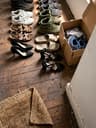
Every home has a shoe pile by the front door. It starts with two pairs, then a guest leaves theirs, then the boots come out, and suddenly you are stepping over a drift of footwear just to get your keys.
These 13 entry way shoe storage ideas are built for that exact spot — the few feet of floor and wall right inside your front door. Every idea here is a shoe-storage solution placed in the entryway: a bench with cubbies you sit on to lace up, a cabinet so slim it hugs the wall, a tray that catches the mud before it reaches the rug. Nothing in this list belongs in a bedroom closet or a garage. It all lives where shoes actually come off.
The trick is to give every pair a home that is easier to use than the floor. Pick the one that fits your wall, cap the pairs it holds, and the doorway starts greeting you with calm instead of clutter.
Measure first, buy second
Before you buy anything, measure three things: the width of the wall beside your door, the depth from that wall to where people walk, and the height of your tallest boots. A shoe cabinet deeper than 10 inches turns a narrow entryway into a squeeze, and a bench wider than the wall looks wrong from the day it arrives.
Sit Down on a Bench With Shoe Cubbies Underneath

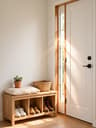
A bench with open cubbies underneath is the hardest-working piece of entry way shoe storage ideas can offer, because it solves two problems at once: somewhere to sit while you lace up, and somewhere for the shoes to live. A light oak bench about 18 inches high, with three open cubbies under the seat, holds three pairs heel-out where you can see them — white sneakers, tan loafers, brown boots — and a cushion on top makes the seat comfortable even in a coat. Keep the cubbies to the pairs you wear this week and move the rest to a closet, because three full cubbies look tidy and four pairs on top of them look like the pile came back. For more ways to get shoes off the floor, see our shoe storage ideas.
Mount a Slim Tilt-Out Shoe Cabinet That Sits Almost Flat on the Wall

When the wall beside your front door is the only free space you have, a slim tilt-out shoe cabinet is the answer. At about 8 inches deep it sits almost flat against the wall, yet each tilted compartment holds two or three pairs upright, so the shoes disappear completely behind clean white doors. Use the flat top for a key dish and a plant, and it looks like furniture instead of storage. The cabinet in the photo holds white sneakers and brown loafers in the open compartment, with the upper compartments closed. Keep only the pairs you wear this week inside — two or three per person — and the rest goes in a closet, or the cabinet fills up and the pile moves back to the floor.
Catch the Mud With a Boot Tray Right Inside the Door

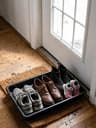
A boot tray is the cheapest entryway shoe storage idea that actually works, and it is the one to buy first if mud and rain are your problem. A black metal tray with a raised edge and a slatted base sits just inside the door and holds the wet pairs — brown rain boots, grey sneakers, black ankle boots — while the raised edge keeps mud and water on the tray instead of on your floor. The slats let the soles drip dry instead of sitting in a puddle. Pair it with a woven jute doormat beside it so people step from the mat onto the tray, and the tray becomes the obvious place every pair goes. Empty it and wipe it once a week, because a tray full of dried mud stops catching anything. In summer, when the boots go away, the same tray holds sandals and trainers just as well.
Float Two Low Shelves on the Wall and Keep Shoes Off the Floor

Floating shelves turn the wall beside your front door into shoe storage without taking a single inch of floor, which is exactly what a narrow entryway needs. Two low wooden shelves, one above the other, hold four pairs on display — white sneakers and tan sandals on the top shelf, brown loafers and grey trainers below — so you can see every pair at a glance instead of digging through a pile. Mount the lower shelf at about knee height so shoes slide on and off easily, and keep the upper shelf for the pairs you wear least. A small round mirror and a brass hook above the shelves give you a last check before you leave and a place for a hat. The rule that keeps floating shelves working is the cap: when a fifth pair arrives, an old one moves to a closet, because a shelf that overflows just becomes a higher pile.
Let a Hall Tree With a Mirror and a Shoe Drawer Do the Whole Job

A hall tree is the whole entryway in one piece of furniture: hooks for coats, a mirror for a last check, and a shoe drawer at the base. The white hall tree in the photo has three black hooks holding a beige trench coat and a canvas tote, a full-length mirror behind them, and a deep drawer at the bottom holding white sneakers and brown boots. It works best in an entryway with one clear wall, because the mirror makes the space feel bigger and the drawer hides the shoes completely — guests see a tidy piece of furniture, not a shoe rack. Keep a boot tray beside it for wet days. One hall tree, one tray, and the doorway is done.
Stack Three Open Cubbies for Shoes You Can Actually See

Open cubbies are the simplest shoe storage there is, and stacking them is what makes them work in an entryway. Three white cube boxes stacked against the wall beside a glass front door hold three pairs heel-out — grey trainers on top, tan loafers in the middle, white sneakers at the bottom — so you can see every pair without opening anything. Put the most-worn pair at the bottom, where it is easiest to reach, and a basket of folded scarves on top so the stack earns its height. The trick is the same as with every shoe system: cap the pairs. Three cubbies hold three pairs, and when a fourth pair arrives, an old one has to move to a closet. A stack taller than three cubes starts to wobble and look like a tower, so stop at three. For more small-space shoe ideas, see our shoe organization for small spaces.
Three helpers worth the money
If you buy only three things, make them these: a boot tray with a raised edge so mud stays put, a small dish or bowl for keys and coins, and a washable doormat you can actually clean. Measure the wall and the floor space first, and skip everything else until you have lived with the setup for a month.
Hide Shoes in Baskets Under a Cushioned Bench

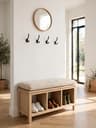
A cushioned bench with baskets underneath is the softer version of the cubby bench, and it is the best pick if you like the look of woven texture in your entryway. A low wooden bench with a cream washable cushion — washable matters, because entryway cushions get sat on with wet coats and muddy hands — sits under a row of black wall hooks holding a green coat and a canvas tote, with a framed botanical print beside them. Under the bench, two large seagrass baskets hold the shoes: white sneakers in one, brown boots in the other. The baskets hide the shoes the way a drawer does, but they lift out for cleaning and you can carry a whole basket to the closet when the season changes. Label nothing; one basket per person is label enough.
Use the Back of the Front Door When the Wall Is Already Full

When there is no free wall and no floor space left, the back of the front door is the last surface available — and it is usually empty. A clear over-the-door shoe organizer hangs from two hooks over the door, needs no screws, and holds four pairs in see-through pockets: white sneakers, brown loafers, grey trainers and tan sandals, each in its own pocket so you can find the pair you want without digging. Put a boot tray underneath for the boots that are too heavy for pockets, and you have a full shoe station that comes down in seconds when you move out. One caution: keep the pockets light. An organizer stuffed with heavy boots swings, bangs against the door, and eventually pulls the hooks off. Light pairs up top, heavy pairs on the tray.
Hide Shoes in a Pull-Out Drawer Inside a Slim Console

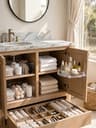
A pull-out shoe drawer in a slim console is shoe storage that looks like nothing at all, which is the point. The white console in the photo could pass for a side table: a brass key bowl, a stack of mail and a small potted olive plant on top, and nothing below except a clean front. Pull the deep drawer open and there they are — white sneakers and brown loafers stored flat, side by side, out of sight the moment the drawer closes. This is the best of these entryway shoe storage ideas for a formal entryway, or for a home where the front door opens straight into the living room and you do not want a shoe rack in the sightline.
Give Every Person a Woven Basket, Not a Shared Pile

Shared shoe storage always ends up belonging to one person and annoying everyone else, so give each person their own basket instead. Three large woven seagrass baskets in a tidy row on the floor beside the front door hold one pair each — brown boots, white sneakers, grey trainers — under a small wooden wall shelf with a plant and a key dish. The rule that makes this work is simple: one basket per person, and when a basket overflows, something in it has to move to a closet. Baskets are also the easiest of all front door shoe storage to move: slide them aside to mop, carry one to the bedroom to pack for a trip, and put it back when you return. For more front-door ideas, see our front-door shoe organization ideas.
Build a Shoe Station: One Low Rack, One Row of Hooks

A shoe station pairs the lowest rack with the hooks above it, so coats and shoes share one strip of wall and nobody has to walk across the room half-dressed. A low two-tier black metal rack holds three pairs — white sneakers, brown loafers, grey trainers — while five black wall hooks above hold a navy coat, a beige cap and a canvas tote. The rack is open on all sides, so air moves through and damp shoes dry instead of smelling, and the woven doormat in front marks where the station starts. This is the setup to copy if your entryway is really just a wall beside the door: one rack, one row of hooks, one mat, and the whole coming-and-going routine happens in about four feet of wall.
Kid height, not adult height
A low shelf 30 inches wide still holds three pairs of kids shoes with room to spare, which is how most families get out the door anyway. Mount the hooks at your child's shoulder height, not yours — if they cannot reach it, you will be hanging their coat forever.
Give Kids Their Own Low Shelf With Hooks at Their Height

Kids cannot use adult shoe storage, so give them their own low shelf right by the front door. A low white two-tier shelf at child height holds three pairs of small colourful shoes on top — pink, blue and green trainers — with white sneakers below, and a small wooden step stool beside it so little legs can sit to put shoes on. Above it, four colourful wall hooks at shoulder height hold a red backpack and a yellow raincoat, so the whole school routine happens in one spot: coat off, hook, shoes off, shelf. The shelf works because it is theirs and it is low — shoes left on the floor next to a shelf a child can reach are a habit problem, not a storage problem. One shelf per two kids is plenty if you cap the pairs.
Stand Tall Boots Upright on Their Own Rack by the Door

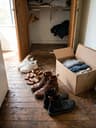
Tall boots are the pair that breaks every normal shoe system: they flop over, they do not fit in cubbies, and they end up leaning against the wall in a muddy row. A tall boot rack fixes that by giving boots their own home by the door. The black metal two-tier rack in the photo holds four pairs of tall brown and black rain boots standing upright on the top tier, with grey trainers on the low shelf below, right beside the front door. Boots stored upright keep their shape, dry faster, and stop the wall from getting scuffed. If you only buy one piece of shoe storage by the front door for winter, make it this one.
A calm entryway is not really about furniture. It is about walking in, kicking your shoes off into a spot you do not have to think about, and walking into the rest of your home with empty hands.
Pick the wall idea first, add one shoe home and one tray for wet days, and let the rest wait until you know what you actually miss. Cap the pairs and do a five-minute reset once a week, and the doorway will start greeting you with calm instead. For the rest of the hallway, see our small entry way ideas and our small entryway organization ideas.
Entry Way Shoe Storage Ideas FAQs
Expert answers & styling advice
What is the best shoe storage for a small entryway? ▼
Start with the wall beside the door, because it is the space you are probably wasting. One slim piece — a tilt-out shoe cabinet, a bench with cubbies, or two floating shelves — plus a boot tray for wet shoes covers most homes. These entry way shoe storage ideas work because they give every pair one obvious home right where shoes come off, so nothing has to pile up on the floor.
What is the slimmest shoe storage for a narrow entryway? ▼
A tilt-out shoe cabinet is the slimmest option at about 8 inches deep, and it hides the shoes completely. If you want to see your shoes, floating shelves or stackable open cubbies work, but cap them at two or three pairs per person. Anything deeper than 10 inches starts to block the walkway in a narrow entryway.
How do I stop shoes piling up by the front door? ▼
Cap the pairs and give them a boundary. Two or three pairs per person, on a boot tray, in cubbies, or in baskets by the front door, and everything else lives in a closet. When the tray or the basket is full, that is the limit working as intended. Adding a bigger tray just moves the pile.
How can I add entryway shoe storage without drilling holes? ▼
Use the door and the floor. A clear over-the-door shoe organizer holds four pairs with no screws, a storage bench hides shoes without touching a wall, and a boot tray holds the wet pairs. Wipe the wall with rubbing alcohol first if you use adhesive hooks, press firmly, and wait a full day before hanging anything heavy.
Where should tall boots go in the entryway? ▼
Give boots their own home: a tall boot rack that holds them upright, or a boot tray with a raised edge if they are short boots. Boots stored upright keep their shape and dry faster, and the tray catches the mud. In summer, slide the rack into a closet and let the tray hold sandals instead.