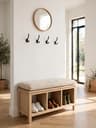
21 Shoe Storage Ideas That End the Pile by the Door

21 shoe storage ideas that end the pile by the door — racks, slim cabinets, boot trays, closet shelves and one basket per person, for entryways of every size.
Table of Contents (21 Ideas)
- 1.Start With a Two-Tier Open Shoe Rack
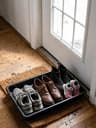
- 2.Put a Boot Tray Under the Wet Shoes
- 3.Hide Them in a Slim Flip-Down Shoe Cabinet
- 4.Hang an Over-the-Door Pocket Organizer
- 5.Stack Clear Shoe Boxes So You Can See Every Pair
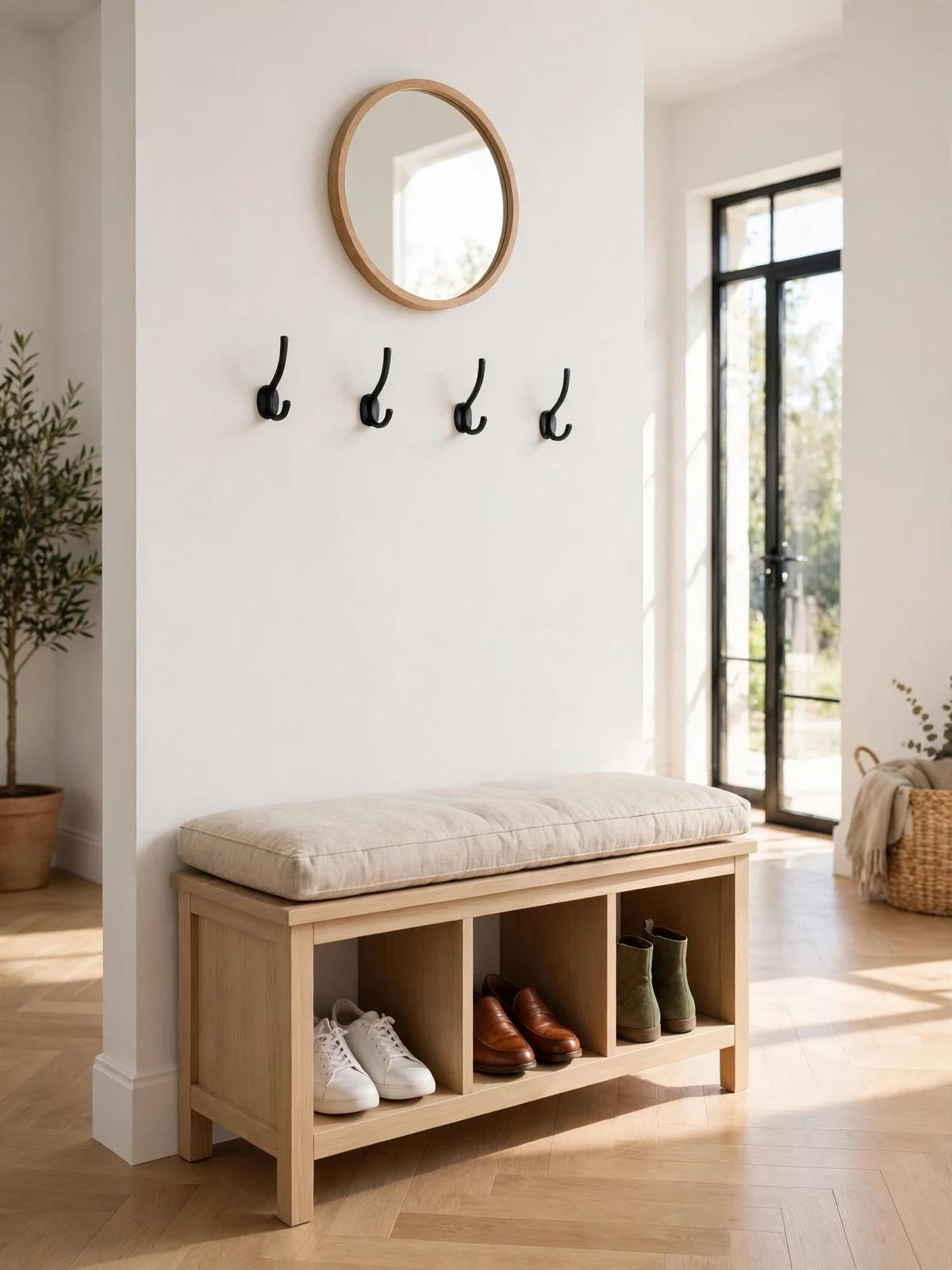
- 6.Build the Entryway Around a Bench With Cubbies
- 7.Float Shoes on Wall-Mounted Shelves
- 8.Slide Off-Season Pairs Under the Bed
- 9.Double the Closet Floor With a Tiered Shoe Riser
- 10.Hang a Fabric Shoe Shelf From the Closet Rod
- 11.Give Tall Boots a Rack and Boot Shapers
- 12.Give Every Person One Basket
- 13.Turn the Space Under the Stairs Into Shoe Shelves
- 14.Roll a Slim Cart Into the Gap Nobody Uses
- 15.Add Pull-Out Drawers to the Entryway Bench
- 16.Label Bins on the Top Shelf for the Seasonal Swap
- 17.Build Mudroom Locker Cubbies, One Per Person
- 18.Spin the Whole Collection on a Rotating Carousel
- 19.Set Up a Low Shoe Station the Kids Can Actually Reach
- 20.Beat the Smell With a Slatted, Ventilated Cabinet
- 21.Keep It Working With a Five-Minute Weekly Shoe Reset
Every house has the same spot: that patch of floor by the front door where shoes go to pile up. Two pairs become six, six become a small mountain, and soon you're stepping over boots to reach your keys. These shoe storage ideas are for that exact spot — and for the closets and hallways behind it.
Here's the honest starting point: count the shoes. Most families of four own 30 to 50 pairs, and no rack holds all of them by the door. The door only needs this week's pairs — the rest lives in the closet, under the bed, or up top. Split the collection into "this week" and "the rest," and every idea below gets easier.
Work through this list with a tape measure in hand. A rack two inches too wide for your hallway is a coat rack in disguise. Measure the wall, count the pairs, and pick the ideas that fit your real space. If the front door is your worst spot, our front door shoe organization ideas go deeper on that one area.
 Save Pin
What you'll need for most of these ideas
Most of this list runs on six things: a two-tier shoe rack, a boot tray, a slim shoe cabinet, clear stackable shoe boxes, woven baskets, and boot shapers. Buy them in that order — the rack and tray change the entryway fastest.
Start With a Two-Tier Open Shoe Rack

A two-tier open rack is the workhorse of shoe storage for a reason: it holds 8 to 12 pairs, costs very little, and takes ten minutes to put together. Put it right beside the door, not across the room — shoes only get put away when the rack beats the floor. A rack around 30 inches wide fits most hallways; go 24 inches if yours is narrow. Keep everyday pairs up top, second-string pairs below, and leave one slot empty on purpose. A rack packed solid is one nobody can use without knocking something over.
Put a Boot Tray Under the Wet Shoes

Rainy days and snowy boots wreck an entryway, because wet shoes can't go on a rack — and they can't go on bare floor either. A boot tray with a raised edge solves it: muddy boots and soaked trainers sit on it, the water stays in the tray, and the floor stays dry. Pick one at least 30 inches long so two pairs of adult boots fit side by side, with a cheap coir doormat underneath so drips don't creep onto the wood. Empty it after a wet day.
Hide Them in a Slim Flip-Down Shoe Cabinet

If you hate looking at shoes, a slim flip-down cabinet is the answer — and it is one of the best shoe storage ideas for small spaces because it is only about 6 inches deep. Two or three tilt-out compartments hold 6 to 12 pairs behind closed doors, and the top becomes a shelf for keys and mail. Measure your hallway first: the cabinet needs a wall about 24 to 32 inches wide, with clearance for the door to swing down without hitting a radiator. Put daily pairs in the top compartment.
Hang an Over-the-Door Pocket Organizer

The back of a door is free storage you already own. An over-the-door pocket organizer with clear pockets holds 12 to 24 pairs of flat shoes, sandals, and trainers without taking an inch of floor — perfect for a bedroom door, a closet door, or the inside of the front door. Clear pockets matter — you can see the pair you want without opening every pocket. Keep heavy boots off it; the hooks and the door hinges will complain. It also suits once-a-week pairs: dance shoes, gym trainers, smart flats for Fridays.
Stack Clear Shoe Boxes So You Can See Every Pair

The problem with shoe boxes is you can't see what's inside, so you buy a second pair of black flats because you forgot the first. Clear stackable shoe boxes fix that: one pair per box, a front flap that opens without unstacking the tower, and a little label on the end. Stack them four or five high — any higher and the tower wobbles when you pull the bottom box out. Best for pairs you rotate by season or occasion: heels, dress shoes, the good trainers.
Build the Entryway Around a Bench With Cubbies

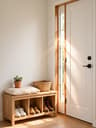
A bench with open cubbies underneath does two jobs at once: somewhere to sit while you put shoes on, and a home for 6 to 10 pairs right under it. That is why it shows up in nearly every tidy entryway — sitting down to lace up means shoes land in the cubby, not on the floor beside it. Look for a bench around 36 to 48 inches wide with cubbies at least 12 inches tall, so boots fit. Our small entryway organization ideas show how to fit one into a tight hallway.
Float Shoes on Wall-Mounted Shelves

Floating shelves turn shoes into a display and free the floor completely — a gift in a hallway where a rack would block the walkway. Mount two or three slim shelves about 12 inches apart — deep enough for trainers, about 10 to 12 inches — and keep everyday pairs at hip height, the prettier ones up high. This works best for a small, edited collection: five or six pairs you like looking at, not the whole family's muddy trainers. Anchor them into studs.
The rule that makes all of these work
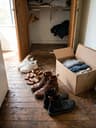
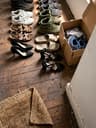
The door holds this week's pairs only. Everything else — off-season boots, dress shoes, spares — lives in the closet, under the bed, or on a high shelf. Split first, then pick the storage.
Slide Off-Season Pairs Under the Bed

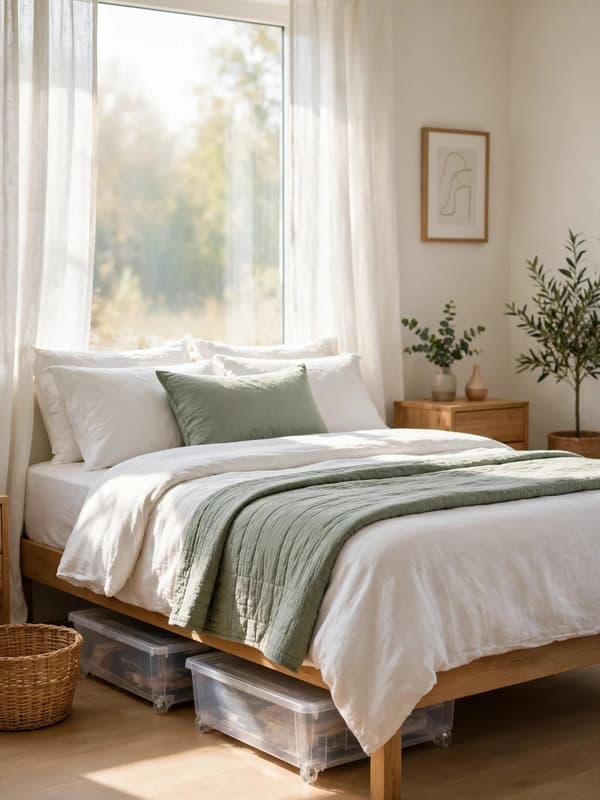
Under the bed is the best home for shoes you won't wear for months: winter boots in summer, sandals in January, spare trainers. A low, flat bin with a lid — around 6 inches tall so it slides under a standard bed frame — holds 4 to 6 pairs and keeps dust off. Label the end of the bin so you can read it without pulling it out, and put a cedar block inside to keep things fresh. Swap twice a year, in spring and autumn, and the under-bed bin becomes your seasonal closet.
Double the Closet Floor With a Tiered Shoe Riser

Closet shoe storage fails most often on the floor, where one row hides the row behind it. A tiered shoe riser turns that single row into stadium seating: two or three levels, every pair visible, nothing buried at the back. A 24-inch riser holds about 4 to 6 pairs per level, so two side by side hold a whole week's rotation. Measure your closet floor depth first — a riser sticking out past the hanging clothes gets knocked every time you reach for a shirt.
Hang a Fabric Shoe Shelf From the Closet Rod

A fabric hanging shelf that clips onto the closet rod adds 10 cubbies in about five minutes, no screws and no tools — one of the friendliest closet shoe storage ideas for renters. Each cubby holds one pair, and the whole thing hangs beside your clothes, so getting dressed means shoes and outfit within reach. It does eat about 12 inches of hanging space, so it's best in a closet with room to spare or for the person whose clothes are mostly folded. Cardboard in the bottom cubby stops it sagging under heavier shoes.
Give Tall Boots a Rack and Boot Shapers

Tall boots flop over, crease at the ankle, and eat a whole shelf when they fall. A boot rack that holds them upside down by the heel — or a row of boot shapers slipped inside — keeps them standing straight, keeps their shape, and stops the dreaded flop. Shapers cost very little and pay for themselves the first time leather boots survive a winter without a permanent crease. Store boots on the closet floor or the bottom of the entryway rack, never stacked under other shoes.
Give Every Person One Basket

In a family house, the pile by the door is usually four small piles in disguise. One basket per person ends the argument about whose shoes are whose: a woven basket about 12 by 16 inches holds two or three pairs, slides under a bench or against the wall, and everyone knows where their shoes go. Tag each one, or use a different basket colour, so the kids can find theirs without asking. The rule is simple — if it doesn't fit in your basket, it doesn't live by the door.
Turn the Space Under the Stairs Into Shoe Shelves

The triangle under the stairs is awkward for almost everything except shoes. A few open shelves cut to follow the slope hold 10 to 20 pairs in space that was doing nothing — and in most houses it's right by the front door, so shoes are exactly where you need them. Keep tall shelves near the high end for boots, short shelves near the low end for flats and children's shoes. If building shelves isn't your thing, a low two-tier rack pushed into the tallest part does most of the same job.
Roll a Slim Cart Into the Gap Nobody Uses

Most houses have a dead gap somewhere — between wardrobe and wall, or beside the dresser — usually 6 to 10 inches wide and completely wasted. A slim rolling cart made for exactly those gaps holds shoes in tiers, rolls out when you need a pair, and disappears when you don't. It is one of the cleverest shoe storage ideas for small spaces because it uses space that wasn't storage at all. Measure the gap before ordering — these carts come in a few widths — and load heavier shoes on the bottom tier so it rolls straight.
A quick word about smelly shoes
Smell is a ventilation problem, not a shoe problem. Shoes stored in a closed box while still damp will smell within a day. Let trainers air out for a few hours before they go back in a cabinet, keep a cedar block or baking-soda sachet in each closed compartment, and never store wet boots in a sealed bin. Air first, store second.
Add Pull-Out Drawers to the Entryway Bench

Open cubbies are easy to use, but they show every shoe — and in a small entryway that visual noise is half the mess. Deep pull-out drawers under a bench hide 4 to 6 pairs each and slide out like a kitchen drawer — the tidiness of a cabinet with the speed of an open rack. This works best if you're buying a bench anyway; retrofitting drawers into an existing bench is fiddly. Look for full-extension runners so you can reach the pairs at the back without pulling the whole drawer out.
Label Bins on the Top Shelf for the Seasonal Swap

The top shelf of a closet is prime real estate that usually holds a dusty bag and good intentions. Reclaim it for labeled bins — summer sandals, winter boots, wedding-only pairs — and the seasonal swap becomes a ten-minute job: one bin down, one bin up, done. Use lidded storage bins so dust stays out, and label the front edge in big letters readable from the floor. Keep a step stool nearby, because a bin you can't reach is a bin you'll never swap.
Build Mudroom Locker Cubbies, One Per Person

If your entryway is really a mudroom — a back door, a garage entrance, a hallway the whole family uses — lockers are the system that sticks. Each person gets a tall cubby with hooks above, a bench seat, and shoe storage below: coat, bag, and shoes in one vertical column, no thinking required. A family of four needs about 48 inches of wall for four 12-inch cubbies. It's the biggest build on this list, but it survives kids, dogs, and sports seasons, because nobody has to remember a system — they just use their own column.
Spin the Whole Collection on a Rotating Carousel

A rotating shoe carousel — a tall tower with circular tiers that spin — holds 20 to 30 pairs in the footprint of one chair. That makes it the highest-density hallway shoe storage idea here for a walk-in closet or a wide hallway corner. One spin brings every pair to you — nothing hides at the back of a shelf. It suits similar-sized shoes best; bulky boots and tall heels don't spin well. Keep it where you get dressed, not by the front door — it's not a grab-and-go system for muddy trainers.
Set Up a Low Shoe Station the Kids Can Actually Reach

Kids don't put shoes away because the rack is built for adults. A low shelf at knee height — around 12 to 15 inches off the floor — with two or three pairs per child changes that overnight, especially with a picture label on each spot: the trainers, the wellies, the school shoes. Little kids match pictures faster than they read words. Keep it right by the door they actually use, not the front door if everyone comes in through the garage.
Beat the Smell With a Slatted, Ventilated Cabinet

A closed shoe cabinet that doesn't breathe becomes a smell box within a week, especially in summer. The fix is slats: slatted or louvered doors let air move through while still hiding the shoes, so trainers dry out instead of stewing. If you already own a solid-door cabinet, drill small holes along the back panel or leave the doors ajar for an hour after shoes go in. Drop a cedar block or a baking-soda sachet into each compartment and the cabinet stays neutral.
Keep It Working With a Five-Minute Weekly Shoe Reset

No shoe system survives a real week of school runs, gym trips, and rainy days unless someone maintains it — and the maintenance here is small: five minutes, once a week, ideally Sunday evening. Put strays back in their cubby or basket, move the pair nobody wore all week to the closet, wipe the boot tray, and check for the single shoe hiding under the bench. That's it. Add a one-in, one-out rule on top — a new pair in, an old pair out — and the collection stops growing past what your storage can hold.
The pile by the door is not a shoe problem — it's a system problem, and a system is fixable in a weekend. Start with the count, split the collection into this week and the rest, and pick the three ideas that fit your space: a rack and a boot tray for most houses, a slim cabinet or bench if the hallway is tight. You don't need all 21 at once. Live with your first three for a week, see what still lands on the floor, then add the next one. Calm entryway, clear floor — that's the goal. If your shoes are only part of the hallway chaos, our hidden storage ideas will help you tuck the rest away too.
Shoe Storage Ideas FAQs
Expert answers & styling advice
How many pairs of shoes should I keep by the front door? ▼
Two pairs per person is the number that works for most households — the pair you're wearing today and the pair you'll wear tomorrow. A family of four needs room for about eight pairs by the door, and the rest belongs in the closet or under the bed. If the rack is full, the overflow goes back to the closet, not onto the floor.
What is the best shoe storage for a small hallway? ▼
A slim flip-down shoe cabinet, only about 6 inches deep, is the best fit for a narrow hallway because it hides 6 to 12 pairs behind closed doors without blocking the walkway. A two-tier open rack works too if you have about 30 inches of wall. Avoid deep cubby units in a tight hallway — they eat the walking space and get knocked daily.
How do I store shoes in a small closet? ▼
Use the floor first with a tiered shoe riser, then the rod with a hanging fabric shelf, then the top shelf with labeled bins for off-season pairs. Keep daily pairs at the bottom where you can grab them and seasonal pairs up high. Our guide to shoe organization for small closets covers the full layout if your closet needs a proper plan.
How do I stop shoes from smelling in storage? ▼
Let shoes air out for a few hours before they go into any closed storage — damp shoes in a sealed cabinet will smell within a day. Choose slatted or ventilated storage, add a cedar block or baking-soda sachet to each compartment, and never store wet boots in a lidded bin. Rotate pairs so no single pair gets worn two days running.
How do I store tall boots so they don't flop over? ▼
Use boot shapers or a boot rack that holds boots upright by the heel. Stuffing the shaft with rolled newspaper or tissue works as a free stand-in. Store boots on the closet floor or the bottom tier of a rack, never stacked under other shoes, and keep them out of direct sunlight so the leather doesn't dry and crack.